Narciso Garcia – författare
Visar alla böcker från författaren Narciso Garcia. Handla med fri frakt och snabb leverans.
10 produkter
10 produkter
Inbunden, Engelska, 1998
545 kr
Skickas inom 10-15 vardagar
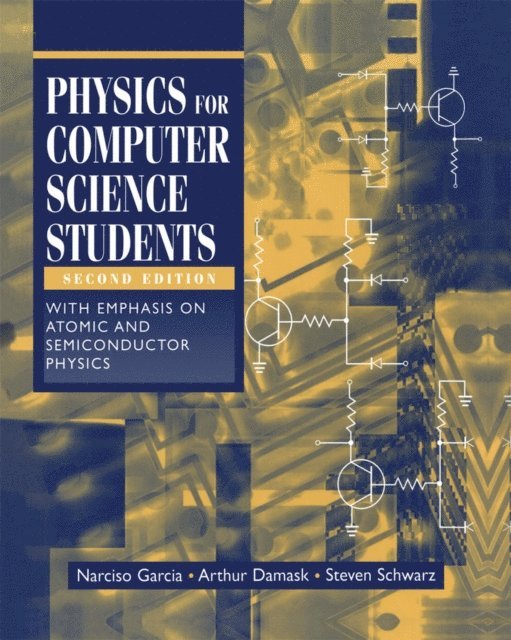
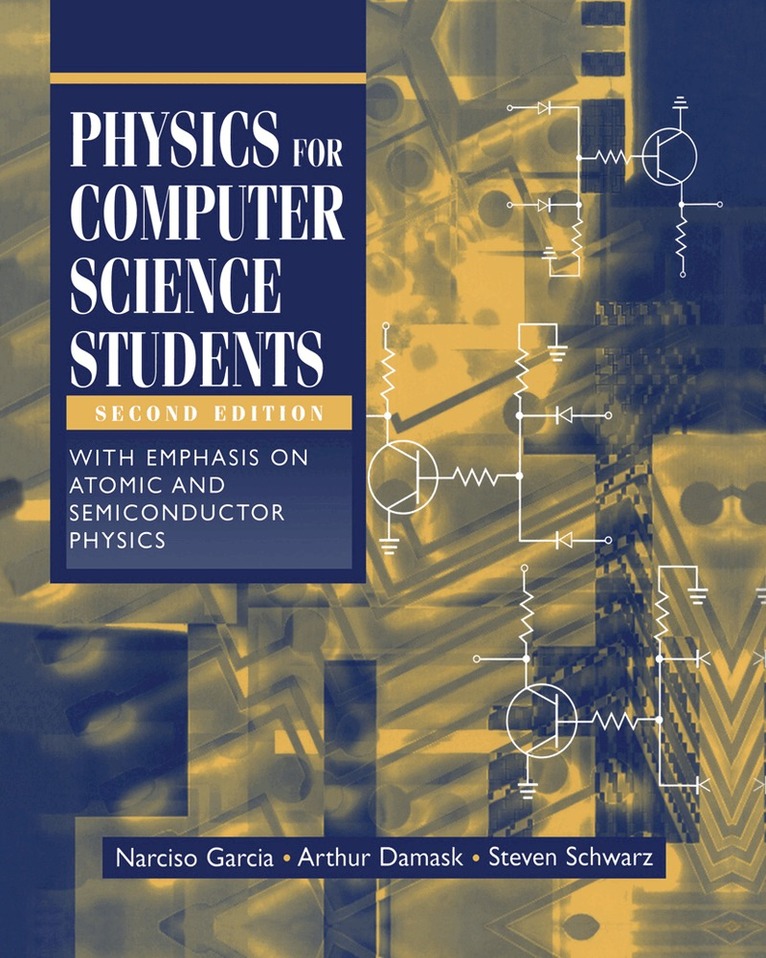
Includes presentation that directs toward understanding how a computer works, while providing a one-year introduction to classical and modern physics. This book covers the fundamentals of quantum mechanics, multi-electron systems, crystal structure, semiconductor devices, and logic circuits.
Del 235 - NATO Science Series C
Nanosources and Manipulation of Atoms Under High Fields and Temperatures
Applications
Inbunden, Engelska, 1993
868 kr
Skickas inom 10-15 vardagar
This volume contains the proceedings of the NATO Advanced Research Workshop which reviewed the basic principles and highlighted the progress made during the last few years on the atomic scale sources and the interactions between microprobes and samples. The motivation is to use the novel properties attached to the atomic dimensions to develop nanoscale technologies.
Inbunden, Engelska, 1998
868 kr
Skickas inom 10-15 vardagar
This volume summarizes six years of active research sponsored by NATO with the participation of the leading experts. The book provides an interdisciplinary view of several aspects of physics at the atomic scale. It contains an overview of the latest findings on the transport of electrons in nanowires and nanoconstrictions, the role of forces in probe microscopy, the control of structures and properties in the nanometer range, aspects of magnetization in nanometric structures, and local probes for nondestructive measurement as provided by light and metal clusters near atomic scales.
E-bok
PDF, Engelska, 2012791 kr
Läs direkt efter köp
presentation of the classical and quantum free electron theories and their successes and shortcomings (Chapter 23). In order to explain the large differences in the electrical properties of solids as well as the peculiar properties of semiconductors, the existence of allowed and forbidden energy bands is investigated (Chapter 24). In this chapter, we introduce the concepts of the electron effective mass and of holes. Intrinsic and doped semiconductors, their electron and hole densities, and their electrical properties are discussed in Chapter 25. It is now a rather simple matter for the student to understand the behavior and the characteristics of semiconductor devices: diodes, bipolar transistors, field effect transistors, etc. Semiconductor devices are the subject of Chapter 26. The text concludes with two chapters unique to this physics textbook. In Chapter 27, we show how diodes and transistors can be used to construct the logic circuits (gates) that constitute the fundamental building blocks of the computer. Chapter 28 is a layman''S introduction to some of the techniques used in the fabrication of integrated circuits. The laboratory experiments for the first semester are standard in any physics department, and thus we do not feel that is is necessary to include them in this book.
Häftad, Engelska, 2012
597 kr
Skickas inom 10-15 vardagar
presentation of the classical and quantum free electron theories and their successes and shortcomings (Chapter 23). In order to explain the large differences in the electrical properties of solids as well as the peculiar properties of semiconductors, the existence of allowed and forbidden energy bands is investigated (Chapter 24). In this chapter, we introduce the concepts of the electron effective mass and of holes. Intrinsic and doped semiconductors, their electron and hole densities, and their electrical properties are discussed in Chapter 25. It is now a rather simple matter for the student to understand the behavior and the characteristics of semiconductor devices: diodes, bipolar transistors, field effect transistors, etc. Semiconductor devices are the subject of Chapter 26. The text concludes with two chapters unique to this physics textbook. In Chapter 27, we show how diodes and transistors can be used to construct the logic circuits (gates) that constitute the fundamental building blocks of the computer. Chapter 28 is a layman'S introduction to some of the techniques used in the fabrication of integrated circuits. The laboratory experiments for the first semester are standard in any physics department, and thus we do not feel that is is necessary to include them in this book.
E-bok
PDF, Engelska, 20121 140 kr
Läs direkt efter köp
This text is the product of several years'' effort to develop a course to fill a specific educational gap. It is our belief that computer science students should know how a computer works, particularly in light of rapidly changing tech nologies. The text was designed for computer science students who have a calculus background but have not necessarily taken prior physics courses. However, it is clearly not limited to these students. Anyone who has had first-year physics can start with Chapter 17. This includes all science and engineering students who would like a survey course of the ideas, theories, and experiments that made our modern electronics age possible. This textbook is meant to be used in a two-semester sequence. Chapters 1 through 16 can be covered during the first semester, and Chapters 17 through 28 in the second semester. At Queens College, where preliminary drafts have been used, the material is presented in three lecture periods (50 minutes each) and one recitation period per week, 15 weeks per semester. The lecture and recitation are complemented by a two-hour laboratory period per week for the first semester and a two-hour laboratory period biweekly for the second semester.
Häftad, Engelska, 2003
546 kr
Skickas inom 10-15 vardagar
The purpose of VLBV 2003 was to provide an international forum for the d- cussion of the state of the art of visual content processing techniques, standards, and applications covering areas such as: video/image analysis, representation and coding, communications and delivery, consumption, synthesis, protection, and adaptation. The topics of special interest include all the areas relevant to image communications nowadays, from representation and coding to content classi?cation, adaptation, and personalization. A meeting covering such a wide range of topics takes many years to develop. So, please follow a brief story of the evolution of this relevant and specialized forum and of its adaptation to the prevailing interests along time. At the beginning of 1993, the idea of a specialized workshop to discuss topics in advanced image communications came in Lausanne, Switzerland, at a m- ting of the steering committee of the International Picture Coding Symposium. Therefore, the so-called International Workshop on Coding Techniques for Very Low Bit-rate Video VLBV was born as low bit-rate research was considered to be the leading edge. The ?rst workshop was held at the University of Illinois at Urbana-Champaign, USA, in 1993; the second at the University of Essex in Colchester, UK, in April 1994; the third at NTT in Tokyo, Japan, in November 1995;thefourthattheUniversityofLink¨ oping,Sweden,inJuly1997;the?fthin Urbana (again) in October 1998. Until this last workshop, VLBV life was closely tied with MPEG-4, that is to low bit-rate research.
E-bok
PDF, Engelska, 2003734 kr
Läs direkt efter köp
The purpose of VLBV 2003 was to provide an international forum for the d- cussion of the state of the art of visual content processing techniques, standards, and applications covering areas such as: video/image analysis, representation and coding, communications and delivery, consumption, synthesis, protection, and adaptation. The topics of special interest include all the areas relevant to image communications nowadays, from representation and coding to content classi?cation, adaptation, and personalization. A meeting covering such a wide range of topics takes many years to develop. So, please follow a brief story of the evolution of this relevant and specialized forum and of its adaptation to the prevailing interests along time. At the beginning of 1993, the idea of a specialized workshop to discuss topics in advanced image communications came in Lausanne, Switzerland, at a m- ting of the steering committee of the International Picture Coding Symposium. Therefore, the so-called International Workshop on Coding Techniques for Very Low Bit-rate Video VLBV was born as low bit-rate research was considered to be the leading edge. The ?rst workshop was held at the University of Illinois at Urbana-Champaign, USA, in 1993; the second at the University of Essex in Colchester, UK, in April 1994; the third at NTT in Tokyo, Japan, in November 1995;thefourthattheUniversityofLink¨ oping,Sweden,inJuly1997;the?fthin Urbana (again) in October 1998. Until this last workshop, VLBV life was closely tied with MPEG-4, that is to low bit-rate research.
E-bok
PDF, Engelska, 2003734 kr
Läs direkt efter köp
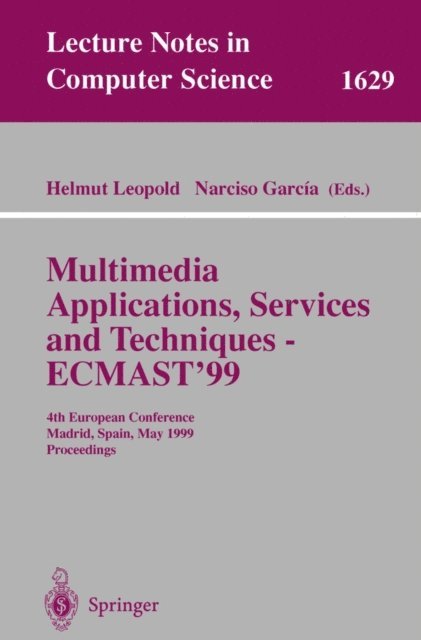
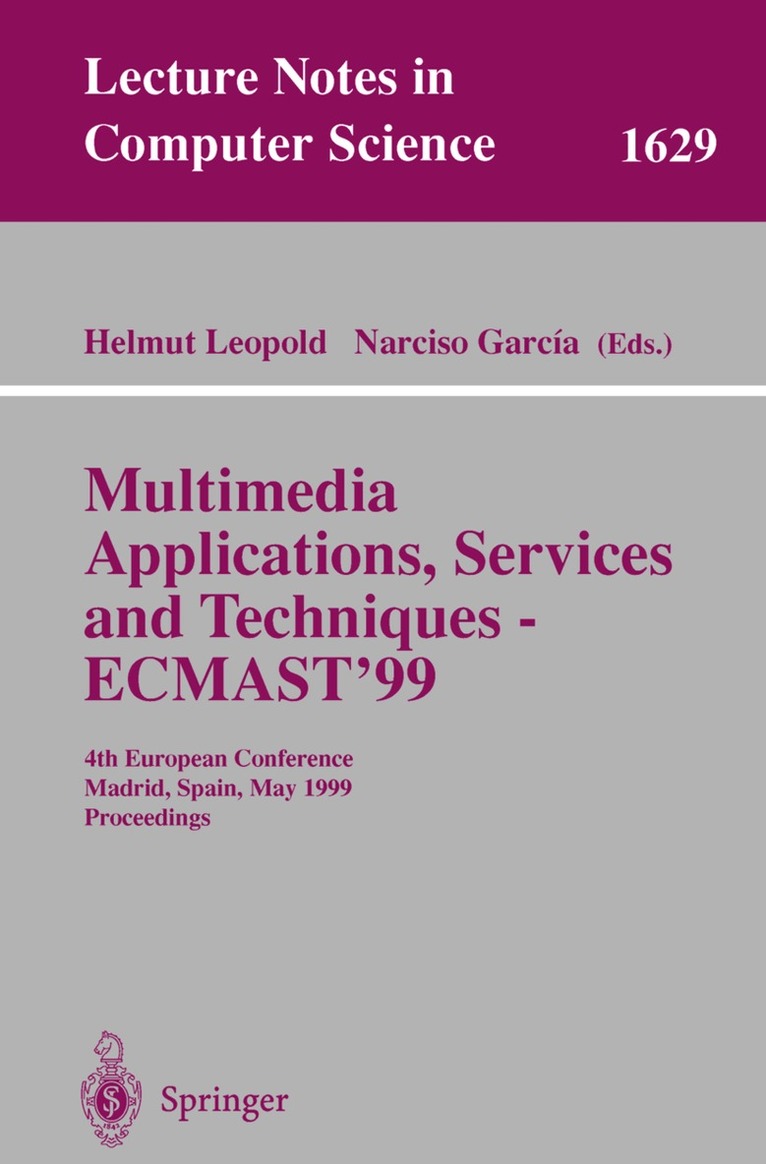
The liberalisation in the telecommunication market and thus the advent of competition has had a tremendous impact on business in this area. New operators have started to offer telecommunication services in competition with the classical national network operators. This in turn will have an impact on the market share, the tariff structure, the Quality of Service (QoS) and the services offered to the end customers. A way to maintain or increase revenue for network operators is to additionally offer new services to the customers. The final target is a so-called "Full Service Network (FSN)", which is capable of offering all types of bi-directional multimedia services. The provisioning of new telecommunication services in general and new multimedia services in particular is made possible by the availability of several new technologies as well as through advances in standardisation. R&D policies world-wide but especially in Europe have forced the development of new networking technologies such as ATM, xDSL and HFC as well as new video technologies as defined by DVB and DAVIC.
Häftad, Engelska, 1999
562 kr
Skickas inom 10-15 vardagar
The liberalisation in the telecommunication market and thus the advent of competition has had a tremendous impact on business in this area. New operators have started to offer telecommunication services in competition with the classical national network operators. This in turn will have an impact on the market share, the tariff structure, the Quality of Service (QoS) and the services offered to the end customers. A way to maintain or increase revenue for network operators is to additionally offer new services to the customers. The final target is a so-called "Full Service Network (FSN)", which is capable of offering all types of bi-directional multimedia services. The provisioning of new telecommunication services in general and new multimedia services in particular is made possible by the availability of several new technologies as well as through advances in standardisation. R&D policies world-wide but especially in Europe have forced the development of new networking technologies such as ATM, xDSL and HFC as well as new video technologies as defined by DVB and DAVIC.