Nasir Mahmood Abbasi – författare
Visar alla böcker från författaren Nasir Mahmood Abbasi. Handla med fri frakt och snabb leverans.
8 produkter
Semiconducting Black Phosphorus
From 2D Nanomaterial to Emerging 3D Architecture
Av Bing Wang, Nasir Mahmood Abbasi m. fl.
E-bok, 2021
935 kr
Lägg i varukorg
Black phosphorus (BP)-based two-dimensional (2D) nanomaterials are used as components in practical industrial applications in biomedicine, electronics, and photonics. There is a need to controllably shape engineered scalable structures of 2D BP building blocks, and their assembly/organization is …
Semiconducting Black Phosphorus
From 2D Nanomaterial to Emerging 3D Architecture
Av Bing Wang, Nasir Mahmood Abbasi m. fl.
E-bok, 2021
915 kr
Lägg i varukorg
Black phosphorus (BP)-based two-dimensional (2D) nanomaterials are used as components in practical industrial applications in biomedicine, electronics, and photonics. There is a need to controllably shape engineered scalable structures of 2D BP building blocks, and their assembly/organization is …
Semiconducting Black Phosphorus
From 2D Nanomaterial to Emerging 3D Architecture
Av Han Zhang, Nasir Mahmood Abbasi m. fl.
Inbunden, 2021
2133 kr
Lägg i varukorg
Black phosphorus (BP)-based two-dimensional (2D) nanomaterials are used as components in practical industrial applications in biomedicine, electronics, and photonics. There is a need to controllably shape engineered scalable structures of 2D BP building blocks, and their assembly/organization is …
Semiconducting Black Phosphorus
From 2D Nanomaterial to Emerging 3D Architecture
Av Han Zhang, Nasir Mahmood Abbasi m. fl.
Häftad, 2024
793 kr
Lägg i varukorg
Black phosphorus (BP)-based two-dimensional (2D) nanomaterials are used as components in practical industrial applications in biomedicine, electronics, and photonics. There is a need to controllably shape engineered scalable structures of 2D BP building blocks, and their assembly/organization is …
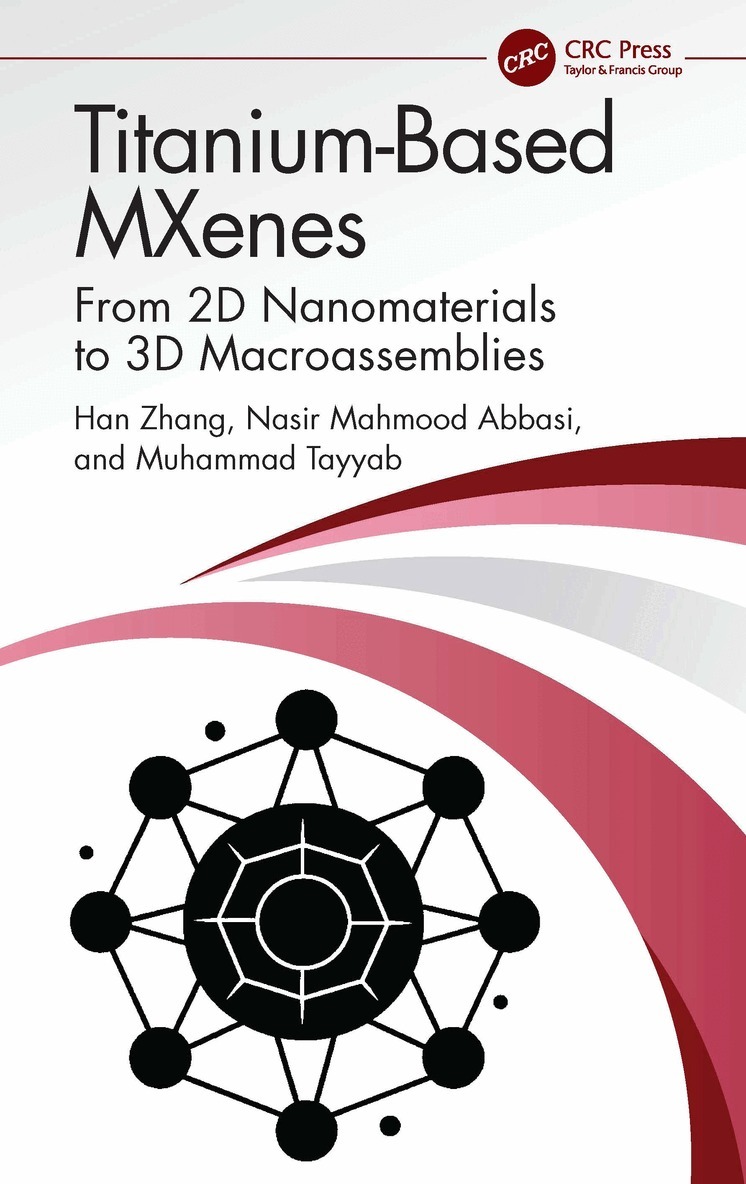
Titanium-Based MXenes
From 2D Nanomaterials to 3D Macroassemblies
Av Han Zhang, Nasir Mahmood Abbasi m. fl.
Inbunden, 2025
2133 kr
Lägg i varukorg
This book explores titanium-based MXenes, an emergent class of materials with a broad range of properties and potential applications. It introduces 3D MXene assemblies and compares their properties with such other well-known two-dimensional materials as graphene and transition metal …
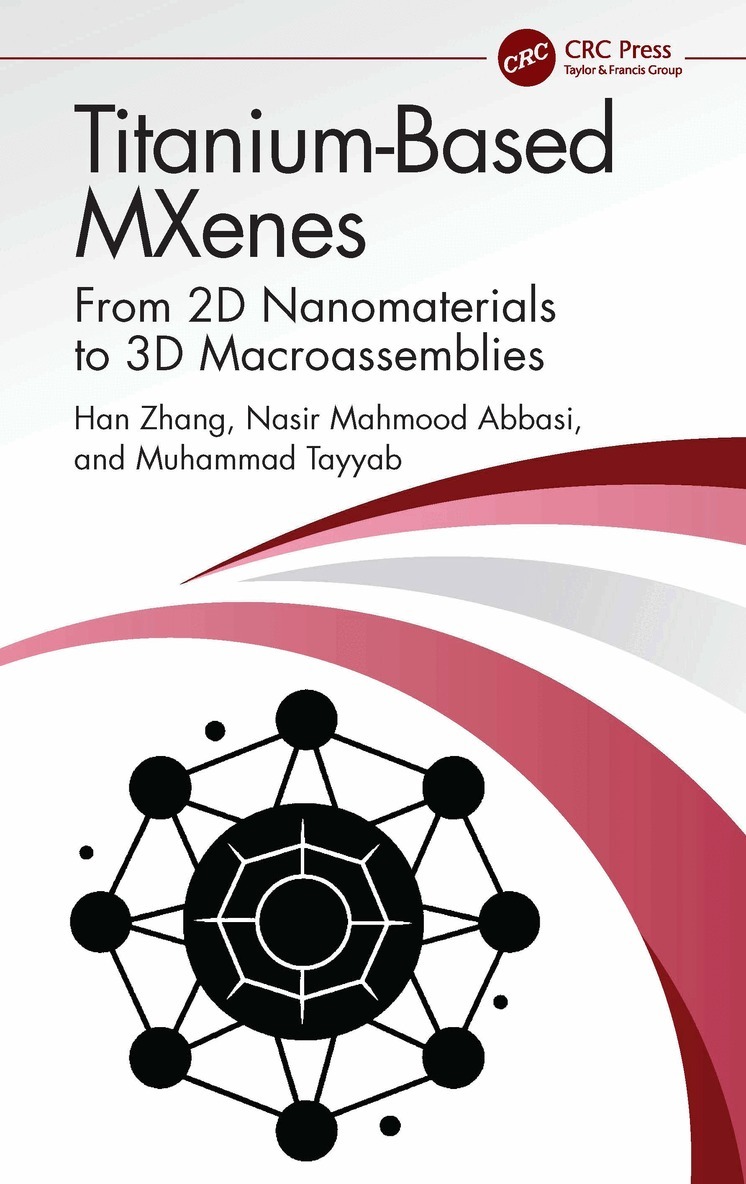
Titanium-Based MXenes
From 2D Nanomaterials to 3D Macroassemblies
Av Han Zhang, Nasir Mahmood Abbasi m. fl.
Häftad, 2026
953 kr
Lägg i varukorg
This book explores titanium-based MXenes, an emergent class of materials with a broad range of properties and potential applications. It introduces 3D MXene assemblies and compares their properties with such other well-known two-dimensional materials as graphene and transition metal …
Titanium-Based MXenes
From 2D Nanomaterials to 3D Macroassemblies
Av Muhammad Tayyab, Nasir Mahmood Abbasi m. fl.
E-bok, 2025
989 kr
Lägg i varukorg
This book explores titanium-based MXenes, an emergent class of materials with a broad range of properties and potential applications. It introduces 3D MXene assemblies and compares their properties with such other well-known two-dimensional materials as graphene and transition metal …
Titanium-Based MXenes
From 2D Nanomaterials to 3D Macroassemblies
Av Muhammad Tayyab, Nasir Mahmood Abbasi m. fl.
E-bok, 2025
1022 kr
Lägg i varukorg
This book explores titanium-based MXenes, an emergent class of materials with a broad range of properties and potential applications. It introduces 3D MXene assemblies and compares their properties with such other well-known two-dimensional materials as graphene and transition metal …