Nasya S. Razavi - Böcker
Visar alla böcker från författaren Nasya S. Razavi. Handla med fri frakt och snabb leverans.
3 produkter
3 produkter
2 103 kr
Skickas inom 10-15 vardagar
Doing Feminist Urban Research introduces the reader to the newly emerging 21st-century global landscape of feminist urban research. It showcases decolonising practices, partnerships and teamwork, new standards such as EDI, geo-ethnographic methodologies, software-enhanced qualitative data analysis, and knowledge mobilisation.This book delves into both the institutional and lived realities of the practice of feminist urban research for the 21st century via the insights of the GenUrb transnational research project. Through refection exercises based on real-life examples, it covers feminist methodologies and research techniques, critically examining the ‘feld’ through comparison and feminist geo-ethnographies. It guides readers through navigating the politics of decolonising research, working across diferences, and embracing feminist ethics and activism. The book also explores data through the practices of translation, data management, data analysis, and the use of NVivo. And it further introduces professional standards, including EDI, collaboration with partners, engagement in teamwork, the handling of crises, such as pandemics, and knowledge mobilisation, including utilising social media. Accompanying web resources will assist scholars and students with additional audio fles and documents.This book’s practical guidance will help those starting to contemplate and engage in qualitative feminist urban research as well as those teaching the practice and politics of research. It will appeal to practitioners in urban studies, geography, gender and women’s studies, sociology, anthropology, global studies, and development studies.The Open Access version of this book, available at www.taylorfrancis.com, has been made available under a Creative Commons Attribution-Non Commercial-No Derivatives (CC-BY-NC-ND) 4.0 license.
553 kr
Skickas inom 10-15 vardagar
Doing Feminist Urban Research introduces the reader to the newly emerging 21st-century global landscape of feminist urban research. It showcases decolonising practices, partnerships and teamwork, new standards such as EDI, geo-ethnographic methodologies, software-enhanced qualitative data analysis, and knowledge mobilisation.This book delves into both the institutional and lived realities of the practice of feminist urban research for the 21st century via the insights of the GenUrb transnational research project. Through refection exercises based on real-life examples, it covers feminist methodologies and research techniques, critically examining the ‘feld’ through comparison and feminist geo-ethnographies. It guides readers through navigating the politics of decolonising research, working across diferences, and embracing feminist ethics and activism. The book also explores data through the practices of translation, data management, data analysis, and the use of NVivo. And it further introduces professional standards, including EDI, collaboration with partners, engagement in teamwork, the handling of crises, such as pandemics, and knowledge mobilisation, including utilising social media. Accompanying web resources will assist scholars and students with additional audio fles and documents.This book’s practical guidance will help those starting to contemplate and engage in qualitative feminist urban research as well as those teaching the practice and politics of research. It will appeal to practitioners in urban studies, geography, gender and women’s studies, sociology, anthropology, global studies, and development studies.The Open Access version of this book, available at www.taylorfrancis.com, has been made available under a Creative Commons Attribution-Non Commercial-No Derivatives (CC-BY-NC-ND) 4.0 license.
2 103 kr
Skickas inom 10-15 vardagar
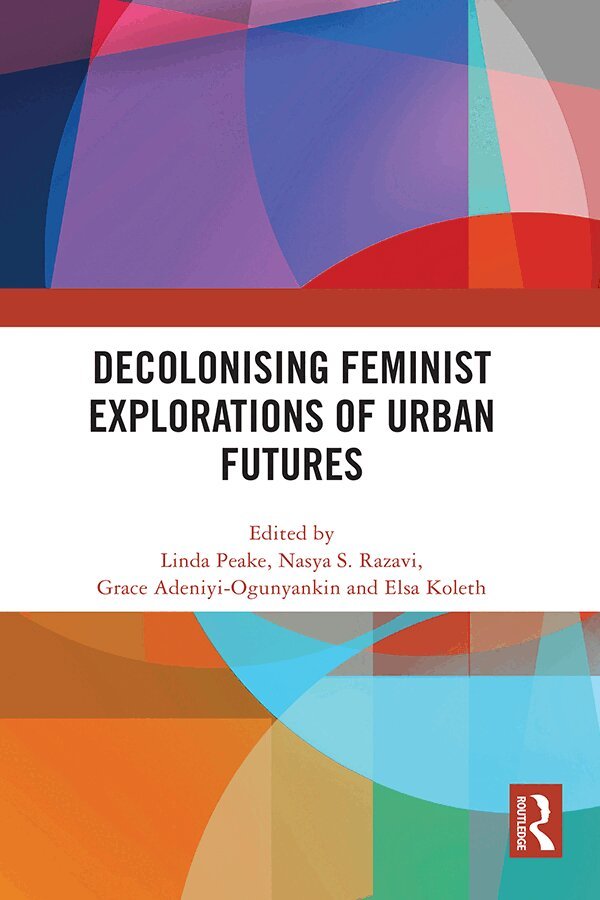
How do decolonial feminist urban imaginaries of urban futures begin to interrogate twenty-first century urban life? The urban futures signaled by the chapters in this book highlight overlapping dimensions of urban imaginaries—capitalism, temporality and the everyday. While the first dimension connects the privatisation and commodification of urban infrastructures to the realisation of state-based and capitalist discursive efforts to make the urban, the second dimension concerns temporal convergences of past, present and future in visions of the urban. It is in these convergences that the recursive logics of coloniality are reproduced in re-mappings of the landscapes of urban inequality and dispossession through which encounters between historical sedimentations of colonial relations and emergent (neo)colonial formations take place. Third, authors take up the everyday as a site of struggle through which women’s negotiations and placemaking practices offer alternative decolonial urban imaginaries.The book is based on papers given at the ‘Feminist Explorations of Urban Futures’ conference, held in September 2019, at York University in Toronto, Canada, organised by the transnational feminist research project ‘Urbanisation, Gender and the Global South: A Transformative Knowledge Network’ (GenUrb). It was originally published as a special issue of Urban Geography.