Nathan N. Kapoor – författare
Visar alla böcker från författaren Nathan N. Kapoor. Handla med fri frakt och snabb leverans.
3 produkter
3 produkter
Correspondence of John Tyndall, Volume 8
The Correspondence, June 1862-January 1865
Inbunden, Engelska, 2021
1 969 kr
Skickas inom 3-6 vardagar
The 318 letters in this volume reveal a great deal about Tyndall’s personality, the development of his career, and his role in attempting to better establish science as a respectable and professional enterprise. However, Tyndall was not above controversy, and on more than one occasion he entered public disputes either in defense of his own or a colleagues’ priority claims over scientific discoveries. Perhaps the most dramatic letters—if not those detailing the accounts of his cousin Hector Tyndale’s courageous exploits in the American Civil War—are those relating to Tyndall’s mountaineering adventures. He climbed in pursuit of science, and often with only a guide, making an attempt on the Matterhorn just days after Edward Whymper had failed in the effort. Toward the end of this volume, Tyndall, Thomas Henry Huxley, and others acquired the Reader. Although short-lived, the journal intended to promote and publish the works, society meetings, and correspondence of scientific men, and demonstrates Tyndall’s commitment to the popularization of science and to facilitating communication within the international scientific community.
1 835 kr
Kommande
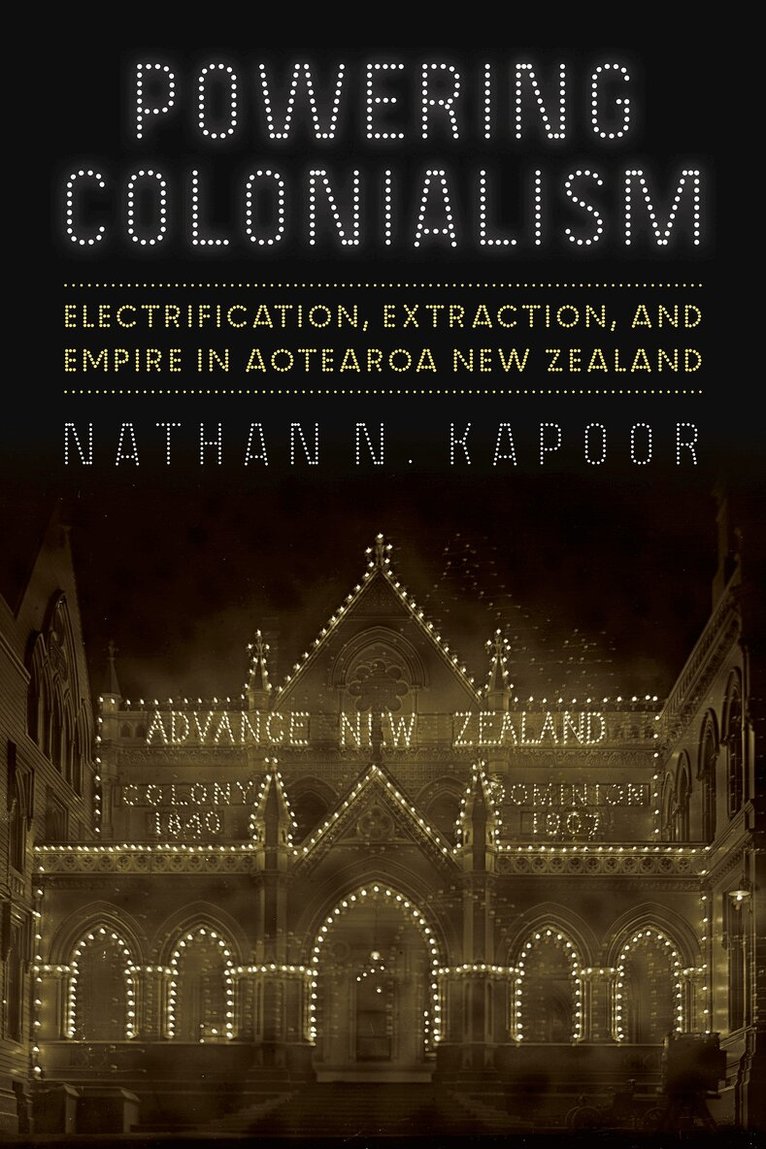
Powering Colonialism explores the history of electrification and its relationship to colonialism in Aotearoa New Zealand. Exploitative electric infrastructure, Nathan N. Kapoor argues, was not inevitable, and it was not determined by geography or a coincidence of colonization—it was by design. By the twenty-first century, hydropower provided more than half the country’s electricity. Although it is now lauded as a renewable energy source, advocates for the earliest hydroelectrification schemes were more concerned with extracting greater profits and highlighting British technological superiority. Settlers, miners, and politicians saw electricity as a tool for achieving modernity, wealth, and self-sufficiency, and Aotearoa New Zealand’s vast river system, once a barrier to colonial expansion, was now used to justify it. The electrification projects Kapoor examines in Powering Colonialism—from hydroelectric power for gold mining in the 1880s to Māori-led geothermal energy plants in use today—illustrate how, from the very beginning of Aotearoa New Zealand’s transition to electric power, settlers designed and used electric power systems in service to their colonial mission.
Powering Colonialism
Electrification, Extraction, and Empire in Aotearoa New Zealand
Häftad, Engelska, 2026
557 kr
Kommande
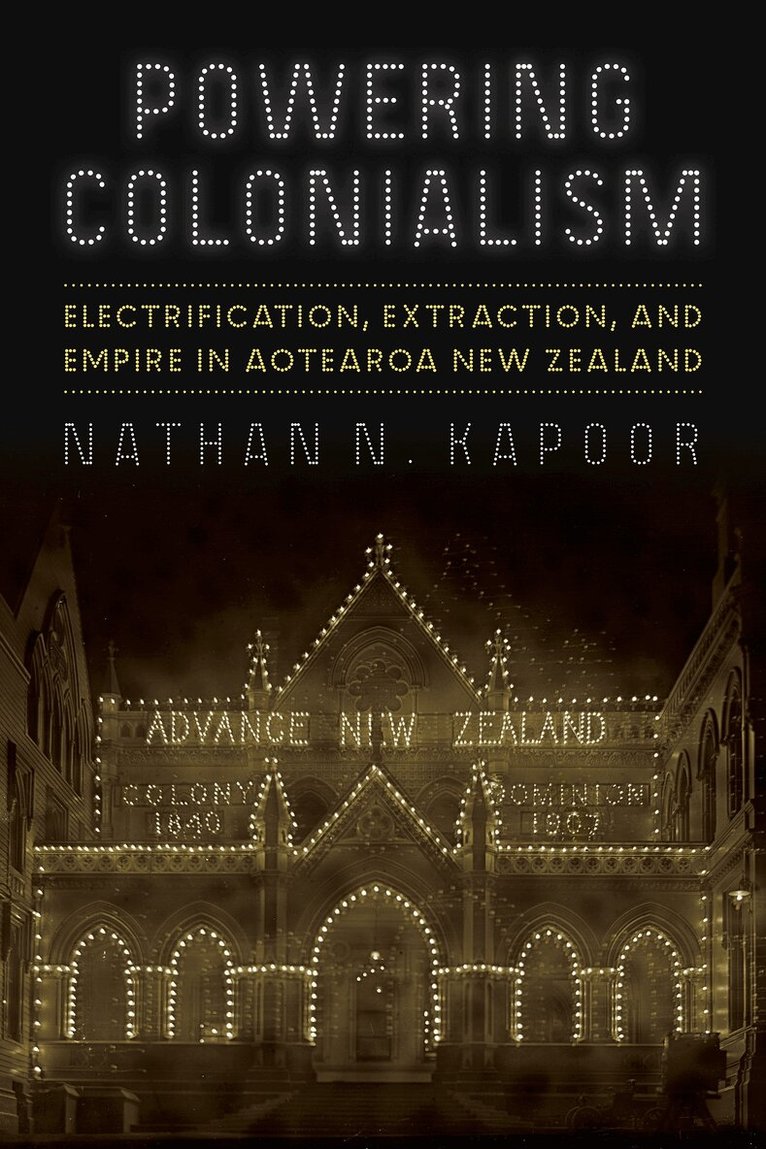
Powering Colonialism explores the history of electrification and its relationship to colonialism in Aotearoa New Zealand. Exploitative electric infrastructure, Nathan N. Kapoor argues, was not inevitable, and it was not determined by geography or a coincidence of colonization—it was by design. By the twenty-first century, hydropower provided more than half the country’s electricity. Although it is now lauded as a renewable energy source, advocates for the earliest hydroelectrification schemes were more concerned with extracting greater profits and highlighting British technological superiority. Settlers, miners, and politicians saw electricity as a tool for achieving modernity, wealth, and self-sufficiency, and Aotearoa New Zealand’s vast river system, once a barrier to colonial expansion, was now used to justify it. The electrification projects Kapoor examines in Powering Colonialism—from hydroelectric power for gold mining in the 1880s to Māori-led geothermal energy plants in use today—illustrate how, from the very beginning of Aotearoa New Zealand’s transition to electric power, settlers designed and used electric power systems in service to their colonial mission.