Nchoji Nkwi – författare
Visar alla böcker från författaren Nchoji Nkwi. Handla med fri frakt och snabb leverans.
3 produkter
3 produkter
E-bok
PDF, Engelska, 2021416 kr
Läs direkt efter köp
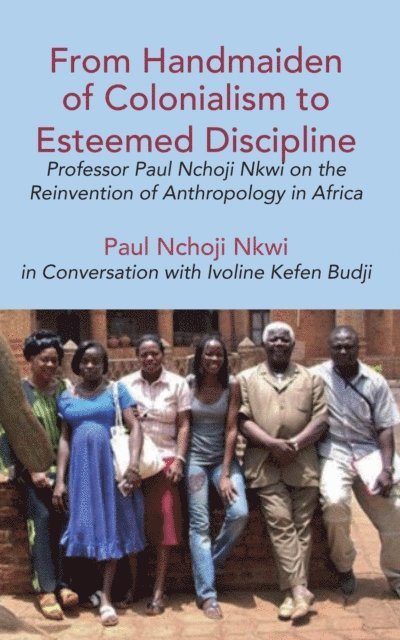
This book documents key features in the life of the father of anthropology in Cameroon, Professor Paul Nchoji Nkwi. The conversations within these pages chronicle, in his own words, how he came to anthropology and how the discipline shaped and still shapes his trajectory. One work does not suffice to elucidate all that Nkwi has contributed to the discipline of Anthropology in Cameroon and beyond; nevertheless, this book is a starting point. As the founding president of the Pan-African Association of Anthropologists (PAAA), Nkwi has been a trail blazer, sowing the seeds, nurturing the shoots, and grooming budding African anthropologists in their investigation of that great anthropological question: what it means to be human. In discussing the transformation of anthropology from the handmaiden of colonialism to the advocate of identity, voice, and a means for Africa to engage with and interact within contemporary society, Nkwi reveals insights regarding, among others, the birth and growth of the discipline in Cameroon, the founding of the PAAA, and the applicability of the subject to the changing and challenging landscape that characterizes today's globalized world. Likewise, blending theory and practice, he weaves a formidable tale of anthropological thought from an Africanist perspective through his notion of an African Pragmatic Socialism as a way of delving into, making sense of, and addressing the reality of the 21st century on the African continent and possibly beyond.
E-bok
PDF, Engelska, 20111 188 kr
Läs direkt efter köp
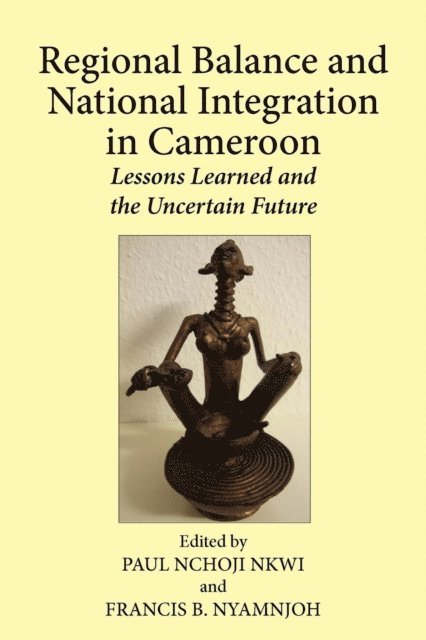
This book presents a series of reflections by Cameroon scholars on a variety of topics associated with regional balance and national integration. The different reflections look for answers to some burning questions of the day such as: Where are we coming from? Where are we going? How are we going where we are going? Have the different state ideologies offered appropriate solutions to the quest for a strong, united, stable and prosperous nation-state? If not, what has gone wrong and why? What can be done to shape the future and accommodate the aspirations of the men and women of Cameroon and of their progeny? The book addresses the issue of national unity and national integration within the context of different political perceptions and visions. It examines the merits and demerits of the policy of regional balance of the Ahmadou Ahidjo years (1960-1982). Focus is also on the underlying flaws of this doctrine and philosophy. The debate also addresses some critical questions of the national integration policy and practices of Paul Biya, President since November 1982. The policy has failed to achieve its stated goals and has ended up in the ethnicisation and polarisation of national life. The future of the Cameroon nation-state, with its rich ethnic and cultural diversity, seems to be in jeopardy as internal forces question the management of civil society by leaders who have lost the sense of justice and equity. Why are there several voices singing the song of destitution and disappointment with the state? Have regionalism and the rhetoric of national integration and balance emerged as untenable polities within a nation-state in search of an identity and responsible leadership? These are some of the questions and issues Cameroonian and Cameroonist scholars have tried to address in this collection of 28 well-researched and outstandingly argued essays.
E-bok
PDF, Engelska, 20151 045 kr
Läs direkt efter köp
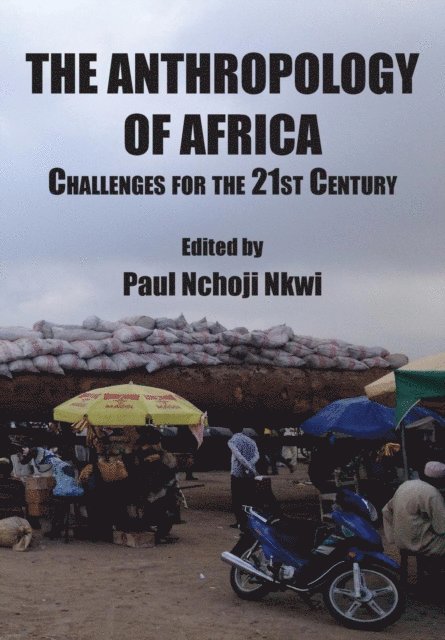
In 1999 (August 30 , September 2) the Pan African Anthropological Association (PAAA) marked the 10th anniversary of its creation by holding its 9th Annual Conference in Yaounde, Cameroon , the city and country of its birth. The conference, themed ,The Anthropology of Africa: Challenges for the 21st Century,, was attended by some seventy participants, mostly African. Among the international participants was Dr Sydel Silverman, President of the Wenner Gren Foundation at the time , a long term partner of the PAAA; she was present at the inaugural conference in 1988. The conference proceedings were initially published in 2000 with very limited circulation. Given the continued relevance of the papers presented, and in view of the call by the President of the PAAA for African anthropologists to reunite anthropological theory and practice in the teaching programmes of African universities, the PAAA is pleased to republish the proceedings of its landmark 9th Annual Conference. The book consists of forty three chapters divided into eight parts, namely: i) teaching anthropology in the decades ahead; ii) Health Challenges: HIV/AIDS Anthropological Perspectives; iii) NGOS: Use and Misuse of Anthropology; iv) Anthropological Focus on Environment; v) Some Applied Issues in Anthropology; vi) The African Family in Crisis; vii) Ethnicity and Ethnic Conflicts; and viii) Population issues and anthropology: Fertility Crisis. Paul Nkwi concludes his introduction to the volume with these words: ,The Anthropology of Africa will remain for a long time, fundamentally applied if it is to meet the challenges of the 21st Century.,