B. Nyamnjoh – författare
Visar alla böcker från författaren B. Nyamnjoh. Handla med fri frakt och snabb leverans.
24 produkter
24 produkter
E-bok
PDF, Engelska, 2020320 kr
Läs direkt efter köp
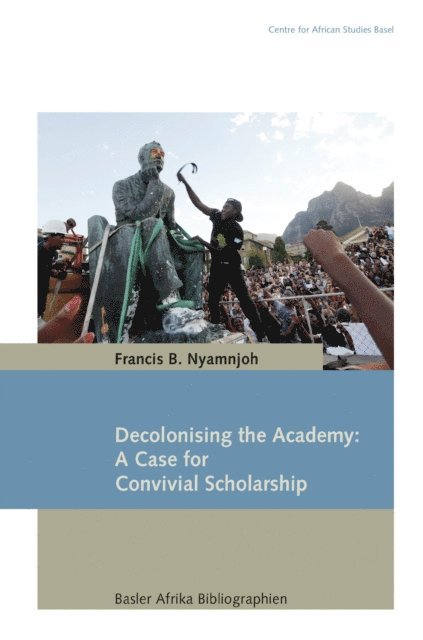
Recurrent clamours by students and academics for universities in Africa and elsewhere, to imbibe and exude a spirit of inclusion are a continual reminder that universities can and need to be much more convivial. Processes of knowledge production that champion delusions of superiority and zero-sum games of absolute winners and losers are elitist and un-convivial. Academic disciplines tend to encourage introversion and emphasise exclusionary fundamentalisms of heartlands rather than highlight inclusionary overtures of borderlands. Frequenting crossroads and engaging in frontier conversations are frowned upon, if not prohibited. The scarcity of conviviality in universities, within and between disciplines, and among scholars results in highly biased knowledge processes. The production and consumption of knowledge are socially and politically mediated by webs of humanity, hierarchies of power, and instances of human agency. Given the resilience of colonial education throughout Africa and among Africans, endogenous traditions of knowledge are barely recognised and grossly underrepresented. What does conviviality in knowledge production entail? It involves conversing and collaborating across disciplines and organisations and integrating epistemologies informed by popular universes and ideas of reality. Convivial scholarship is predicated upon recognising and providing for incompleteness � in persons, disciplines, and traditions of knowing and knowledge making.
E-bok
PDF, Engelska, 2018401 kr
Läs direkt efter köp
This book discusses the seminal role played by Edward Bernays, a nephew of Sigmund Freud, in the founding of American-style public relations � persuasive communication through manipulation of symbols � and his huge (and cynical) impact on the American economic and political scene. It provides a substantiated and convincing explanation for what is happening today in Donald Trump�s America. In the form of a history of ideas, the book makes clear that the present Trumpian manipulation of democracy and what it means to be American has a long pre-history and continues to go through different phases, involving the cultivation and institutionalisation of strong bonds between business and politics. The book shows how this is intimately linked with a science, intellectualism and practice informed by a series of binary oppositions in human action and interaction (e.g. rationality and irrationality, reason and emotion, mind and body, brain and heart, insider and outsider, us and them) and how unpredictable human nature really is. It makes a convincing argument that being human depends on how successfully we are able to negotiate such apparently contradictory binaries with the intricacies and dynamism of human agency. It is rich and thought provoking and very timely, given the exclusionary politics of fear, anger, hate and nativism we see unfolding not only in the USA but all over the world.
E-bok
PDF, Engelska, 2016561 kr
Läs direkt efter köp
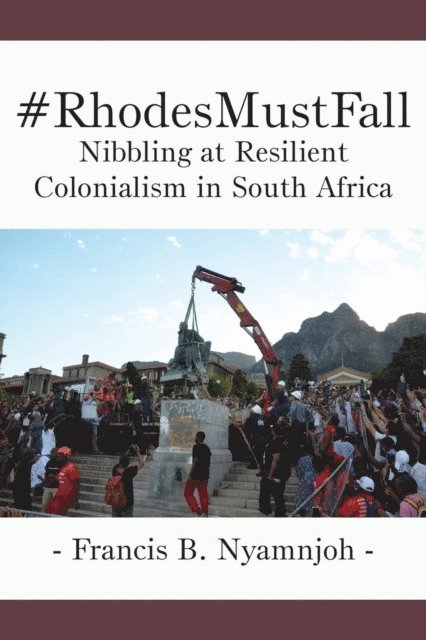
This book on rights, entitlements and citizenship in post-apartheid South Africa shows how the playing field has not been as levelled as presumed by some and how racism and its benefits persist. Through everyday interactions and experiences of university students and professors, it explores the question of race in a context still plagued by remnants of apartheid, inequality and perceptions of inferiority and inadequacy among the majority black population. In education, black voices and concerns go largely unheard, as circles of privilege are continually regenerated and added onto a layered and deep history of cultivation of black pain. These issues are examined against the backdrop of organised student protests sweeping through the country�s universities with a renewed clamour for transformation around a rallying cry of �Black Lives Matter�. The nuanced complexity of this insightful analysis of the Rhodes Must Fall movement elicits compelling questions about the attractions and dangers of exclusionary articulations of belonging. What could a grand imperialist like the stripling Uitlander or foreigner of yesteryear, Sir Cecil John Rhodes, possibly have in common with the present-day nimble-footed makwerekwere from Africa north of the Limpopo? The answer, Nyamnjoh suggests, is to be found in how human mobility relentlessly tests the boundaries of citizenship.
E-bok
PDF, Engelska, 2018573 kr
Läs direkt efter köp
This innovative book is an open invitation to a rich and copious meal of imagination, senses and desires. It argues that cannibalism is practised by all and sundry. In love or in hate, fear or fascination, purposefulness or indifference, individuals, cultures and societies are actively cannibalising and being cannibalised. The underlying message of: ‘Own up to your own cannibalism!’ is convincingly argued and richly substantiated.The book brilliantly and controversially puts cannibalism at the heart of the self-assured biomedicine, globalising consumerism and voyeuristic social media. It unveils a vast number of prejudices, blind spots and shameful othering. It calls on the reader to consider a morality and an ethics that are carefully negotiated with required sensibility and sensitivity to the fact that no one and no people have the monopoly of cannibalisation and of creative improvisation in the game of cannibalism. The productive, transformative and (re)inventive understanding of cannibalism argued in the book should bring to the fore one of the most vital aspects of what it means to be human in a dynamic world of myriad interconnections and enchantments. To nourish and cherish such a productive form of cannibalism requires not only a compassionate generosity to let in and accommodate the stranger knocking at the door, but also, and more importantly, a deliberate effort to reach in, identify, contemplate, understand, embrace and become intimate with the stranger within us, individuals and societies alike.
E-bok
PDF, Engelska, 2020573 kr
Läs direkt efter köp
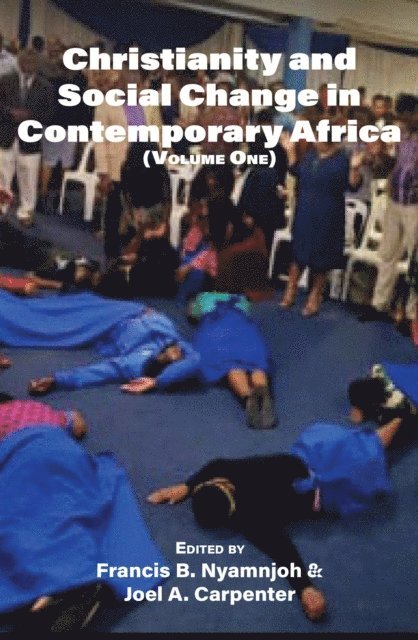
This volume brings together seven empirically grounded contributions by African social scientists of different disciplinary backgrounds. The authors explore the social impact of religious innovation and competition in present day Africa. They represent a selection from an interdisciplinary initiative that made 23 research grants for theologians and social scientists to study Christianity and social change in contemporary Africa. These contributions focus on a variety of dynamics in contemporary African religion (mostly Christianity), including gender, health and healing, social media, entrepreneurship, and inter-religious borrowing and accommodation. The volume seeks to enhance understanding of religion,s vital presence and power in contemporary Africa. It reveals problems as well as possibilities, notably some ethical concerns and psychological maladies that arise in some of these new movements, notably neo-Pentecostal and militant fundamentalist groups. Yet the contributions do not fixate on African problems and victimization. Instead, they explore sources of African creativity, resiliency and agency. The book calls on scholars of religion and religiosity in Africa to invest new conceptual and methodological energy in understanding what it means to be actively religious in Africa today.
E-bok
PDF, Engelska, 2021863 kr
Läs direkt efter köp
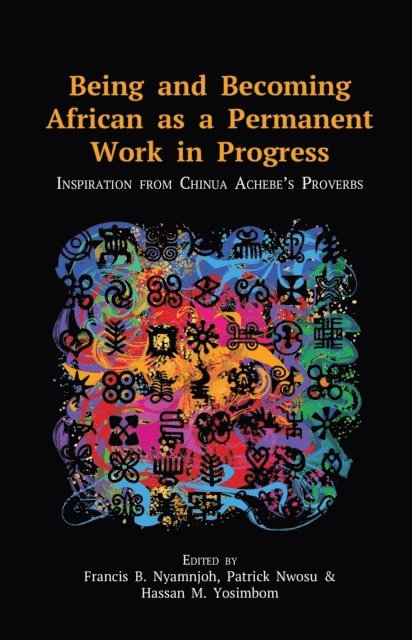
This book is a timely addition to debates and explorations on the epistemological relevance of African proverbs, especially with growing calls for the decolonisation of African curricula. The editors and contributors have chosen to reflect on the diverse ways of being and becoming African as a permanent work in progress by drawing inspiration from Chinua Achebe's harnessing of the effectualness of oratory, especially his use of proverbs in his works. The book recognises and celebrates the fact that Achebe's proverbial Igbo imaginations of being and becoming African are compelling because they are instructive about the lives, stories, struggles and aspirations of the rainbow of people that make up Africa as a veritable global arena of productive circulations, entanglements and compositeness of being. The contributions foray into how claims to and practices of being and becoming African are steeped in histories of mobilities and a myriad of encounters shaped by and inspiring of the competing and complementary logics of personhood and power that Africans have sought and seek to capture in their repertoires of proverbs. The task of documenting African proverbs and rendering them accessible in the form of a common hard currency with fascinating epistemological possibilities remains a challenge yearning for financial, scholarly, social and political attention. The book is an important contribution to John Mbiti's clarion call for an active and sustained interest in African proverbs.
E-bok
PDF, Engelska, 2022520 kr
Läs direkt efter köp
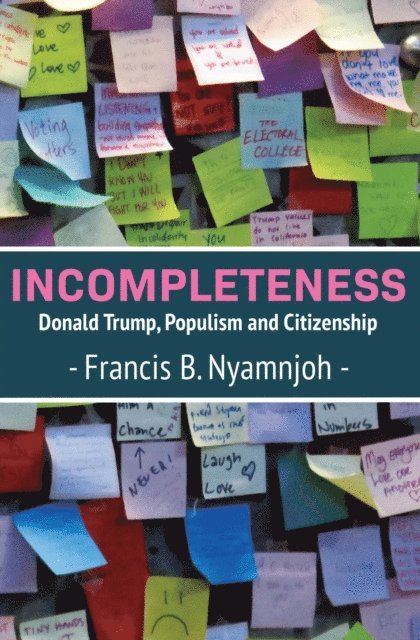
This is a study of how Donald J. Trump, his populist credentials notwithstanding, borrows without acknowledgment and stubbornly refuses to come to terms with his indebtedness. Taken together with mobility and conviviality, the principle of incompleteness enables us to distinguish between inclusionary and exclusionary forms of populism, and when it is fuelled by ambitions of superiority and zero-sum games of conquest. Nyamnjoh challenges the reader to reflect on how stifling frameworks of citizenship and belonging predicated upon hierarchies of humanity and mobility, and driven by a burning but elusive quest for completeness, can be constructively transcended by humility and conviviality inspired by taking incompleteness seriously. Nyamnjoh argues that the logic and practice of incompleteness is a healthy antidote to name-calling and scapegoating others as undesirable outsiders, depending on the brand of populism at play. Recognising incompleteness also helps to question sterile and problematic binaries such as those between elites and the impoverished masses among whom populists go to fish for political visibility, prominence and success.
E-bok
PDF, Engelska, 2022821 kr
Läs direkt efter köp
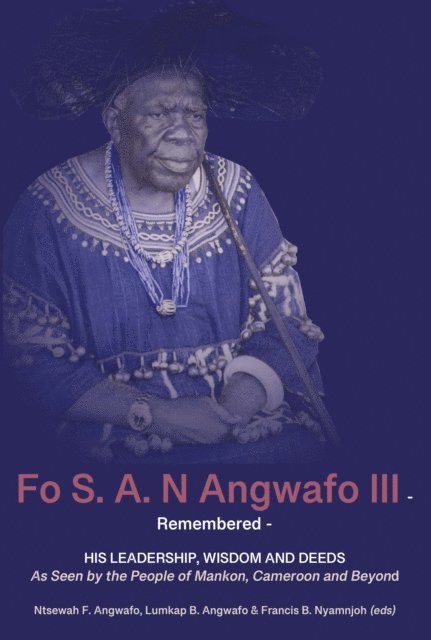
We are thrilled to share with you this rich harvest of tributes on Fo Solomon AnyeGhamoti Angwafo III of the Kingdom of Mankon. The tributes are by people and institutions from Mankon, Cameroon and the world at large, that knew him well and generously responded to our call for memories, testimonies and reflections to mark his transitioning from Atsum to join his ancestors at Alankyi. The tributers share with the reader their thoughts on various aspects of who King Solomon Angwafo III was and what he meant to them. A common thread in the tributes is the irrepressible admiration for the ideas, ideals, principles and values he championed and lived by for 97 years. His leadership, wisdom, deeds, sociality and humanity are in focus. Fo Angwafo III had a lifelong commitment to cultivation. To him, living was not just about tilling the soil for sustenance, it was also about tending the mind and the soul. He valued agriculture and culture in equal measure. In this and other aspects he was a pacesetter all his life. He had a warm heart and welcoming smile for all and sundry. In conversations and good company, his distinctive laughter brightened and lightened the weights of hearts and minds. In leadership, he distinguished himself most as a servant. Fo Angwafo III was father of both the beginner and the expert, the pupil and the teacher, the fool and the philosopher. He was the father of all: the good, the bad and the ugly. His disappearance offers us an opportunity for introspection. He leaves us in the well-cultivated hands of Fo Fru-Asah Angwafo IV, an educationist, through whom his presence and inspiration will continue to be felt, and from whom we will continue to learn.
E-bok
PDF, Engelska, 2011486 kr
Läs direkt efter köp
Life in Safang could not have been more idyllic for Ngoma and Shaka, his elder sister. Under the wings of an attendant and storytelling mother, they didn,t miss the father they hadn,t known. Later on, in the alluvial valleys of Bonfuma and the lands beyond, Ngoma experiences the thrills and challenges of schooling and being schooled. Adolescents will appreciate his stories and struggles as he tries to reconcile his village roots with the desire for a modern education. He has special relationships with his grandfather, stepfather and teachers, and becomes captain of the college football team. But growing up with a sister does not make him understand the subtleties and complexities of girls. Whether Collette or Camille, they seem to be two sides of the same coin. Ngoma successfully manoeuvres between the two, without the slightest crisis, for a while. He seeks balance between God and girls, work and pleasure, learning and mischief. While life can be well salted, it can also be bitter. Jealousy rises and he discovers who matters and who doesn,t. His life brings together the bearableness and unbearableness of belonging, of being in love and being free, of...
E-bok
PDF, Engelska, 2010549 kr
Läs direkt efter köp
Intimate Strangers tells the story of the everyday tensions of maids and madams in ways that bring together different worlds and explore various dimensions of servitude and mobility. Immaculate travels to a foreign land only to find her fianc, refusing to marry her. Operating from the margins of society, through her own ingenuity and an encounter with researcher Dr Winter-Bottom Nanny, she is able to earn some money. Will she remain at the margins or graduate into DUST - Diamond University of Science and Technology? Immaculate learns how maids struggle to make ends meet and madams wrestle to keep them in their employ. Resolved to make her disappointments blessings, she perseveres until she can take no more.
E-bok
PDF, Engelska, 2008643 kr
Läs direkt efter köp
Married But Available ventures into a theme about which people say as much as they withhold. It explores intersections between sex, money and power, challenging orthodoxies, revealing complexities and providing insights into the politics and economics of relationships. During six months of fieldwork in Mimboland, Lilly Loveless, a Muzungulander doctoral student in Social Geography, researches how sex shapes and is shaped by power and consumerism in Africa. The bulk of her research takes place on the outskirts of the University of Mimbo, an institution where nothing is what it seems. Through her astounding harvest of encounters, interviews, conversations and observations, the reader gets a captivating glimpse into the frailty and resilience of human beings and society. Lilly Loveless comes out of it all well and truly baptized. And so does the reader!
E-bok
PDF, Engelska, 2007486 kr
Läs direkt efter köp
In Mind Searching Nyamnjoh has attempted to do something rather clever - to expose, through the attitudes, feelings and thoughts of one man and a very simple story, the hypocrisy and corruption of Cameroon society and humanity in general, often using understatement and irony in good effect. The commentary is unremittingly cynical and returns again and again to corruption, callous squandering, exploitation, prostitution, and other fairly worn butts. The book depicts a society where basic freedoms are shackled, and thinking aloud treasonable. Hence the mental ramblings of the narrator and central character Judascious Fanda Yanda, in the form of an extended monologue full of observations, anecdotes and asides written from the point of view of an apparently insouciant naive. The basic method is to foreground the opinions and conversational elegance of the narrator, while having events going on as a background to his thoughts. We trace the narrator's progress from a disenchanted 'Damn? de la Terre' to a comfortably well off Private Secretary to a Vice Minister over a number of years. It is a clear illustration of how the system perpetuates its mediocrity and buys off any spark of initiative. Nyamnjoh has a good command of ironic tone and sound control over form and structure. He employs a very fluent style, and often has very urbane and neat turns of phrase. He captures the bored, superior, cynical and ultimately predatory tone of voice of his narrator extremely well.
E-bok
PDF, Engelska, 2007486 kr
Läs direkt efter köp
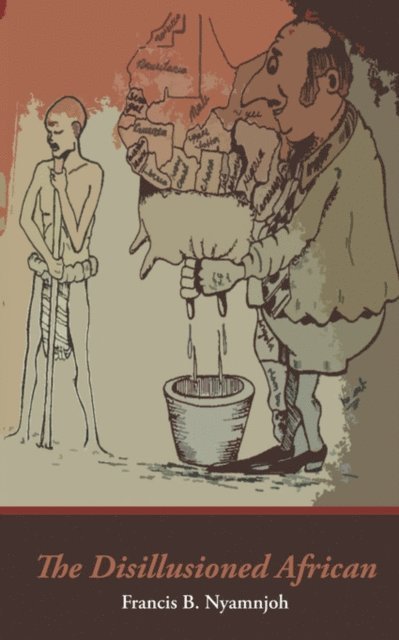
This humorous tale of the na?ve and curious African student-cum-philosopher wandering between North and South, the rural and the urban, has been in gestation for a period of nearly two decades. With allusion to traditions of the philosophical novel and the picaresque, Nyamnjoh's protagonist travels from his African village to the sharply divided and socially cruel world of 1980s Britain. By casting aside his disillusion and the traps of servitude and victimhood, The Disillusioned African reveals his creative potential for curiosity and adventure. He brings a bird's eye view, always affectionate, gently mocking, to the cultural idiosyncrasies of the new world he encounters, which throws his own African culture, politics and socio-economic realities into light relief. Praise for The Disillusioned African 'Whatever the imagined future for Africa, this courageous book will certainly provide, for both its foreign readers and the young generation of Cameroonians, a provocative insight into the complex web of despair, frustration, paradox and hope . on the eve of the 21st century.' - Louise Cuming, Catholic University of Central Africa 'In his characteristically humorous style, Nyamnjoh portrays the various social ills in society and castigates the political elite he holds largely responsible.' - Piet Konings, African Studies Centre, Leiden, The Netherlands. 'Francis Nyamnjoh . has a particular way of saying very serious things in the most unserious manner. He entertains, and in the process he moralises, he teaches, he gives you lessons. learning experience and philosophy to give you a view of the dilemma of the African.' - Sammy Beban Chumbow, Professor of Linguistics, University of Yaounde I
E-bok
PDF, Engelska, 2008643 kr
Läs direkt efter köp
"e; "e;"e;One day, Mama Ngonsu told her son: "e;"e;"e;"e;Normally, a child grew up and stayed around to help his parents. The world has changed, and things are no longer as they used to be. Things must not be normal all the time, otherwise life would not be life."e;"e;"e;"e; When Emmanuel Kwanga gets a University scholarship, he travels from the lake and hills of Abehema to the Great City. Everyone in the village has invested in him their hopes for the good life. When the life they've imagined is cut short by the University guillotine, Emmanuel Kwanga must struggle to make sense of what the good life means - for himself and for Abehema - in a world where things are no longer as they used to be. This novel is about coming of age and coming to terms in Mimboland. It is also about the fragility of life and the strength of the human spirit. The filth and screaming splendor of the city and the perplexed tranquility of the village are juxtaposed, as the tension and conviviality between tradition and modernity are lived and explored. Roads and drivers, dreams and public transport link different geographies. Faltering along or speeding away, these spaces of risk, frustration and solidarity are filled with popular songs as vehicles for understanding events and relationships. With every crossing of the Pont de Maturit? the story flows, and its mysteries surge. In this novel, the worlds of the living and the dead intermingle, as do the natural and the supernatural, the visible and the invisible."e;"e;"e;
E-bok
PDF, Engelska, 2007486 kr
Läs direkt efter köp
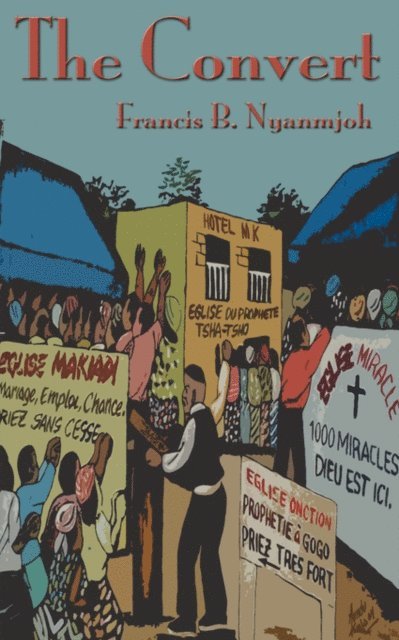
"e; "e;"e;This play tackles the theatrically attractive but ethically complex issue of Christian fundamentalism. Nyamnjoh, as a sociologist is well qualified to explore the social problems and psychological pressures which give rise to the born-again phenomenon, and the strong appeal of fundamentalist religion. The Convert, however is no schematic sociological tract. It deals with the conflicting imperatives in 21st century West Africa, which push ordinary people into extraordinary situations, and provides no easy solutions to the issues raised. Although the play revolves around the Ultimate Church of Christ and the four main characters affected by it, the audience is given a deftly sketched picture of a corrupt world beyond it, lacking in spiritual or community values. [..] The characterization. is remarkable for its avoidance of any obvious protagonist; the audience is allowed no clear character with whom to identify. The four main characters . have both virtues and flaws, each providing insights into ways the consumer-oriented materialism of modern life impacts upon African spirituality and community values. - David Kerr, Professor in Literature and Drama, University of Botswana "e;"e;"e;"e;At the core of the implicit philosophy in Nyamnjoh's The Convert . is the theatrical manifesto that contemporary society has not only to liberate itself, and its productive powers from 'Pentecostal', freak religions and distortion, it also has to liberate these same productive capacities from their present prostration. There is a deep, engaging humanism that pervades The Convert, but it is a humanism emblematic, to speak analogously, of the Aeschylean variety."e;"e;"e;"e; - Bate Besong, Africa Review of Books."e;"e;"e;
E-bok
PDF, Engelska, 2011455 kr
Läs direkt efter köp
In this juvenalia, his first collection of poems, Francis Nyamnjoh takes the reader back in time, even as the past catches up with the present, to show how unchanging and even painful life can be. Accordingly, the poems celebrate, mourn, ridicule, lambast, and lament, thereby highlighting Nyamnjoh,s characteristic fascination with the plight of the person in society, a picture which reaffirms his already established role as the conscience of spaces, especially those African.
E-bok
PDF, Engelska, 2007486 kr
Läs direkt efter köp
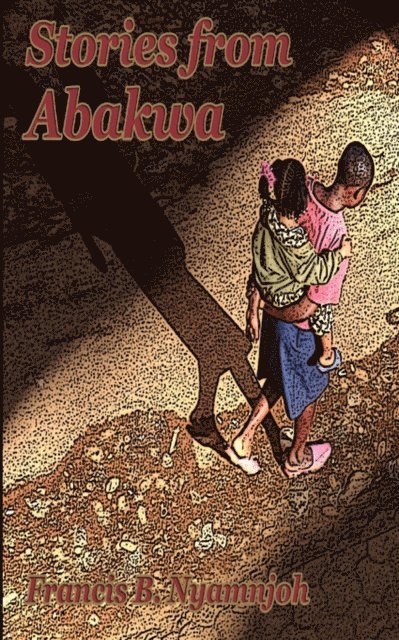
Childhood and growing up in Mimboland, Cameroon are infused with fascinating stories and adventures. Discover life in Abakwa with Tom and his friend, as they are chased through an orchard for secretly harvesting avocadoes and mangoes. Smile as Mathias Chi's overloaded canoe almost loses balance. Shiver as Roland runs through the dark streets and bleeding corridors of Mvog Mvog. And cry when Big Brother discovers how his siblings suffered when he was away at school. What happens to Esther when she finds the courage to make an announcement at the Abakwa Mountain Foot Radio Station about her husband's disappearance? Will Prudencia and Collette kill or give life? How does Prisca Lum deal with her dwarf husband? Some characters will remind you of people you know - or even of yourself. Drum beats and church bells, thunder and lightning, princes and princesses, visions and deceptions fill the pages. Discover your favorite stories waiting to be told and retold, again and again.
E-bok
PDF, Engelska, 2011773 kr
Läs direkt efter köp
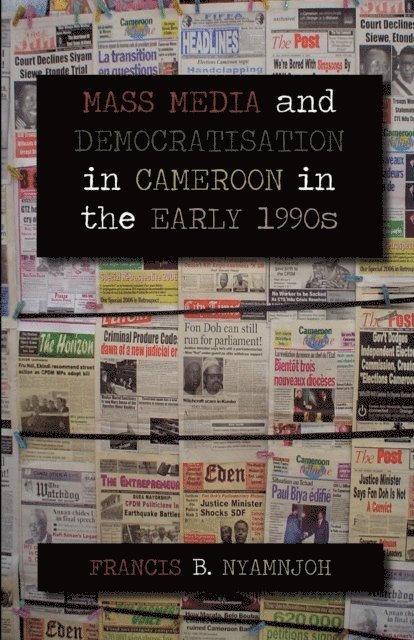
In the on-going democratic debate, the Cameroonian media have not played the role of objective mediators. A one-party logic, of which government, opposition and the public are guilty, has prevented Cameroonian multipartyism from addressing the major issue: that of how best to bring about real participatory democracy. So far, democracy has served mainly as a face powder, an empty concept or slogan devoid of concrete meaning used to justify reactionary propaganda by the ruling party and its acolytes on the one hand, and revolutionary propaganda by the opposition and some pressure groups on the other. This polarisation in the Cameroonian political arena corresponds to a similar polarisation in the Cameroonian media. One can identify two main political tendencies in the media: first, there are those who argue that all the government does is good and in the best interest of Cameroon, and that the radical opposition is void of patriots and motivated only by selfish, regional, or ethnic self-interests. These comprise the publicly owned, government-controlled electronic and print media on the one hand, and pro-government ,privately, owned newspapers on the other. Second, there are those who claim that all the radical opposition does or stands for is in the best interest of Cameroon, and that the government and its allies are only motivated by a stubborn love of power and other selfish pursuits. These comprise the bulk of the privately owned papers. The media are polarised into two diametrically opposing camps, each claiming to know and represent the best interests of the Cameroonian people.
E-bok
PDF, Engelska, 20111 188 kr
Läs direkt efter köp
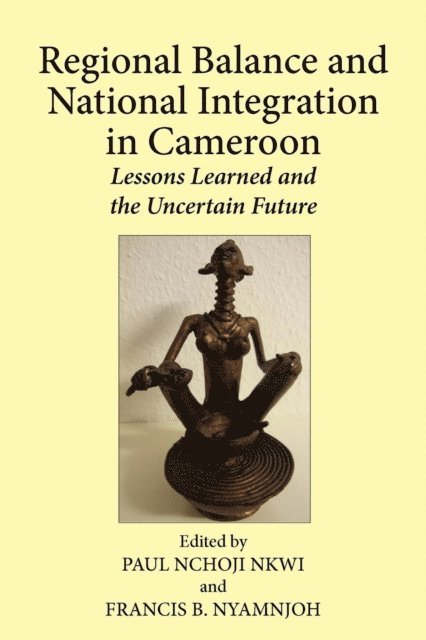
This book presents a series of reflections by Cameroon scholars on a variety of topics associated with regional balance and national integration. The different reflections look for answers to some burning questions of the day such as: Where are we coming from? Where are we going? How are we going where we are going? Have the different state ideologies offered appropriate solutions to the quest for a strong, united, stable and prosperous nation-state? If not, what has gone wrong and why? What can be done to shape the future and accommodate the aspirations of the men and women of Cameroon and of their progeny? The book addresses the issue of national unity and national integration within the context of different political perceptions and visions. It examines the merits and demerits of the policy of regional balance of the Ahmadou Ahidjo years (1960-1982). Focus is also on the underlying flaws of this doctrine and philosophy. The debate also addresses some critical questions of the national integration policy and practices of Paul Biya, President since November 1982. The policy has failed to achieve its stated goals and has ended up in the ethnicisation and polarisation of national life. The future of the Cameroon nation-state, with its rich ethnic and cultural diversity, seems to be in jeopardy as internal forces question the management of civil society by leaders who have lost the sense of justice and equity. Why are there several voices singing the song of destitution and disappointment with the state? Have regionalism and the rhetoric of national integration and balance emerged as untenable polities within a nation-state in search of an identity and responsible leadership? These are some of the questions and issues Cameroonian and Cameroonist scholars have tried to address in this collection of 28 well-researched and outstandingly argued essays.
E-bok
PDF, Engelska, 20111 002 kr
Läs direkt efter köp
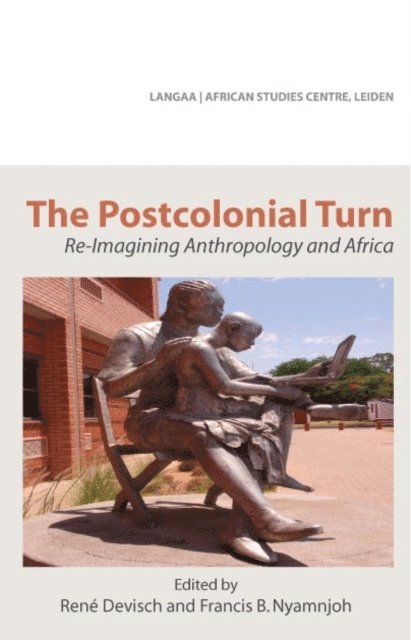
This innovative book is a forward-looking reflection on mental decolonisation and the postcolonial turn in Africanist scholarship. As a whole, it provides five decennia-long lucid and empathetic research involvements by seasoned scholars who came to live, in local people,s own ways, significant daily events experienced by communities, professional networks and local experts in various African contexts. The book covers materials drawn from Botswana, Cameroon, the Democratic Republic of Congo, Mozambique, Nigeria, South Africa and Tanzania. Themes include the Whelan Research Academy, rap musicians, political leaders, wise men and women, healers, Sacred Spirit churches, diviners, bards and weavers who are deemed proficient in the classical African geometrical knowledge. As a tribute to late Archie Mafeje who showed real commitment to decolonise social sciences from western-centred modernist development theories, commentators of his work pinpoint how these theories sought to dismiss the active role played by African people in their quest for self-emancipation. One of the central questions addressed by the book concerns the role of an anthropologist and this issue is debated against the background of the academic lecture delivered by Ren, Devisch when receiving an honorary doctoral degree at the University of Kinshasa. The lecture triggered critical but constructive comments from such seasoned experts as Valentin Mudimbe and Wim van Binsbergen. They excoriate anthropological knowledge on account that the anthropologist, notwithstanding his or her social and cognitive empathy and intense communication with the host community, too often fails to also question her own world and intellectual habitus from the standpoint of her hosts. Leading anthropologists carry further into great depth the bifocal anthropological endeavour focussing on local people,s re-imagining and re-connecting the local and global. The book is of interest to a wide readership in the humanities, social sciences, philosophy and the history of the African continent and its relation with the North.
E-bok
PDF, Engelska, 2012796 kr
Läs direkt efter köp
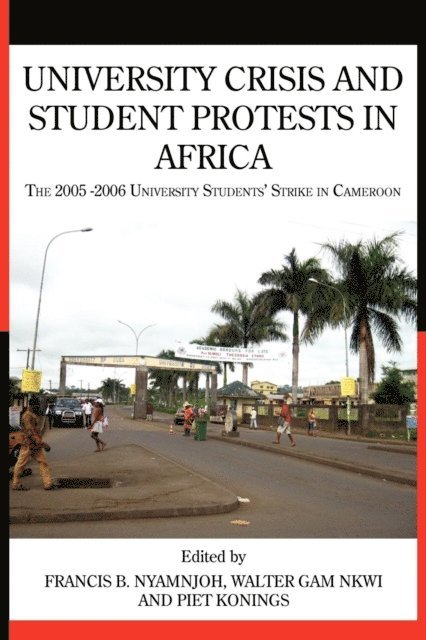
Faced with a deepening crisis in their universities, African students have demonstrated a growing activism and militancy. They have been engaged in numerous, often violent, strikes for improvements in their deteriorating living and study conditions and the introduction of a democratic culture in the universities and society as a whole, including the right to express their views, organise in student unions and participate in university management. This book focuses on a recent violent strike action in Cameroon,s state universities, with special attention to the University of Buea , the only English-speaking university in the country between 1993 and 2011. Such a detailed study on student strikes is still rare in African studies, and maybe even more important, this book pays special attention to certain elements that have been of great significance to the strike but are often overlooked in narratives of other student actions in Africa, namely the use of cell phones, differences in gender roles of student activists, the religious dimensions of the strike, the central role of some public spaces like bars and caf,s for the planning and execution of student strikes, and the power of the photocopier. The book goes far beyond simply documenting the various protest actions of students against the state and university authorities. It also provides ample room for comments from journalists and other civil-society members and groups on various aspects of the strike.
E-bok
PDF, Engelska, 2015530 kr
Läs direkt efter köp
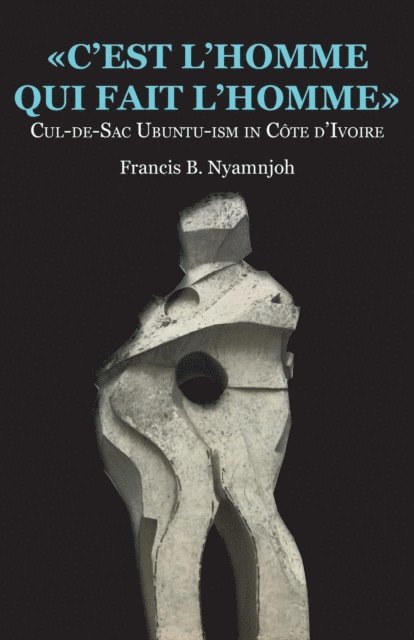
The idea that human beings are inextricably bound to one another is at the heart of this book about African agency, especially drawing on the African philosophy Ubuntu, with its roots in human sociality and inclusivity. Ubuntu,s precepts and workings are severely tested in these times of rapid change and multiple responsibilities. Africans negotiate their social existence between urban and rural life, their continental and transcontinental distances, and all the market forces that now impinge, with relationships and loyalties placed in question. Between ideal and reality, dreams and schemes, how is Ubuntu actualized, misappropriated and endangered? The book unearths the intrigues and contradictions that go with inclusivity in Africa. Basing his argument on the ideals of trust, conviviality and support embodied in the concept of Ubuntu, Francis Nyamnjoh demonstrates how the pursuit of personal success and even self-aggrandizement challenges these ideals, thus leading to discord in social relationships. Nyamnjoh uses a popular Ivorian drama with the same title to substantiate life-world realities and more importantly to demonstrate that new forms of expression, from popular drama to fiction, thicken and enrich the ethnographic component in current anthropology.
E-bok
PDF, Engelska, 2015416 kr
Läs direkt efter köp
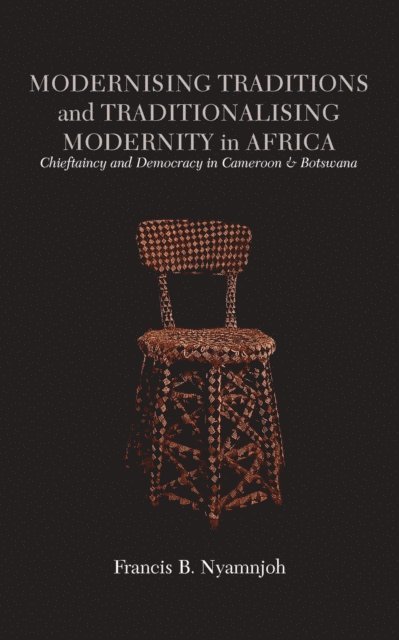
Chieftaincy in Africa has displayed remarkable dynamics and adaptability to new socio-economic and political developments, without becoming totally transformed in the process. Almost everywhere on the continent, chiefdoms and chiefs have become active agents in the quest for ethnic, cultural symbols as a way of maximising opportunities at the centre of bureaucratic and state power, and at the home village where control over land and labour often require both financial and symbolic capital. Chieftaincy remains central to ongoing efforts at developing democracy and accountability in line with the expectations of Africans as individual ,citizens, and also as ,subjects, of various cultural communities. This book uses Cameroon and Botswana as case studies, to argue that the rigidity and prescriptiveness of modernist partial theories have left a major gap in scholarship on chiefs and chieftaincy in Africa. It stresses that studies of domesticated agency in Africa are sorely needed to capture the creative ongoing processes and to avoid overemphasising structures and essentialist perceptions on chieftaincy and the cultural communities that claim and are claimed by it.
E-bok
PDF, Engelska, 2017627 kr
Läs direkt efter köp
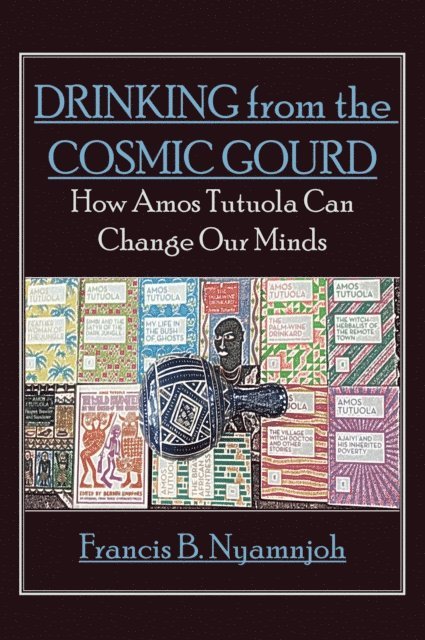
This book questions colonial and apartheid ideologies on being human and being African, ideologies that continue to shape how research is conceptualised, taught and practiced in universities across Africa. Africans immersed in popular traditions of meaning-making are denied the right, by those who police the borders of knowledge, to think and represent their realities in accordance with the civilisations and universes they know best. Often, the ways of life they cherish are labelled and dismissed too eagerly as traditional knowledge by some of the very African intellectual elite they look to for protection. The book makes a case for sidestepped traditions of knowledge. It draws attention to Africa�s possibilities, prospects and emergent capacities for being and becoming in tune with its creativity and imagination. It speaks to the nimble-footed flexible-minded �frontier African� at the crossroads and junctions of encounters, facilitating creative conversations and challenging regressive logics of exclusionary identities. The book uses Amos Tutuola�s stories to question dualistic assumptions about reality and scholarship, and to call for conviviality, interconnections and interdependence between competing knowledge traditions in Africa.