U. Nwosu – författare
Visar alla böcker från författaren U. Nwosu. Handla med fri frakt och snabb leverans.
2 produkter
2 produkter
E-bok
PDF, Engelska, 2018959 kr
Läs direkt efter köp
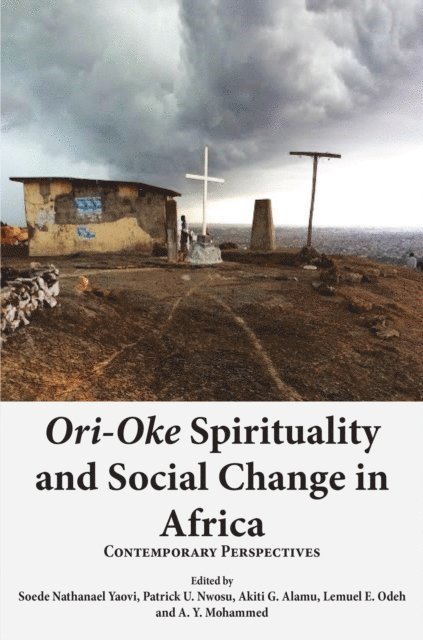
The dynamic nature of Christianity has necessitated its movement from the cathedral to the mountain top. This has occasioned a proliferation of Prayer Mountains throughout Africa. In Yorubaland of southwestern Nigeria, Prayer Mountain is known as Ori-Oke. Like many communities in Africa, the Yoruba are confronted with fundamental challenges in life for which people do not rest until they find solutions. Within the praxis of Nigerian Christian lexicon Ori-Oke is synonymous with the enactment of a sacred space on a mountain top characterised by various prayer regimes, rituals, exorcism and religious practices, aimed at eliciting the help of the divine to alleviate the existential challenges of devotees. This book explores the resacralisation of space on the mountains, highlighting how humans and the divine interact in Yorubaland. It brings into conversation 35 empirically rich scholarly essays on the role of Ori-Oke to those seeking divine intervention in their lives. Today, Ori-Oke have become centres of pilgrimage as a result of the lived experiences of devotees, creating unique religious value quite distinct from the aesthetic value of these mountain tops. The spirituality of Ori-Oke is anchored on the absolute belief in God and the infusion of traditional African worldview sensibilities in religious rites and worship. Ori-Oke spirituality employs resources of Christian tradition, introduced by the formal agents of Christianity, synthesised with traditional culture, to develop a life based on the precepts of an African Christianity. The book is an intellectual discourse on Ori-Oke spirituality, reflecting its contemporary relevance in a context of religious innovation and competition.
E-bok
PDF, Engelska, 2021863 kr
Läs direkt efter köp
This book is a timely addition to debates and explorations on the epistemological relevance of African proverbs, especially with growing calls for the decolonisation of African curricula. The editors and contributors have chosen to reflect on the diverse ways of being and becoming African as a permanent work in progress by drawing inspiration from Chinua Achebe's harnessing of the effectualness of oratory, especially his use of proverbs in his works. The book recognises and celebrates the fact that Achebe's proverbial Igbo imaginations of being and becoming African are compelling because they are instructive about the lives, stories, struggles and aspirations of the rainbow of people that make up Africa as a veritable global arena of productive circulations, entanglements and compositeness of being. The contributions foray into how claims to and practices of being and becoming African are steeped in histories of mobilities and a myriad of encounters shaped by and inspiring of the competing and complementary logics of personhood and power that Africans have sought and seek to capture in their repertoires of proverbs. The task of documenting African proverbs and rendering them accessible in the form of a common hard currency with fascinating epistemological possibilities remains a challenge yearning for financial, scholarly, social and political attention. The book is an important contribution to John Mbiti's clarion call for an active and sustained interest in African proverbs.