Neil Woodford – författare
Visar alla böcker från författaren Neil Woodford. Handla med fri frakt och snabb leverans.
6 produkter
6 produkter
Inbunden, Engelska, 1998
1 681 kr
Skickas inom 10-15 vardagar
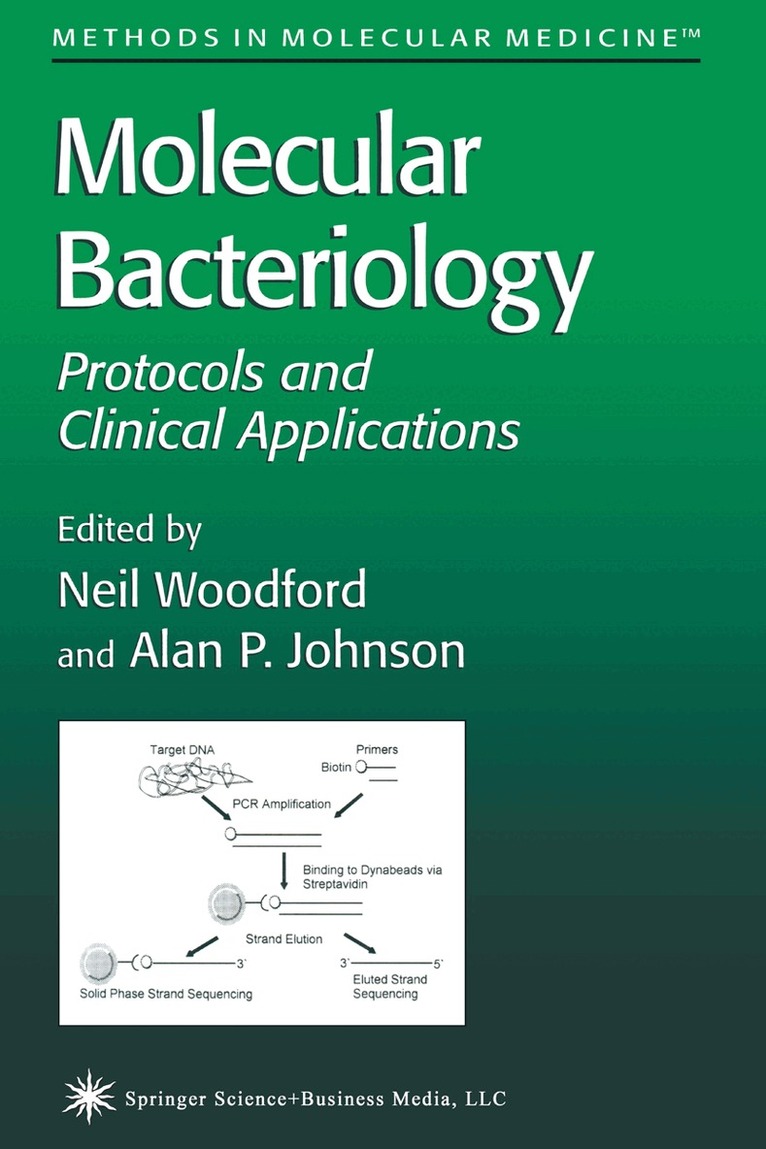
The enormous advances in molecular biology that have been witnessed in . Not recent years have had major impacts on many areas of the biological sciences least of these has been in the field of clinical bacteriology and infectious disease . Molecular Bacteriology: Protocols and ClinicalApplications aims to provide the reader with an insight into the role that molecular methodology has to play in modern medical bacteriology. The introductory chapter ofMolecular Bacteriology: ProtocolsandCli- cal Applications offers a personal overview by a Consultant Medical Microbio- gist of the impact and future potential offered by molecular methods. The next six chapters comprise detailed protocols for a range of such methods . We believe that the use of these protocols should allow the reader to establish the various methods described in his or her own laboratory. In selecting the methods to be included in this section, we have concentrated on those that, arguably, have greatest current relevance to reference clinical bacteriology laboratories; we have deliberately chosen not to give detailed protocols for certain methods, such as multilocus enzyme electrophoresis that, in our opinion, remain the preserve of specialist la- ratories and that are not currently suited for general use. We feel that the methods included in this section will find increasing use in diagnostic laboratories and that it is important that the concepts, advantages, and limitations of each are th- oughly understood by a wide range of workers in the field .
Inbunden, Engelska, 2004
1 681 kr
Skickas inom 10-15 vardagar
An accessible introduction to how genomics has and will provide novel methods for bacterial investigation and advance our understanding and knowledge of bacterial pathogenicity. The authors critically evaluate the applications of genomics to diagnostic bacteriology, highlighting both current and likely future uses, describing real-time PCR methods, and outlining the promise of microarrays in clinical bacteriology. Their discussion examines in detail genomic approaches to antibacterial discovery, the nature of pathogenicity, the discovery of new pathogens, the exploration of the concept of clonality in bacteria, and bacterial taxonomics.
E-bok
Engelska, 20081 579 kr
Läs direkt efter köp
The enormous advances in molecular biology that have been witnessed in . Not recent years have had major impacts on many areas of the biological sciences least of these has been in the field of clinical bacteriology and infectious disease . Molecular Bacteriology: Protocols and ClinicalApplications aims to provide the reader with an insight into the role that molecular methodology has to play in modern medical bacteriology. The introductory chapter ofMolecular Bacteriology: ProtocolsandCli- cal Applications offers a personal overview by a Consultant Medical Microbio- gist of the impact and future potential offered by molecular methods. The next six chapters comprise detailed protocols for a range of such methods . We believe that the use of these protocols should allow the reader to establish the various methods described in his or her own laboratory. In selecting the methods to be included in this section, we have concentrated on those that, arguably, have greatest current relevance to reference clinical bacteriology laboratories; we have deliberately chosen not to give detailed protocols for certain methods, such as multilocus enzyme electrophoresis that, in our opinion, remain the preserve of specialist la- ratories and that are not currently suited for general use. We feel that the methods included in this section will find increasing use in diagnostic laboratories and that it is important that the concepts, advantages, and limitations of each are th- oughly understood by a wide range of workers in the field .
2 401 kr
Skickas
Internationally-renowned authors have prepared state-of-the-art review on the application of proteomic and genomic advances to clinical bacteriology. They cover the principles of bacterial genomics, the application of genomics to diagnostic bacteriology and protocols for interrogating bacterial genomes. This book will bring all clinical bacteriologists up-to-date with the significant advancements that genome sequencing has had on the field and enable them to turn these into tangible advances, with resulting benefits for patient care and management.
Häftad, Engelska, 2010
1 235 kr
Skickas inom 10-15 vardagar
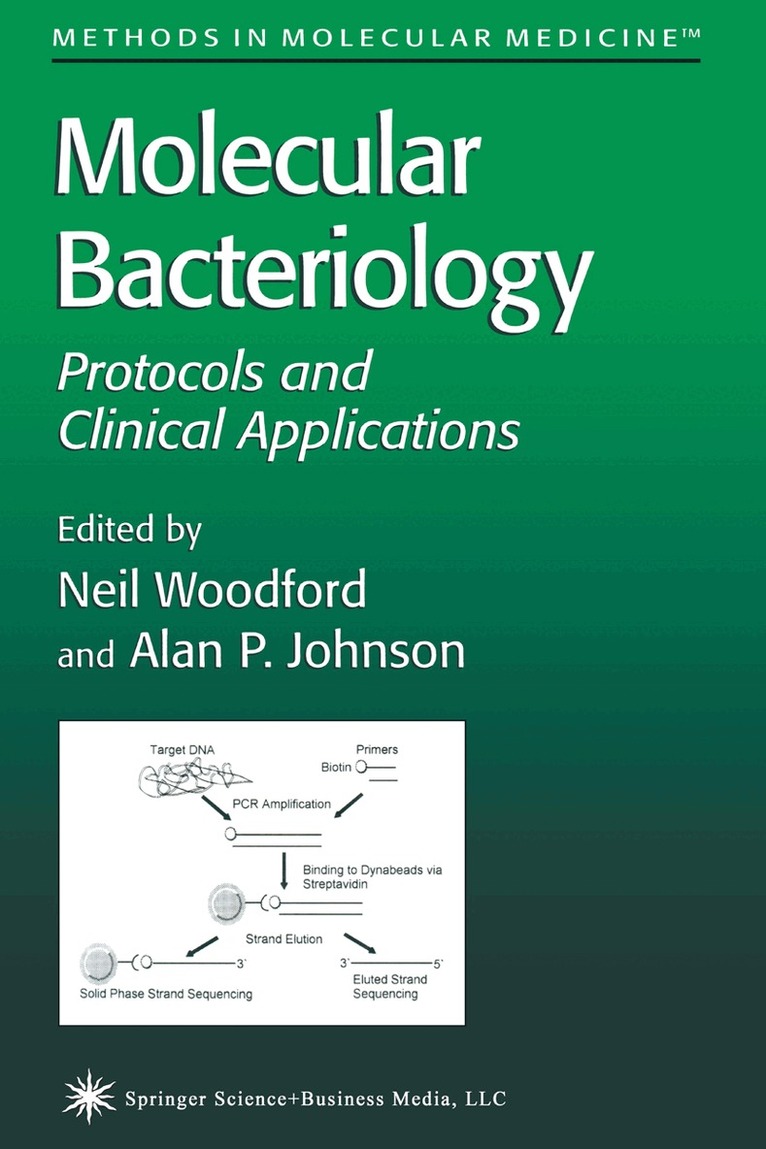
In Molecular Bacteriology: Protocols and Clinical Applications, Woodford and Johnson bring together in a single volume a state-of-the-art collection of detailed molecular methods for the diagnosis and clinical investigation of bacterial infections. These wide ranging techniques-each presented by recognized experts who have fine-tuned their methods for optimum performance-will permit readers to establish them successfully in their own laboratories. An accompanying series of minireviews highlights and explains the clinical and epidemiological relevance of the techniques and shows how they may be applied to major pathogen species and various types of antibiotic resistance. Molecular Bacteriology: Protocols and Clinical Applications enlarges our current understanding of the role that molecular methodology can play in modern medical bacteriology, fully explaining both the practical and theoretical aspects of the cutting-edge methods that are increasingly finding diagnostic use in laboratories throughout the world. An authoritative laboratory resource for everyone working with infectious diseases today, this book's insightful reviews and detailed protocols will soon win many devotees.
Häftad, Engelska, 2010
1 633 kr
Skickas inom 10-15 vardagar
Gazing into crystal balls is beyond the expertise of most scientists. Yet, as we look further into the 21st century, one does not have to be Nostradamus to predict that the current genomics and proteomics "revolution" will have an immense impact on medical bacteriology. This impact is already being re- ized in many academic departments, and although encroachment on routine diagnostic bacteriology, particularly in the hospital setting, is likely to occur at a slower pace, it remains nonetheless inevitable. Therefore, it is important that no one working in bacteriology should find themselves distanced from these fundamental developments. The involvement of all clinical bacteriologists is essential if the significant achievements of genome sequencing and analysis are to be turned into tangible advances, with resulting benefits for patient care and m- agement. It is our hope that Genomics, Proteomics, and Clinical Bacteriology: Methods and Reviews will play a part in bringing such a development to fruition. The advances in genomics and proteomics have already given us frequent opportunities to reassess our knowledge and understanding of established b- terial adversaries, and have provided us with the means to identify new foes. The new knowledge gained is enabling us to reconsider, for example, our c- cepts of bacterial pathogenicity, phylogeny and novel targets for antibacterial chemotherapy. These topics, and others, are considered in Genomics, Proteomics, and Clinical Bacteriology: Methods and Reviews.