Nella Van Dyke – författare
Visar alla böcker från författaren Nella Van Dyke. Handla med fri frakt och snabb leverans.
6 produkter
Strategic Alliances
Coalition Building and Social Movements
Av Nella Van Dyke, Holly J. McCammon
Häftad, 2010
304 kr
Lägg i varukorg
Social researchers in the past have paid surprisingly little theoretical or empirical attention to movement alliances. Strategic Alliances provides a pioneering set of in-depth analyses of the circumstances leading to these organizational alliances. Contributors investigate coalition dynamics among …
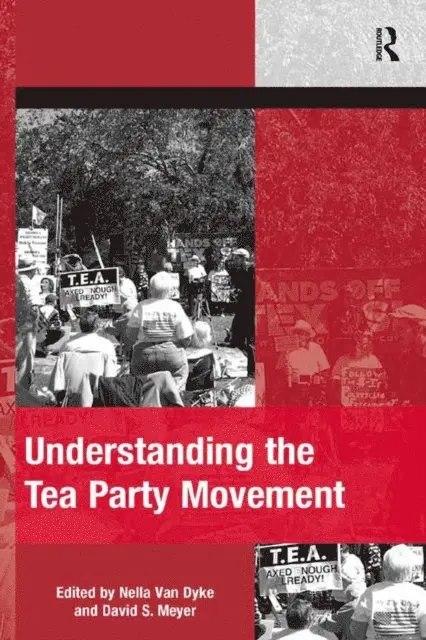
Understanding the Tea Party Movement
Av Nella Van Dyke, David S. Meyer
E-bok, 2016
1074 kr
Lägg i varukorg
Hailing themselves as heirs to the American Revolution, the Tea Party movement staged tax day protests in over 750 US cities in April 2009, quickly establishing a large and volatile social movement. Tea Partiers protested at town hall meetings about health care across the country in August, leading …
Understanding the Tea Party Movement
Av Nella Van Dyke, David S. Meyer
E-bok, 2016
1074 kr
Lägg i varukorg
Hailing themselves as heirs to the American Revolution, the Tea Party movement staged tax day protests in over 750 US cities in April 2009, quickly establishing a large and volatile social movement. Tea Partiers protested at town hall meetings about health care across the country in August, leading …
Understanding the Tea Party Movement
Av Nella Van Dyke, David S. Meyer
Inbunden, 2014
2516 kr
Lägg i varukorg
Hailing themselves as heirs to the American Revolution, the Tea Party movement staged tax day protests in over 750 US cities in April 2009, quickly establishing a large and volatile social movement. Tea Partiers protested at town hall meetings about health care across the country in August, leading …
Understanding the Tea Party Movement
Av Nella Van Dyke, David S. Meyer
Häftad, 2014
911 kr
Lägg i varukorg
Hailing themselves as heirs to the American Revolution, the Tea Party movement staged tax day protests in over 750 US cities in April 2009, quickly establishing a large and volatile social movement. Tea Partiers protested at town hall meetings about health care across the country in August, leading …
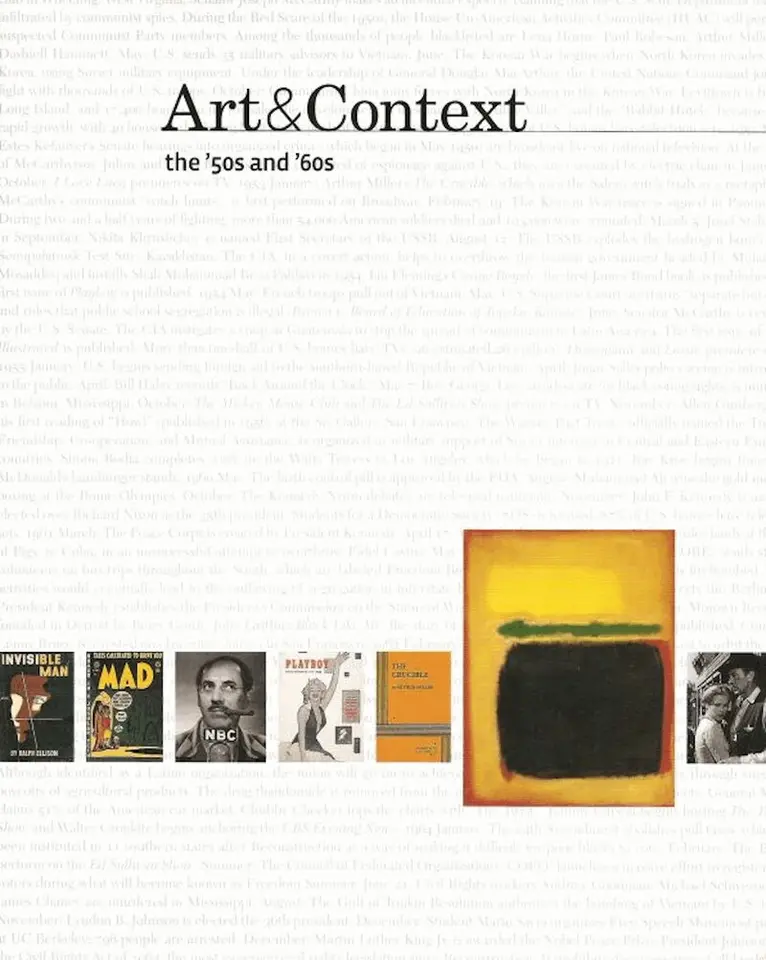
Art and Context
The '50s and '60s
Av Chris Bruce, Nella Van Dyke m. fl.
Inbunden, 2006
296 kr
Tillfälligt slut
Prior to the 1960s, art objects were viewed as wholly distinct from non-art. But by mid-decade, that perspective was being challenged by artists such as Andy Warhol, whose Brillo Boxes looked exactly like the real ones; Roy Lichtenstein, whose paintings imitated comic book pages; and Carl Andre, …