Niccolo Innocenti – författare
Visar alla böcker från författaren Niccolo Innocenti. Handla med fri frakt och snabb leverans.
8 produkter
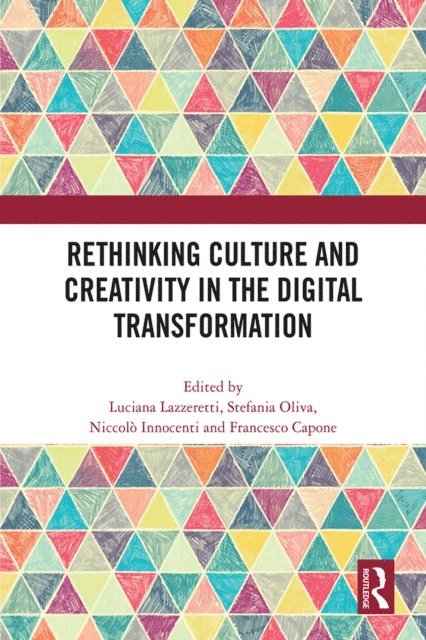
Rethinking Culture and Creativity in the Digital Transformation
Av Francesco Capone, Niccolo Innocenti m. fl.
E-bok, 2023
762 kr
Lägg i varukorg
This book discusses the role of digital technologies in the growth and development of cultural organizations and the creative sector. It includes contributions by authoritative scholars who address this topic through different perspectives, methodologies and approaches. The first part of the volume …
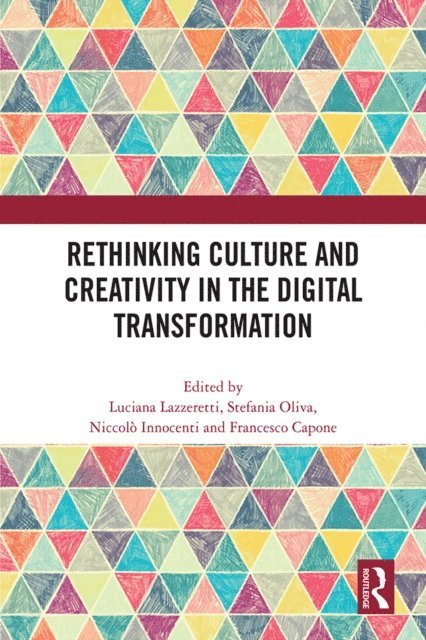
Rethinking Culture and Creativity in the Digital Transformation
Av Francesco Capone, Niccolo Innocenti m. fl.
E-bok, 2023
762 kr
Lägg i varukorg
This book discusses the role of digital technologies in the growth and development of cultural organizations and the creative sector. It includes contributions by authoritative scholars who address this topic through different perspectives, methodologies and approaches. The first part of the volume …
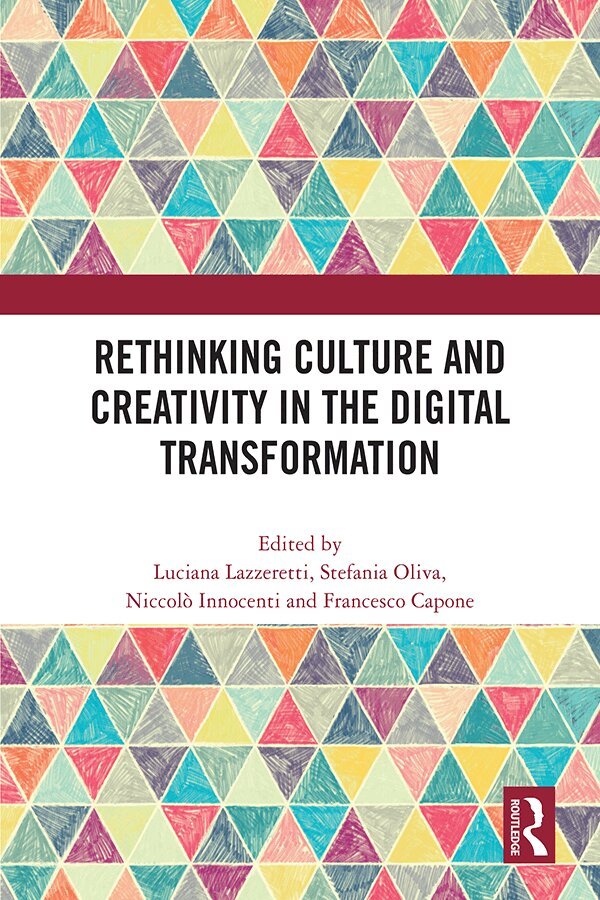
Rethinking Culture and Creativity in the Digital Transformation
Av Luciana Lazzeretti, Stefania Oliva m. fl.
Inbunden, 2023
2133 kr
Lägg i varukorg
This book discusses the role of digital technologies in the growth and development of cultural organizations and the creative sector. It includes contributions by authoritative scholars who address this topic through different perspectives, methodologies and approaches.The first part of the volume …
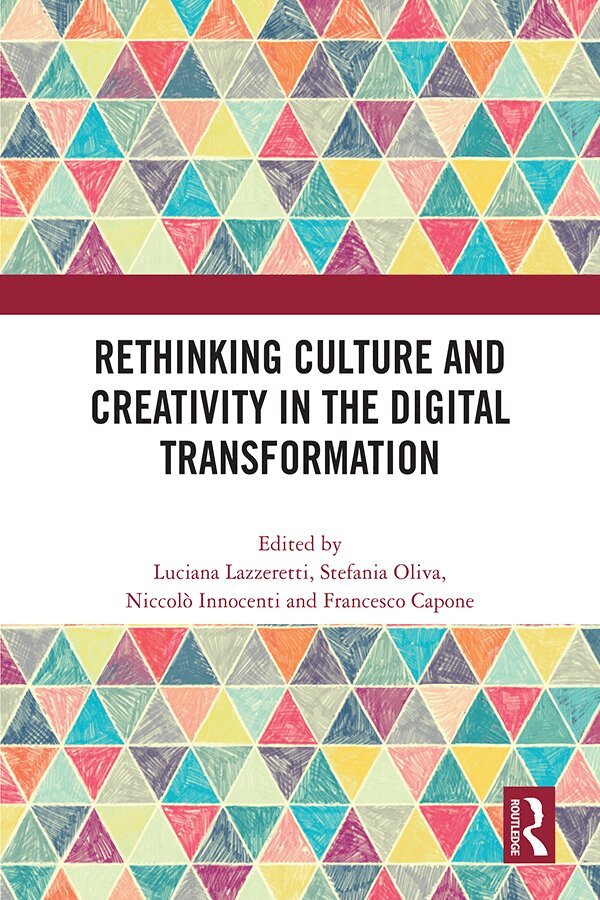
Rethinking Culture and Creativity in the Digital Transformation
Av Luciana Lazzeretti, Stefania Oliva m. fl.
Häftad, 2024
648 kr
Lägg i varukorg
This book discusses the role of digital technologies in the growth and development of cultural organizations and the creative sector. It includes contributions by authoritative scholars who address this topic through different perspectives, methodologies and approaches.The first part of the volume …
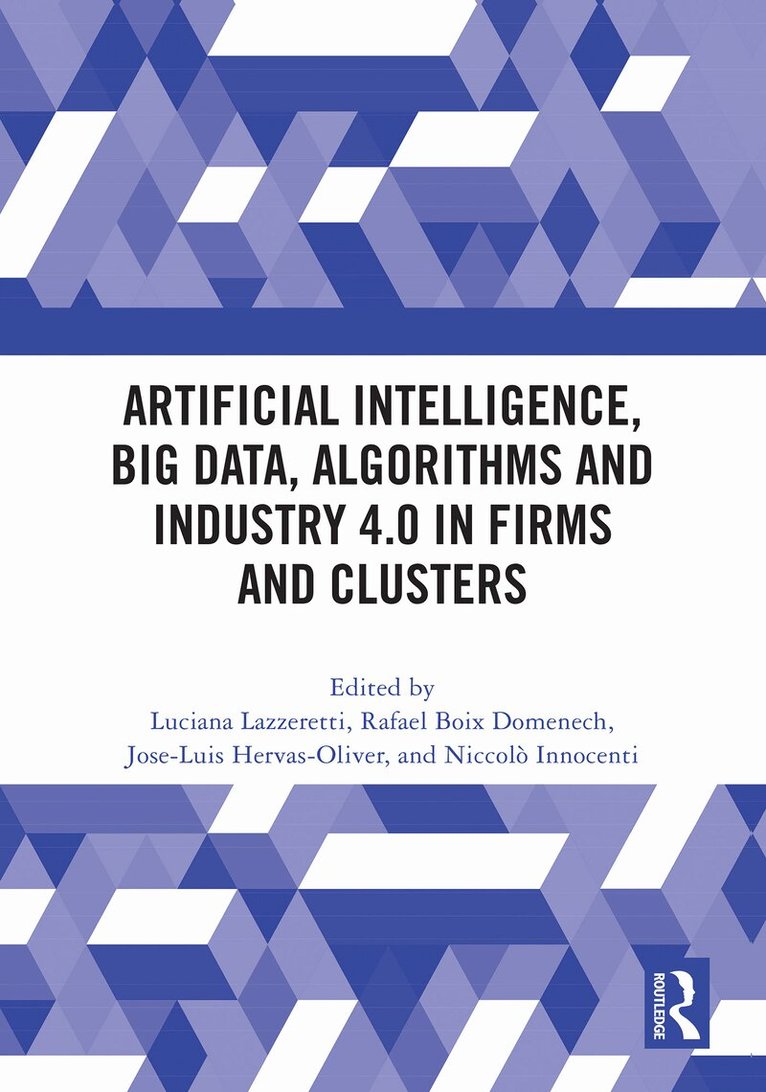
Artificial Intelligence, Big Data, Algorithms and Industry 4.0 in Firms and Clusters
Av Luciana Lazzeretti, Rafael Boix-Domenech m. fl.
Inbunden, 2024
2512 kr
Lägg i varukorg
This volume offers a wide-ranging discussion on the interrelations among AI, algorithms, big data, and Industry 4.0 to understand the importance of these new paradigms for the development of firms, districts, clusters, cities, regions, and innovation.Drawing on theoretical, empirical, and …
Artificial Intelligence, Big Data, Algorithms and Industry 4.0 in Firms and Clusters
Av Luciana Lazzeretti, Rafael Boix-Domenech m. fl.
Häftad, 2026
706 kr
Lägg i varukorg
This volume offers a wide-ranging discussion on the interrelations among AI, algorithms, big data, and Industry 4.0 to understand the importance of these new paradigms for the development of firms, districts, clusters, cities, regions, and innovation.Drawing on theoretical, empirical, and …
Artificial Intelligence, Big Data, Algorithms and Industry 4.0 in Firms and Clusters
Av Niccolo Innocenti, Jose-Luis Hervas-Oliver m. fl.
E-bok, 2024
2829 kr
Lägg i varukorg
This volume offers a wide-ranging discussion on the interrelations among AI, algorithms, big data, and Industry 4.0 to understand the importance of these new paradigms for the development of firms, districts, clusters, cities, regions, and innovation. Drawing on theoretical, empirical, and …
Artificial Intelligence, Big Data, Algorithms and Industry 4.0 in Firms and Clusters
Av Niccolo Innocenti, Jose-Luis Hervas-Oliver m. fl.
E-bok, 2024
2829 kr
Lägg i varukorg
This volume offers a wide-ranging discussion on the interrelations among AI, algorithms, big data, and Industry 4.0 to understand the importance of these new paradigms for the development of firms, districts, clusters, cities, regions, and innovation. Drawing on theoretical, empirical, and …