Nicholas Dirks – författare
972 kr
Skickas inom 3-6 vardagar
476 kr
Skickas inom 5-8 vardagar
720 kr
Läs direkt efter köp
The intellectual radicalism of the 1960s spawned a new set of questions about the role and nature of "the political" in social life, questions that have since revolutionized nearly every field of thought, from literary criticism through anthropology to the philosophy of science. Michel Foucault in particular made us aware that whatever our functionally defined "roles" in society, we are constantly negotiating questions of authority and the control of the definitions of reality. Such insights have led theorists to challenge concepts that have long formed the very underpinnings of their disciplines. By exploring some of the most debated of these concepts--"culture," "power," and "history"--this reader offers an enriching perspective on social theory in the contemporary moment. Organized around these three concepts, Culture/ Power/History brings together both classic and new essays that address Foucault''s "new economy of power relations" in a number of different, contestatory directions. Representing innovative work from various disciplines and sites of study, from taxidermy to Madonna, the book seeks to affirm the creative possibilities available in a time marked by growing uncertainty about established disciplinary forms of knowledge and by the increasing fluidity of the boundaries between them. The book is introduced by a major synthetic essay by the editors, which calls attention to the most significant issues enlivening theoretical discourse today. The editors seek not only to encourage scholars to reflect anew on the course of social theory, but also to orient newcomers to this area of inquiry. The essays are contributed by Linda Alcoff ("Cultural Feminism versus Post-Structuralism"), Sally Alexander ("Women, Class, and Sexual Differences in the 1830s and 1840s"), Tony Bennett ("The Exhibitionary Complex"), Pierre Bourdieu ("Structures, Habitus, Power"), Nicholas B. Dirks ("Ritual and Resistance"), Geoff Eley ("Nations, Publics, and Political Cultures"), Michel Foucault (Two Lectures), Henry Louis Gates, Jr. ("Authority, [White] Power and the [Black] Critic"), Stephen Greenblatt ("The Circulation of Social Energy"), Ranajit Guha ("The Prose of Counter-Insurgency"), Stuart Hall ("Cultural Studies: Two Paradigms"), Susan Harding ("The Born-Again Telescandals"), Donna Haraway ("Teddy Bear Patriarchy"), Dick Hebdige ("After the Masses"), Susan McClary ("Living to Tell: Madonna''s Resurrection of the Fleshly"), Sherry B. Ortner ("Theory in Anthropology since the Sixties"), Marshall Sahlins ("Cosmologies of Capitalism"), Elizabeth G. Traube ("Secrets of Success in Postmodern Society"), Raymond Williams (selections from Marxism and Literature), and Judith Williamson ("Family, Education, Photography").
602 kr
Läs direkt efter köp
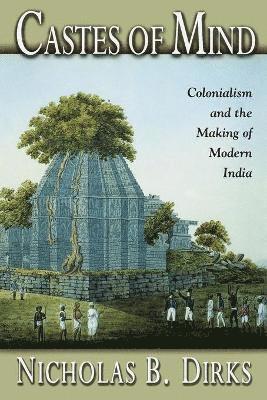
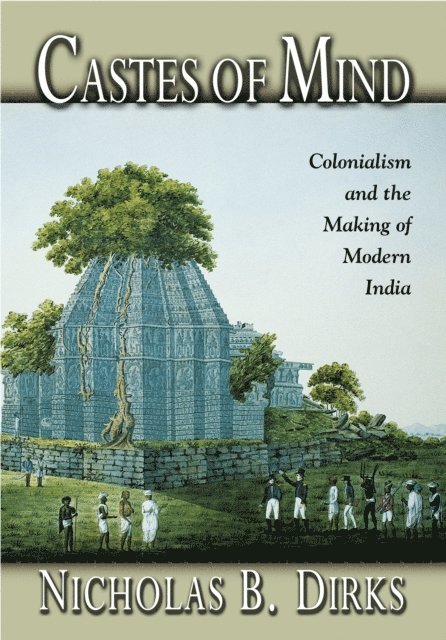
When thinking of India, it is hard not to think of caste. In academic and common parlance alike, caste has become a central symbol for India, marking it as fundamentally different from other places while expressing its essence. Nicholas Dirks argues that caste is, in fact, neither an unchanged survival of ancient India nor a single system that reflects a core cultural value. Rather than a basic expression of Indian tradition, caste is a modern phenomenon--the product of a concrete historical encounter between India and British colonial rule. Dirks does not contend that caste was invented by the British. But under British domination caste did become a single term capable of naming and above all subsuming India''s diverse forms of social identity and organization. Dirks traces the career of caste from the medieval kingdoms of southern India to the textual traces of early colonial archives; from the commentaries of an eighteenth-century Jesuit to the enumerative obsessions of the late-nineteenth-century census; from the ethnographic writings of colonial administrators to those of twentieth-century Indian scholars seeking to rescue ethnography from its colonial legacy. The book also surveys the rise of caste politics in the twentieth century, focusing in particular on the emergence of caste-based movements that have threatened nationalist consensus. Castes of Mind is an ambitious book, written by an accomplished scholar with a rare mastery of centuries of Indian history and anthropology. It uses the idea of caste as the basis for a magisterial history of modern India. And in making a powerful case that the colonial past continues to haunt the Indian present, it makes an important contribution to current postcolonial theory and scholarship on contemporary Indian politics.