Nicholas G. Evans – författare
546 kr
Läs direkt efter köp
Interdisciplinary perspectives on the science, politics, and ethics of the 2013–2015 Ebola virus disease outbreak.
The 2013–2015 outbreak of the Ebola virus disease (EVD) was a public health disaster: 28,575 infections and 11,313 deaths (as of October 2015), devastating the countries of Guinea, Liberia, and Sierra Leone; a slow and mismanaged international response; and sensationalistic media coverage, seized upon by politicians to justify wrongheaded policy. And yet there were also promising developments that may improve future responses to infectious disease epidemics: the UN Security Council''s first involvement in a public health event; a series of promising clinical treatments and vaccines for EVD; and recognition of the need for a global public health system to deal with epidemics that cross national borders. This volume offers a range of perspectives on these and other lessons learned, with essays on the science, politics, and ethics of the Ebola outbreak.
The contributors discuss topics including the virology and management of EVD in both rich and poor nations; the spread of the disease (with an essay by a leader of Médecins Sans Frontières); racist perceptions of West Africa; mainstream and social media responses to Ebola; and the ethical issue of whether to run clinical trials of experimental treatments during an outbreak.
ContributorsChristian L. Althaus, Daniel G. Bausch, Adia Benton, Michael J. Connor, Jr., Kim Yi Dionne, Nicholas G. Evans, Morenike Oluwatoyin Folayan, Stephen Goldstein, Bridget Haire, Patricia C. Henwood, Kelly Hills, Cyril Ibe, Marjorie Kruvand, Lisa M. Lee, Maimuna S. Majumder, Alexandra L. Phelan, Annette Rid, Cristine Russell, Lara Schwarz, Laura Seay, Michael Selgelid, Tara C. Smith, Armand Sprecher
555 kr
Läs direkt efter köp
208 kr
Läs direkt efter köp
175 kr
Skickas
652 kr
Skickas inom 5-8 vardagar
4 097 kr
Skickas inom 10-15 vardagar
665 kr
Läs direkt efter köp
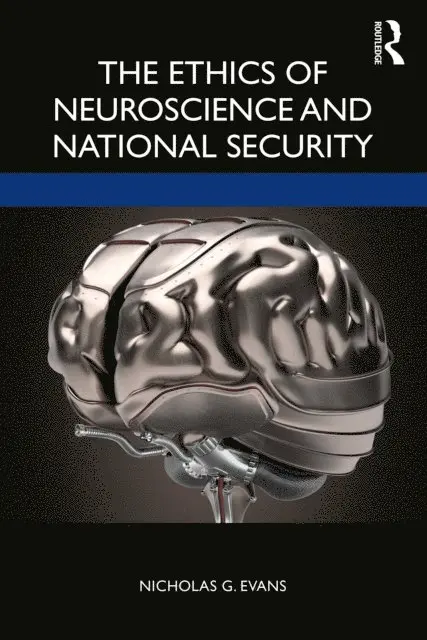
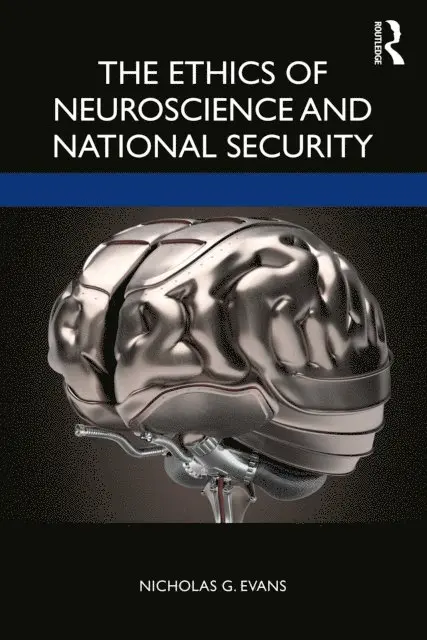
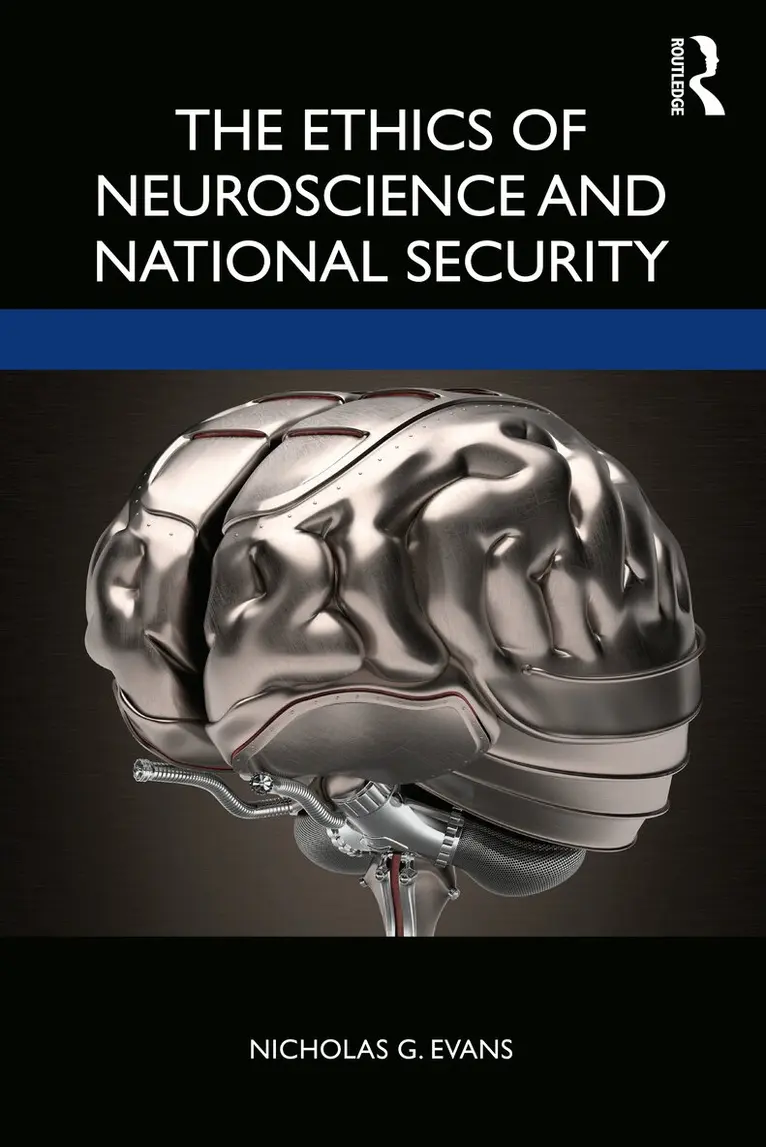
New advances in neuroscience promise innovations in national security, especially in the areas of law enforcement, intelligence collection, and armed conflict. But ethical questions emerge about how we can, and should, use these innovations. This book draws on the open literature to map the development of neuroscience, particularly through funding by the Defense Advanced Research Projects Agency, in certain areas like behavior prediction, behavior modification, and neuroenhancement, and its use in the creation of novel weapons. It shows how advances in neuroscience and new technologies raise ethical issues that challenge the norms of law enforcement, intelligence collection, and armed conflict, broadly grouped under the term "national security." Increasing technological sophistication without attention to ethics, this book argues, risks creating conditions for the development of "dual-use" technologies that may be prone to misuse, are grounded in an incomplete understanding of the brain, or are based on a limited view of the political contexts in which these technologies arise. A concluding section looks at policy and regulatory options that might promote the benefits of emerging neuroscience, while mitigating attendant risks.
Key Features:
First broad survey of the ethics of neuroscience as it applies to national security
Innovative ethical analysis over a range of cross-cutting technologies including behavior prediction and modification tools, human enhancement, and novel lethal and nonlethal weapons
Ethical analysis covering all stages from the development, testing, and use (or misuse) of these technologies; and decisions from the individual scientist to the nation state
Strong policy focus at multiple levels, from self-governance to international regulation
Combination of philosophical analysis with grounded, practical recommendations
665 kr
Läs direkt efter köp
New advances in neuroscience promise innovations in national security, especially in the areas of law enforcement, intelligence collection, and armed conflict. But ethical questions emerge about how we can, and should, use these innovations. This book draws on the open literature to map the development of neuroscience, particularly through funding by the Defense Advanced Research Projects Agency, in certain areas like behavior prediction, behavior modification, and neuroenhancement, and its use in the creation of novel weapons. It shows how advances in neuroscience and new technologies raise ethical issues that challenge the norms of law enforcement, intelligence collection, and armed conflict, broadly grouped under the term "national security." Increasing technological sophistication without attention to ethics, this book argues, risks creating conditions for the development of "dual-use" technologies that may be prone to misuse, are grounded in an incomplete understanding of the brain, or are based on a limited view of the political contexts in which these technologies arise. A concluding section looks at policy and regulatory options that might promote the benefits of emerging neuroscience, while mitigating attendant risks.
Key Features:
First broad survey of the ethics of neuroscience as it applies to national security
Innovative ethical analysis over a range of cross-cutting technologies including behavior prediction and modification tools, human enhancement, and novel lethal and nonlethal weapons
Ethical analysis covering all stages from the development, testing, and use (or misuse) of these technologies; and decisions from the individual scientist to the nation state
Strong policy focus at multiple levels, from self-governance to international regulation
Combination of philosophical analysis with grounded, practical recommendations
925 kr
Läs direkt efter köp
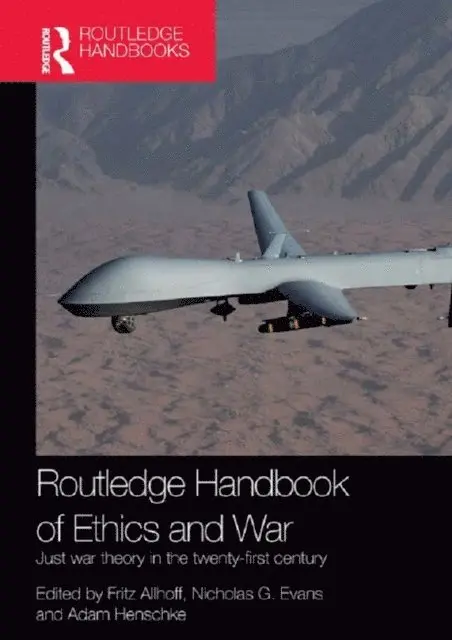
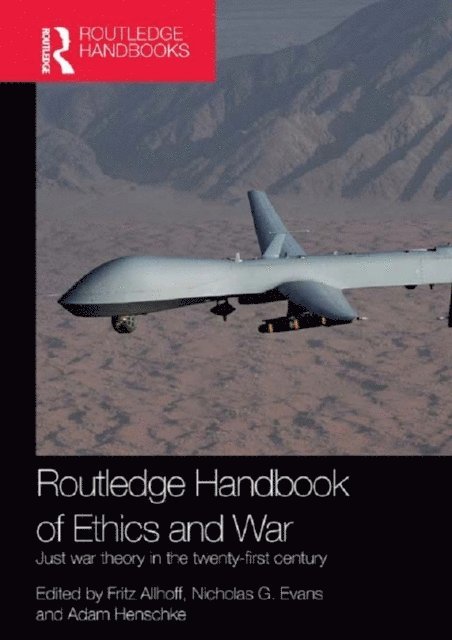
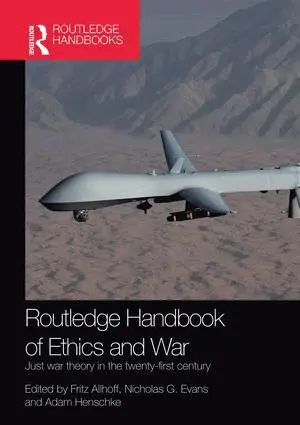
This new Handbook offers a comprehensive overview of contemporary extensions and alternatives to the just war tradition in the field of the ethics of war.
The modern history of just war has typically assumed the primacy of four particular elements: jus ad bellum, jus in bello, the state actor, and the solider. This book will put these four elements under close scrutiny, and will explore how they fare given the following challenges:
• What role do the traditional elements of jus ad bellum and jus in bello—and the constituent principles that follow from this distinction—play in modern warfare? Do they adequately account for a normative theory of war?
• What is the role of the state in warfare? Is it or should it be the primary actor in just war theory?
• Can a just war be understood simply as a response to territorial aggression between state actors, or should other actions be accommodated under legitimate recourse to armed conflict?
• Is the idea of combatant qua state-employed soldier a valid ethical characterization of actors in modern warfare?
• What role does the technological backdrop of modern warfare play in understanding and realizing just war theories?Over the course of three key sections, the contributors examine these challenges to the just war tradition in a way that invigorates existing discussions and generates new debate on topical and prospective issues in just war theory.
This book will be of great interest to students of just war theory, war and ethics, peace and conflict studies, philosophy and security studies.
925 kr
Läs direkt efter köp
This new Handbook offers a comprehensive overview of contemporary extensions and alternatives to the just war tradition in the field of the ethics of war.
The modern history of just war has typically assumed the primacy of four particular elements: jus ad bellum, jus in bello, the state actor, and the solider. This book will put these four elements under close scrutiny, and will explore how they fare given the following challenges:
• What role do the traditional elements of jus ad bellum and jus in bello—and the constituent principles that follow from this distinction—play in modern warfare? Do they adequately account for a normative theory of war?
• What is the role of the state in warfare? Is it or should it be the primary actor in just war theory?
• Can a just war be understood simply as a response to territorial aggression between state actors, or should other actions be accommodated under legitimate recourse to armed conflict?
• Is the idea of combatant qua state-employed soldier a valid ethical characterization of actors in modern warfare?
• What role does the technological backdrop of modern warfare play in understanding and realizing just war theories?Over the course of three key sections, the contributors examine these challenges to the just war tradition in a way that invigorates existing discussions and generates new debate on topical and prospective issues in just war theory.
This book will be of great interest to students of just war theory, war and ethics, peace and conflict studies, philosophy and security studies.
2 195 kr
Skickas inom 10-15 vardagar
586 kr
Skickas inom 10-15 vardagar
826 kr
Skickas inom 10-15 vardagar