Nicholas Rush Smith – Författare
Visar alla böcker från författaren Nicholas Rush Smith. Handla med fri frakt och snabb leverans.
4 produkter
4 produkter
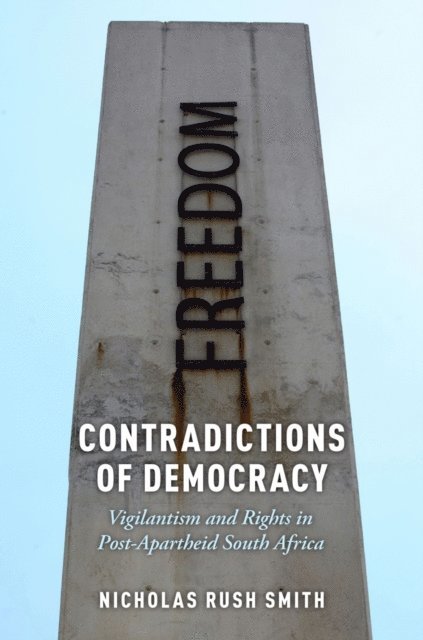
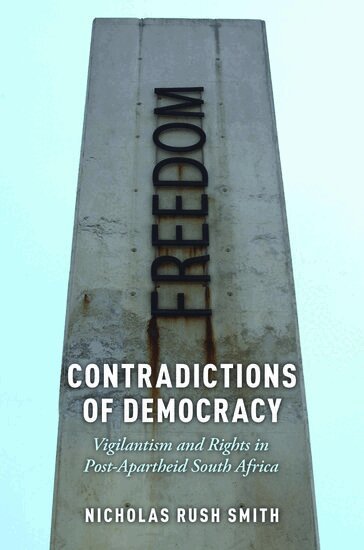
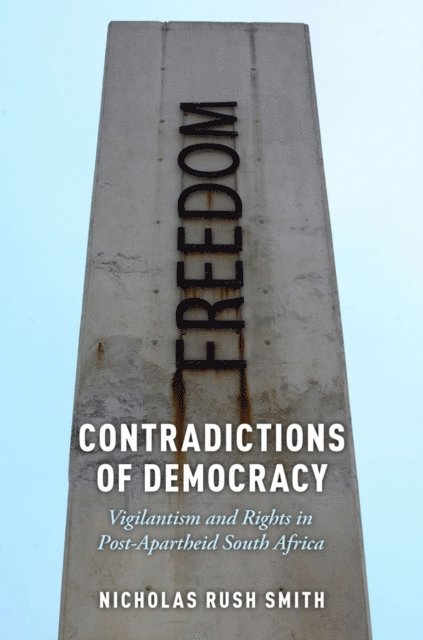
Contradictions of Democracy
Vigilantism and Rights in Post-Apartheid South Africa
Inbunden, Engelska, 2019
1 025 kr
Skickas inom 5-8 vardagar
Despite being one of the world's most vibrant democracies, police estimate between five and ten percent of the murders in South Africa result from vigilante violence. This is puzzling given the country's celebrated transition to democracy and massive reform of the state's legal institutions. Where most studies explain vigilantism as a response to state or civic failure, in Contradictions of Democracy, Nicholas Rush Smith illustrates that vigilantism is actually a response to the processes of democratic state formation. In the context of densely networked neighborhoods, vigilante citizens often interpret the technical success of legal institutions-for instance, the arrest and subsequent release of suspects on bail-as failure and work to correct such perceived failures on their own. Smith also shows that vigilantism provides a new lens through which to understand democratic state formation. Among young men of color in some parts of South Africa, fear of extra-judicial police violence is common. Amid such fear, instead of the state seeming protective, it can appear as something akin to a massive vigilante organization. An insightful look into the high rates of vigilantism in South Africa and the general challenges of democratic state building, Contradictions of Democracy explores fundamental questions about political order, the rule of law, and democratic citizenship.
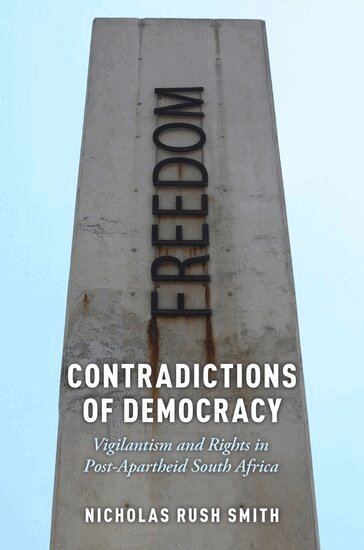
Contradictions of Democracy
Vigilantism and Rights in Post-Apartheid South Africa
Häftad, Engelska, 2019
299 kr
Skickas inom 5-8 vardagar
Despite being one of the world's most vibrant democracies, police estimate between five and ten percent of the murders in South Africa result from vigilante violence. This is puzzling given the country's celebrated transition to democracy and massive reform of the state's legal institutions. Where most studies explain vigilantism as a response to state or civic failure, in Contradictions of Democracy, Nicholas Rush Smith illustrates that vigilantism is actually a response to the processes of democratic state formation. In the context of densely networked neighborhoods, vigilante citizens often interpret the technical success of legal institutions-for instance, the arrest and subsequent release of suspects on bail-as failure and work to correct such perceived failures on their own. Smith also shows that vigilantism provides a new lens through which to understand democratic state formation. Among young men of color in some parts of South Africa, fear of extra-judicial police violence is common. Amid such fear, instead of the state seeming protective, it can appear as something akin to a massive vigilante organization. An insightful look into the high rates of vigilantism in South Africa and the general challenges of democratic state building, Contradictions of Democracy explores fundamental questions about political order, the rule of law, and democratic citizenship.
1 311 kr
Skickas inom 7-10 vardagar
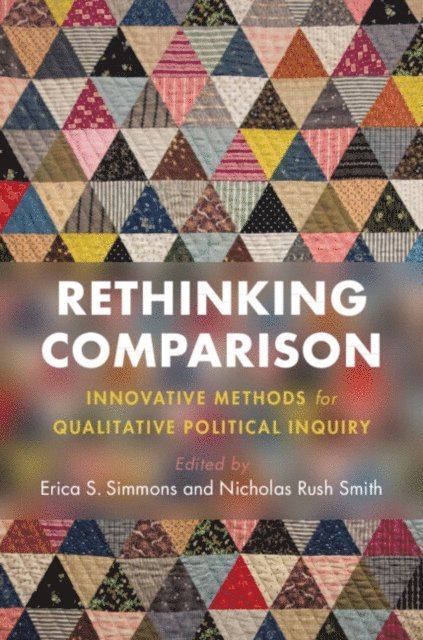
Qualitative comparative methods - and specifically controlled qualitative comparisons - are central to the study of politics. They are not the only kind of comparison, though, that can help us better understand political processes and outcomes. Yet there are few guides for how to conduct non-controlled comparative research. This volume brings together chapters from more than a dozen leading methods scholars from across the discipline of political science, including positivist and interpretivist scholars, qualitative methodologists, mixed-methods researchers, ethnographers, historians, and statisticians. Their work revolutionizes qualitative research design by diversifying the repertoire of comparative methods available to students of politics, offering readers clear suggestions for what kinds of comparisons might be possible, why they are useful, and how to execute them. By systematically thinking through how we engage in qualitative comparisons and the kinds of insights those comparisons produce, these collected essays create new possibilities to advance what we know about politics.
410 kr
Skickas inom 7-10 vardagar
Qualitative comparative methods - and specifically controlled qualitative comparisons - are central to the study of politics. They are not the only kind of comparison, though, that can help us better understand political processes and outcomes. Yet there are few guides for how to conduct non-controlled comparative research. This volume brings together chapters from more than a dozen leading methods scholars from across the discipline of political science, including positivist and interpretivist scholars, qualitative methodologists, mixed-methods researchers, ethnographers, historians, and statisticians. Their work revolutionizes qualitative research design by diversifying the repertoire of comparative methods available to students of politics, offering readers clear suggestions for what kinds of comparisons might be possible, why they are useful, and how to execute them. By systematically thinking through how we engage in qualitative comparisons and the kinds of insights those comparisons produce, these collected essays create new possibilities to advance what we know about politics.