Niels Bjørn-Andersen – författare
Visar alla böcker från författaren Niels Bjørn-Andersen. Handla med fri frakt och snabb leverans.
5 produkter
5 produkter
Del 24 - John Wiley Series in Information Systems
EDI in Europe
How It Works in Practice
Inbunden, Engelska, 1995
1 574 kr
Skickas inom 5-8 vardagar
EDI in Europe How It Works in Practice During the last decade, the use of information technology to support the exchange of information has been constantly growing. One of the most important areas of growth has been the application of technology to the exchange of structured information between companies - generally referred to as Electronic Data Interchange (EDI). While adoption of EDI is widespread in the US, usage in Europe is reported as scant. This book addresses itself to the European situation and the potential for EDI in Europe. EDI in Europe begins by introducing the basic elements of the concept, and its benefits. It goes on to analyse 14 case studies drawing out the lessons to be learned - all of which gives the reader the opportunity to evaluate their own situation and choose the most suitable approach.
Inbunden, Engelska, 2003
1 123 kr
Skickas inom 10-15 vardagar
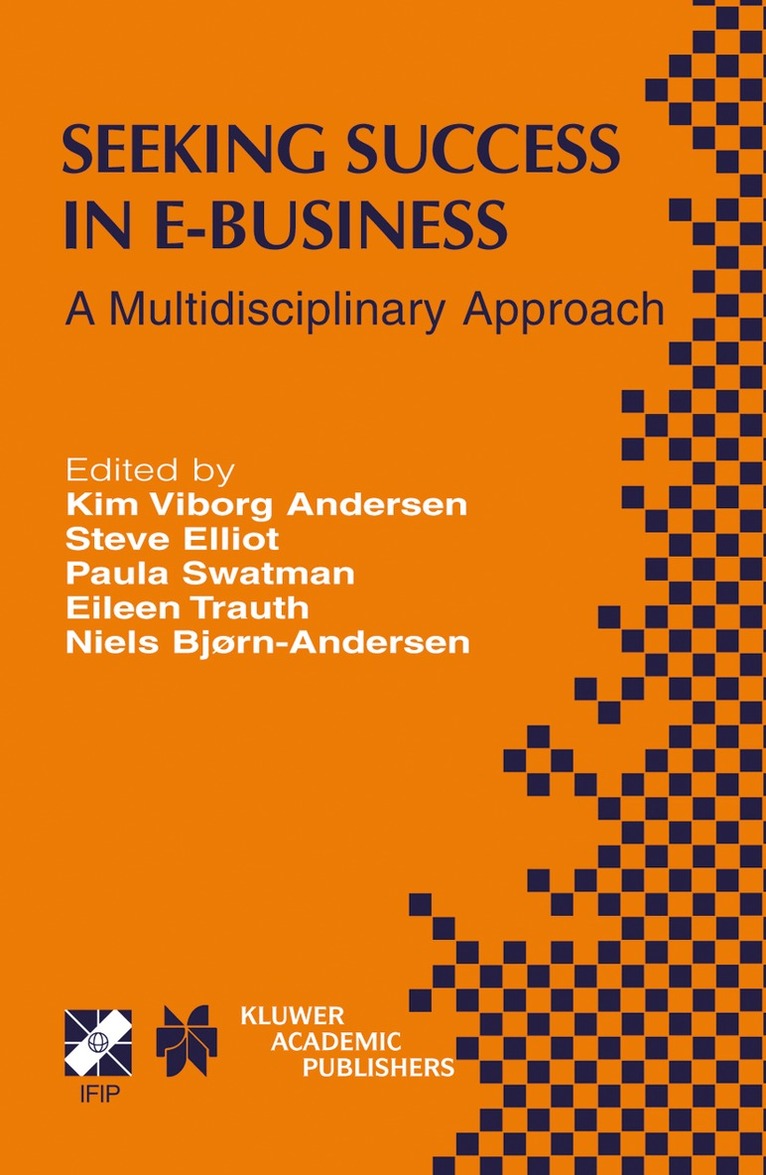
This collection of research papers addresses the emerging field of e-commerce and e-business, and presents a number of key contributions as the research fields are maturing. Many of the texts represent cutting-edge research, illustrating the diverse nature of these fields, from conceptual frameworks to state-of-the-art implementations. The book includes contributions in areas such as: strategies for implementing e-business; business-2-consumer, business-2-business; internet marketing; evaluation tools for e-business; implications for SMEs; mobile commerce; trust; distributed knowledge management; and dot.com-driven business transformations. The volume comprises the edited proceedings of the Second Working Conference on E-Business: Multidisciplinary Research and Practice, which was sponsored by the International Federation for Information Processing (IFIP), Working Group 8.4, as well as by the Danish Center for E-Business Development and the Copenhagen Business School. The conference was held in June 2002 in Copenhagen.
Del 123 - IFIP Advances in Information and Communication Technology
Seeking Success in E-Business
A Multidisciplinary Approach
Häftad, Engelska, 2013
1 124 kr
Skickas inom 10-15 vardagar
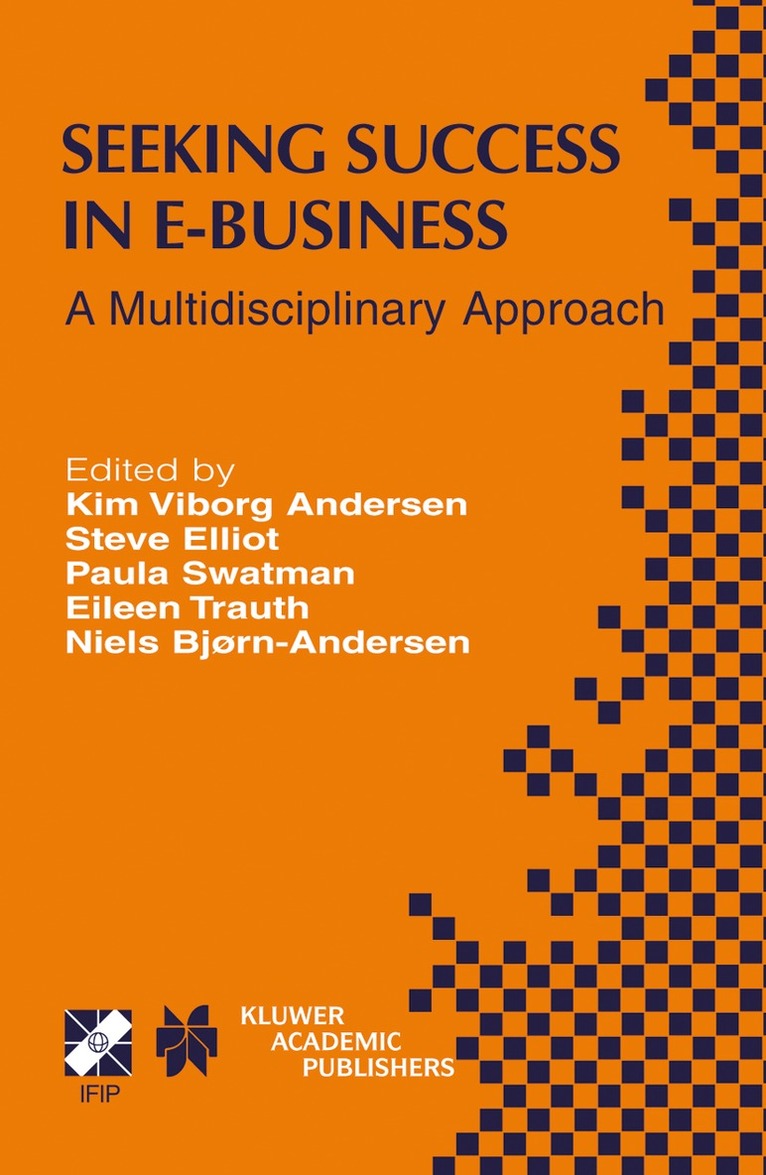
In the foreword to this volume of conference proceedings for IFIP Working Group 8.4, it is appropriate to review the wider organization to which the Working Group belongs. The International Federation of Information Processing (IFIP) is a non-governmental, non-profit umbrella organization for national societies working in the field of information processing that was established in 1960 under the auspices of UNESCO. IFIP's mission is to be the leading, truly international, apolitical organization which encourages and assists in the development, exploitation and application of Information Technology for the benefit of all people. At the heart of IFIP lie its Technical Committees that, between them, count on the active participation of some two thousand people world-wide. These Groups work in a variety of ways to share experience and to develop their specialised knowledge. Technical Committees include: TC 1. Foundations of Computer Science; TC 2: Software: Theory and Practice; TC 3: Education; TC 6: Communication Systems; TC 7: System Modelling and Optimization; TC 9: Relationship between Computers and Society; TC 11: Security and Protection in Information Processing Systems; TC 12: Artificial Intelligence and TC 13: Human-Computer Interaction. The IFIP website www.ifip.org) has further details. Technical Committee 8 (TC8) is concerned with Information Systems in organisations. Within TC8 there are different Working Groups focusing on particular aspects of Information Systems.
Inbunden, Engelska, 2010
1 683 kr
Skickas inom 10-15 vardagar
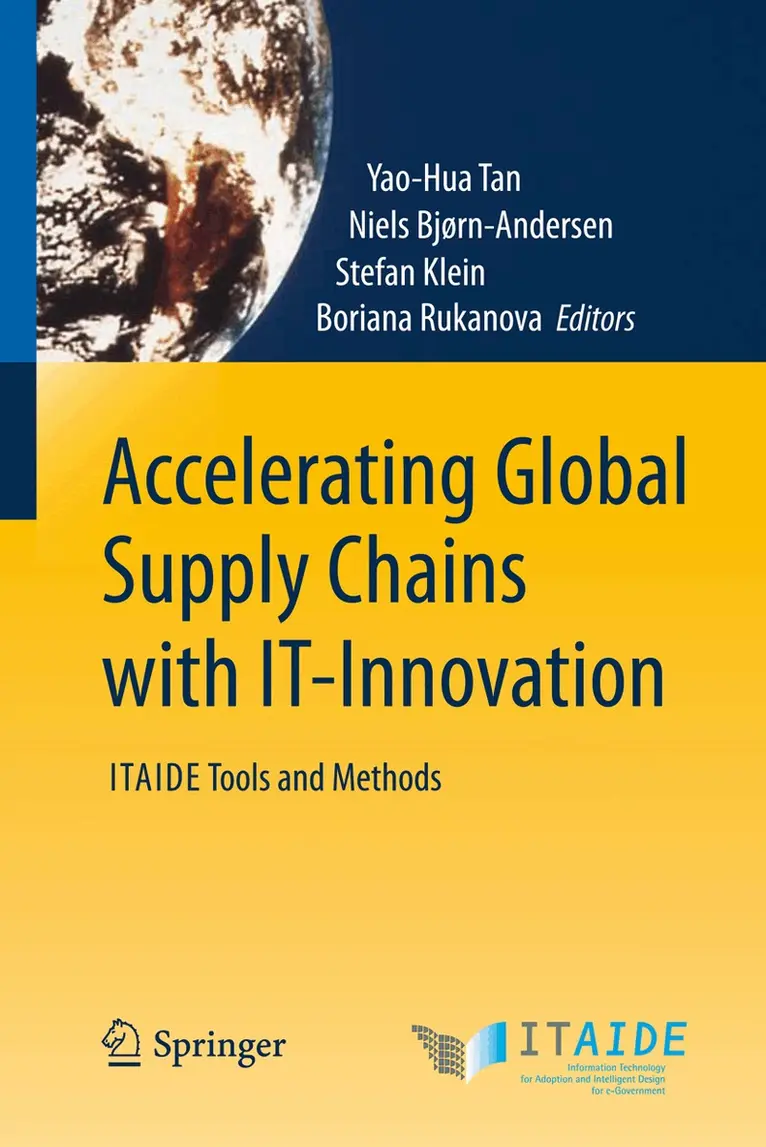
One of the major challenges for European governments is to solve the dilemma of increasing the security and reducing fraud in international trade, while at the same time reducing the administrative burden for commercial as well as public administration organisations. To address these conflicting demands, the ITAIDE project has developed a large set of innovative IT-related tools and methods that enable companies to be better in control of their business operations. These tools and methods have been integrated in the ITAIDE Information Infrastructure (I3) framework. By using the I3 framework, companies are better positioned to apply for the Trusted Trader status, and enjoy trade facilitation benefits such as simplified customs procedures and fewer inspections of their goods. Hence, the I3 framework can contribute to making global supply chains faster, cheaper, and more secure. The I3 framework has been tested and validated in five real-life Living Labs, spanning four different sectors of industry, and conducted in five different EU countries. National Tax & Customs organizations from various European countries have actively participated in the Living Labs.The United Nations CEFACT group, experts from the World Customs Organization and representatives of key industry associations have also provided valuable feedback and ideas for the Living Labs and the project in general. www.itaide.org
Häftad, Engelska, 2014
1 634 kr
Skickas inom 10-15 vardagar
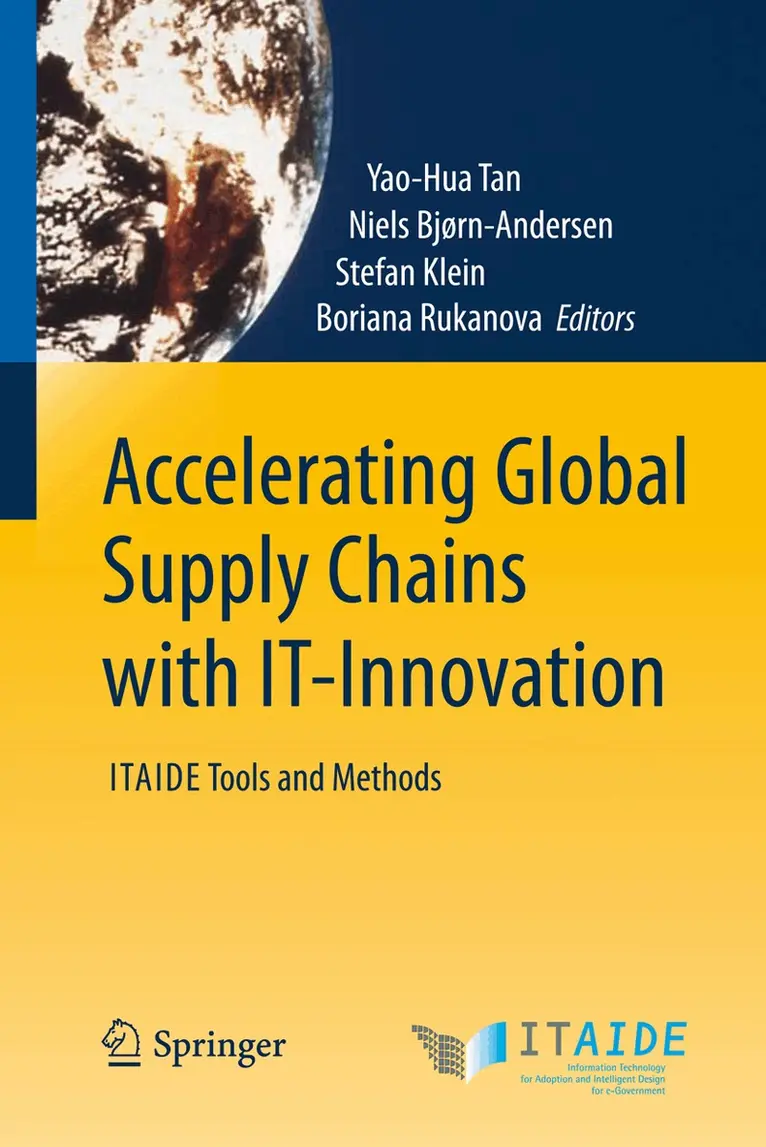
One of the major challenges for European governments is to solve the dilemma of increasing the security and reducing fraud in international trade, while at the same time reducing the administrative burden for commercial as well as public administration organisations. To address these conflicting demands, the ITAIDE project has developed a large set of innovative IT-related tools and methods that enable companies to be better in control of their business operations. These tools and methods have been integrated in the ITAIDE Information Infrastructure (I3) framework. By using the I3 framework, companies are better positioned to apply for the Trusted Trader status, and enjoy trade facilitation benefits such as simplified customs procedures and fewer inspections of their goods. Hence, the I3 framework can contribute to making global supply chains faster, cheaper, and more secure. The I3 framework has been tested and validated in five real-life Living Labs, spanning four different sectors of industry, and conducted in five different EU countries. National Tax & Customs organizations from various European countries have actively participated in the Living Labs.The United Nations CEFACT group, experts from the World Customs Organization and representatives of key industry associations have also provided valuable feedback and ideas for the Living Labs and the project in general. www.itaide.org