Nijavalli H. Ravindranath – författare
Visar alla böcker från författaren Nijavalli H. Ravindranath. Handla med fri frakt och snabb leverans.
3 produkter
3 produkter
E-bok
PDF, Engelska, 20051 367 kr
Läs direkt efter köp
Among global environmental issues, climate change has received the largest attention of national and global policy makers, researchers, industry, multilateral banks and NGOs. Climate change is one of the most important global environmental problems with unique characteristics. It is global, long-term (up to several centuries) and involves complex interactions between climatic, environmental, economic, political, institutional and technological pressures. It is of great significance to developing countries as all the available knowledge suggests that they, and particularly their poorer inhabitants, are highly vulnerable to climate impacts. The projected warming of 1. 4 to 5. 8° C by 2100 and the related changes in rainfall pattern, rise in sea-level and increased frequency of extreme events (such as drought, hurricanes and storms) are likely to threaten food security, increase fresh water scarcity, lead to decline in biodiversity, increase occurrence of vector-borne diseases, cause flooding of coastal settlements, etc. Recognizing the potential threat of severe disruptions, the United Nations Conference on Environment and Development was organized in 1992 in Rio de Janeiro, Brazil to begin to address ways to reduce these impacts, which led to the formulation of the UN Framework Convention on Climate Change. This Convention and the subsequent Kyoto Protocol recognize “the common but differentiated responsibility” of developing and industrialized countries in addressing climate change. Developing countries thus have a unique role to play in formulating a sound, reasoned, and well informed response to the threat of climate change.
Inbunden, Engelska, 2002
1 082 kr
Skickas inom 10-15 vardagar
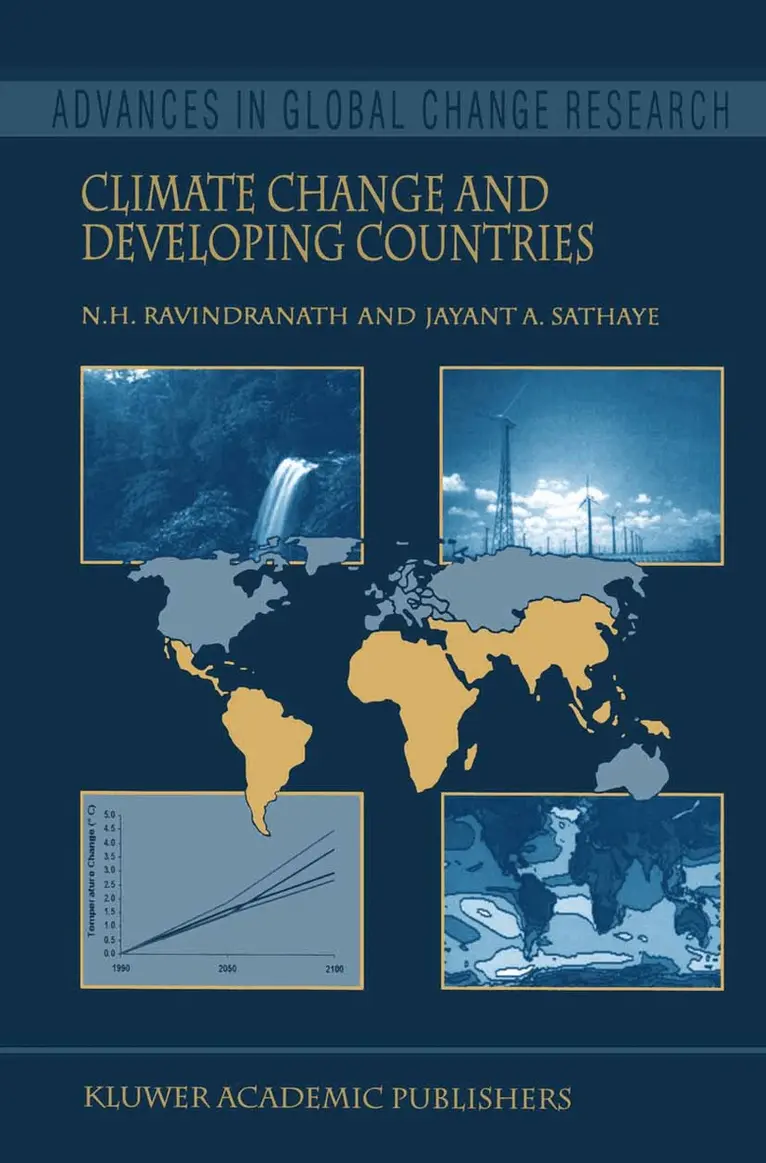
Developing countries recognize the importance of their future role in responding to the uncertainty posed by global climate change through appropriate technical, institutional, and policy measures. A comprehensive assessment and understanding of issues relevant to developing countries, such as greenhouse gas emissions inventories, contribution of developing countries to greenhouse gas emissions, projected climate change, impacts of climate change on the ecosystems and developing economies, mitigation opportunities, and potential socio-economic implications for developing countries, is necessary in order to address the emerging climate change. This title presents alternative perspectives of developing countries on opportunities to benefit from global negotiations, institutions, and mechanisms to address climate change. Analyses show that the developing countries, with appropriate policy and institutional responses, could benefit from the global programmes for mitigating the climate change.
Del 11 - Advances in Global Change Research
Climate Change and Developing Countries
Häftad, Engelska, 2002
1 082 kr
Skickas inom 10-15 vardagar
Developing countries recognize the importance of their future role in responding to the uncertainty posed by global climate change through appropriate technical, institutional, and policy measures. A comprehensive assessment and understanding of issues relevant to developing countries, such as greenhouse gas emissions inventories, contribution of developing countries to greenhouse gas emissions, projected climate change, impacts of climate change on the ecosystems and developing economies, mitigation opportunities, and potential socio-economic implications for developing countries, is necessary in order to address the emerging climate change. This title presents alternative perspectives of developing countries on opportunities to benefit from global negotiations, institutions, and mechanisms to address climate change. Analyses show that the developing countries, with appropriate policy and institutional responses, could benefit from the global programmes for mitigating the climate change.