Niles Eldredge – författare
Visar alla böcker från författaren Niles Eldredge. Handla med fri frakt och snabb leverans.
18 produkter
18 produkter
Inbunden, Engelska, 1986
1 028 kr
Skickas inom 5-8 vardagar
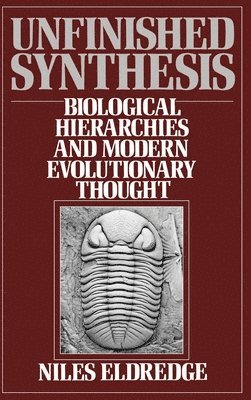
This provocative study provides a stimulating critique of contemporary evolutionary thought, analysing the Modern Synthesis first developed by Theodosius Dobzhansky, Ernst Mayr, and George Gaylord Simpson.Written by an eminent evolutionary biologist (the co-founder of the theory of punctuated equilibria), this highly readable book argues that only genes and organisms are taken as historic 'individuals' in conventional theory. Eldredge proposes that species, higher taxa, and ecological entities such as populations and communities should also be construed as individuals - an approach yielding the ecological and genealogical hierarchies that interact to produce evolution. This clearly stated, controversial work will provoke much debate among evolutionary biologists, systematicists, palaeontologists and ecologists, as well as lay readers.
Häftad, Engelska, 2016
313 kr
Skickas inom 5-8 vardagar
The natural world is infinitely complex and hierarchically structured, with smaller units forming the components of progressively larger systems: molecules make up cells, cells comprise tissues and organs that are, in turn, parts of individual organisms, which are united into populations and integrated into yet more encompassing ecosystems. In the face of such awe-inspiring complexity, there is a need for a comprehensive, non-reductionist evolutionary theory. Having emerged at the crossroads of paleobiology, genetics, and developmental biology, the hierarchical approach to evolution provides a unifying perspective on the natural world and offers an operational framework for scientists seeking to understand the way complex biological systems work and evolve. Coedited by one of the founders of hierarchy theory and featuring a diverse and renowned group of contributors, this volume provides an integrated, comprehensive, cutting-edge introduction to the hierarchy theory of evolution.From sweeping historical reviews to philosophical pieces, theoretical essays, and strictly empirical chapters, it reveals hierarchy theory as a vibrant field of scientific enterprise that holds promise for unification across the life sciences and offers new venues of empirical and theoretical research. Stretching from molecules to the biosphere, hierarchy theory aims to provide an all-encompassing understanding of evolution and with this first collection devoted entirely to the concept will help make transparent the fundamental patterns that propel living systems.
Inbunden, Engelska, 1992
692 kr
Skickas inom 5-8 vardagar
Which species can be saved, when all cannot? "Systematics, Ecology, and the Biodiversity Crisis" provides critical tools for finding answers to the current of systematic biology. Systematists are in a unique position to identify ciritcal areas of endemism and additional criteria for the identification of habitats and species most urgently in need of protection. The result of a symposium held at the American Museum of Natural History, this book fills a void created by other volumes that have explored the biodiversity crisis exclusively from an ecological stance."It may well be that the dynamics of extinction processes will prove to be exclusively in the domain of moment-by-moment interactive processes of matter-energy transfer: the realm of ecology. But the problems of extinction," Eldredge argues, "can be defined, recognized, measured, and assessed only through the tools of the systematists, paleontologists, and ecologists who explore the relationship between ecology and systematics as it pertains to understanding the origin, maintenance, and loss of biological diversity. The role of museums, zoos, and related institutions is also examined.At a time when our country has only recently awakened to the environmental crisis, "Systematics, Ecology, and the Biodiversity Crisis" provides urgently needed information for any attempts to understand and ameliorate the present dilemma of extinction and preservation.
Inbunden, Engelska, 2015
2 354 kr
Skickas inom 3-6 vardagar
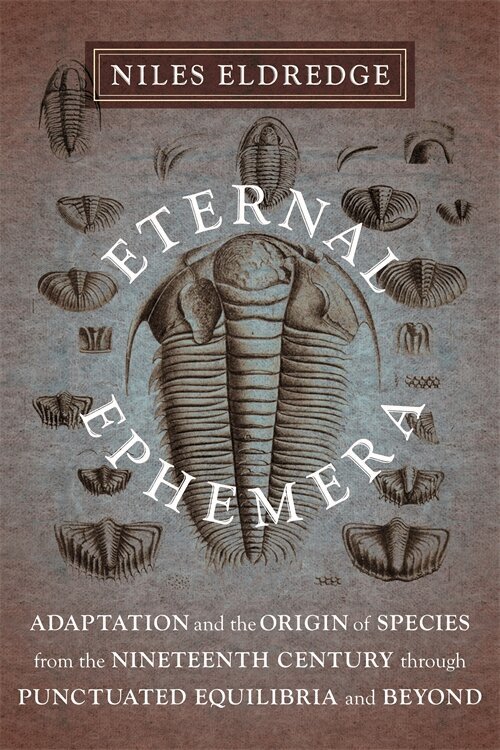
All organisms and species are transitory, yet life endures. The origin, extinction, and evolution of species-interconnected in the web of life as "eternal ephemera"-are the concern of evolutionary biology. In this riveting work, renowned paleontologist Niles Eldredge follows leading thinkers as they have wrestled for more than two hundred years with the eternal skein of life composed of ephemeral beings, revitalizing evolutionary science with their own, more resilient findings. Eldredge begins in France with the naturalist Jean-Baptiste Lamarck, who in 1801 first framed the overarching question about the emergence of new species. The Italian geologist Giambattista Brocchi followed, bringing in geology and paleontology to expand the question. In 1825, at the University of Edinburgh, Robert Grant and Robert Jameson introduced the astounding ideas formulated by Lamarck and Brocchi to a young medical student named Charles Darwin. Who can doubt that Darwin left for his voyage on the Beagle in 1831 filled with thoughts about these daring new explanations for the "transmutation" of species.Eldredge revisits Darwin's early insights into evolution in South America and his later synthesis of knowledge into a theory of the origin of species. He then considers the ideas of more recent evolutionary thinkers, such as George Gaylord Simpson, Ernst Mayr, and Theodosius Dobzhansky, as well as the young and brash Niles Eldredge and Steven Jay Gould, who set science afire with their concept of punctuated equilibria. Filled with insights into evolutionary biology and told with a rich affection for the scientific arena, this book celebrates the organic, vital relationship between scientific thinking and its subjects.
Häftad, Engelska, 2016
329 kr
Skickas inom 5-8 vardagar
All organisms and species are transitory, yet life endures. The origin, extinction, and evolution of species-interconnected in the web of life as "eternal ephemera"-are the concern of evolutionary biology. In this riveting work, renowned paleontologist Niles Eldredge follows leading thinkers as they have wrestled for more than two hundred years with the eternal skein of life composed of ephemeral beings, revitalizing evolutionary science with their own, more resilient findings. Eldredge begins in France with the naturalist Jean-Baptiste Lamarck, who in 1801 first framed the overarching question about the emergence of new species. The Italian geologist Giambattista Brocchi followed, bringing in geology and paleontology to expand the question. In 1825, at the University of Edinburgh, Robert Grant and Robert Jameson introduced the astounding ideas formulated by Lamarck and Brocchi to a young medical student named Charles Darwin. Who can doubt that Darwin left for his voyage on the Beagle in 1831 filled with thoughts about these daring new explanations for the "transmutation" of species.Eldredge revisits Darwin's early insights into evolution in South America and his later synthesis of knowledge into a theory of the origin of species. He then considers the ideas of more recent evolutionary thinkers, such as George Gaylord Simpson, Ernst Mayr, and Theodosius Dobzhansky, as well as the young and brash Niles Eldredge and Steven Jay Gould, who set science afire with their concept of punctuated equilibria. Filled with insights into evolutionary biology and told with a rich affection for the scientific arena, this book celebrates the organic, vital relationship between scientific thinking and its subjects.
Inbunden, Engelska, 2024
232 kr
Skickas inom 5-8 vardagar
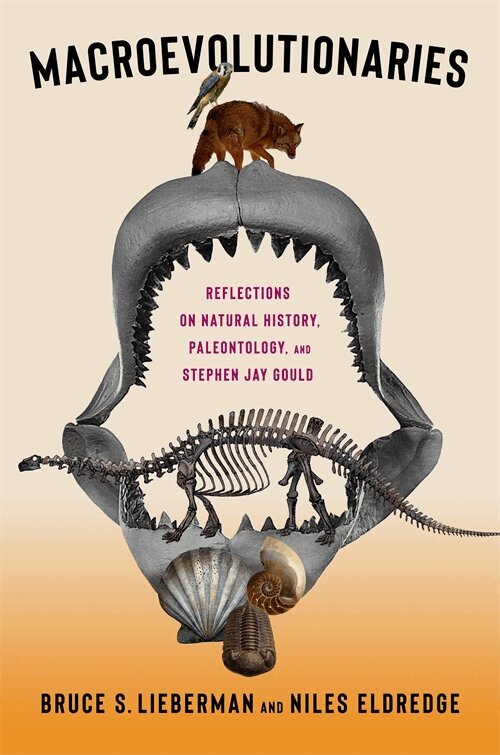
One of the twentieth century’s great paleontologists and science writers, Stephen Jay Gould was, for Bruce S. Lieberman and Niles Eldredge, also a close colleague and friend. In Macroevolutionaries, they take up the tradition of Gould’s acclaimed essays on natural history, offering a series of wry and insightful reflections on the fields to which they have devoted their careers.Lieberman and Eldredge explore the major features of evolution, or “macroevolution,” examining key issues in paleontology and their links to popular culture, philosophy, music, and the history of science. They focus on topics such as punctuated equilibria, mass extinctions, and the history of life—with detours including trilobites, Hollywood stuntmen, coywolves, birdwatching, and New Haven-style pizza. Lieberman and Eldredge’s essays showcase their deep knowledge of the fossil record and keen appreciation of the arts and culture while touching on different aspects of Gould’s life and work. Ultimately, they show why Gould’s writings and perspective are still relevant today, following his lead in using the natural history essay to articulate their view of evolutionary theory and its place in contemporary life. At once thought-provoking and entertaining, Macroevolutionaries is for all readers interested in paleontology, evolutionary biology, and Gould’s literary and scientific legacy.
Häftad, Engelska, 2026
184 kr
Skickas inom 5-8 vardagar
One of the twentieth century’s great paleontologists and science writers, Stephen Jay Gould was, for Bruce S. Lieberman and Niles Eldredge, also a close colleague and friend. In Macroevolutionaries, they take up the tradition of Gould’s acclaimed essays on natural history, offering a series of wry and insightful reflections on the fields to which they have devoted their careers.Lieberman and Eldredge explore the major features of evolution, or “macroevolution,” examining key issues in paleontology and their links to popular culture, philosophy, music, and the history of science. They focus on topics such as punctuated equilibria, mass extinctions, and the history of life—with detours including trilobites, Hollywood stuntmen, coywolves, birdwatching, and New Haven-style pizza. Lieberman and Eldredge’s essays showcase their deep knowledge of the fossil record and keen appreciation of the arts and culture while touching on different aspects of Gould’s life and work. Ultimately, they show why Gould’s writings and perspective are still relevant today, following his lead in using the natural history essay to articulate their view of evolutionary theory and its place in contemporary life. At once thought-provoking and entertaining, Macroevolutionaries is for all readers interested in paleontology, evolutionary biology, and Gould’s literary and scientific legacy.
Häftad, Engelska, 2005
262 kr
Skickas inom 5-8 vardagar
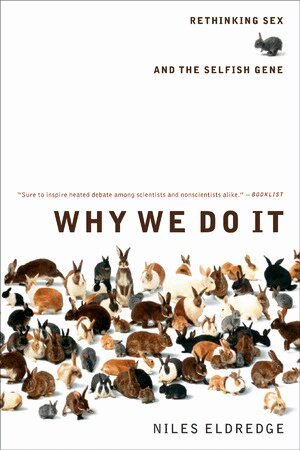
Why do people have sex? Is it solely for the purpose of passing on genetic information, or are there other reasons? "A candid, no-punches-pulled interpreter of the core ideas of evolutionary biology" (Science News), author Niles Eldredge unravels the origins of our coital instincts. Whereas other scientists dismiss human sexuality as a helpless response to the same deep-set biological imperatives that govern the behavior of lesser animals, Eldredge points to various examples of customs, taboos, laws, and other cultural forces that run counter to our most primal desires. Directly assaulting the reductionist "selfish gene" theory, whereby sex is reduced to a purely procreative act, Eldredge draws on Darwin's ideas about evolution as well as modern economic theory to describe the delicate cultural and societal interaction that exists between survival, sex, and procreation in the human species.
Inbunden, Engelska, 1995
385 kr
Skickas inom 3-6 vardagar
Häftad, Engelska, 1997
349 kr
Skickas inom 5-8 vardagar
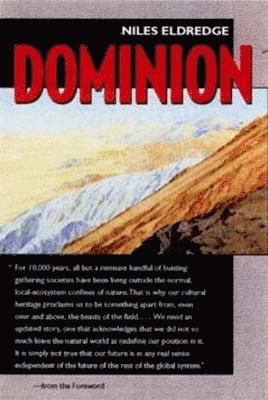
Overpopulation, depletion of natural resources, hunting of nonhuman species to extinction: paleontologist Niles Eldredge questions the long term survival of humans, given our propensity for living beyond our ecological means. In Dominion he reviews the relation between biological and cultural evolution, showing how the agricultural revolution freed humans from dependence on local ecosystems and allowed us to assert our dominion, as the Christian Bible has it, over the beasts of the field. Unless we quickly change our homocentric ways, we'll irretrievably destroy our own habitat.
Inbunden, Engelska, 2014
289 kr
Skickas inom 5-8 vardagar
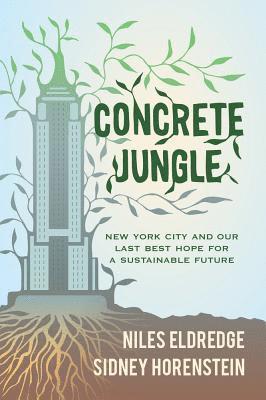
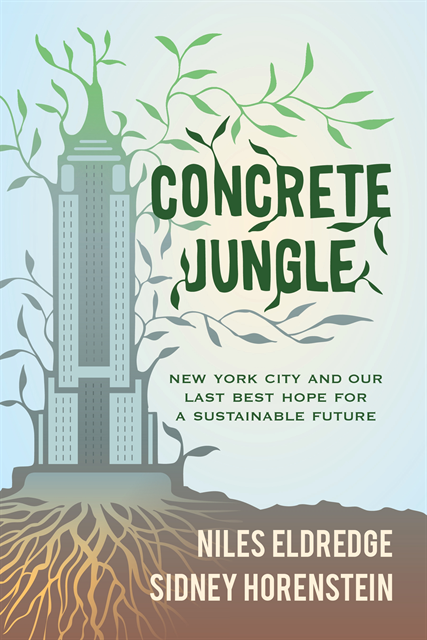
If they are to survive, cities need healthy chunks of the world's ecosystems to persist; yet cities, like parasites, grow and prosper by local destruction of these very ecosystems. In this absorbing and wide-ranging book, Eldredge and Horenstein use New York City as a microcosm to explore both the positive and the negative sides of the relationship between cities, the environment, and the future of global biodiversity. They illuminate the mass of contradictions that cities present in embodying the best and the worst of human existence. The authors demonstrate that, though cities have voracious appetites for resources such as food and water, they also represent the last hope for conserving healthy remnants of the world's ecosystems and species. With their concentration of human beings, cities bring together centers of learning, research, government, finance, and media institutions that increasingly play active roles in solving environmental problems.Some of the topics covered in Concrete Jungle: the geological history of the New York region, including remnant glacial features visible today; the early days of urbanization on Manhattan Island, focusing on the history of Central Park, Collect Pond, and Manhattan Square; the history of early railway lines and the development of New York's iconic subway system; the problem of producing enough safe drinking water for an ever-expanding population; and prominent civic institutions, including universities, museums, and zoos.
Häftad, Engelska, 1994
409 kr
Skickas inom 5-8 vardagar
How is our fate linked to the earth's creatures, and the cycle of flourishing and extinction? Does human activity accelerate extinction? And what really causes it? This account of the widespread reduction of the world's wildlife examines humankind's role in the larger life cycles of the earth, composing a provocative general theory of extinction.
Häftad, Engelska, 2000
478 kr
Skickas inom 3-6 vardagar
In Life in the Balance, Niles Eldredge argues that the Earth is confronting a disaster in the making--an ecological crisis that, if left unresolved, could ultimately lead to mass extinction on the scale of that which killed the dinosaurs sixty-five million years ago. Writing for general readers, he reviews compelling evidence for this "biodiversity crisis," showing that species are dying out at an unnaturally rapid rate. He demonstrates the importance of maintaining biodiversity, taking the reader on a journey that reveals the twin faces of biodiversity--over thirteen million living species and the ecosystems through which these species transform the sun's energy into life-sustaining matter. Throughout, Eldredge shows how our own fate is intricately linked with that of other species. Eldredge, one of the world's foremost paleontologists, begins by taking us to the heart of Botswana's Okavango Delta, considered by many to be among the last "Edens" left on Earth--a place where a rich assortment of organisms exist in natural equilibrium.However, it is also a place where the results of human activity--pollution, clear-cutting, water-diversion, encroaching agriculture, disease--now pose the same ecological threats that, on a worldwide scale, put the entire planet at risk. Eldredge then leads us on a fascinating exploration of the Earth's organisms--animals, plants, fungi, the microbes that underpin all life--and of the diverse ecosystems from the tundra to the tropics in which these organisms live. It is a journey that demonstrates the inherent value of the millions of species and ecosystems on Earth, and the importance of biodiversity to the entire biosphere and to humans' continued existence. Eldredge concludes that humans not only are responsible for the biodiversity crisis but also hold the key to preventing an impending Sixth Extinction. He argues that we must, among other strategies, pledge ourselves to sustainable development and the conservation of wild places. An eloquent and passionate account by one of today's leading scientists, Life in the Balance will draw new attention to one of the most pressing problems now facing the world.In this book, Eldredge explores the same themes that illuminate The American Museum of Natural History's new Hall of Biodiversity, for which he is Scientific Curator. The Hall is scheduled to open in spring 1998.
Häftad, Engelska, 2014
823 kr
Skickas inom 3-6 vardagar
Inbunden, Engelska, 2016
1 930 kr
Skickas inom 3-6 vardagar
Häftad, Engelska, 2002
221 kr
Skickas inom 3-6 vardagar
Inbunden, Engelska, 2005
297 kr
Tillfälligt slut
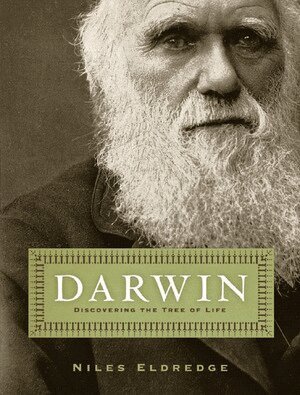
Charles Darwin's ideas resonate deeply in Western culture today, and his theory still lies at the heart of modern scientific evolutionary research. As other nineteenth-century figures fade, Darwin's theory of evolution still provokes controversy, spilling over into curriculum battles at state and local school boards in the United States and around the world.In exploring the everyday artifacts of Darwin's life, his notebooks, and early manuscripts, Niles Eldredge "a candid, no-punches-pulled interpreter of the core ideas of evolutionary biology" (Science News) provides a rare glimpse into the mind of this highly intuitive, creative scientist. The celebration of Charles Darwin's 200th birthday in 2009 begins in November 2005 with the opening of a major exhibition at the American Museum of Natural History in New York, curated by Eldredge, that will travel across the nation. More than a companion book to the exhibit, Darwin is a rich and inspiring reconstruction of Darwin's life through his writings and discoveries.
Inbunden, Engelska, 2005
254 kr
Tillfälligt slut