Telmo Pievani – författare
Visar alla böcker från författaren Telmo Pievani. Handla med fri frakt och snabb leverans.
16 produkter
Evolutionary Theory
A Hierarchical Perspective
Av Ilya Temkin, Emanuele Serrelli m. fl.
E-bok, 2016
643 kr
Lägg i varukorg
The natural world is infinitely complex and hierarchically structured, with smaller units forming the components of progressively larger systems: molecules make up cells, cells comprise tissues and organs that are, in turn, parts of individual organisms, which are united into populations and …
Evolutionary Theory
A Hierarchical Perspective
Av Niles Eldredge, Telmo Pievani m. fl.
Häftad, 2016
331 kr
Lägg i varukorg
The natural world is infinitely complex and hierarchically structured, with smaller units forming the components of progressively larger systems: molecules make up cells, cells comprise tissues and organs that are, in turn, parts of individual organisms, which are united into populations and …
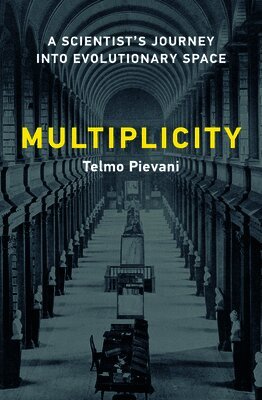
Multiplicity
A Scientist’s Journey into Evolutionary Space
Inbunden, 2026
288 kr
Lägg i varukorg
The awe-inspiring, little-known story of Nobel laureate Frances Arnold’s discovery of directed enzyme evolution—and how it was sparked by reading Jorge Luis Borges.In 1976, a young engineering student from Princeton, Frances Arnold, happened upon Jorge Luis Borges’s short story “The Library of …
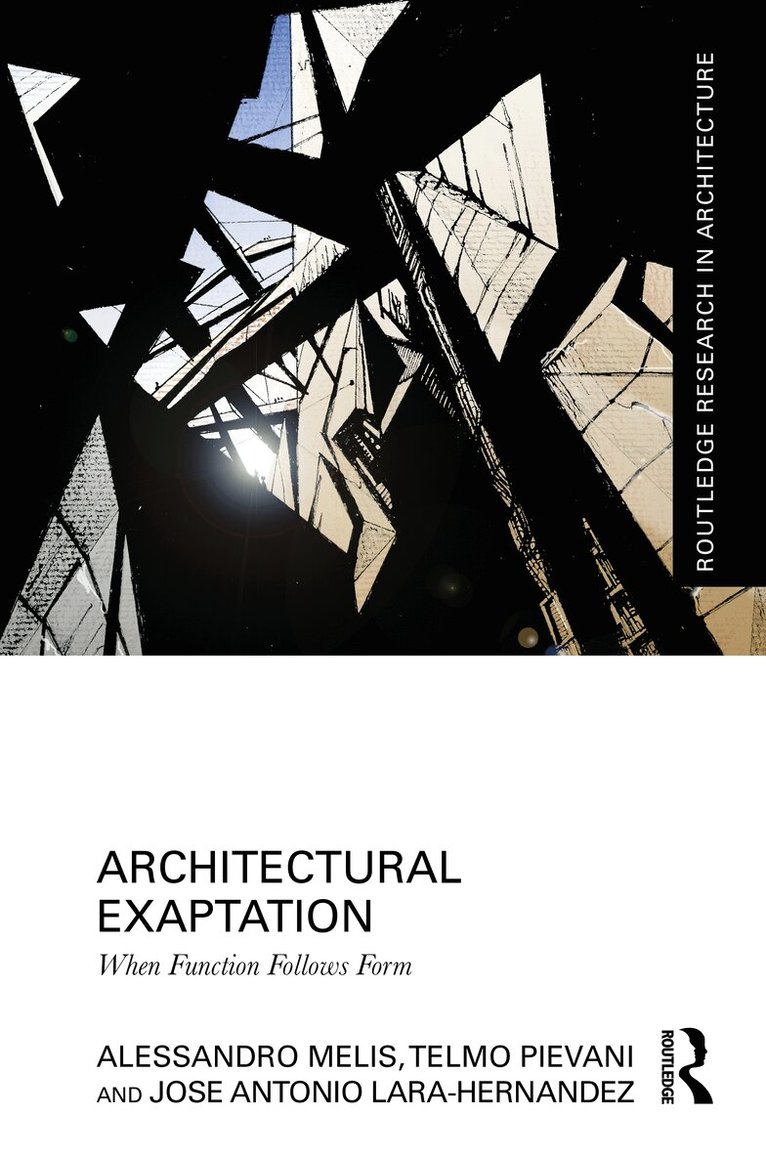
Architectural Exaptation
When Function Follows Form
Av Jose Antonio Lara-Hernandez, Telmo Pievani m. fl.
E-bok, 2024
838 kr
Lägg i varukorg
Architectural Exaptation: When Function Follows Form focuses on the significance and the originality of the study of exaptation. It presents exaptation as an opportunity to extend architectural design towards more sustainable approaches aimed at enforcing urban resilience. The use of exaptation’s …
Architectural Exaptation
When Function Follows Form
Av Jose Antonio Lara-Hernandez, Telmo Pievani m. fl.
E-bok, 2024
838 kr
Lägg i varukorg
Architectural Exaptation: When Function Follows Form focuses on the significance and the originality of the study of exaptation. It presents exaptation as an opportunity to extend architectural design towards more sustainable approaches aimed at enforcing urban resilience. The use of exaptation’s …
Architectural Exaptation
When Function Follows Form
Av Alessandro Melis, Telmo Pievani m. fl.
Inbunden, 2024
2601 kr
Lägg i varukorg
Architectural Exaptation: When Function Follows Form focuses on the significance and the originality of the study of exaptation. It presents exaptation as an opportunity to extend architectural design towards more sustainable approaches aimed at enforcing urban resilience.The use of exaptation’s …
Architectural Exaptation
When Function Follows Form
Av Alessandro Melis, Telmo Pievani m. fl.
Häftad, 2025
731 kr
Lägg i varukorg
Architectural Exaptation: When Function Follows Form focuses on the significance and the originality of the study of exaptation. It presents exaptation as an opportunity to extend architectural design towards more sustainable approaches aimed at enforcing urban resilience.The use of exaptation’s …
Unvollkommen. Eine andere Geschichte der Evolution
Eine neue Sichtweise auf Erdgeschichte und uns Menschen
E-bok, 2026
251 kr
Lägg i varukorg
Die Schönheit des UnvollkommenenDie Unvollkommenheit ist nicht unser Mangel, sondern unser größtes Geschenk. Der renommierte Philosoph und Evolutionsbiologe Telmo Pievani zeigt in seiner brillanten Naturgeschichte, wie viel auch wir ›Fehlern‹ verdanken. Er deutet dabei scheinbare Mängel in …
Homo Sapiens: Der Groae Atlas Der Menschheit
Av Telmo Pievani, Valery Zeitoun
Inbunden, 2024
514 kr
Lägg i varukorg
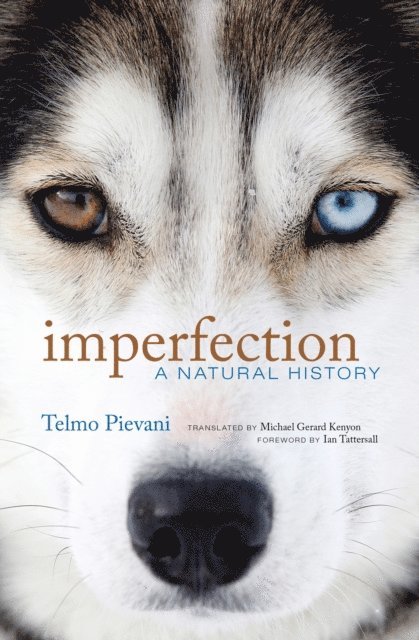
Imperfeccion
E-bok, 2022
83 kr
Lägg i varukorg
Si se analiza el universo con las herramientas hoy a nuestro alcance, comprobamos que se funda en la imperfeccion, y no solo eso, sino que esta es su principal motor. Solo donde hay imperfeccion hay algo que sucede -un evento, un proceso, un cambio, una relacion-, mientras que la perfeccion es, por …
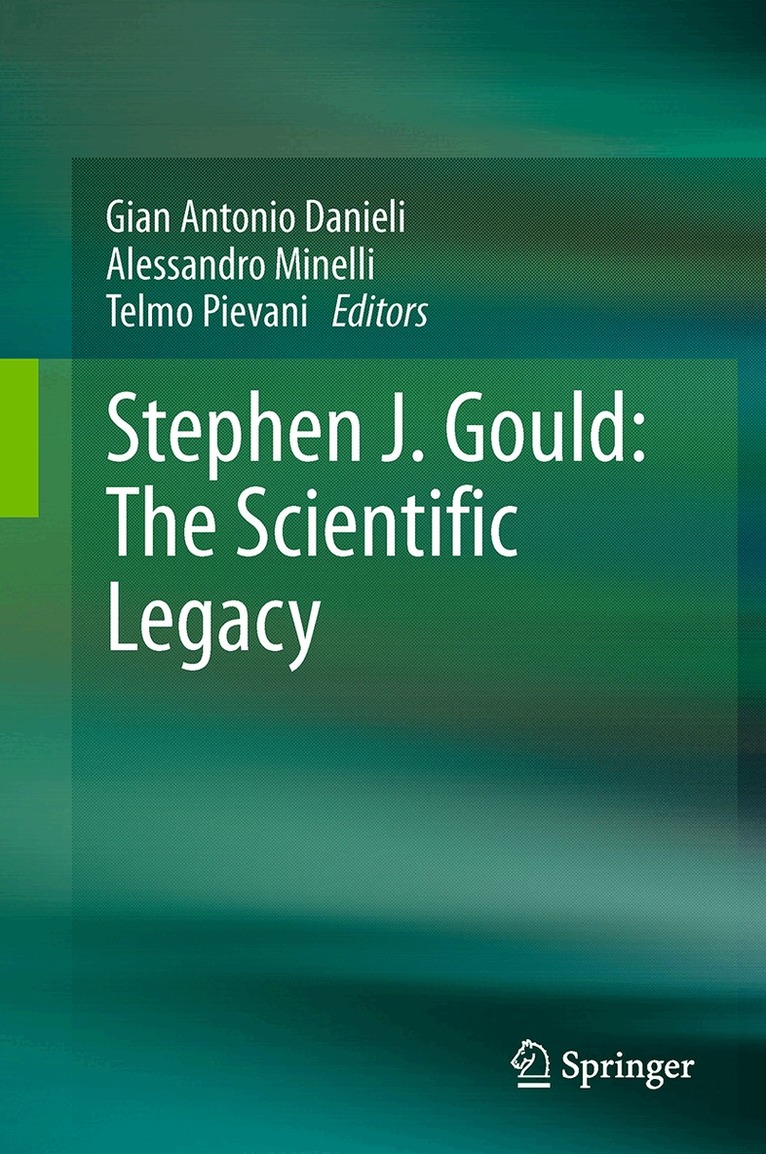
Stephen J. Gould: The Scientific Legacy
Av Gian Antonio Danieli, Alessandro Minelli m. fl.
Inbunden, 2013
2183 kr
Lägg i varukorg
Stephen J. Gould’s greatest contribution to science is a revised version of the theory of evolution which offers today a useful framework for understanding progress in many evolutionary fields. His intuitions about the conjunction of evolution and development, the role of ecological factors in …
Stephen J. Gould: The Scientific Legacy
Av Telmo Pievani, Alessandro Minelli m. fl.
E-bok, 2013
2925 kr
Lägg i varukorg
Stephen J. Gould’s greatest contribution to science is a revised version of the theory of evolution which offers today a useful framework for understanding progress in many evolutionary fields. His intuitions about the conjunction of evolution and development, the role of ecological factors in …
Stephen J. Gould: The Scientific Legacy
Av Gian Antonio Danieli, Alessandro Minelli m. fl.
Häftad, 2015
2183 kr
Lägg i varukorg
Stephen J. Gould’s greatest contribution to science is a revised version of the theory of evolution which offers today a useful framework for understanding progress in many evolutionary fields. His intuitions about the conjunction of evolution and development, the role of ecological factors in …