Ninni Wahlstrom – författare
662 kr
Läs direkt efter köp
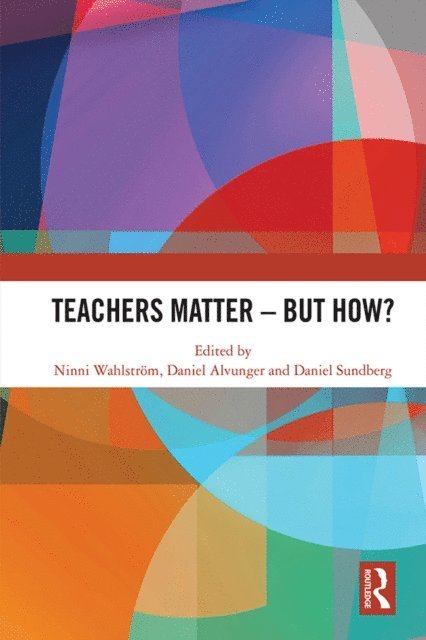
Global processes are transforming educational policy around the world in complex ways, with different implications for different local arenas. Over the last two decades, a global neoliberal policy paradigm has emerged, placing the teacher at its centre. Two well-known examples are the OECD report on education and training policy, ‘Teachers Matter’, and the McKinsey & Company report entitled ‘How the World’s Best-Performing School Systems Come Out on Top’. It now seems more important than ever to highlight some alternatives that might contribute to a broader understanding of the meaning of being a teacher.
In a time of standardised performance and accountability, this special issue raises critical questions about the space for teachers’ agency and teachers as curriculum agents. The different articles from some of our most distinguished researchers in the field provide essential perspectives on the question of where, when and how teachers matter. Our interest is not primarily to understand the scope of teachers’ agency but rather to understand what becomes important for teachers in their everyday activities, such as teaching students, handling educational norms and rules, working in a local as well as a global society etc. A common theme throughout the articles is that teachers matter in spaces where they can act as moral subjects in their profession in the present, drawing on collective and individual experiences of the past whilst imagining a desired future.
This book was originally published as a special issue of the Journal of Curriculum Studies.
662 kr
Läs direkt efter köp
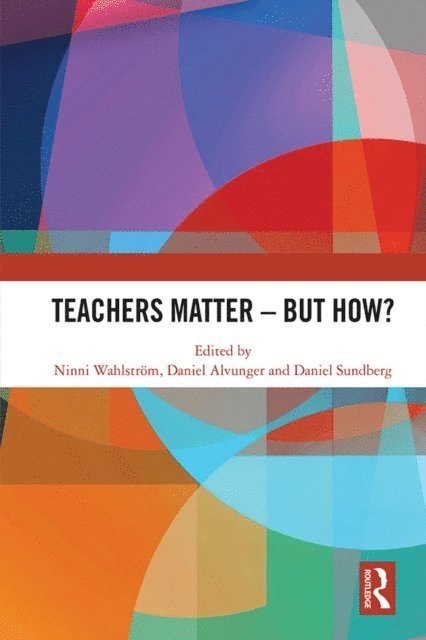
Global processes are transforming educational policy around the world in complex ways, with different implications for different local arenas. Over the last two decades, a global neoliberal policy paradigm has emerged, placing the teacher at its centre. Two well-known examples are the OECD report on education and training policy, ‘Teachers Matter’, and the McKinsey & Company report entitled ‘How the World’s Best-Performing School Systems Come Out on Top’. It now seems more important than ever to highlight some alternatives that might contribute to a broader understanding of the meaning of being a teacher.
In a time of standardised performance and accountability, this special issue raises critical questions about the space for teachers’ agency and teachers as curriculum agents. The different articles from some of our most distinguished researchers in the field provide essential perspectives on the question of where, when and how teachers matter. Our interest is not primarily to understand the scope of teachers’ agency but rather to understand what becomes important for teachers in their everyday activities, such as teaching students, handling educational norms and rules, working in a local as well as a global society etc. A common theme throughout the articles is that teachers matter in spaces where they can act as moral subjects in their profession in the present, drawing on collective and individual experiences of the past whilst imagining a desired future.
This book was originally published as a special issue of the Journal of Curriculum Studies.
716 kr
Läs direkt efter köp
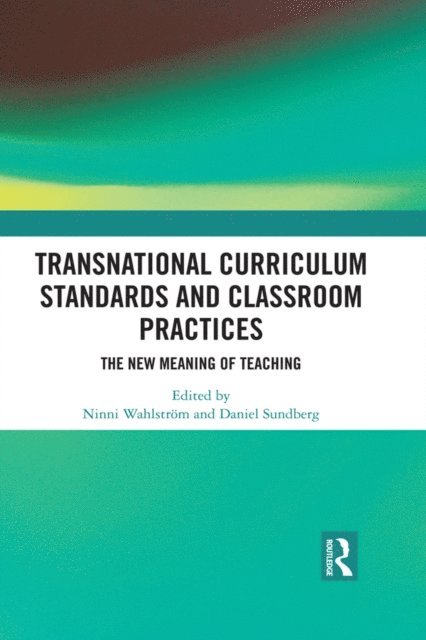
Focusing on the meaning of teaching, Transnational Curriculum Standards and Classroom Practices contributes to a deepened understanding of what it means to be a teacher in an institutional context ranked high on the policymakers’ agenda. While the policy literature emphasises efficiency in teaching, educational research demonstrates an awareness of the importance of alternative perspectives on what makes for successful teaching. This book critically examines the conditions and dimensions of teaching as framed in current policy discourse and situates school education in relation to wider societal issues.
Based on a four-year research project financed by the Swedish Research Council and drawing on international policy discourse, as well as international research, the chapters in this book contribute to the knowledge of relations and influences between international educational reform movements, national curriculum reforms, and implications for teaching and learning practices at the classroom level. Offering results and reflections from comprehensive comparative classroom studies, the book makes a distinctive contribution to our knowledge of the implications of policy for teachers and students.
This book should be essential reading for academics, researchers and postgraduate students interested in the relationship between the curriculum and teaching in a contemporary context, as well as those engaged in the study of education policy, curriculum theory, pedagogy and educational leadership. It should also be of great interest to policymakers and teachers.
710 kr
Läs direkt efter köp
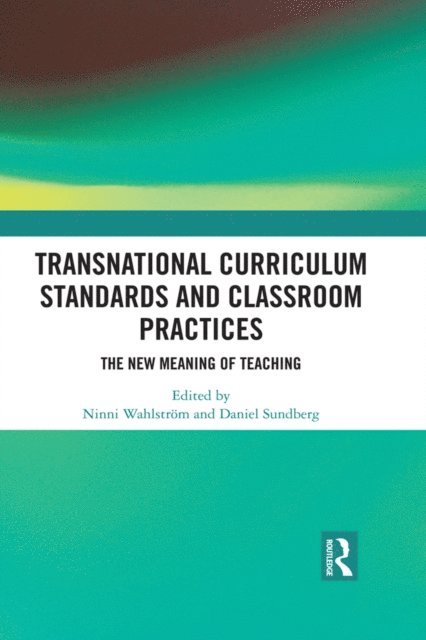
Focusing on the meaning of teaching, Transnational Curriculum Standards and Classroom Practices contributes to a deepened understanding of what it means to be a teacher in an institutional context ranked high on the policymakers’ agenda. While the policy literature emphasises efficiency in teaching, educational research demonstrates an awareness of the importance of alternative perspectives on what makes for successful teaching. This book critically examines the conditions and dimensions of teaching as framed in current policy discourse and situates school education in relation to wider societal issues.
Based on a four-year research project financed by the Swedish Research Council and drawing on international policy discourse, as well as international research, the chapters in this book contribute to the knowledge of relations and influences between international educational reform movements, national curriculum reforms, and implications for teaching and learning practices at the classroom level. Offering results and reflections from comprehensive comparative classroom studies, the book makes a distinctive contribution to our knowledge of the implications of policy for teachers and students.
This book should be essential reading for academics, researchers and postgraduate students interested in the relationship between the curriculum and teaching in a contemporary context, as well as those engaged in the study of education policy, curriculum theory, pedagogy and educational leadership. It should also be of great interest to policymakers and teachers.