Nissim Leon – författare
Visar alla böcker från författaren Nissim Leon. Handla med fri frakt och snabb leverans.
5 produkter
5 produkter
422 kr
Skickas inom 10-15 vardagar
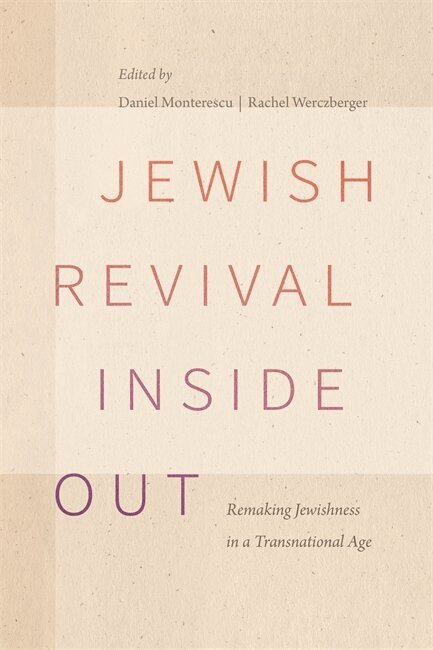
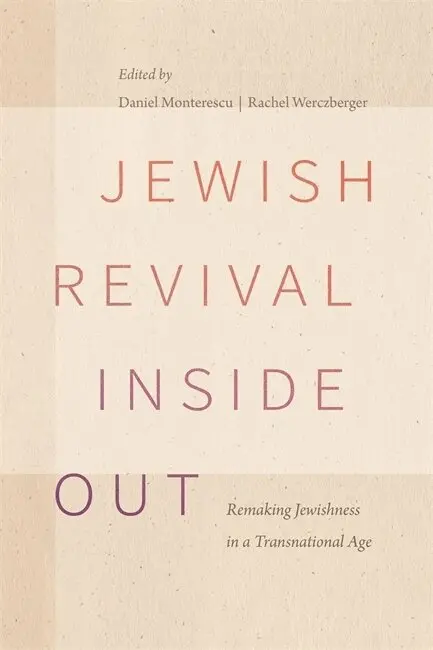
Against the gloomy forecast of "The Vanishing Diaspora", the end of the second millennium saw the global emergence of a dazzling array of Jewish cultural initiatives, institutional modalities, and individual practices. These "Jewish Revival" and "Jewish Renewal" projects are led by Jewish NGOs and philanthropic organizations, the Orthodox Teshuva (return to the fold) movement and its well-known emissary Chabad-Lubavitch Hasidism, and alternative cultural initiatives that promote what can be termed "lifestyle Judaism." This range between institutionalized revival movements and ephemeral event-driven projects circumscribes a diverse space of creative agency, which calls for a bottom-up empirical analysis of cultural creativity and the re-invention of Jewish tradition worldwide. Indeed, the trope of a "Jewish Renaissance" has become both a descriptive category of an increasingly popular and scholarly discourse across the globe, and a prescriptive model for social action. This volume explores the global transformations of contemporary Jewishness, which give renewed meaning to identity, tradition, and politics in our post secular world.
1 023 kr
Skickas inom 10-15 vardagar
Against the gloomy forecast of "The Vanishing Diaspora", the end of the second millennium saw the global emergence of a dazzling array of Jewish cultural initiatives, institutional modalities, and individual practices. These "Jewish Revival" and "Jewish Renewal" projects are led by Jewish NGOs and philanthropic organizations, the Orthodox Teshuva (return to the fold) movement and its well-known emissary Chabad-Lubavitch Hasidism, and alternative cultural initiatives that promote what can be termed "lifestyle Judaism." This range between institutionalized revival movements and ephemeral event-driven projects circumscribes a diverse space of creative agency, which calls for a bottom-up empirical analysis of cultural creativity and the re-invention of Jewish tradition worldwide. Indeed, the trope of a "Jewish Renaissance" has become both a descriptive category of an increasingly popular and scholarly discourse across the globe, and a prescriptive model for social action. This volume explores the global transformations of contemporary Jewishness, which give renewed meaning to identity, tradition, and politics in our post secular world.
1 977 kr
Skickas inom 10-15 vardagar
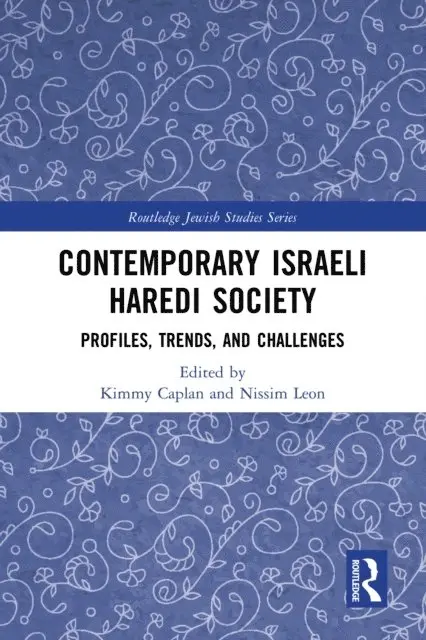
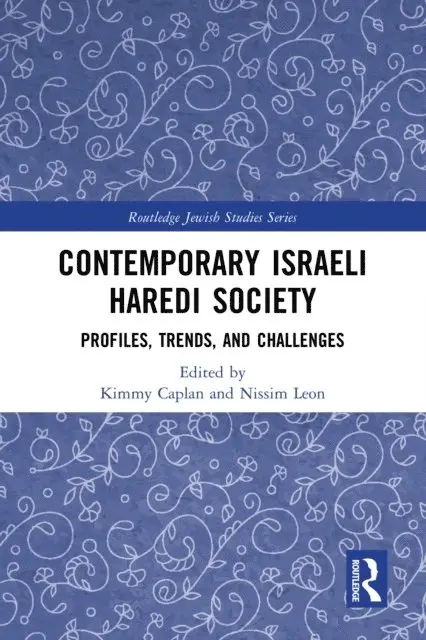
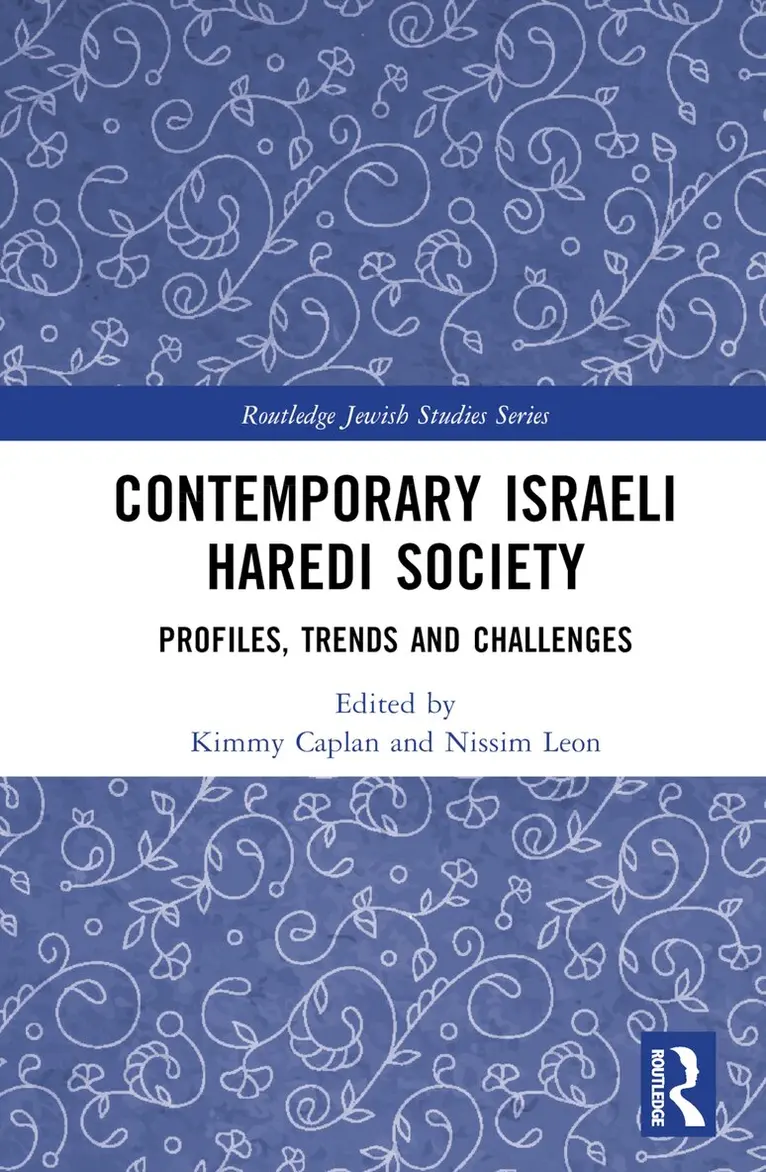
This edited volume offers profiles of contemporary Israeli Haredi (i.e., Jewish Ultra-Orthodox) society from several disciplinary points of view, resisting a generalized approach and examining the different, sometimes competing currents, that define it.It is argued that Haredi society has undergone a process of rejuvenation in recent history: demographically, it has experienced steady and consistent growth; on the Israeli political stage, Haredi parties have become increasingly influential; and culturally, the Haredi presence is increasingly felt in Israeli news media, popular movies, and TV series. Each of the chapters in the book focuses on a particular topic and combines research findings with an assessment of the current state of the field. These topics encompass Haredi ideology, politics, military service, education, geography, the media, and healthcare – together, they paint a complex picture of Haredi society as one of contradictory layers, dimensions, and aspects.Making sense of contemporary Haredi society is critical for anyone interested in understanding Israeli society as a whole, but the book will also appeal to historians of religion, scholars of contemporary conservative enclave religious societies and cultures, and those who focus on Jewish studies in the modern era.
578 kr
Skickas inom 10-15 vardagar
This edited volume offers profiles of contemporary Israeli Haredi (i.e., Jewish Ultra-Orthodox) society from several disciplinary points of view, resisting a generalized approach and examining the different, sometimes competing currents, that define it.It is argued that Haredi society has undergone a process of rejuvenation in recent history: demographically, it has experienced steady and consistent growth; on the Israeli political stage, Haredi parties have become increasingly influential; and culturally, the Haredi presence is increasingly felt in Israeli news media, popular movies, and TV series. Each of the chapters in the book focuses on a particular topic and combines research findings with an assessment of the current state of the field. These topics encompass Haredi ideology, politics, military service, education, geography, the media, and healthcare – together, they paint a complex picture of Haredi society as one of contradictory layers, dimensions, and aspects.Making sense of contemporary Haredi society is critical for anyone interested in understanding Israeli society as a whole, but the book will also appeal to historians of religion, scholars of contemporary conservative enclave religious societies and cultures, and those who focus on Jewish studies in the modern era.
Emergence of a Mizrachi Middle Class in Israel
The Struggle of Mizrachi Jews for Mobility, Status, and Prestige
Inbunden, Engelska, 2025
1 588 kr
Skickas inom 3-6 vardagar
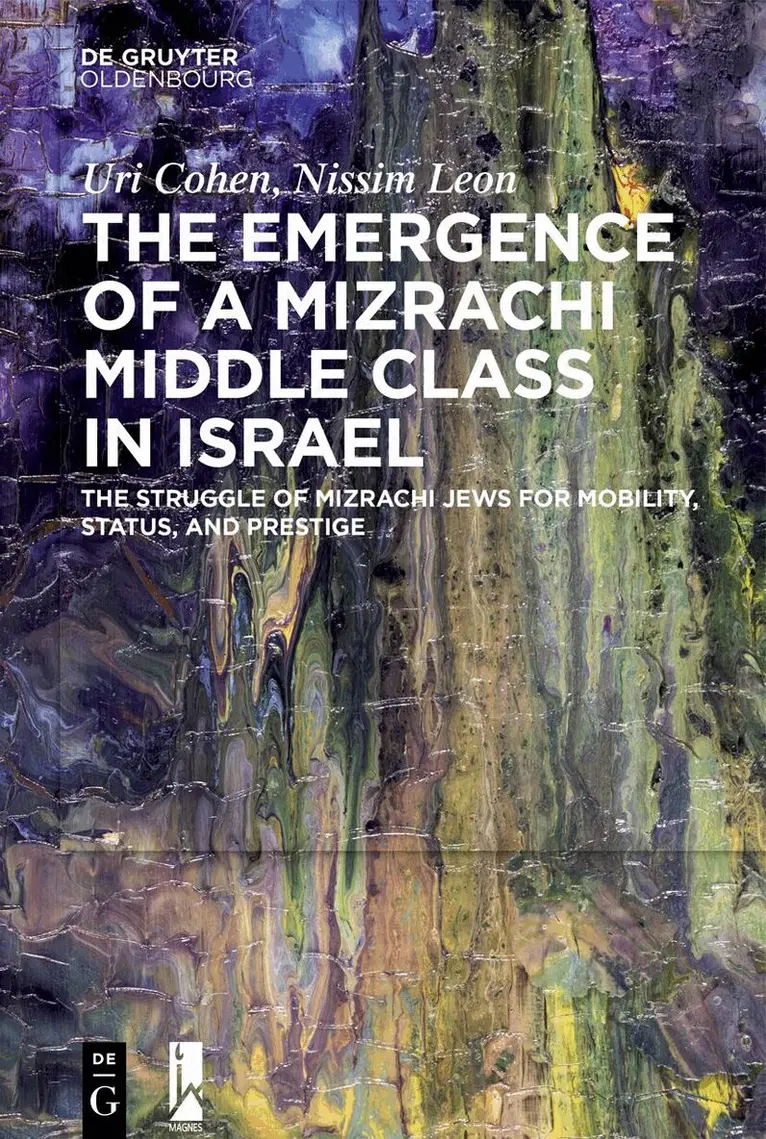
The Emergence of the Mizrachi Middle Class examines one of the major issues in the sociology of Israel: the story of the Mizrachim (Jews of Middle Eastern and North African descent), a group that has been, and is still, engaged in class-mobility efforts, and is ostensibly closing the gap between itself and the Ashkenazim (Jews of Central and Eastern European extraction). This is one of the most important social processes to have emerged in Israel in recent decades; it is changing the face of the Israeli middle class. While Israeli public discourse depicts this process as a reduction of ethnic and class disparities, the critical analysis offered in this book aims to reveal the issue’s tremendous complexity. The academically-educated Mizrachi middle class is an effective social focus for the description and critical analysis of the Mizrachi mobility process, its sources, and the accompanying social unrest. The book shows that Mizrachi mobility was not a continuous progression along orderly mobility routes, but rather a struggle full of mobility traps – a Sisyphean effort to achieve not only economic advancement, but also status and prestige in Israeli society.