Noel Gaston - Böcker
Visar alla böcker från författaren Noel Gaston. Handla med fri frakt och snabb leverans.
5 produkter
5 produkter
535 kr
Skickas inom 10-15 vardagar
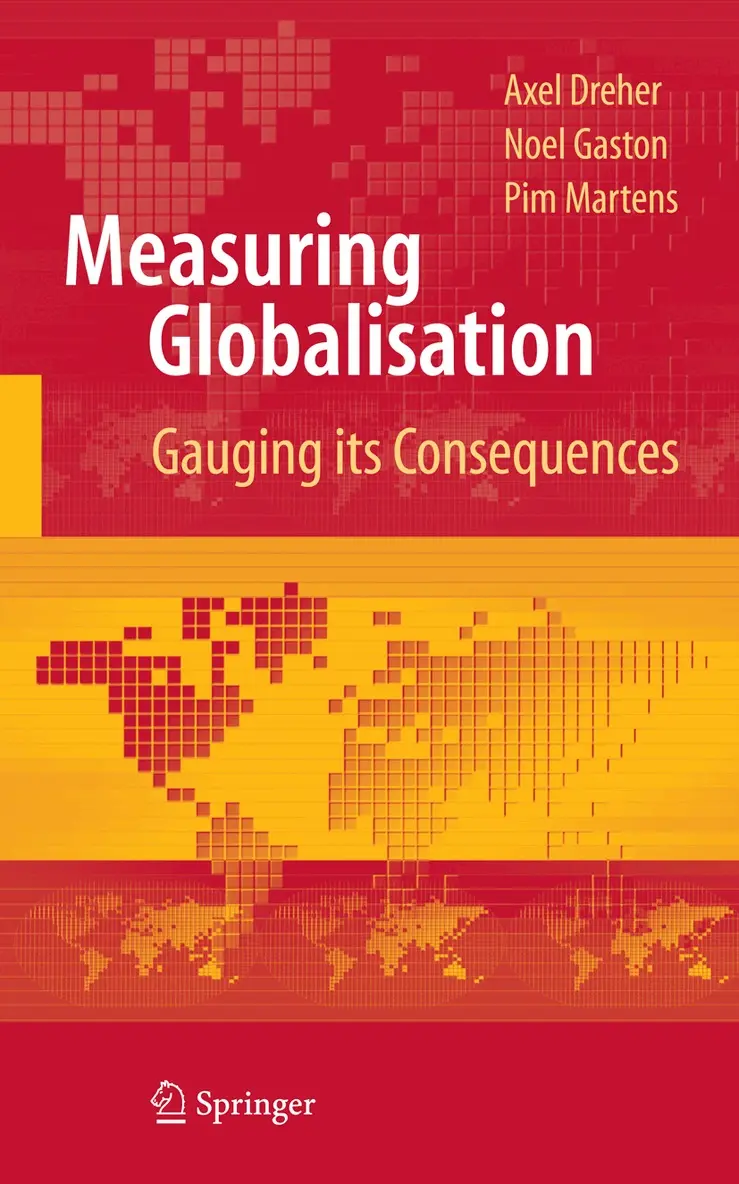
During the last few decades, human dynamics, institutional change, political relations, and the natural environment have become successively more intertwined. While the increased global economic integration, global forms of governance, globally inter-linked social and environmental developments are often referred to as “globalisation,” there is no unanimously-agreed upon definition of the term. Depending on the researcher or commentator, it can mean, among other things, the growing integration of markets and nation-states, receding geographical constraints on social and cultural arrangements, the increased dissemination of ideas and technologies, the threat to national sovereignty by trans-national actors; or the transformation of the economic, political and cultural foundations of societies. Regardless of perspective, globalisation permeates our economic, political, and social institutions to a profound degree. Recently, the issue of “sustainability” has reached the mainstream: are the forces of globalisation ultimately contributing to growth and opportunity—or to destruction and chaos? Against the chorus of globalisation’s proponents and detractors, the authors propose an approach for measuring globalisation and its consequences. Undertaking a comprehensive review of the literature on globalisation and using data from the MGI and KOF indices, the authors build a framework for defining globalisation and analyzing the relationships among economic, political, and social variables. In particular, they apply the methodology to analyze the effects of globalisation on tax policy, government spending, economic growth, inequality, union power, and the natural environment and consider additional avenues for research, analysis, and decision making. In the process, they hope that by introducing objective measures to enhance our insight into the functioning of the complex global system.Dreher, Gaston and Martens have produced the most systematicand comprehensive research I have seen on both measuring globalisation and analyzing its impact on the most important social and economic issues of our time. Globalisation research is a dense thicket. This books stands out among its many thorns.Geoffrey Garrett, President of the Pacific Council on International PolicyThis is an important contribution to the growing literature on measuring globalization. The analysis is comprehensive and insightful, making it a work that the students of globalization cannot ignore.Jagdish Bhagwati, University Professor, Economics and Law, Columbia University and Author of In Defense of Globalization
576 kr
Skickas inom 10-15 vardagar
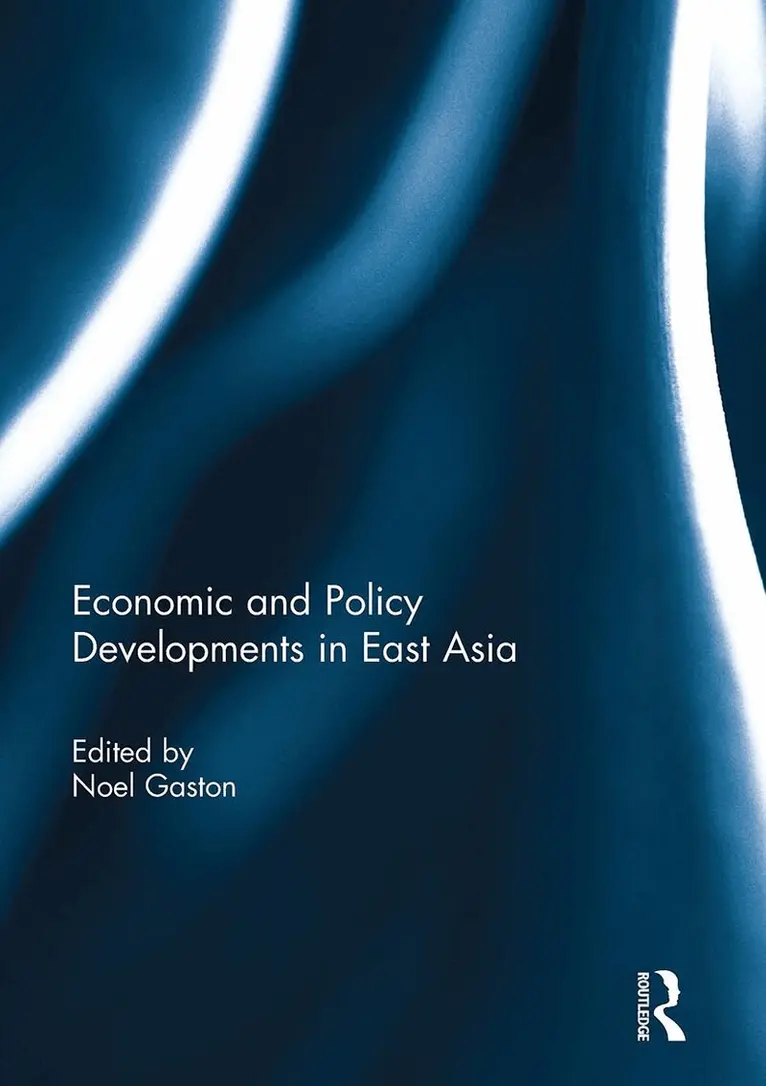
In this collection, academics and policy-makers from Australia, Japan, New Zealand and Singapore present research results on a variety of topics based around three key themes: macroeconomics and trade, labour and social issues, and taxes and government spending. The chapters are empirically-oriented and include both cross-country studies and individual country studies. They include examinations of key topics, such as the problem of corruption, the relationship between trade liberalisation and growth and the impact of migration on the Asian welfare state, as well as studies of Chinese manufacturing exports and the income volatility of Indonesian banks. The scholarship containing in this collection is a crucial resource to researchers and commentators on the economies in our Asia-Pacific region. This book was originally published as a special issue of the Journal of the Asia Pacific Economy.
2 155 kr
Skickas inom 10-15 vardagar
In this collection, academics and policy-makers from Australia, Japan, New Zealand and Singapore present research results on a variety of topics based around three key themes: macroeconomics and trade, labour and social issues, and taxes and government spending. The chapters are empirically-oriented and include both cross-country studies and individual country studies. They include examinations of key topics, such as the problem of corruption, the relationship between trade liberalisation and growth and the impact of migration on the Asian welfare state, as well as studies of Chinese manufacturing exports and the income volatility of Indonesian banks. The scholarship containing in this collection is a crucial resource to researchers and commentators on the economies in our Asia-Pacific region. This book was originally published as a special issue of the Journal of the Asia Pacific Economy.
535 kr
Skickas inom 10-15 vardagar
During the last few decades, human dynamics, institutional change, political relations, and the natural environment have become successively more intertwined. While the increased global economic integration, global forms of governance, globally inter-linked social and environmental developments are often referred to as “globalisation,” there is no unanimously-agreed upon definition of the term. Depending on the researcher or commentator, it can mean, among other things, the growing integration of markets and nation-states, receding geographical constraints on social and cultural arrangements, the increased dissemination of ideas and technologies, the threat to national sovereignty by trans-national actors; or the transformation of the economic, political and cultural foundations of societies. Regardless of perspective, globalisation permeates our economic, political, and social institutions to a profound degree. Recently, the issue of “sustainability” has reached the mainstream: are the forces of globalisation ultimately contributing to growth and opportunity—or to destruction and chaos? Against the chorus of globalisation’s proponents and detractors, the authors propose an approach for measuring globalisation and its consequences. Undertaking a comprehensive review of the literature on globalisation and using data from the MGI and KOF indices, the authors build a framework for defining globalisation and analyzing the relationships among economic, political, and social variables. In particular, they apply the methodology to analyze the effects of globalisation on tax policy, government spending, economic growth, inequality, union power, and the natural environment and consider additional avenues for research, analysis, and decision making. In the process, they hope that by introducing objective measures to enhance our insight into the functioning of the complex global system.Dreher, Gaston and Martens have produced the most systematicand comprehensive research I have seen on both measuring globalisation and analyzing its impact on the most important social and economic issues of our time. Globalisation research is a dense thicket. This books stands out among its many thorns.Geoffrey Garrett, President of the Pacific Council on International PolicyThis is an important contribution to the growing literature on measuring globalization. The analysis is comprehensive and insightful, making it a work that the students of globalization cannot ignore.Jagdish Bhagwati, University Professor, Economics and Law, Columbia University and Author of In Defense of Globalization
Globalization and Economic Integration
Winners and Losers in the Asia-Pacific
Inbunden, Engelska, 2010
2 038 kr
Skickas inom 7-10 vardagar
Given the importance of globalization in today’s world, this salutary and timely book explores how globalization is specifically shaping the Asia-Pacific. It investigates future prospects and challenges, identifies the key winners and losers, and concludes in many cases that the portents for globalization are not particularly promising. Prominent economists and policy scholars examine a wide range of topics pertinent to globalization and economic integration in the Asia-Pacific, encompassing macroeconomic coordination and financial market integration; regionalism and preferential trade agreements; and immigration and labor markets, including gender issues and the impact of outsourcing. Through these analyses, the expert contributors illustrate the importance of market participants and regulators clearly understanding the risks associated with the present stage of globalization. They show that national policy makers need to reconfigure the regulatory framework following international lessons from previous financial crises experienced in the last two decades, and that financial literacy is essential for market participants, especially in emerging economies. Many of the issues discussed will prove useful in promoting the development of a new international financial architecture, comprising measures that will help reap the full benefits of globalization.This stimulating and challenging book will strongly appeal to academics, advanced undergraduates, postgraduates, researchers, and policy makers in the fields of Asian studies, international economics, and international business.