Pim Martens - Böcker
Visar alla böcker från författaren Pim Martens. Handla med fri frakt och snabb leverans.
12 produkter
12 produkter
540 kr
Skickas inom 10-15 vardagar
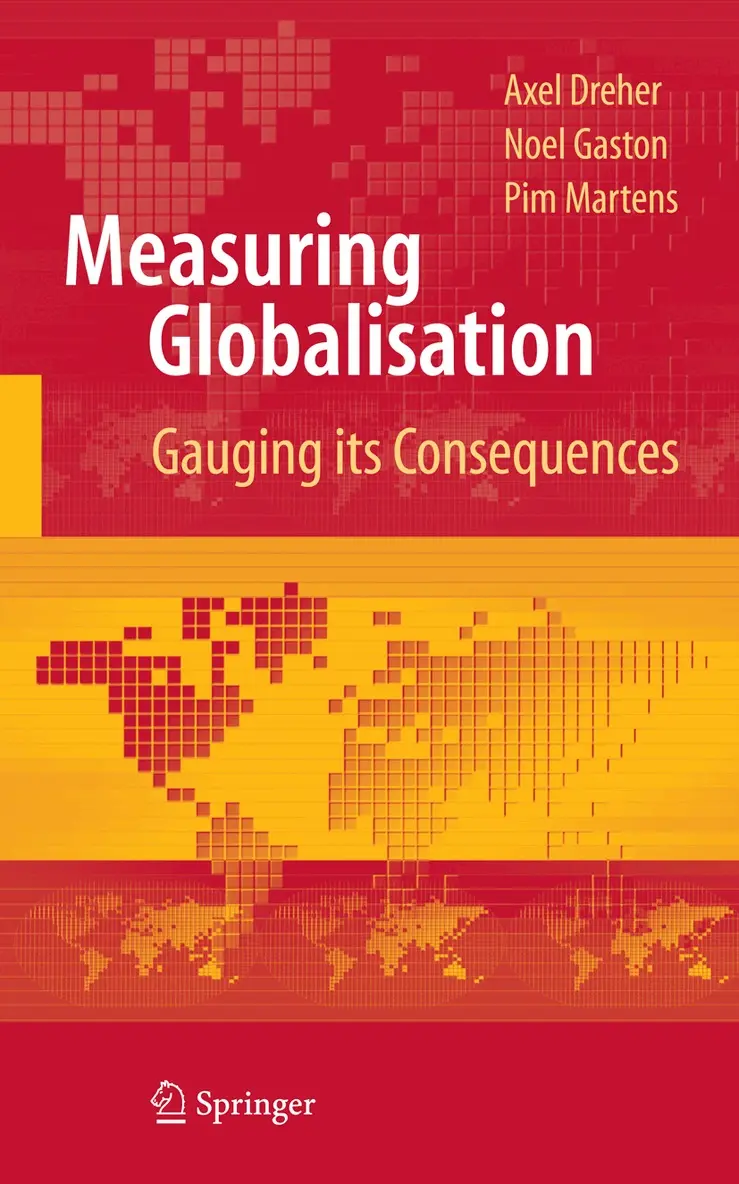
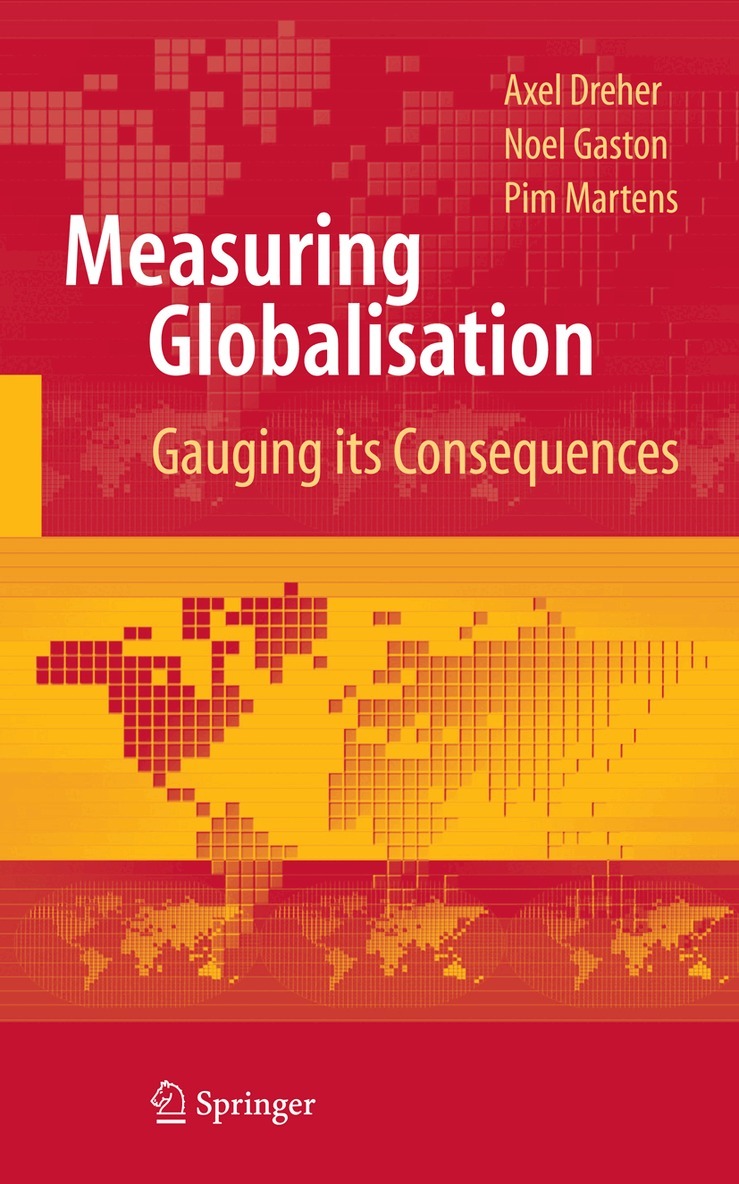
During the last few decades, human dynamics, institutional change, political relations, and the natural environment have become successively more intertwined. While the increased global economic integration, global forms of governance, globally inter-linked social and environmental developments are often referred to as “globalisation,” there is no unanimously-agreed upon definition of the term. Depending on the researcher or commentator, it can mean, among other things, the growing integration of markets and nation-states, receding geographical constraints on social and cultural arrangements, the increased dissemination of ideas and technologies, the threat to national sovereignty by trans-national actors; or the transformation of the economic, political and cultural foundations of societies. Regardless of perspective, globalisation permeates our economic, political, and social institutions to a profound degree. Recently, the issue of “sustainability” has reached the mainstream: are the forces of globalisation ultimately contributing to growth and opportunity—or to destruction and chaos? Against the chorus of globalisation’s proponents and detractors, the authors propose an approach for measuring globalisation and its consequences. Undertaking a comprehensive review of the literature on globalisation and using data from the MGI and KOF indices, the authors build a framework for defining globalisation and analyzing the relationships among economic, political, and social variables. In particular, they apply the methodology to analyze the effects of globalisation on tax policy, government spending, economic growth, inequality, union power, and the natural environment and consider additional avenues for research, analysis, and decision making. In the process, they hope that by introducing objective measures to enhance our insight into the functioning of the complex global system.Dreher, Gaston and Martens have produced the most systematicand comprehensive research I have seen on both measuring globalisation and analyzing its impact on the most important social and economic issues of our time. Globalisation research is a dense thicket. This books stands out among its many thorns.Geoffrey Garrett, President of the Pacific Council on International PolicyThis is an important contribution to the growing literature on measuring globalization. The analysis is comprehensive and insightful, making it a work that the students of globalization cannot ignore.Jagdish Bhagwati, University Professor, Economics and Law, Columbia University and Author of In Defense of Globalization
Health and Climate Change
Modelling the impacts of global warming and ozone depletion
Häftad, Engelska, 2014
780 kr
Skickas inom 10-15 vardagar
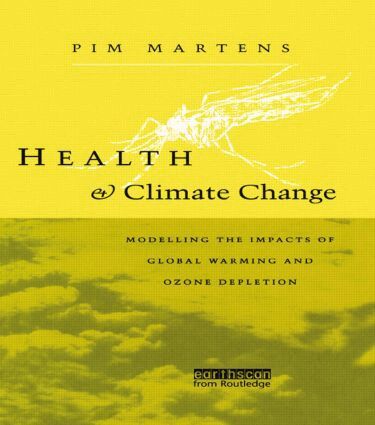
'Understanding how complex ecological and climatic change can influence human health is the new challenge before us. The book confronts these multidimensional risk assessments head-on and will catalyse the important interdisciplinary and integrated approach that is the new paradigm now required for environmental and public health research.' Dr JONATHAN PATZ Johns Hopkins School of Hygiene and Public Health'This book provides a sturdy foundation for thinking about how best to tackle a varied spectrum of population health hazards posed by different aspects and combinations of global change processes it alsogoes that extra mile by estimating the attributable population burdens of disease or mortality that are likely to result from these aspects of global change. It is heartening to see the results of this mathematical modeling being presented in policy-relevant terms.' From the Foreword by TONY McMICHAELHealth and Climate Change is the first major study of the potentially devastating health impacts of the global atmospheric changes which are under way. Using the best available data, the author presents models of the most plausible future courses of vector-borne diseases such as malaria, dengue fever and schistosomiasis; skin cancer caused by nozone depletion; and cardiovascular and respiratory disorders caused by higher temperatures.Current epidemiological research methods are not well adapted to analysing complex systems influenced by human intervention, or more simple processes calculated to take place within the distant future. Health and Climate Change proposes a new paradigm of integrated eco-epidemiological models for these areas of study. It will be essential reading for those concerned with public health and epidemiology, environmental studies, climate change and development studies.Originally published in 1998
1 590 kr
Skickas inom 10-15 vardagar
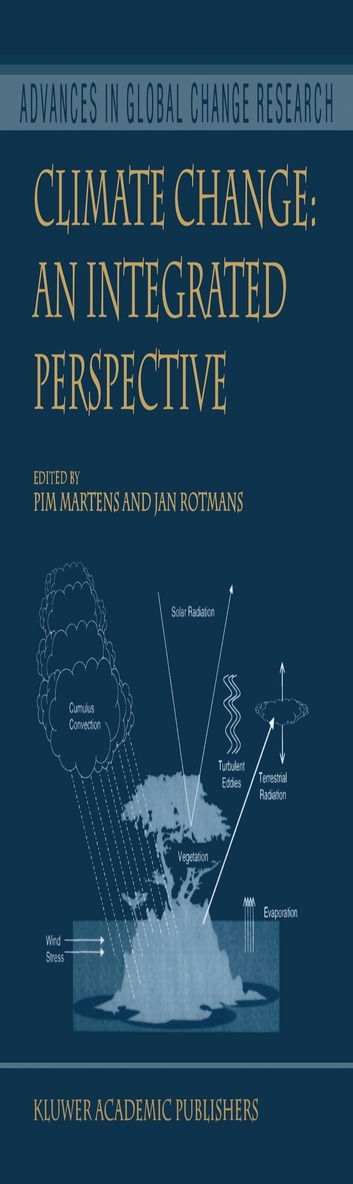
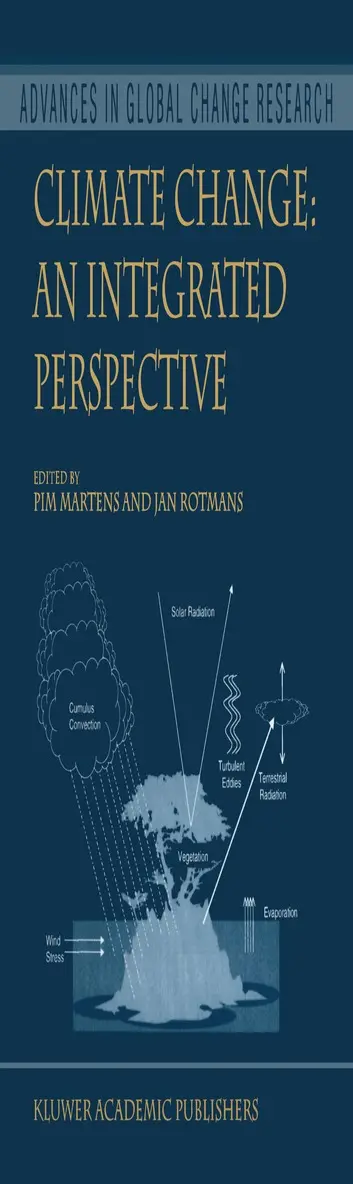
Global climate change - rapid, substantial and human-induced - may have radical consequences for life on earth. The problem is a complex one, however, demanding a multi-disciplinary approach. A simple cost-benefit analysis cannot capture the essentials, nor can the issue be reduced to an emissions reduction game, as the Kyoto process tries to do. This text considers an integrative approach, which reveals that global climate change needs to be considered as a spider in a web, a triggering factor for a range of other, related problems - land use changes, water supply and demand, food supply, energy supply, human health, and air pollution. But an approach like this, which takes account of all items of knowledge, known and uncertain, does not produce clear-cut, final and popular answers. It does provide useful insights, however, which will allow comprehensive and effective long-term climate strategies to be put into effect.
1 073 kr
Skickas inom 10-15 vardagar
The workshop “Environmental Change and Malaria Risk: Global and Local Implications” was held to conclude a 5-year collaborative research project on environmental change and malaria risk, with field research in Kenya and Brazil. It was fitting that such a large group of specialists was able to attend the workshop and contribute with a chapter in which the predicted environmental changes were viewed from different angles. We would like to thank the Netherlands Foundation for the Advancement of Tropical Research (WOTRO) and the National Programme for Research on Climate Change and Air Quality (NOP) for having funded our work so generously. Wageningen UR – Frontis is thanked for having arranged the workshop and for its financial contribution. We would especially like to thank Petra van Boetzelaer for having assisted with the logistics of the workshop, and Paulien van Vredendaal for having spent many hours in the type editing of the chapters, making publication of this book possible. The editors, Willem Takken Pim Martens Rob Bogers Wageningen, March 2005 Colour pages Chapter 2. Pim Martens and Chris Thomas; Figures 2 and 3 Figure 2. MARA/ARMA index of climatic suitability for P. falciparum transmission in four consecutive months Figure 3. Number of consecutive months with a MARA/ARMA index of climatic suitability for P. falciparum transmission of p ?0. 9 in each month Colour pages Chapter 5. M. B. Hoshen and A. P.
1 073 kr
Skickas inom 10-15 vardagar
The workshop “Environmental Change and Malaria Risk: Global and Local Implications” was held to conclude a 5-year collaborative research project on environmental change and malaria risk, with field research in Kenya and Brazil. It was fitting that such a large group of specialists was able to attend the workshop and contribute with a chapter in which the predicted environmental changes were viewed from different angles. We would like to thank the Netherlands Foundation for the Advancement of Tropical Research (WOTRO) and the National Programme for Research on Climate Change and Air Quality (NOP) for having funded our work so generously. Wageningen UR – Frontis is thanked for having arranged the workshop and for its financial contribution. We would especially like to thank Petra van Boetzelaer for having assisted with the logistics of the workshop, and Paulien van Vredendaal for having spent many hours in the type editing of the chapters, making publication of this book possible. The editors, Willem Takken Pim Martens Rob Bogers Wageningen, March 2005 Colour pages Chapter 2. Pim Martens and Chris Thomas; Figures 2 and 3 Figure 2. MARA/ARMA index of climatic suitability for P. falciparum transmission in four consecutive months Figure 3. Number of consecutive months with a MARA/ARMA index of climatic suitability for P. falciparum transmission of p ?0. 9 in each month Colour pages Chapter 5. M. B. Hoshen and A. P.
540 kr
Skickas inom 10-15 vardagar
During the last few decades, human dynamics, institutional change, political relations, and the natural environment have become successively more intertwined. While the increased global economic integration, global forms of governance, globally inter-linked social and environmental developments are often referred to as “globalisation,” there is no unanimously-agreed upon definition of the term. Depending on the researcher or commentator, it can mean, among other things, the growing integration of markets and nation-states, receding geographical constraints on social and cultural arrangements, the increased dissemination of ideas and technologies, the threat to national sovereignty by trans-national actors; or the transformation of the economic, political and cultural foundations of societies. Regardless of perspective, globalisation permeates our economic, political, and social institutions to a profound degree. Recently, the issue of “sustainability” has reached the mainstream: are the forces of globalisation ultimately contributing to growth and opportunity—or to destruction and chaos? Against the chorus of globalisation’s proponents and detractors, the authors propose an approach for measuring globalisation and its consequences. Undertaking a comprehensive review of the literature on globalisation and using data from the MGI and KOF indices, the authors build a framework for defining globalisation and analyzing the relationships among economic, political, and social variables. In particular, they apply the methodology to analyze the effects of globalisation on tax policy, government spending, economic growth, inequality, union power, and the natural environment and consider additional avenues for research, analysis, and decision making. In the process, they hope that by introducing objective measures to enhance our insight into the functioning of the complex global system.Dreher, Gaston and Martens have produced the most systematicand comprehensive research I have seen on both measuring globalisation and analyzing its impact on the most important social and economic issues of our time. Globalisation research is a dense thicket. This books stands out among its many thorns.Geoffrey Garrett, President of the Pacific Council on International PolicyThis is an important contribution to the growing literature on measuring globalization. The analysis is comprehensive and insightful, making it a work that the students of globalization cannot ignore.Jagdish Bhagwati, University Professor, Economics and Law, Columbia University and Author of In Defense of Globalization
Health and Climate Change
Modelling the impacts of global warming and ozone depletion
Inbunden, Engelska, 2009
2 166 kr
Skickas inom 10-15 vardagar
'Understanding how complex ecological and climatic change can influence human health is the new challenge before us. The book confronts these multidimensional risk assessments head-on and will catalyse the important interdisciplinary and integrated approach that is the new paradigm now required for environmental and public health research.' Dr JONATHAN PATZ Johns Hopkins School of Hygiene and Public Health'This book provides a sturdy foundation for thinking about how best to tackle a varied spectrum of population health hazards posed by different aspects and combinations of global change processes it alsogoes that extra mile by estimating the attributable population burdens of disease or mortality that are likely to result from these aspects of global change. It is heartening to see the results of this mathematical modeling being presented in policy-relevant terms.' From the Foreword by TONY McMICHAELHealth and Climate Change is the first major study of the potentially devastating health impacts of the global atmospheric changes which are under way. Using the best available data, the author presents models of the most plausible future courses of vector-borne diseases such as malaria, dengue fever and schistosomiasis; skin cancer caused by nozone depletion; and cardiovascular and respiratory disorders caused by higher temperatures.Current epidemiological research methods are not well adapted to analysing complex systems influenced by human intervention, or more simple processes calculated to take place within the distant future. Health and Climate Change proposes a new paradigm of integrated eco-epidemiological models for these areas of study. It will be essential reading for those concerned with public health and epidemiology, environmental studies, climate change and development studies.Originally published in 1998
Social and Behavioural Aspects of Climate Change
Linking Vulnerability, Adaptation and Mitigation
Inbunden, Engelska, 2010
2 306 kr
Skickas inom 10-15 vardagar
Over the past few years, and certainly since the publication of the "Stern Report", there has been increasing recognition that climate change is not only an environmental crisis, but one with important social and economic dimensions. There is now a growing need for multi-disciplinary research and for the science of climate change to be usefully translated for policy-makers.Until very recently, scientific and policy emphasis on climate change has focused almost exclusively on mitigation efforts: mechanisms and regulations to reduce greenhouse gas emissions. The success of such efforts to date is debatable. In fact, the impact of ever more stringent emission control programmes could potentially have enormous social consequences. Little effort has been expended on the exploration of a systematic evaluation of climate stabilization benefits or the costs of adapting to a changed climate, let alone attempting to integrate different approaches. There is an increasing recognition that the key actors in the climate crisis also need to be preparing for change that is unavoidable. This has resulted in a greater consideration of vulnerability and adaptation.The book, based on the research programme "Vulnerability, Adaptation and Mitigation" (VAM) which ran from 2004 to 2010, funded by the Netherlands Organisation for Scientific Research (NWO), presents a cluster of case studies of industries, communities and institutions which each show how vulnerability, adaptation and mitigation analyses can be integrated using social behavioural sciences. Each chapter makes specific recommendations for the studied industry sector, community or institution, analyses the latest research developments of the field and identifies priorities for future research.The book argues that the inherent complexity of climate change will ultimately require a much more integrated response both scientifically – to better understand multiple causes and impacts – as well as at the scientific/policy interface, where new forms of engagement between scientists, policy-makers and wider stakeholder groups can make a valuable contribution to more informed climate policy and practice.The book is particularly timely as the scientific research and policy debate is shifting from one of problem-framing to new agendas that are much more concerned with implementation, the improvement of assessment methodologies from a multi-disciplinary perspective, and the reframing of current scientific understanding towards mitigation, adaptation and vulnerability. A critical element in responding to the climate change challenge will be to ensure the translation of these new scientific insights into innovative policy and practice "on the ground". This book provides some fundamental elements to answer this need.The Social and Behavioural Aspects of Climate Change: Linking Vulnerability, Adaptation and Mitigation will be essential reading for social science researchers and policy managers in the area of climate change, as well as for those who want to know what the social and behavioural sciences can contribute toward coping with climate hazards. NGOs, law firms and businesses in the energy sector or other climate related fields will also find the book of great value.
1 168 kr
Tillfälligt slut
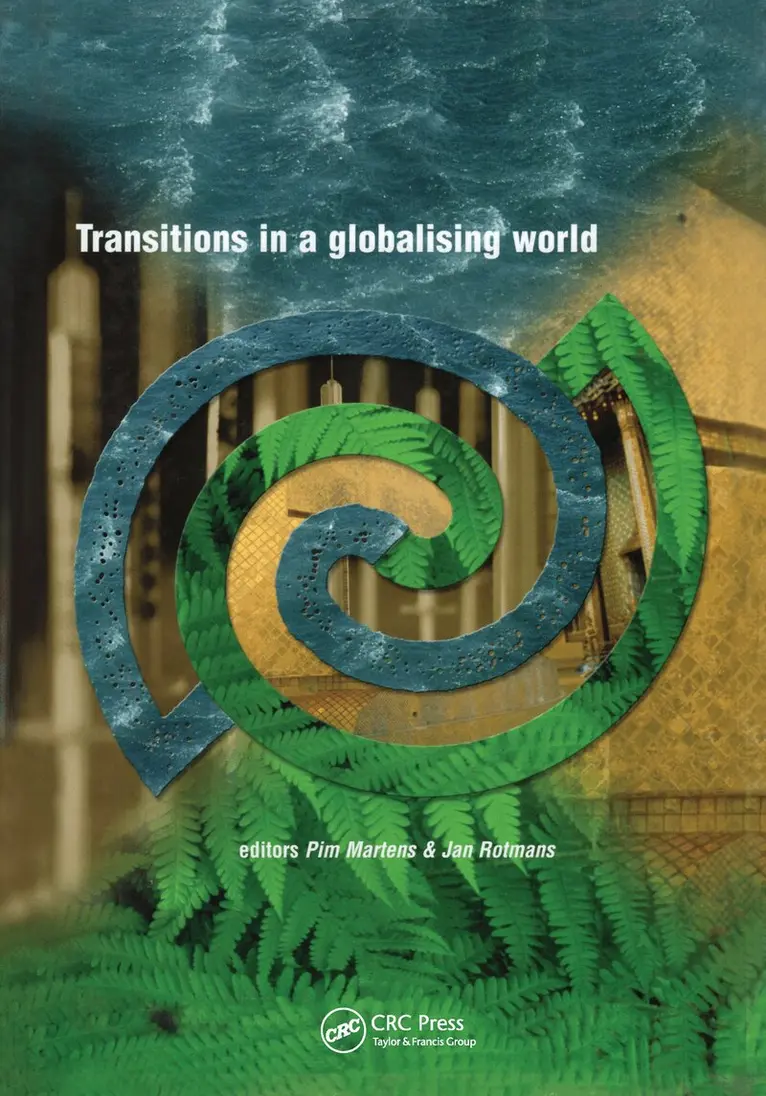
In this work, four major issues are discussed that are of global importance: developments related to two of our key natural resources; water and biodiversity; the health of human populations; and the developments related to global tourism.

1 590 kr
Skickas inom 10-15 vardagar
Global climate change - rapid, substantial and human induced - may have radical consequences for life on earth. The problem is a complex one, however, demanding a multi-disciplinary approach. A simple cost-benefit analysis cannot capture the essentials, nor can the issue be reduced to an emissions reduction game, as the Kyoto process tries to do. It is much more sensible to adopt an integrative approach, which reveals that global climate change needs to be considered as a spider in a web, a triggering factor for a range of other, related problems - land use changes, water supply and demand, food supply, energy supply, human health, air pollution, etc. But an approach like this, which takes account of all items of knowledge, known and uncertain, does not produce clear-cut, final and popular answers. It does provide useful insights, however, which will allow comprehensive and effective long-term climate strategies to be put into effect. Climate Change: An Integrated Perspective will appeal to a broad spectrum of readers. It is a useful source for the climate-change professionals, such as policy makers and analysts, natural and social scientists. It is also suitable for educationalists, students and indeed anyone interested in the fascinating world of multidisciplinary research underlying our approach to this global change issue.
1 392 kr
Skickas inom 10-15 vardagar
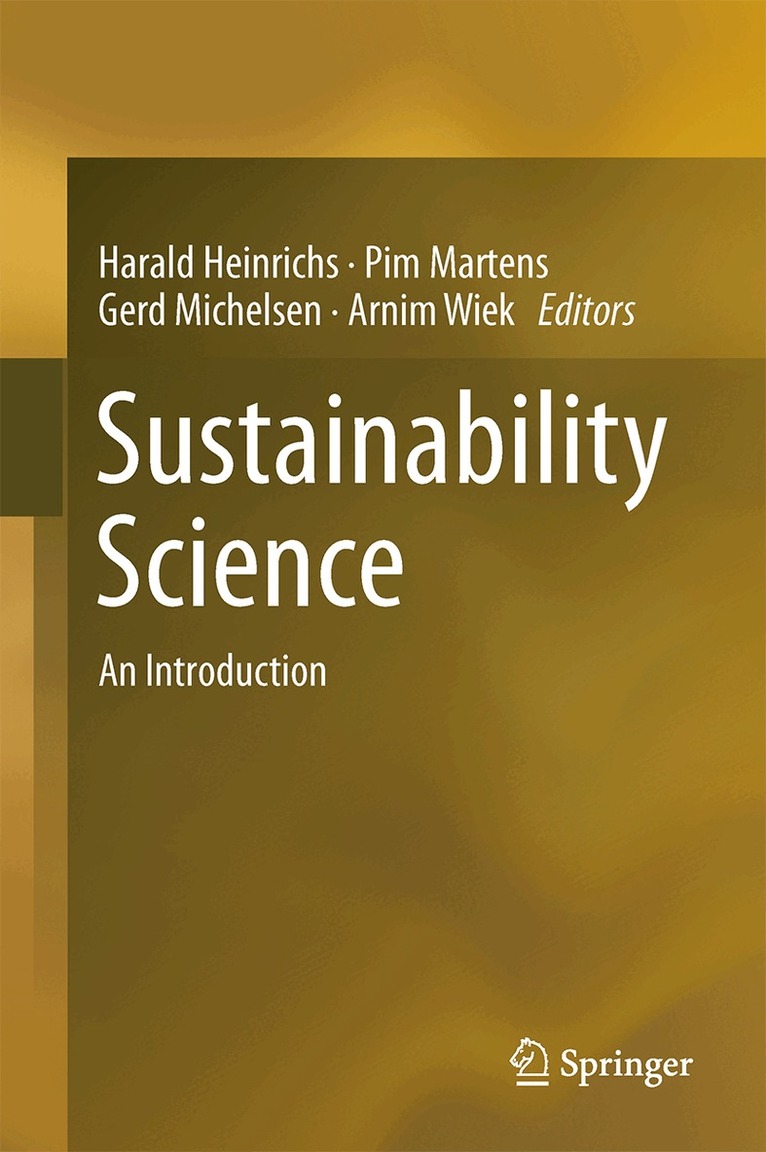
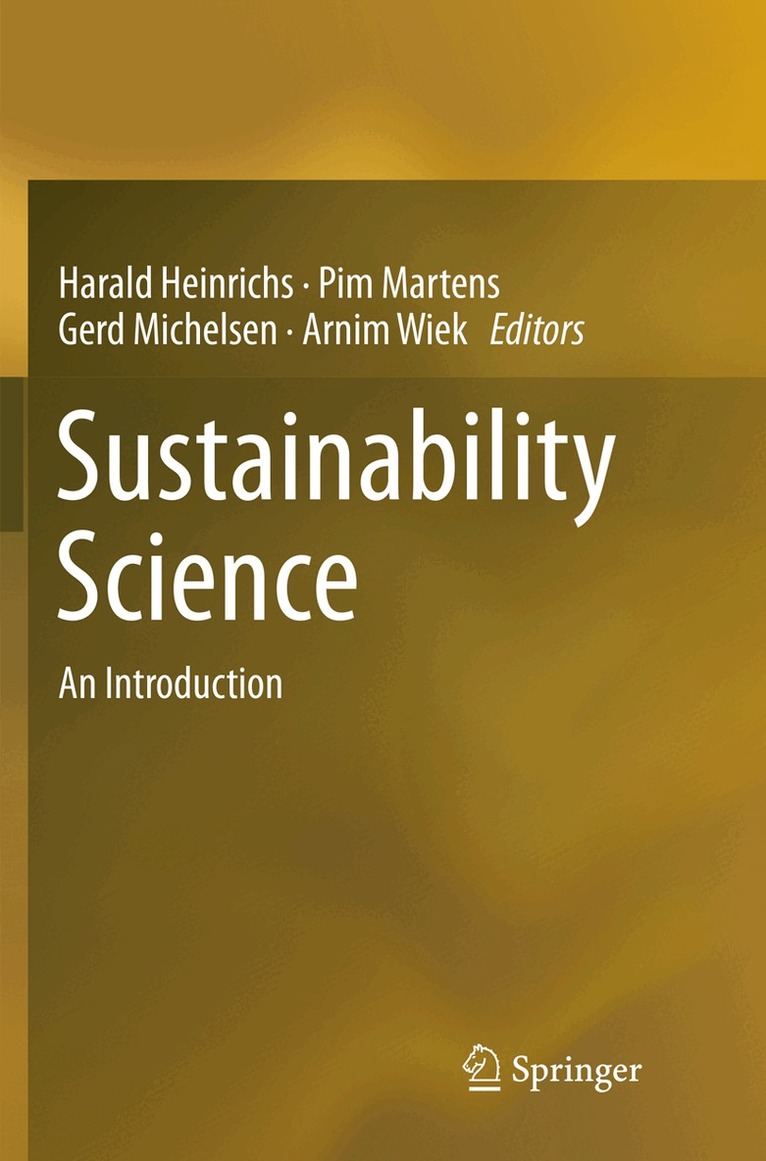
This textbook provides a comprehensive compilation of conceptual perspectives, methodological approaches and empirical insights of inter- and transdisciplinary sustainability science. Written by an international team of authors from leading sustainability institutions, the textbook covers key perspectives and topics of the scientific discourse on sustainable development. More than two decades after conceptualizing sustainability as societal guiding vision and regulative idea the necessity of concretizing and realizing sustainability in societal praxis is bigger than ever. Sharply improved individual and societal sustainable decision-making and action is necessary for a better future of humankind and the planet. On that account problem- and solution-oriented perspectives and competencies are crucial. The different chapters assemble an encompassing view of essential foundations and specific areas of research and action in sustainability science and practice. The textbook aims at fostering the further establishment of sustainability science in higher education and to enable the next generation of sustainability experts to tackle the challenging and exciting topic of sustainable development.
1 073 kr
Skickas inom 10-15 vardagar
This textbook provides a comprehensive compilation of conceptual perspectives, methodological approaches and empirical insights of inter- and transdisciplinary sustainability science. Written by an international team of authors from leading sustainability institutions, the textbook covers key perspectives and topics of the scientific discourse on sustainable development. More than two decades after conceptualizing sustainability as societal guiding vision and regulative idea the necessity of concretizing and realizing sustainability in societal praxis is bigger than ever. Sharply improved individual and societal sustainable decision-making and action is necessary for a better future of humankind and the planet. On that account problem- and solution-oriented perspectives and competencies are crucial. The different chapters assemble an encompassing view of essential foundations and specific areas of research and action in sustainability science and practice. The textbook aims at fostering the further establishment of sustainability science in higher education and to enable the next generation of sustainability experts to tackle the challenging and exciting topic of sustainable development.