Willem Takken - Böcker
Visar alla böcker från författaren Willem Takken. Handla med fri frakt och snabb leverans.
5 produkter
5 produkter
1 069 kr
Skickas inom 10-15 vardagar
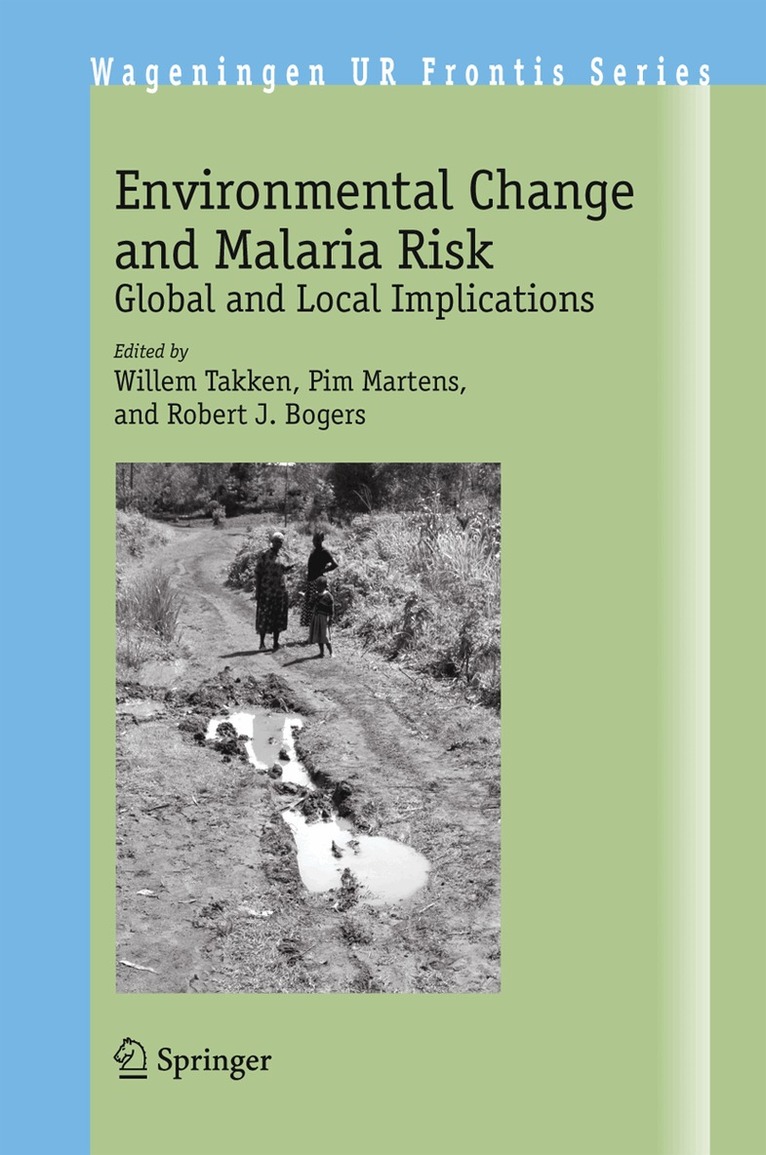
The workshop “Environmental Change and Malaria Risk: Global and Local Implications” was held to conclude a 5-year collaborative research project on environmental change and malaria risk, with field research in Kenya and Brazil. It was fitting that such a large group of specialists was able to attend the workshop and contribute with a chapter in which the predicted environmental changes were viewed from different angles. We would like to thank the Netherlands Foundation for the Advancement of Tropical Research (WOTRO) and the National Programme for Research on Climate Change and Air Quality (NOP) for having funded our work so generously. Wageningen UR – Frontis is thanked for having arranged the workshop and for its financial contribution. We would especially like to thank Petra van Boetzelaer for having assisted with the logistics of the workshop, and Paulien van Vredendaal for having spent many hours in the type editing of the chapters, making publication of this book possible. The editors, Willem Takken Pim Martens Rob Bogers Wageningen, March 2005 Colour pages Chapter 2. Pim Martens and Chris Thomas; Figures 2 and 3 Figure 2. MARA/ARMA index of climatic suitability for P. falciparum transmission in four consecutive months Figure 3. Number of consecutive months with a MARA/ARMA index of climatic suitability for P. falciparum transmission of p ?0. 9 in each month Colour pages Chapter 5. M. B. Hoshen and A. P.
1 069 kr
Skickas inom 10-15 vardagar
The workshop “Environmental Change and Malaria Risk: Global and Local Implications” was held to conclude a 5-year collaborative research project on environmental change and malaria risk, with field research in Kenya and Brazil. It was fitting that such a large group of specialists was able to attend the workshop and contribute with a chapter in which the predicted environmental changes were viewed from different angles. We would like to thank the Netherlands Foundation for the Advancement of Tropical Research (WOTRO) and the National Programme for Research on Climate Change and Air Quality (NOP) for having funded our work so generously. Wageningen UR – Frontis is thanked for having arranged the workshop and for its financial contribution. We would especially like to thank Petra van Boetzelaer for having assisted with the logistics of the workshop, and Paulien van Vredendaal for having spent many hours in the type editing of the chapters, making publication of this book possible. The editors, Willem Takken Pim Martens Rob Bogers Wageningen, March 2005 Colour pages Chapter 2. Pim Martens and Chris Thomas; Figures 2 and 3 Figure 2. MARA/ARMA index of climatic suitability for P. falciparum transmission in four consecutive months Figure 3. Number of consecutive months with a MARA/ARMA index of climatic suitability for P. falciparum transmission of p ?0. 9 in each month Colour pages Chapter 5. M. B. Hoshen and A. P.
2 110 kr
Skickas inom 10-15 vardagar
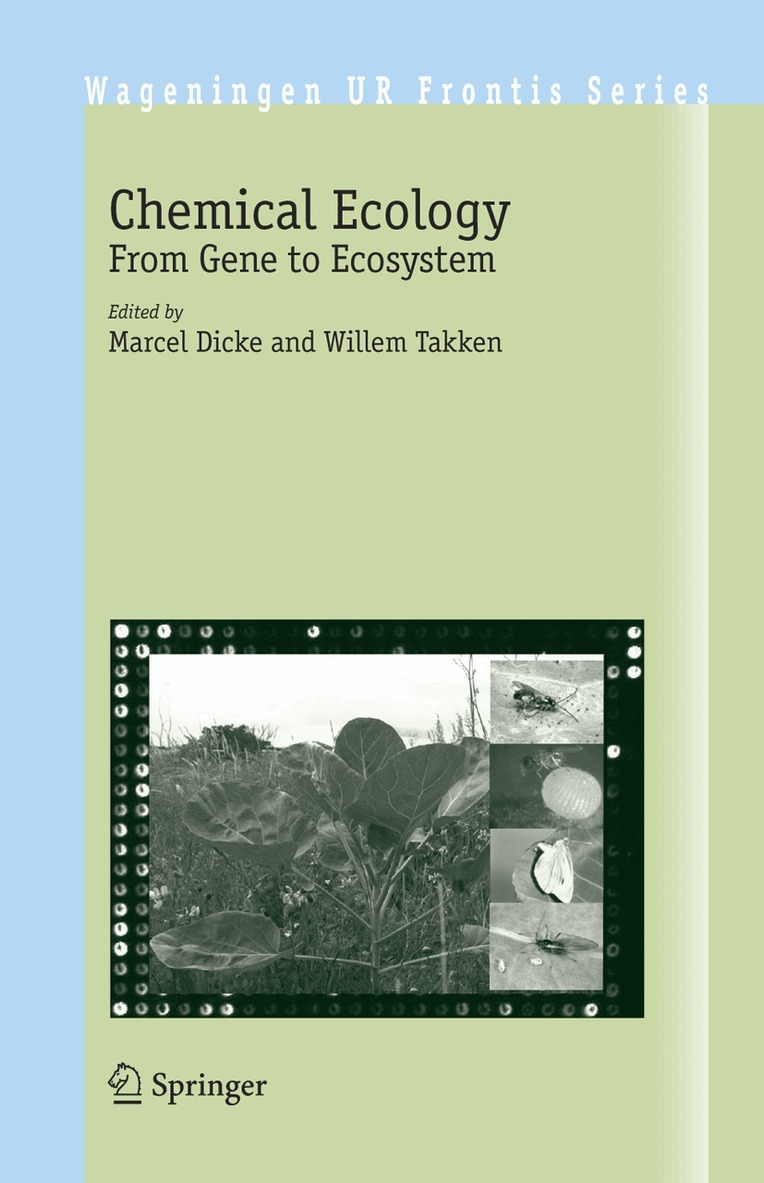
This book provides an overview of chemical ecology related to different ecosystems and an outlook at novel directions that can be taken in chemical ecology through a molecular-ecological or eco-genomic approach.
2 110 kr
Skickas inom 10-15 vardagar
This book provides an overview of chemical ecology related to different ecosystems and an outlook at novel directions that can be taken in chemical ecology through a molecular-ecological or eco-genomic approach.
Del 1 - Ecology and Control of Vector-borne Diseases
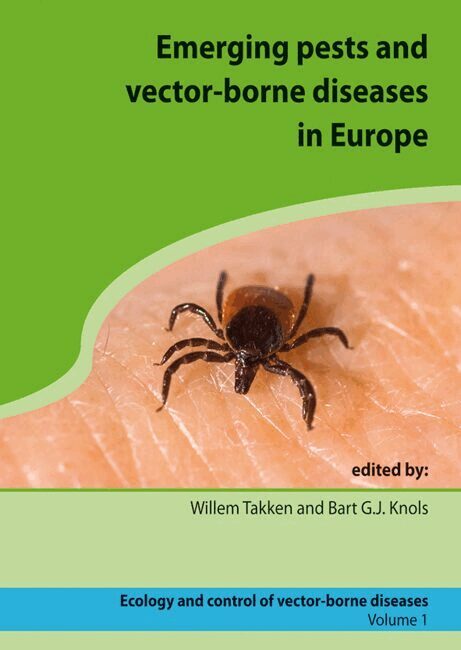
Emerging pests and vector-borne diseases in Europe
Inbunden, Engelska, 2007
3 129 kr
Skickas inom 5-8 vardagar
"This is a multi-authored book concerning the perceived threat and recorded increase of emerging pests and vector-borne diseases affecting man and animals in Europe.Historically, Europe suffered from numerous pests and vector-borne diseases, including yellow fever, malaria, plague and typhus. Introduction of hygienic measures, drugs and vector control caused the disappearance of many of these diseases from Europe. In the (sub)tropics, however, many of these diseases still thrive, causing serious health problems for humans and animals. Increased trade, leading to animal and human movement and climate change cause reason to assume that several of these diseases might become re-established or allow 'new' diseases and pests to be introduced in Europe. The recent outbreaks of bluetongue virus in North-western Europe highlights this concern, requiring an effective surveillance systems for the early detection of pests and vector-borne diseases.In 24 chapters this book provides examples of the most likely pests and diseases affecting man and animals in Europe, with emphasis on ecological factors favouring these diseases and methods for prevention and intervention. The authors are recognized experts in specific fields. All chapters are peer reviewed."