Noel M. Morada – författare
Visar alla böcker från författaren Noel M. Morada. Handla med fri frakt och snabb leverans.
5 produkter
Covid-19 and Atrocity Prevention in East Asia
Av Mely Caballero-Anthony, Noel M. Morada
E-bok, 2022
762 kr
Lägg i varukorg
This edited volume examines the multifaceted impact of the COVID-19 pandemic on peoples and states in East Asia. The book brings together selected case studies in Southeast Asia and the wider East Asian region that analyse how states in the region have responded to the pandemic and its …
Covid-19 and Atrocity Prevention in East Asia
Av Mely Caballero-Anthony, Noel M. Morada
E-bok, 2022
746 kr
Lägg i varukorg
This edited volume examines the multifaceted impact of the COVID-19 pandemic on peoples and states in East Asia. The book brings together selected case studies in Southeast Asia and the wider East Asian region that analyse how states in the region have responded to the pandemic and its …
Covid-19 and Atrocity Prevention in East Asia
Av Noel M. Morada, Mely Caballero-Anthony
Inbunden, 2022
2133 kr
Lägg i varukorg
This edited volume examines the multifaceted impact of the COVID-19 pandemic on peoples and states in East Asia. The book brings together selected case studies in Southeast Asia and the wider East Asian region that analyse how states in the region have responded to the pandemic and its …
Covid-19 and Atrocity Prevention in East Asia
Av Noel M. Morada, Mely Caballero-Anthony
Häftad, 2024
596 kr
Lägg i varukorg
This edited volume examines the multifaceted impact of the COVID-19 pandemic on peoples and states in East Asia. The book brings together selected case studies in Southeast Asia and the wider East Asian region that analyse how states in the region have responded to the pandemic and its …
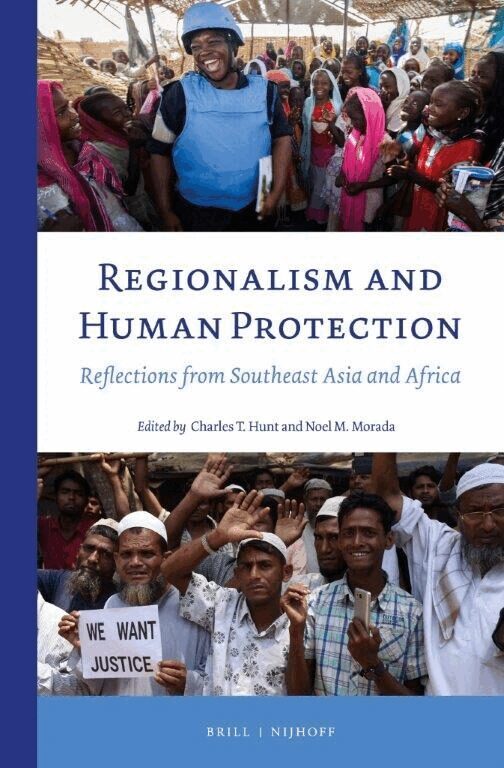
Regionalism and Human Protection
Reflections from Southeast Asia and Africa
Av Charles T. Hunt, Noel M. Morada
Häftad, 2018
1561 kr
Lägg i varukorg
This book provides a detailed examination of how norms concerning human rights, civilian protection and prevention of mass atrocities have fared in the regions of Southeast Asia and Africa. Originated as a spin off of the journal GR2P (vol. 8/2-3, 2016), it has been enriched with new chapters and …