Noel Robertson – författare
Visar alla böcker från författaren Noel Robertson. Handla med fri frakt och snabb leverans.
6 produkter
6 produkter
Del 85 - Collins New Naturalist Library
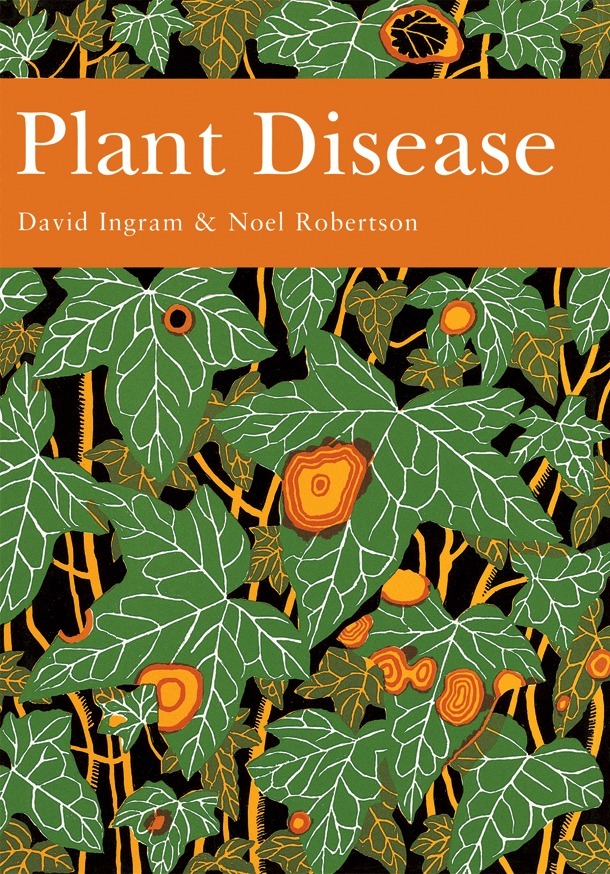
Plant Disease
E-bok
Engelska, 2013291 kr
Läs direkt efter köp
Plant Disease covers all aspects of diseases of plants growing in the wild or likely to be encountered on cultivated plants in farm, forest and garden. This edition is exclusive to newnaturalists.comThis book covers all aspects of diseases of plants growing in the wild or likely to be encountered on cultivated plants in farm, forest and garden.Between 1845 and 1851 one and a half million Irish men, women and children died in misery from starvation and disease; the result of potato blight, a fungal disease that destroyed their potato crops. A million more people, driven to despair by the succession of appalling harvests, emigrated, mostly to America. So it was that a plant disease changed the course of history, its economic effects causing not only social but also major political upheaval.Many plant diseases have had surprisingly far reaching social and economic effects, so the study of these diseases is of great interest and importance to scientists, horticulturists, agriculturalists and foresters. In Plant Disease: A Natural History, Ingram and Robertson draw on personal observations in the field and laboratory to discuss all types of diseases caused by fungi, from rots and mildews to rusts, smuts and tumours. The symptoms encountered in the wild are described, together with their causes. A final chapter discusses the diseases caused by viruses, bacteria and flowering plants.
1 443 kr
Läs direkt efter köp
Two Greek cities which in their time were leading states in the Mediterranean world, Selinus in Sicily and Cyrene in Libya, set up inscriptions of the kind called sacred laws, but regulating worship on a larger scale than elsewhere - Selinus in the mid fifth century B.C., Cyrene in the late fourth. In different ways, the content and the format of both inscriptions are so unusual that they have baffled understanding. At Selinus, a large lead tablet with two columns of writing upside down to each other is thought to be a remedy for homicide pollution arising from civil strife, but most of it remains obscure and intractable. The gods who are named and the ritual that is prescribed have been misinterpreted in the light of literary works that dwell on the sensational. Instead, they belong to agrarian religion and follow a regular sequence of devotions, the upside-down columns being reversed midway through the year with magical effect. Gods and ritual were selected because of their appeal to ordinary persons. Selinus was governed by a long enduring oligarchy which made an effort, appearing also in the economic details of sacrifice, to reconcile rich and poor. At Cyrene, a long series of rules were displayed on a marble block in the premier shrine of Apollo. They are extremely diverse - both costly and trivial, customary and novel - and eighty years of disputation have brought no agreement as to the individual meaning or general significance. In fact this mixture of things is carefully arranged to suit a variety of needs, of rich and poor, of citizens of long standing and of new-comers probably of Libyan origin. In one instance the same agrarian deities appear as at Selinus. It is the work once more of a moderate oligarchy, which on other evidence proved its worth during the turbulent events of this period. Religion and Reconciliation in Greek Cities provides a revised text and a secure meaning for both documents, and interprets the gods, the ritual, and the social background in the light of much comparative material from other Greek cities. Noel Robertson''s approach rejects the usual assumptions based on moralizing literary works and in doing so restores to us an ancient nature religion which Greek communities adapted to their own practical purposes.
Inbunden, Engelska, 2010
1 911 kr
Skickas inom 7-10 vardagar
Two Greek cities which in their time were leading states in the Mediterranean world, Selinus in Sicily and Cyrene in Libya, set up inscriptions of the kind called sacred laws, but regulating worship on a larger scale than elsewhere - Selinus in the mid fifth century B.C., Cyrene in the late fourth. In different ways, the content and the format of both inscriptions are so unusual that they have baffled understanding. At Selinus, a large lead tablet with two columns of writing upside down to each other is thought to be a remedy for homicide pollution arising from civil strife, but most of it remains obscure and intractable. The gods who are named and the ritual that is prescribed have been misinterpreted in the light of literary works that dwell on the sensational. Instead, they belong to agrarian religion and follow a regular sequence of devotions, the upside-down columns being reversed midway through the year with magical effect. Gods and ritual were selected because of their appeal to ordinary persons. Selinus was governed by a long enduring oligarchy which made an effort, appearing also in the economic details of sacrifice, to reconcile rich and poor. At Cyrene, a long series of rules were displayed on a marble block in the premier shrine of Apollo. They are extremely diverse - both costly and trivial, customary and novel - and eighty years of disputation have brought no agreement as to the individual meaning or general significance. In fact this mixture of things is carefully arranged to suit a variety of needs, of rich and poor, of citizens of long standing and of new-comers probably of Libyan origin. In one instance the same agrarian deities appear as at Selinus. It is the work once more of a moderate oligarchy, which on other evidence proved its worth during the turbulent events of this period. Religion and Reconciliation in Greek Cities provides a revised text and a secure meaning for both documents, and interprets the gods, the ritual, and the social background in the light of much comparative material from other Greek cities. Noel Robertson's approach rejects the usual assumptions based on moralizing literary works and in doing so restores to us an ancient nature religion which Greek communities adapted to their own practical purposes.
E-bok
PDF, Engelska, 20091 443 kr
Läs direkt efter köp
Two Greek cities which in their time were leading states in the Mediterranean world, Selinus in Sicily and Cyrene in Libya, set up inscriptions of the kind called sacred laws, but regulating worship on a larger scale than elsewhere - Selinus in the mid fifth century B.C., Cyrene in the late fourth. In different ways, the content and the format of both inscriptions are so unusual that they have baffled understanding. At Selinus, a large lead tablet with two columns of writing upside down to each other is thought to be a remedy for homicide pollution arising from civil strife, but most of it remains obscure and intractable. The gods who are named and the ritual that is prescribed have been misinterpreted in the light of literary works that dwell on the sensational. Instead, they belong to agrarian religion and follow a regular sequence of devotions, the upside-down columns being reversed midway through the year with magical effect. Gods and ritual were selected because of their appeal to ordinary persons. Selinus was governed by a long enduring oligarchy which made an effort, appearing also in the economic details of sacrifice, to reconcile rich and poor. At Cyrene, a long series of rules were displayed on a marble block in the premier shrine of Apollo. They are extremely diverse - both costly and trivial, customary and novel - and eighty years of disputation have brought no agreement as to the individual meaning or general significance. In fact this mixture of things is carefully arranged to suit a variety of needs, of rich and poor, of citizens of long standing and of new-comers probably of Libyan origin. In one instance the same agrarian deities appear as at Selinus. It is the work once more of a moderate oligarchy, which on other evidence proved its worth during the turbulent events of this period. Religion and Reconciliation in Greek Cities provides a revised text and a secure meaning for both documents, and interprets the gods, the ritual, and the social background in the light of much comparative material from other Greek cities. Noel Robertson''s approach rejects the usual assumptions based on moralizing literary works and in doing so restores to us an ancient nature religion which Greek communities adapted to their own practical purposes.
E-bok
PDF, Engelska, 19921 400 kr
Läs direkt efter köp
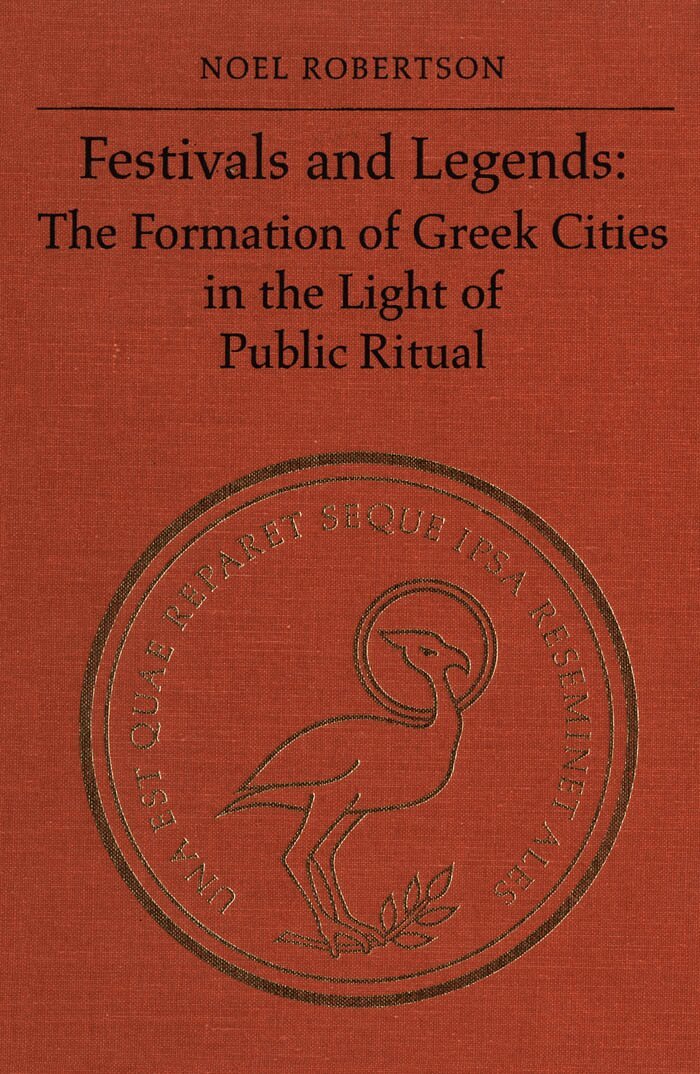
War was a constant activity, almost a staple livelihood, in the cities of ancient Greece, and many public festivals served to promote and celebrate war. They entailed reunions of the whole community, often at the new year, for enrolling citizens or conducting games. Noel Robertson focuses on such festivals in Athens, Aprta, Argos, and two smaller centres, in order to reconstruct the social conditions reflected in the festival programs and settings.He begins with a close analysis of the extant evidence, bringing together for the first time the many small, scattered indications in familiar sources. He uses in addition new epigraphic and archaeological evidence which has recently come to light at Athens.Since ritual is by definition unchanging, public festivals can disclose earlier stages of social organization. Robertson also shows how the festivals gave rise, by way of aetiology (explanatory tales or legends), to some persistent misconceptions about the past.
E-bok
Engelska, 200750 kr
Läs direkt efter köp
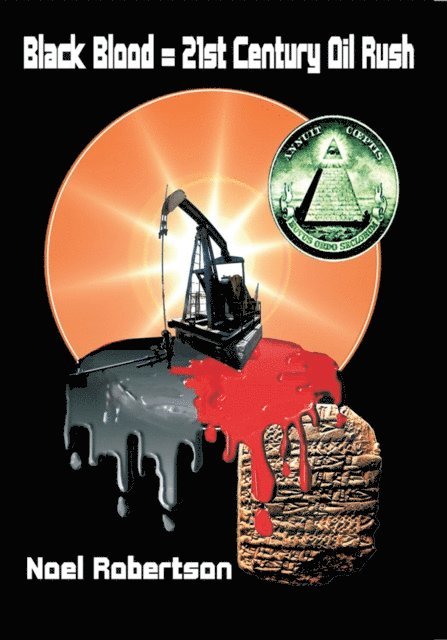
Noel Robertson was born during WWII. He worked hard to gain qualifications in school, banking and then general construction. All the time Noel had a nagging question - "Why are we so poor and who are these people controlling everything?" A Jewish friend told him that ''only fools work''! This made him think, so he embarked on various self-employed activities. Becoming ill at age 51, he has not worked since. He started his research into the history of mankind which took place way before all those Biblical stories - he needed to know the origins of our species and set out to find the ''missing'' link according to Charles Darwin. Time allowed Noel to read numerous books allied to this subject, including those written by Zecharia Sitchin setting out his translations of the Sumerian Tablets. Noel basically found out where we, as a human race, came from. It was these findings that led to Black Blood = 21st Century Oil Rush. This brings right up to date the reasons for wars, both historical and current, which mankind has had to endure. Man has simply given his mind away! If you think you are free, then think again. It is a journey from pre-history, through Biblical times, the renaissance period to the present. Imperialist administrations are still fighting wars over the ''control'' of modern energy - oil and gas - and indeed human minds. Man is being drawn in with most of the world not realising and understanding the covert powers at work here. Black Blood = 21st Century Oil Rush provides some very interesting answers - true understanding is highly controversial. Just substitute the word ''God'' for ''space-ship'' and ''global'' for New World Order and enter Noel''s world.