Nora Boneh - Böcker
Visar alla böcker från författaren Nora Boneh. Handla med fri frakt och snabb leverans.
3 produkter
3 produkter
1 578 kr
Skickas inom 10-15 vardagar
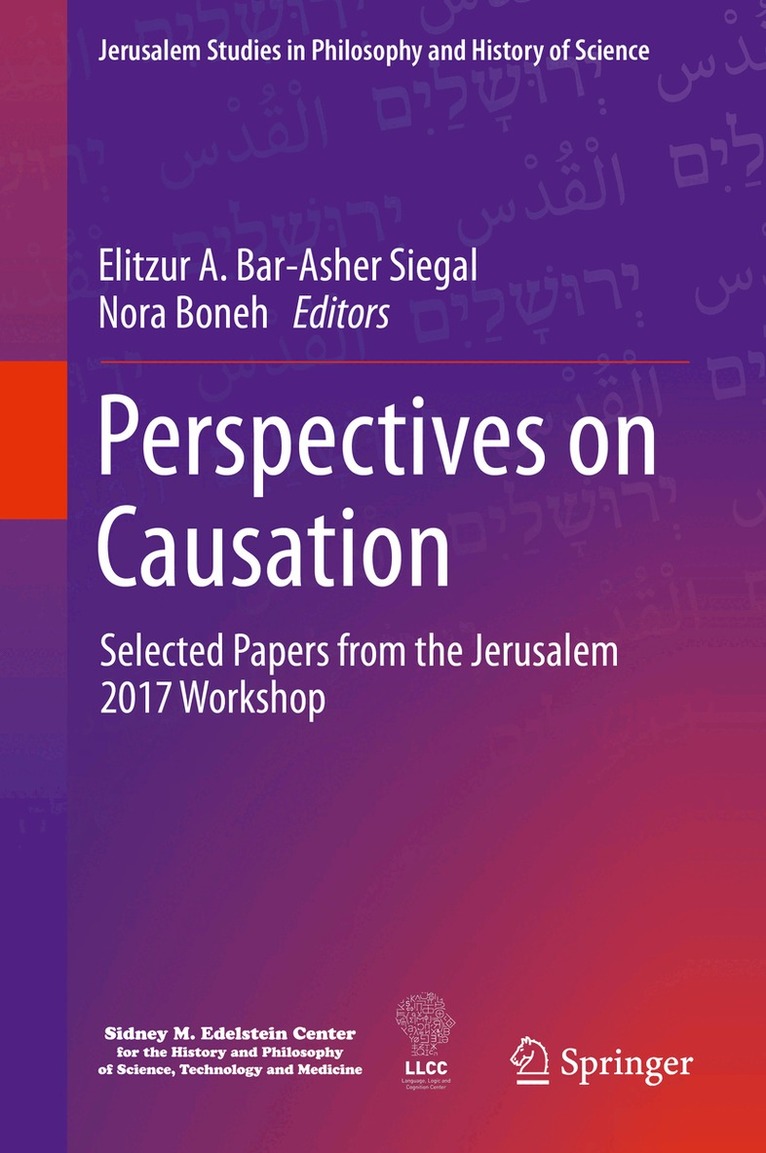
This book explores relationships and maps out intersections between discussions on causation in three scientific disciplines: linguistics, philosophy, and psychology. The book is organized in five thematic parts, investigating connections between philosophical and linguistic studies of causation; presenting novel methodologies for studying the representation of causation; tackling central issues in syntactic and semantic representation of causal relations; and introducing recent advances in philosophical thinking on causation.Beyond its thematic organization, readers will find several recurring topics throughout this book, such as the attempt to reduce causality to other non-causal terms; causal pluralism vs. one all-encompassing account for causation; causal relations pertaining to the mental as opposed to the physical realm, and more.This collection also lays the foundation for questioning whether it is possible to evaluate available philosophical approaches to causation against the variety of linguistic phenomena ranging across diverse lexical and grammatical items, such as bound morphemes, prepositions, connectives, and verbs. Above all, it lays the groundwork for considering whether the fruits of the psychological-cognitive study of the perception of causal relations may contribute to linguistic and philosophical studies, and whether insights from linguistics can benefit the other two disciplines.
1 578 kr
Skickas inom 10-15 vardagar
This book explores relationships and maps out intersections between discussions on causation in three scientific disciplines: linguistics, philosophy, and psychology. The book is organized in five thematic parts, investigating connections between philosophical and linguistic studies of causation; presenting novel methodologies for studying the representation of causation; tackling central issues in syntactic and semantic representation of causal relations; and introducing recent advances in philosophical thinking on causation.Beyond its thematic organization, readers will find several recurring topics throughout this book, such as the attempt to reduce causality to other non-causal terms; causal pluralism vs. one all-encompassing account for causation; causal relations pertaining to the mental as opposed to the physical realm, and more.This collection also lays the foundation for questioning whether it is possible to evaluate available philosophical approaches to causation against the variety of linguistic phenomena ranging across diverse lexical and grammatical items, such as bound morphemes, prepositions, connectives, and verbs. Above all, it lays the groundwork for considering whether the fruits of the psychological-cognitive study of the perception of causal relations may contribute to linguistic and philosophical studies, and whether insights from linguistics can benefit the other two disciplines.
1 625 kr
Skickas inom 10-15 vardagar
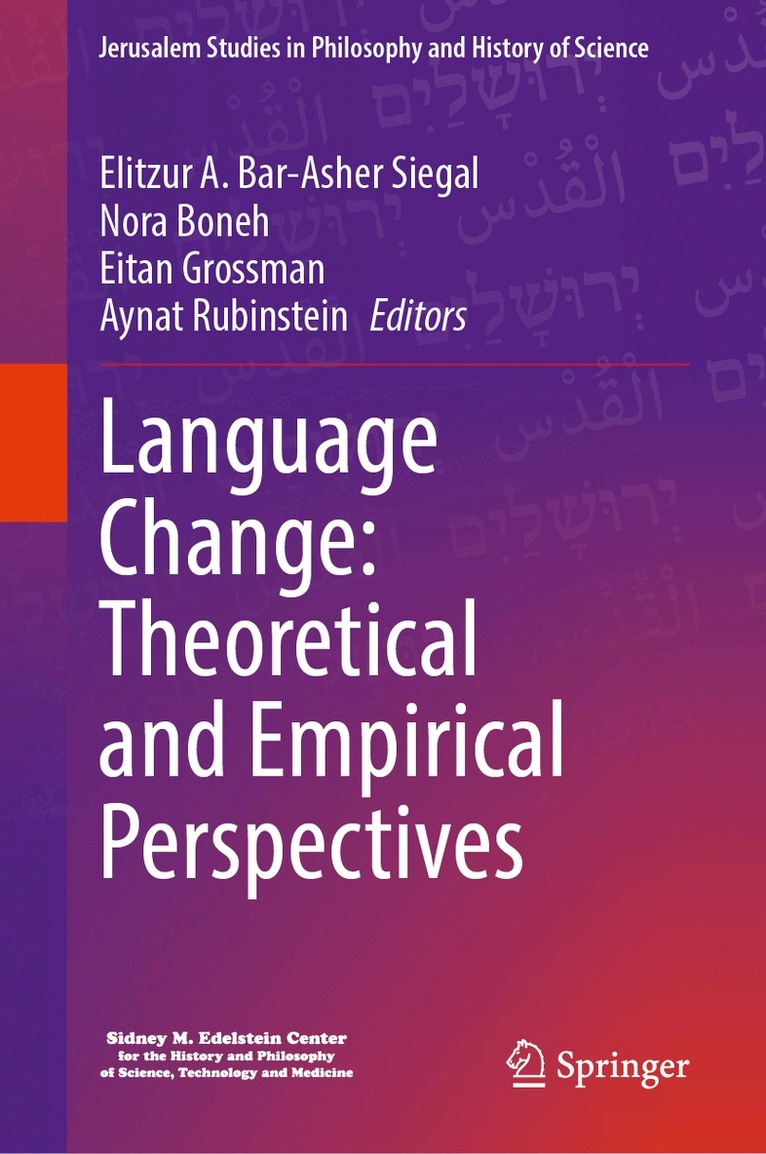
This book offers a comprehensive exploration of recent advances in empirical, theoretical, and experimental research on language change, with a focus on semantic evolution. Bridging the gap between historical linguistics, rooted in philology, and formal semantics, grounded in mathematical logic, it uncovers how insights from one discipline can illuminate the other. Delving into a wide range of linguistic phenomena, and tracking both entailed and presupposed content in historical change, the book examines semantic topics such as causation, concession, negation, reflexivity, numerals, and approximatives, alongside topics related to temporal and aspectual features of language. It also explores pragmatic concepts like topic marking and mirativity. Some papers in the volume focus on morphological and syntactic language change, discussing the rate of morphological change, patterns of subordination, periphrastic structure, and Differential Object Marking. By presenting innovative methodologies, including experimental work, the book reveals key mechanisms behind language change and its interaction with formal and non-formal factors. Designed for researchers and advanced students in linguistics and philology, this volume addresses fundamental questions about the causes, timing, and principles driving linguistic change. It also sheds light on how historical insights can deepen our understanding of synchronic phenomena, offering a fresh perspective on the dynamics of language evolution.