Norbert Gotz – författare
757 kr
Läs direkt efter köp
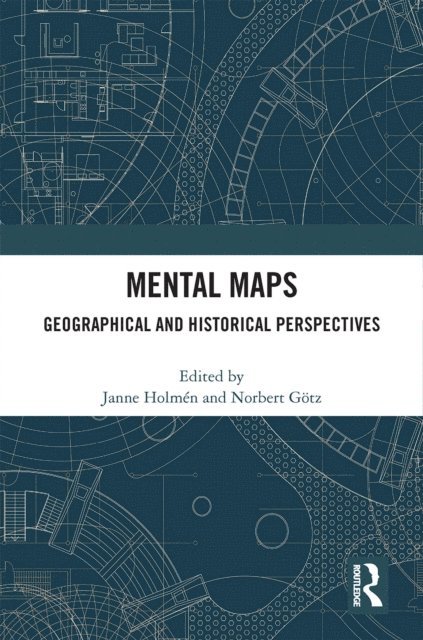
The concept of mental maps is used in several disciplines including geography, psychology, history, linguistics, economics, anthropology, political science, and computer game design. However, until now, there has been little communication between these disciplines and methodological schools involved in mental mapping.
Mental Maps: Geographical and Historical Perspectives addresses this situation by bringing together scholars from some of the related fields. Ute Schneider examines the development of German geographer Heinrich Schiffers’ mental maps, using his books on Africa from the 1930s to the 1970s. Efrat Ben-Ze’ev and Chloé Yvroux investigate conceptions of Israel and Palestine, particularly the West Bank, held by French and Israeli students. By superimposing large numbers of sketch maps, Clarisse Didelon-Loiseau, Sophie de Ruffray, and Nicolas Lambert identify "soft" and "hard" macro-regions on the mental maps of geography students across the world. Janne Holmén investigates whether the Baltic and the Mediterranean Seas are seen as links or divisions between the countries that line their shores, according to the mental maps of high school seniors. Similarly, Dario Musolino maps regional preferences of Italian entrepreneurs. Finally, Lars-Erik Edlund offers an essayistic account of mental mapping, based on memories of maps in his own family.
This edited volume book uses printed maps, survey data and hand drawn maps as sources, contributing to the study of human perception of space from the perspectives of different disciplines.
The chapters in this book were originally published as a special issue of the Journal of Cultural Geography.
757 kr
Läs direkt efter köp
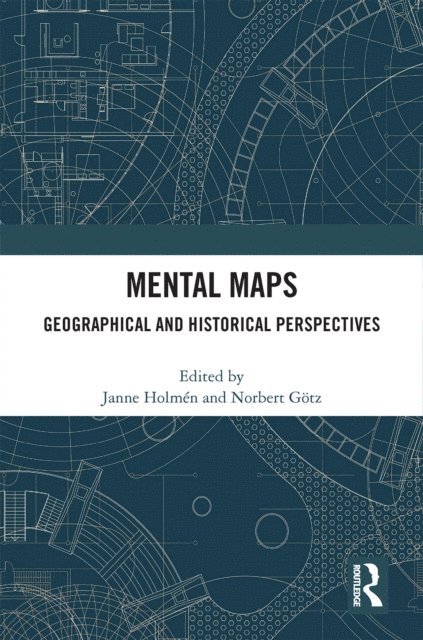
The concept of mental maps is used in several disciplines including geography, psychology, history, linguistics, economics, anthropology, political science, and computer game design. However, until now, there has been little communication between these disciplines and methodological schools involved in mental mapping.
Mental Maps: Geographical and Historical Perspectives addresses this situation by bringing together scholars from some of the related fields. Ute Schneider examines the development of German geographer Heinrich Schiffers’ mental maps, using his books on Africa from the 1930s to the 1970s. Efrat Ben-Ze’ev and Chloé Yvroux investigate conceptions of Israel and Palestine, particularly the West Bank, held by French and Israeli students. By superimposing large numbers of sketch maps, Clarisse Didelon-Loiseau, Sophie de Ruffray, and Nicolas Lambert identify "soft" and "hard" macro-regions on the mental maps of geography students across the world. Janne Holmén investigates whether the Baltic and the Mediterranean Seas are seen as links or divisions between the countries that line their shores, according to the mental maps of high school seniors. Similarly, Dario Musolino maps regional preferences of Italian entrepreneurs. Finally, Lars-Erik Edlund offers an essayistic account of mental mapping, based on memories of maps in his own family.
This edited volume book uses printed maps, survey data and hand drawn maps as sources, contributing to the study of human perception of space from the perspectives of different disciplines.
The chapters in this book were originally published as a special issue of the Journal of Cultural Geography.
394 kr
Läs direkt efter köp
394 kr
Läs direkt efter köp
892 kr
Läs direkt efter köp
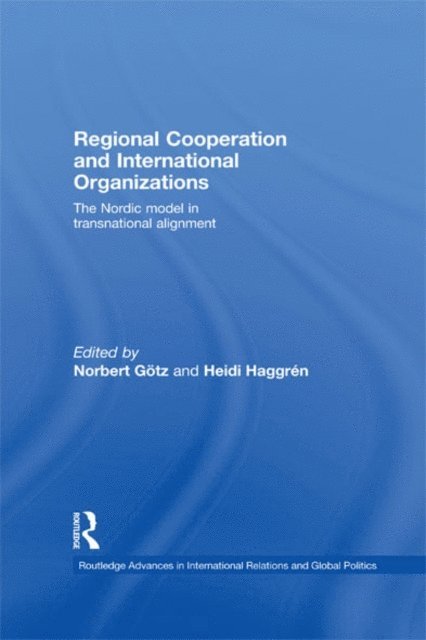
This book explores the roles of national actors within international organizations, with particular emphasis on the collaborative approach adopted by Nordic governments and associations.
Analyzing Nordic regional cooperation within international organizations, this volume seeks to shed light on the politics of alignment and distinct macro-regional identity-building in international arenas. Exploring the middle ground between the national and the international, contributors discuss how Nordic governments and associations have successfully created and used the image of a distinct group within the international system and where they have failed. Presenting a richer picture of international and transnational relations, the volume’s features include:
a key focus on the ‘Nordic model’ with its schism in regard to the EU
studies on cooperation between governments and within civil society, including trade unions and anti-EU movements
contributions from Nordic and international experts highly respected in their fields
Seeking to move beyond neo-realist and cosmopolitan approaches in international studies, Regional Cooperation and International Organizations will be of interest to students and scholars of international relations, regionalism, Nordic studies, and Transnationalism.
892 kr
Läs direkt efter köp
This book explores the roles of national actors within international organizations, with particular emphasis on the collaborative approach adopted by Nordic governments and associations.
Analyzing Nordic regional cooperation within international organizations, this volume seeks to shed light on the politics of alignment and distinct macro-regional identity-building in international arenas. Exploring the middle ground between the national and the international, contributors discuss how Nordic governments and associations have successfully created and used the image of a distinct group within the international system and where they have failed. Presenting a richer picture of international and transnational relations, the volume’s features include:
a key focus on the ‘Nordic model’ with its schism in regard to the EU
studies on cooperation between governments and within civil society, including trade unions and anti-EU movements
contributions from Nordic and international experts highly respected in their fields
Seeking to move beyond neo-realist and cosmopolitan approaches in international studies, Regional Cooperation and International Organizations will be of interest to students and scholars of international relations, regionalism, Nordic studies, and Transnationalism.
605 kr
Läs direkt efter köp
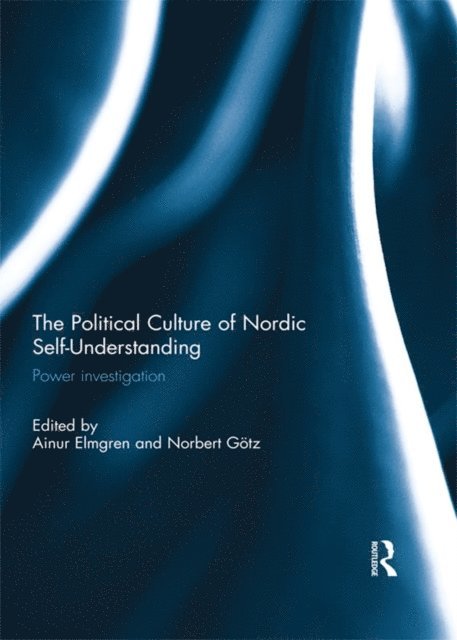
‘Power investigation’, or the practice of power to legitimize itself through commissioned programmes of scientific enquiry, is a hallmark of Nordic democracy. Five power investigations have been conducted in the Nordic countries since 1972. The close connection to state power has not dissuaded prominent scholars from participating in them, nor have their findings evoked strong criticism. Combining politically guided perspectives with collaborative research, power investigations represent public events that typify the ostensibly open political culture of the Nordic countries, rather than simply existing as texts or as a politico-scientific genre. Although such investigations have been thought of as critical studies of power, the authors in this book show that their findings have varied greatly and that they have served as tools for wielding power. Whatever shortcomings they uncover, the utility of these investigations in suggesting transparency and self-reflection enhances the legitimacy of Scandinavian government. The investigations are persuasive exercises through which the commissioning authorities and those scholars hired to carry them out engage in a mutually beneficial exchange. Underlying this strategy is the perception, deeply embedded in Nordic political culture, that politics is a progressive, rational endeavour, and that identification with the state is an honourable role for academics.
This book was published as a special issue of the Journal of Contemporary European Studies.
584 kr
Läs direkt efter köp
‘Power investigation’, or the practice of power to legitimize itself through commissioned programmes of scientific enquiry, is a hallmark of Nordic democracy. Five power investigations have been conducted in the Nordic countries since 1972. The close connection to state power has not dissuaded prominent scholars from participating in them, nor have their findings evoked strong criticism. Combining politically guided perspectives with collaborative research, power investigations represent public events that typify the ostensibly open political culture of the Nordic countries, rather than simply existing as texts or as a politico-scientific genre. Although such investigations have been thought of as critical studies of power, the authors in this book show that their findings have varied greatly and that they have served as tools for wielding power. Whatever shortcomings they uncover, the utility of these investigations in suggesting transparency and self-reflection enhances the legitimacy of Scandinavian government. The investigations are persuasive exercises through which the commissioning authorities and those scholars hired to carry them out engage in a mutually beneficial exchange. Underlying this strategy is the perception, deeply embedded in Nordic political culture, that politics is a progressive, rational endeavour, and that identification with the state is an honourable role for academics.
This book was published as a special issue of the Journal of Contemporary European Studies.
942 kr
Läs direkt efter köp
909 kr
Läs direkt efter köp