Norman P. Lieberman – författare
1 328 kr
Läs direkt efter köp
A PRACTICAL GUIDE TO TROUBLESHOOTING PROCESS EQUIPMENT MALFUNCTIONS
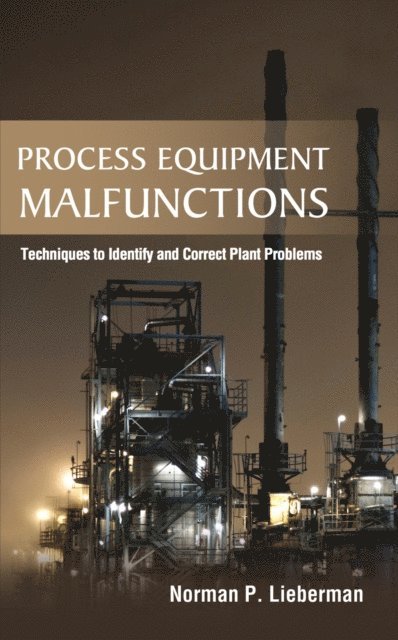
Process Equipment Malfunctions offers proven techniques for finding and fixing process plant problems and contains details on failure identification. Diagnostic tips, examples, and illustrations help to pinpoint and correct faults in chemical process and petroleum refining equipment. Complex math has been omitted. An essential resource for plant operators and process engineers, this book is based on the author''s long career in field troubleshooting process problems.
COVERAGE INCLUDES:
Distillation tray malfunctionsPacked tower problemsDistillation tower pressure and composition controlFractionator product strippingPumparoundsReboiled and steam side strippersInspecting tower internalsProcess reboilers--thermosyphon circulationHeat exchangersCondenser limitationsAir coolersCooling water systemsSteam condensate collection systemsSteam quality problemsLevel control problemsProcess plant corrosion and foulingVapor-liquid separation vesselsHydrocarbon-water separation and desaltersFired heaters--draft and excess O2Disabling safety systemsVacuum systems and steam jetsVacuum surface condensersCentrifugal pump limitationsSteam turbine driversCentrifugal compressorsReciprocating compressors927 kr
Läs direkt efter köp
The latest methods for troubleshooting and maintaining process equipment
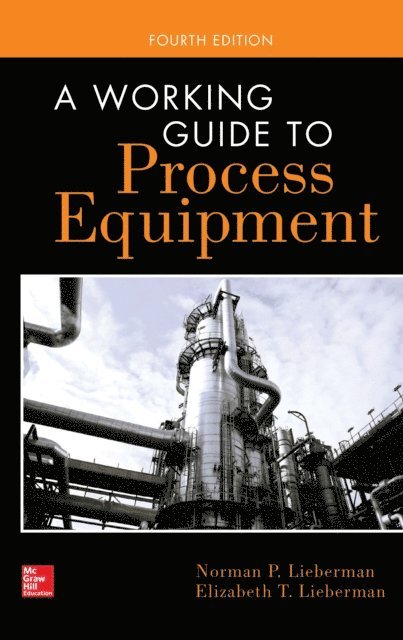
Applicable to a broad range of technicians and industries and fully updated throughout, A Working Guide to Process Equipment, Fourth Edition, explains how to diagnose, troubleshoot, and correct problems with chemical and petroleum refining process equipment. Nine new chapters cover:
Tray design detailsShell-and-tube heat exchanger design detailsRelief valve system designVapor lock and exchanger flooding in steam systemsSteam generation operating and design detailsWastewater strippersThermodynamics -- how it applies to process equipmentCentrifugal pumps -- reducing seal and bearing failuresHand calculations for distillation towersVapor -- liquid equilibrium, absorption, and stripping calculationsFilled with examples and illustrations, this practical resource demonstrates how theory applies to solving real-world plant operation problems. Selected hand calculation methods are also provided.
Comprehensive coverage includes:Distillation Tower Trays * Tower Pressure Control * Distillation Towers * Reboilers * Tower Internals * Instruments * Packed Towers * Steam and Condensate Systems * Bubble Point and Dew Point * Steam Strippers * Draw-Off Nozzle Hydraulics * Pumparounds and Tower Heat Flows * Condensers and Tower Pressure Control * Air Coolers * Deaerators and Steam Systems * Steam Generation * Wastewater Strippers * Vacuum Systems * Steam Turbines * Surface Condensers * Shell-and-Tube Heat Exchangers * Fired Heaters * Refrigeration Systems * Cooling Water Systems * Catalytic Effects * Centrifugal Pumps * Control Valves * Separators * Centrifugal Compressors and Surge * Reciprocating Compressors * Corrosion * Fluid Flow in Pipes * Super-Fractionation Stage * Computer Control * Field Troubleshooting
1 150 kr
Skickas inom 5-8 vardagar
1 282 kr
Läs direkt efter köp
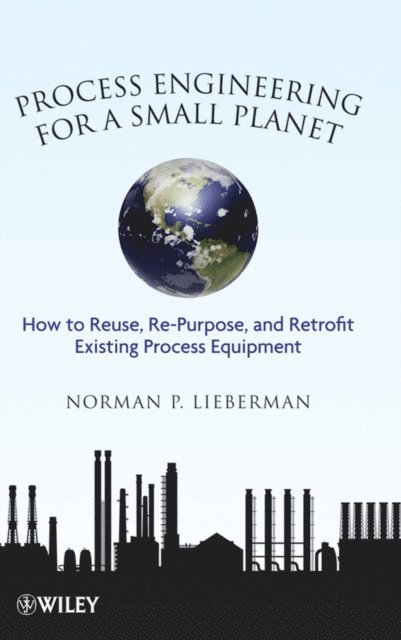
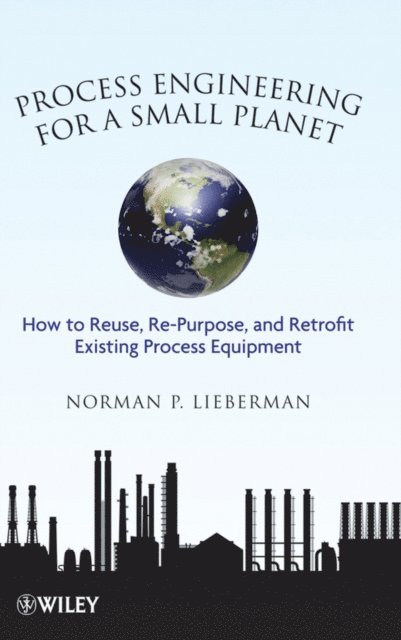
Our earth is just one big, complex Process Facility with limited air, water, and mineral resources. It responds to a number of process variables—among them, humanity and the environmental effects of our carbon consumption. What can professionals in the Hydrocarbon Process Industry do to retard environmental degradation? Rather than looking to exotic technology for solutions, Process Engineering for a Small Planet details ready-at-hand methods that the process engineer can employ to help combat the environmental crisis.
Drawing from the author''s professional experience working with petroleum refineries petroleum refineries, petrochemical plants, and natural gas wells, this handbook explains how to operate and retrofit process facilities to:
Reuse existing process equipment Save energy Reduce greenhouse gas emissions Expand plant capacity without installing new equipment Reduce corrosion and equipment failuresCovering topics from expanding fractionator and compressor capacity and vacuum tower heater expansion to minimizing process water consumption and increasing centrifugal pump capacity, Process Engineering for a Small Planet offers big ideas for saving our small planet.
1 282 kr
Läs direkt efter köp
Our earth is just one big, complex Process Facility with limited air, water, and mineral resources. It responds to a number of process variables—among them, humanity and the environmental effects of our carbon consumption. What can professionals in the Hydrocarbon Process Industry do to retard environmental degradation? Rather than looking to exotic technology for solutions, Process Engineering for a Small Planet details ready-at-hand methods that the process engineer can employ to help combat the environmental crisis.
Drawing from the author''s professional experience working with petroleum refineries petroleum refineries, petrochemical plants, and natural gas wells, this handbook explains how to operate and retrofit process facilities to:
Reuse existing process equipment Save energy Reduce greenhouse gas emissions Expand plant capacity without installing new equipment Reduce corrosion and equipment failuresCovering topics from expanding fractionator and compressor capacity and vacuum tower heater expansion to minimizing process water consumption and increasing centrifugal pump capacity, Process Engineering for a Small Planet offers big ideas for saving our small planet.
2 308 kr
Skickas inom 5-8 vardagar
2 664 kr
Läs direkt efter köp
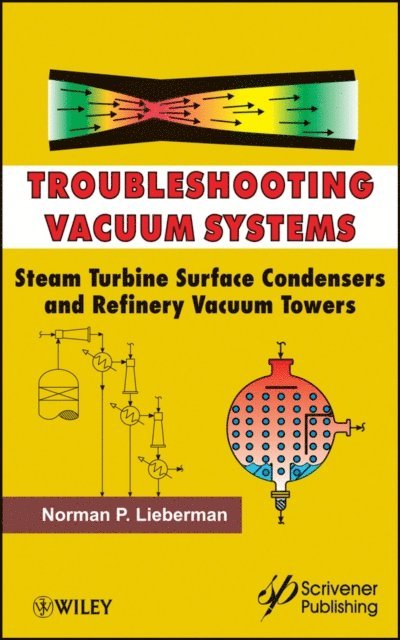
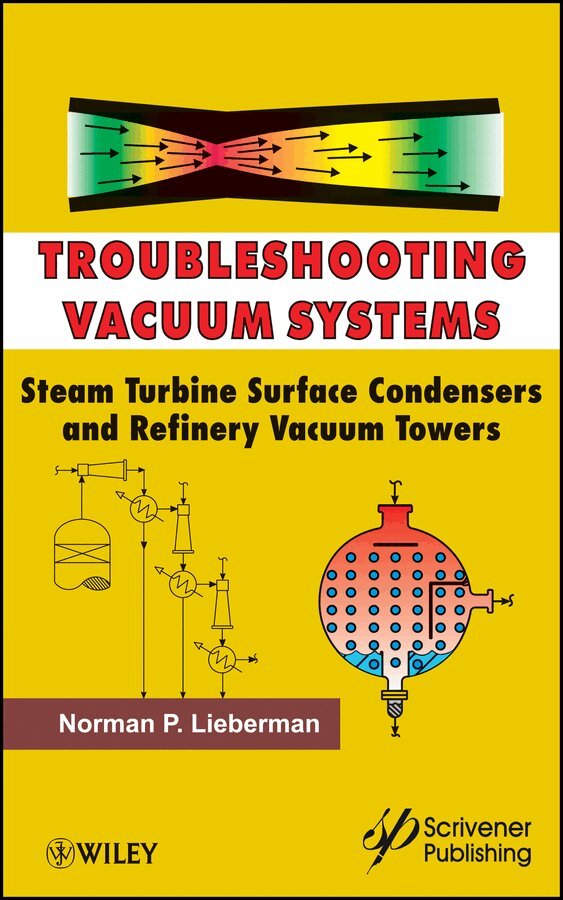
Vacuum systems are in wide spread use in the petrochemical plants, petroleum refineries and power generation plants. The existing texts on this subject are theoretical in nature and only deal with how the equipment functions when in good mechanical conditions, from the viewpoint of the equipment vendor. Also, the existing texts fail to consider the interaction of the vacuum system with the process equipment it serves and the variability of the motive steam conditions, change in cooling water temperature condenser fouling and erosion of the ejectors.
Here are some of the many questions answered in this groundbreaking volume:
Why does my first stage jet make a surging sound during hot weather? Why does the vacuum suddenly break? I''ve seen moisture condensing on the jet''s body! What’s causing that? Why do I have to steam-out the drain legs from our condensers? Superheated steam is making our vacuum worse. Is this normal? How can I locate and measure air leaks? Reducing the steam pressure to my jets improves vacuum. But why? I can''t pull the pre-condenser bundle. The shell side is fouling. What should I do? We''re not getting our normal horsepower from our steam turbine. Could this be a jet problem? Raising the seal drum level improves vacuum! Is there an explanation for this? Our turbine exhaust steam pressure to our surface condenser has doubled in the last two years. What should we do? Restricting cooling water flow from our elevated condensers improves vacuum! Is this possible? What''s a converging-diverging ejector all about? What''s the difference between a barometric condenser and a surface condenser? Which is better?2 664 kr
Läs direkt efter köp
Vacuum systems are in wide spread use in the petrochemical plants, petroleum refineries and power generation plants. The existing texts on this subject are theoretical in nature and only deal with how the equipment functions when in good mechanical conditions, from the viewpoint of the equipment vendor. Also, the existing texts fail to consider the interaction of the vacuum system with the process equipment it serves and the variability of the motive steam conditions, change in cooling water temperature condenser fouling and erosion of the ejectors.
Here are some of the many questions answered in this groundbreaking volume:
Why does my first stage jet make a surging sound during hot weather? Why does the vacuum suddenly break? I''ve seen moisture condensing on the jet''s body! What’s causing that? Why do I have to steam-out the drain legs from our condensers? Superheated steam is making our vacuum worse. Is this normal? How can I locate and measure air leaks? Reducing the steam pressure to my jets improves vacuum. But why? I can''t pull the pre-condenser bundle. The shell side is fouling. What should I do? We''re not getting our normal horsepower from our steam turbine. Could this be a jet problem? Raising the seal drum level improves vacuum! Is there an explanation for this? Our turbine exhaust steam pressure to our surface condenser has doubled in the last two years. What should we do? Restricting cooling water flow from our elevated condensers improves vacuum! Is this possible? What''s a converging-diverging ejector all about? What''s the difference between a barometric condenser and a surface condenser? Which is better?1 360 kr
Läs direkt efter köp
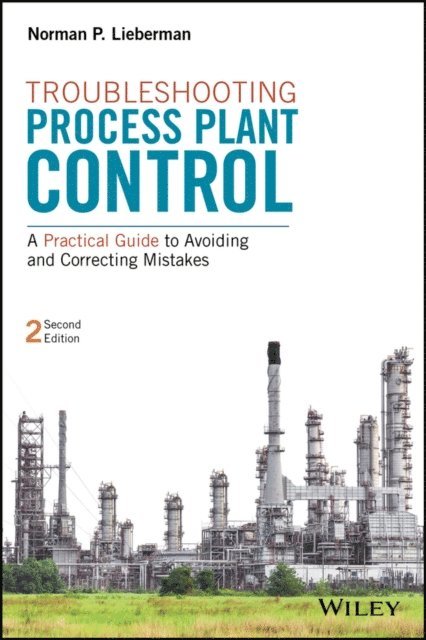
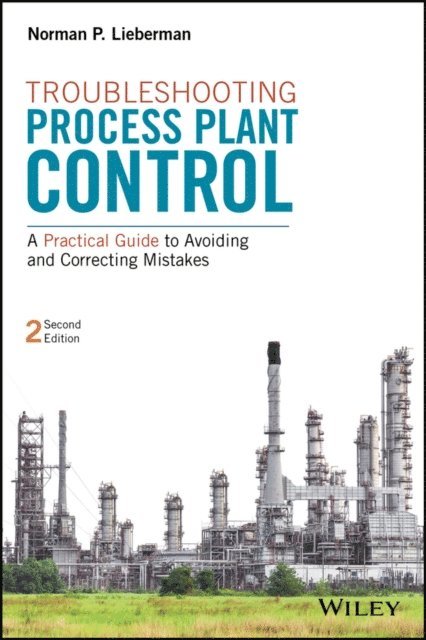
Examines real life problems and solutions for operators and engineers running process controls
Expands on the first book with the addition of five new chapters as well as new troubleshooting examples Written for the working operator and engineer, with straightforward instruction not hinged on complex math Includes real-life examples of control problems that commonly arise and how to fix them Emphasizes single and well-established process engineering principles that will help working engineers and operators switch manual control loops to automatic control1 313 kr
Läs direkt efter köp
Examines real life problems and solutions for operators and engineers running process controls
Expands on the first book with the addition of five new chapters as well as new troubleshooting examples Written for the working operator and engineer, with straightforward instruction not hinged on complex math Includes real-life examples of control problems that commonly arise and how to fix them Emphasizes single and well-established process engineering principles that will help working engineers and operators switch manual control loops to automatic control2 646 kr
Skickas inom 5-8 vardagar
3 148 kr
Läs direkt efter köp
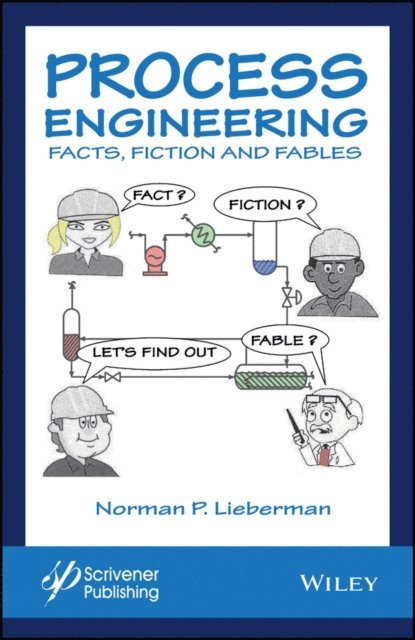
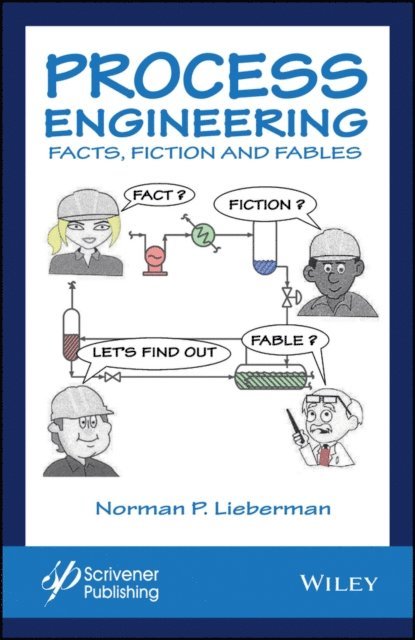
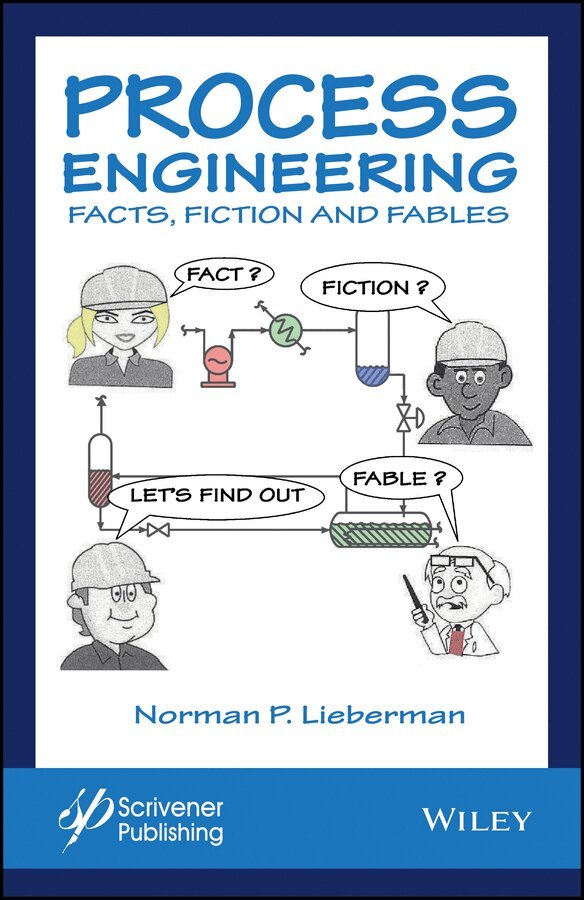
This is not your average technical book! Using a humorous and easy-to-understand approach to solving common process engineering problems, this unique volume is the go-to guide for any veteran or novice engineer in the plant, office, or classroom. Textbooks are often too theoretical to help the average process engineer solve everyday problems in the plant, and generic handbooks are often out of date and not comprehensive. This guide focuses on the most common problems that every engineer faces and how to solve them. The "characters" walk the reader through every problem and solution step-by-step, through dialogues that literally occur every day in process plants around the world.
With over half a century of experience and many books, videos, and seminars to his credit, Norm Lieberman is well-known all over the world and has helped countless companies and engineers through issues with equipment, processes, and training. This is the first time that this knowledge has appeared in a format like this, quite unlike anything ever published before in books on process engineering. This is a must-have for any engineer working in process engineering.
3 038 kr
Läs direkt efter köp
This is not your average technical book! Using a humorous and easy-to-understand approach to solving common process engineering problems, this unique volume is the go-to guide for any veteran or novice engineer in the plant, office, or classroom. Textbooks are often too theoretical to help the average process engineer solve everyday problems in the plant, and generic handbooks are often out of date and not comprehensive. This guide focuses on the most common problems that every engineer faces and how to solve them. The "characters" walk the reader through every problem and solution step-by-step, through dialogues that literally occur every day in process plants around the world.
With over half a century of experience and many books, videos, and seminars to his credit, Norm Lieberman is well-known all over the world and has helped countless companies and engineers through issues with equipment, processes, and training. This is the first time that this knowledge has appeared in a format like this, quite unlike anything ever published before in books on process engineering. This is a must-have for any engineer working in process engineering.
1 414 kr
Läs direkt efter köp
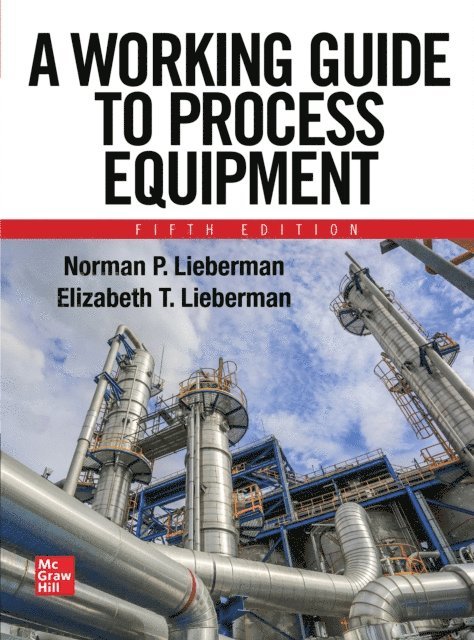
The latest methods for troubleshooting and maintaining process equipment
This extensively revised and updated practical resource fully explains how to diagnose, troubleshoot, and correct problems across a broad range of industries—all without complex equations and without ever losing sight of the importance of direct field measurements and observations.
This fifth edition features new and expanded coverage of:Causes and Effects of Wet Steam on Turbines and StrippersDistillation Design Errors and Inspecting Tower InternalsSetting Pressure Relief Valves on Vessels and Heat ExchangersReduction of Flare LossesSafer Procedures for Sampling Hazardous MaterialTaking Field Measurements Safely and EffectivelyFilled with real-world examples and illustrations, A Working Guide to Process Equipment, Fifth Edition clearly demonstrates how theory applies to solving real-world plant operation problems. Selected hand calculation methods are also provided.Comprehensive Coverage of: Distillation Towers * Tower Internals * Trays and Packing * Pumparounds * Draw-Off Nozzle Hydraulics * Tower Pressure Control * Cooling Water Systems * Instruments * Bubble Point and Dew Point * Vacuum Systems * Surface Condensers * Shell and Tube Heat Exchangers * Natural and Forced Circulation Reboilers * Steam Strippers * Steam and Condensate Systems * Condensers and Air Coolers * Fired Heaters * Steam Generation * Deaerators and Steam Systems * Wastewater Strippers * Steam Turbines * Refrigeration Systems * Catalytic Effects * Centrifugal Pumps * Control Valves * Separators * Centrifugal Compressors and Surge * Reciprocating Compressors * Corrosion * Fluid Flow in Pipes * Super-Fractionation Stage * Computer Control * Field Troubleshooting * Commentary on & need for Suppression of CO2 Emissions1 627 kr
Skickas inom 5-8 vardagar
1 816 kr
Läs direkt efter köp
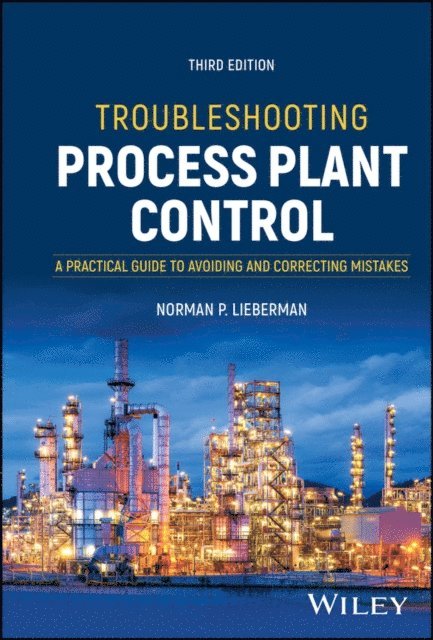
A practical and engaging guide to running process controls in petrochemical plants and refineries
Process control is an area of study dealing with controlling variables that emerge in process plants, such as chemical plants, wastewater purification plants, or refineries. Existing guides to process control are numerous, but they tend to be associated with control engineering, which is more mathematical and theoretical. There is an urgent need for a more straightforward and concrete guide for practical use in petrochemical plants and refineries.
Troubleshooting Process Plant Control meets this need with a work dedicated to real-life solutions and problem solving. Rooted in real-world examples and the career experience of the author, it largely avoids complex mathematics in favor of practical, well-established process engineering principles. Now fully updated to reflect the latest best practices and developments in the field, it is indispensable for process controllers in active plants of all kinds.
Readers of the third edition will also find:
New chapters on alarm disabling, spectrometer use, and reducing CO2 emissionsAdditional novel examples throughoutGuidelines for using spectrometers to directly control reflux rates and steam flow to reboilersTroubleshooting Process Plant Control is ideal for practicing engineers and other technical professionals working in process facilities, as well as advanced students taking professional training courses in these fields.
1 816 kr
Läs direkt efter köp
A practical and engaging guide to running process controls in petrochemical plants and refineries
Process control is an area of study dealing with controlling variables that emerge in process plants, such as chemical plants, wastewater purification plants, or refineries. Existing guides to process control are numerous, but they tend to be associated with control engineering, which is more mathematical and theoretical. There is an urgent need for a more straightforward and concrete guide for practical use in petrochemical plants and refineries.
Troubleshooting Process Plant Control meets this need with a work dedicated to real-life solutions and problem solving. Rooted in real-world examples and the career experience of the author, it largely avoids complex mathematics in favor of practical, well-established process engineering principles. Now fully updated to reflect the latest best practices and developments in the field, it is indispensable for process controllers in active plants of all kinds.
Readers of the third edition will also find:
New chapters on alarm disabling, spectrometer use, and reducing CO2 emissionsAdditional novel examples throughoutGuidelines for using spectrometers to directly control reflux rates and steam flow to reboilersTroubleshooting Process Plant Control is ideal for practicing engineers and other technical professionals working in process facilities, as well as advanced students taking professional training courses in these fields.