Oisín Deery - Böcker
Visar alla böcker från författaren Oisín Deery. Handla med fri frakt och snabb leverans.
3 produkter
3 produkter
1 091 kr
Skickas inom 5-8 vardagar
In Naturally Free Action, Oisín Deery argues that free will exists, where free will is understood as the ability to act freely, and free actions as exercises of that ability.Deery reaches his conclusion by showing how the concept of free will plausibly refers to many actual human behaviors, and how these behaviors count as a natural category or kind. Deery also addresses the role of phenomenology in fixing the reference of the concept, arguing that our phenomenology as of deciding or acting freely is typically accurate, even if determinism is true. The result is a realist, naturalistic framework for theorizing about free will, according to which free will almost certainly exists and we act freely. Deery's position mostly sidesteps the question of whether free will is compatible with determinism. Even so, Deery maintains that his natural-kind view about free will supports compatibilism and provides compatibilists with an attractive way to be realists about free will.Deery also responds to recent empirical threats to free will, including those posed by findings about behaviors caused by implicit biases. Finally, Deery shows how his view possesses the resources to address emerging questions about whether artificially intelligent agents might ever act freely or be responsible for their behaviors, and if so in what sense.
642 kr
Skickas inom 5-8 vardagar
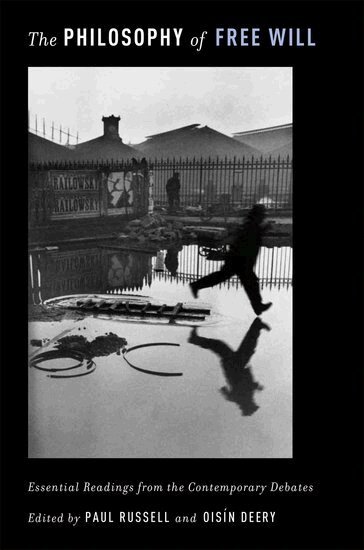
The problem of free will is one of the great perennial issues of philosophy and has been discussed and debated over many centuries. The issues that arise in this sphere cover both metaphysics and morals and concern matters of central importance not only for philosophy but also for law, theology, psychology and the social sciences. What is at stake here is nothing less than our self-image as responsible moral agents who are in control of our own destiny and fate. The investigations and findings of modern science are judged by many to put skeptical pressure on this self-image and may challenge its credibility. During the past few decades the free will controversy has developed and evolved in exciting and significant ways. All the major parties involved in this debate have had to revise and amend their core positions with a view to responding to the sophisticated and searching arguments put forward by their critics and opponents. The papers collected in this volume represent the most essential and indispensible contributions to the contemporary debate. The specific topics covered include: moral luck, skepticism and naturalism, the consequence argument, alternate possibilities, libertarian metaphysics, compatibilism and reason-responsive theories, illusionism and revisionism, optimism and pessimism, and the phenomenology of agency, as well as contributions relating to neuroscience and experimental philosophy. The collection is arranged in a way that presents the topics covered in a structured and organized manner. The general aim is to provide an effective guide for students and readers who are new to the field, as well as a useful collection for those who are already familiar with the topics and contributions. The contributors include many of the leading and most distinguished figures in the field, along with a number of younger scholars who have already had an impact and produced significant work.
2 367 kr
Skickas inom 5-8 vardagar
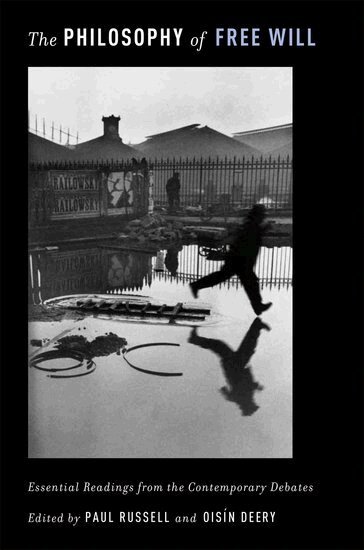
The problem of free will is one of the great perennial issues of philosophy and has been discussed and debated over many centuries. The issues that arise in this sphere cover both metaphysics and morals and concern matters of central importance not only for philosophy but also for law, theology, psychology and the social sciences. What is at stake here is nothing less than our self-image as responsible moral agents who are in control of our own destiny and fate. The investigations and findings of modern science are judged by many to put skeptical pressure on this self-image and may challenge its credibility. During the past few decades the free will controversy has developed and evolved in exciting and significant ways. All the major parties involved in this debate have had to revise and amend their core positions with a view to responding to the sophisticated and searching arguments put forward by their critics and opponents. The papers collected in this volume represent the most essential and indispensible contributions to the contemporary debate. The specific topics covered include: moral luck, skepticism and naturalism, the consequence argument, alternate possibilities, libertarian metaphysics, compatibilism and reason-responsive theories, illusionism and revisionism, optimism and pessimism, and the phenomenology of agency, as well as contributions relating to neuroscience and experimental philosophy. The collection is arranged in a way that presents the topics covered in a structured and organized manner. The general aim is to provide an effective guide for students and readers who are new to the field, as well as a useful collection for those who are already familiar with the topics and contributions. The contributors include many of the leading and most distinguished figures in the field, along with a number of younger scholars who have already had an impact and produced significant work.