Ola Ahlqvist - Böcker
Visar alla böcker från författaren Ola Ahlqvist. Handla med fri frakt och snabb leverans.
4 produkter
4 produkter
1 105 kr
Skickas inom 10-15 vardagar
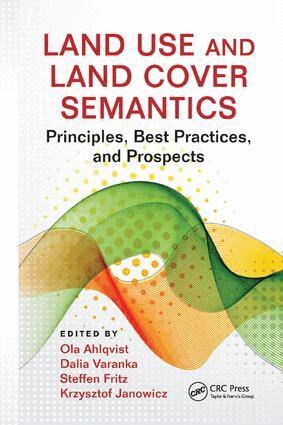
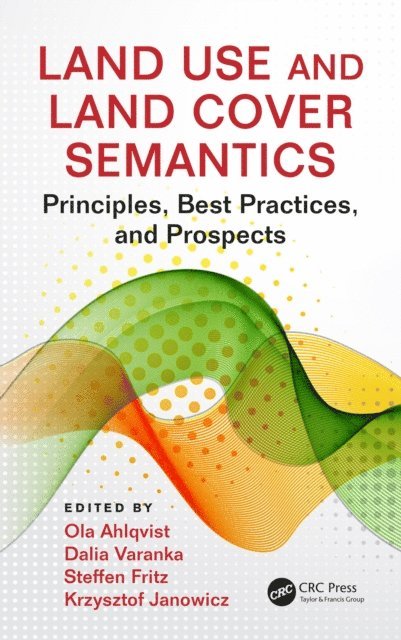
Explore the Important Role that the Semantics of Land Use and Land Cover Plays within a Broader Environmental ContextFocused on the information semantics of land use and land cover (LULC) and providing a platform for reassessing this field, Land Use and Land Cover Semantics: Principles, Best Practices, and Prospects presents a comprehensive overview of fundamental theories and best practices for applying semantics in LULC. Developed by a team of experts bridging relevant areas related to the subject (LULC studies, ontology, semantic uncertainty, information science, and earth observation), this book encourages effective and critical uses of LULC data and considers practical contexts where LULC semantics can play a vital role.The book includes work on conceptual and technological semantic practices, including but not limited to categorization; the definition of criteria for sets and their members; metadata; documentation for data reuse; ontology logic restrictions; reasoning from text sources; and explicit semantic specifications, ontologies, vocabularies, and design patterns. It also includes use cases from applicable semantics in searches, LULC classification, spatial analysis and visualization, issues of Big Data, knowledge infrastructures and their organization, and integration of bottom-up and top-down approaches to collaboration frameworks and interdisciplinary challenges such as EarthCube. This book: Centers on the link between planning goals, objectives, and policy and land use classification systemsUses examples of maps and databases to draw attention to the problems of semantic integration of land use/cover dataDiscusses the principles used in a categorizationExplores the origins and impacts of semantic variation using the example of land coverExamines how crowd science and human perceptions can be used to improve the quality of land cover datasets, and moreLand Use and Land Cover Semantics: Principles, Best Practices, and Prospects offers an up-to-date account of land use/land cover semantics, looks into aspects of semantic data modeling, and discusses current approaches, ongoing developments, and future trends. The book provides guidance to anyone working with land use or land cover data, looking to harmonize categories, repurpose data, or otherwise develop or use LULC datasets.
2 222 kr
Skickas inom 7-10 vardagar
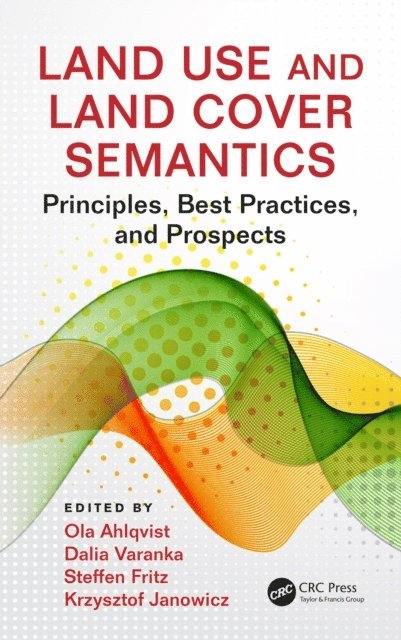
Explore the Important Role that the Semantics of Land Use and Land Cover Plays within a Broader Environmental ContextFocused on the information semantics of land use and land cover (LULC) and providing a platform for reassessing this field, Land Use and Land Cover Semantics: Principles, Best Practices, and Prospects presents a comprehensive overview of fundamental theories and best practices for applying semantics in LULC. Developed by a team of experts bridging relevant areas related to the subject (LULC studies, ontology, semantic uncertainty, information science, and earth observation), this book encourages effective and critical uses of LULC data and considers practical contexts where LULC semantics can play a vital role.The book includes work on conceptual and technological semantic practices, including but not limited to categorization; the definition of criteria for sets and their members; metadata; documentation for data reuse; ontology logic restrictions; reasoning from text sources; and explicit semantic specifications, ontologies, vocabularies, and design patterns. It also includes use cases from applicable semantics in searches, LULC classification, spatial analysis and visualization, issues of Big Data, knowledge infrastructures and their organization, and integration of bottom-up and top-down approaches to collaboration frameworks and interdisciplinary challenges such as EarthCube. This book: Centers on the link between planning goals, objectives, and policy and land use classification systemsUses examples of maps and databases to draw attention to the problems of semantic integration of land use/cover dataDiscusses the principles used in a categorizationExplores the origins and impacts of semantic variation using the example of land coverExamines how crowd science and human perceptions can be used to improve the quality of land cover datasets, and moreLand Use and Land Cover Semantics: Principles, Best Practices, and Prospects offers an up-to-date account of land use/land cover semantics, looks into aspects of semantic data modeling, and discusses current approaches, ongoing developments, and future trends. The book provides guidance to anyone working with land use or land cover data, looking to harmonize categories, repurpose data, or otherwise develop or use LULC datasets.
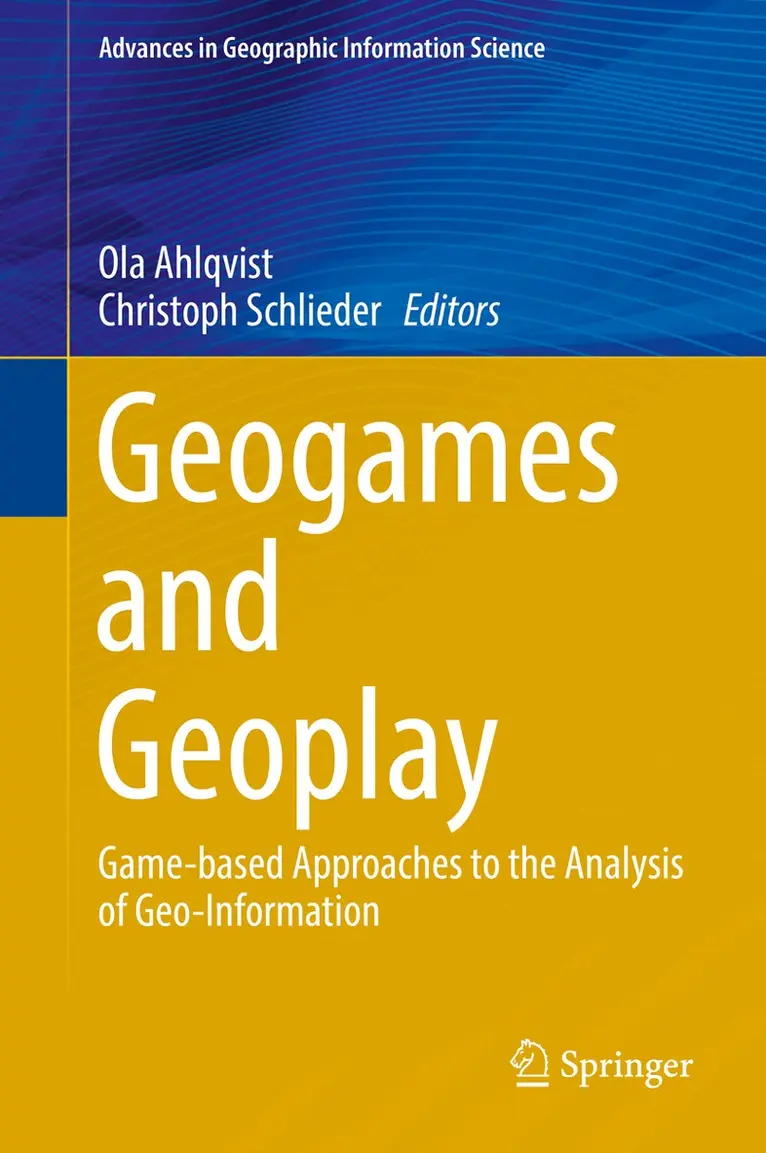
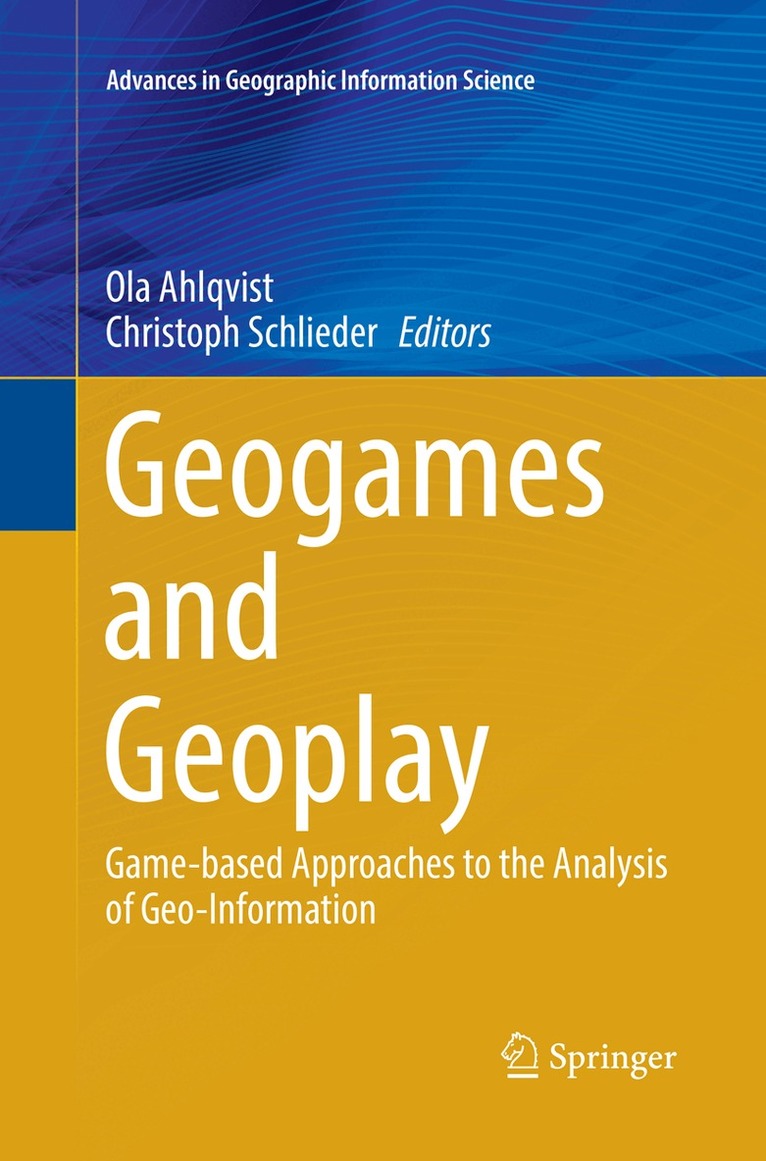
Geogames and Geoplay
Game-based Approaches to the Analysis of Geo-Information
Inbunden, Engelska, 2017
1 578 kr
Skickas inom 10-15 vardagar
This book brings together contributions from researchers, GIS professionals and game designers to provide a first overview of this highly interdisciplinary field. Its scope ranges from fundamentals about games and play, geographic information technologies, game design and culture, to current examples and forward looking analysis.Of interest to anyone interested in creating and using Geogames, this volume serves as a channel for sharing early experiences, discussing technological challenges and solutions, and outlines a future research agenda. Games and play are part of human life, and in many game activities, place, space and geography plays a central role in determining the rules and interactions that are characteristic of each game. Recent developments and widespread access to mobile information, communication, and geospatial technologies have spurred a flurry of developments, including many variations of gaming activities that are situated in, or otherwise connected to the real world.
1 170 kr
Skickas inom 10-15 vardagar
This book brings together contributions from researchers, GIS professionals and game designers to provide a first overview of this highly interdisciplinary field. Its scope ranges from fundamentals about games and play, geographic information technologies, game design and culture, to current examples and forward looking analysis.Of interest to anyone interested in creating and using Geogames, this volume serves as a channel for sharing early experiences, discussing technological challenges and solutions, and outlines a future research agenda. Games and play are part of human life, and in many game activities, place, space and geography plays a central role in determining the rules and interactions that are characteristic of each game. Recent developments and widespread access to mobile information, communication, and geospatial technologies have spurred a flurry of developments, including many variations of gaming activities that are situated in, or otherwise connected to the real world.