Olajumoke Yacob-Haliso – författare
544 kr
Skickas inom 5-8 vardagar
2 151 kr
Skickas inom 10-15 vardagar
629 kr
Skickas inom 10-15 vardagar
648 kr
Skickas inom 10-15 vardagar
730 kr
Läs direkt efter köp
This book argues that ancient and modern African indigenous knowledges remain key to Africa’s role in global capital, technological and knowledge development and to addressing her marginality and postcoloniality.
The contributors engage the unresolved problematics of the historical and contemporary linkages between African knowledges and the African academy, and between African and global knowledges. The book relies on historical and comparative political analysis to explore the global context for the application of indigenous knowledges for tackling postcolonial challenges of knowledge production, conflict and migration, and women’s rights on the continent in transcontinental African contexts.
Asserting the enduring potency of African indigenous knowledges for the transformation of policy, the African academy and the study of Africa in the global academy, this book will be of interest to scholars of African Studies, postcolonial studies and decolonisation and global affairs.
730 kr
Läs direkt efter köp
This book argues that ancient and modern African indigenous knowledges remain key to Africa’s role in global capital, technological and knowledge development and to addressing her marginality and postcoloniality.
The contributors engage the unresolved problematics of the historical and contemporary linkages between African knowledges and the African academy, and between African and global knowledges. The book relies on historical and comparative political analysis to explore the global context for the application of indigenous knowledges for tackling postcolonial challenges of knowledge production, conflict and migration, and women’s rights on the continent in transcontinental African contexts.
Asserting the enduring potency of African indigenous knowledges for the transformation of policy, the African academy and the study of Africa in the global academy, this book will be of interest to scholars of African Studies, postcolonial studies and decolonisation and global affairs.
602 kr
Skickas inom 10-15 vardagar
2 201 kr
Skickas inom 10-15 vardagar
784 kr
Läs direkt efter köp
This book introduces readers to the rich and diverse experiences of women across the African continent, covering their socio-cultural, political, and economic realities from the precolonial era right up to the modern day.
In many precolonial African societies, women were empowered and considered to be important participants in the social structures and political systems that managed their communities, but during the colonial era, women were often marginalized. Now, across the continent, women are reasserting their agency. This book explores the various ways in which gender has been constructed in different African cultures across history and how this has impacted the lived experiences of women. The book encompasses a broad range of topics, including history, health, sexualities, gender-based violence, motherhood, education, economic activities, science and technology, religion, popular culture, politics, peacebuilding, feminism, literature, social media, and migration. Engaging and compelling, this book invites us to think again about the changing roles, identities, and contributions of African women across time and space.
It is the perfect introduction for any student of gender or African studies, as well as for anyone looking for a reader-friendly guide to the subject.
784 kr
Läs direkt efter köp
This book introduces readers to the rich and diverse experiences of women across the African continent, covering their socio-cultural, political, and economic realities from the precolonial era right up to the modern day.
In many precolonial African societies, women were empowered and considered to be important participants in the social structures and political systems that managed their communities, but during the colonial era, women were often marginalized. Now, across the continent, women are reasserting their agency. This book explores the various ways in which gender has been constructed in different African cultures across history and how this has impacted the lived experiences of women. The book encompasses a broad range of topics, including history, health, sexualities, gender-based violence, motherhood, education, economic activities, science and technology, religion, popular culture, politics, peacebuilding, feminism, literature, social media, and migration. Engaging and compelling, this book invites us to think again about the changing roles, identities, and contributions of African women across time and space.
It is the perfect introduction for any student of gender or African studies, as well as for anyone looking for a reader-friendly guide to the subject.
2 215 kr
Skickas inom 10-15 vardagar
2 151 kr
Skickas inom 10-15 vardagar
574 kr
Skickas inom 10-15 vardagar
665 kr
Läs direkt efter köp
This book spotlights, analyzes and explains varying forms and patterns of state-society relations on the African continent, taking as point of departure the complexities created by the emergence, proliferation and complicated interactions of so-called ‘big men’ across Africa''s fifty-four states. The contributors interrogate the evolution of Africa’s big men; the role of the big men in Africa’s political and economic development; and the relationship between the state, the big men and the citizens.
Throughout the chapters the contributors engage with a number of questions from different disciplinary and methodological orientations. How did these states evolve to exhibit various deformities in their composition, functioning and in their relations with the societies that they govern? What roles did Atlantic and other slavery and European colonialism play in creating states that are unable to display the right and good relationships with citizens in civil society? Why did these forms of predatory state-society relations continue to thrive in Africa after the end of Atlantic slave trade and subsequent colonialism? Why did the emerging African leaders at independence fail to effectively dismantle the structures of exploitation and expropriation that were the defining features of slavery and colonialism? Who are Africa’s ‘big men’, and what are their trajectories?
This book is essential reading for all students and scholars of African politics, public policy and administration, political economy, and democratisation.
665 kr
Läs direkt efter köp
This book spotlights, analyzes and explains varying forms and patterns of state-society relations on the African continent, taking as point of departure the complexities created by the emergence, proliferation and complicated interactions of so-called ‘big men’ across Africa''s fifty-four states. The contributors interrogate the evolution of Africa’s big men; the role of the big men in Africa’s political and economic development; and the relationship between the state, the big men and the citizens.
Throughout the chapters the contributors engage with a number of questions from different disciplinary and methodological orientations. How did these states evolve to exhibit various deformities in their composition, functioning and in their relations with the societies that they govern? What roles did Atlantic and other slavery and European colonialism play in creating states that are unable to display the right and good relationships with citizens in civil society? Why did these forms of predatory state-society relations continue to thrive in Africa after the end of Atlantic slave trade and subsequent colonialism? Why did the emerging African leaders at independence fail to effectively dismantle the structures of exploitation and expropriation that were the defining features of slavery and colonialism? Who are Africa’s ‘big men’, and what are their trajectories?
This book is essential reading for all students and scholars of African politics, public policy and administration, political economy, and democratisation.
737 kr
Läs direkt efter köp
Gendering Knowledge in Africa and the African Diaspora addresses the question of to what extent the history of gender in Africa is appropriately inscribed in narratives of power, patriarchy, migration, identity and women and men’s subjection, emasculation and empowerment. The book weaves together compelling narratives about women, men and gender relations in Africa and the African Diaspora from multidisciplinary perspectives, with a view to advancing original ways of understanding these subjects.
The chapters achieve three things: first, they deliberately target long-held but erroneous notions about patriarchy, power, gender, migration and masculinity in Africa and of the African Diaspora, vigorously contesting these, and debunking them; second, they unearth previously marginalized and little known his/herstories, depicting the dynamics of gender and power in places ranging from Angola to Arabia to America, and in different time periods, decidedly gendering the previously male-dominated discourse; and third, they ultimately aim to re-write the stories of women and gender relations in Africa and in the African Diaspora. As such, this work is an important read for scholars of African history, gender and the African Diaspora.
This book will be of interest to students and scholars of African Studies, Diaspora Studies, Gender and History.
730 kr
Läs direkt efter köp
Gendering Knowledge in Africa and the African Diaspora addresses the question of to what extent the history of gender in Africa is appropriately inscribed in narratives of power, patriarchy, migration, identity and women and men’s subjection, emasculation and empowerment. The book weaves together compelling narratives about women, men and gender relations in Africa and the African Diaspora from multidisciplinary perspectives, with a view to advancing original ways of understanding these subjects.
The chapters achieve three things: first, they deliberately target long-held but erroneous notions about patriarchy, power, gender, migration and masculinity in Africa and of the African Diaspora, vigorously contesting these, and debunking them; second, they unearth previously marginalized and little known his/herstories, depicting the dynamics of gender and power in places ranging from Angola to Arabia to America, and in different time periods, decidedly gendering the previously male-dominated discourse; and third, they ultimately aim to re-write the stories of women and gender relations in Africa and in the African Diaspora. As such, this work is an important read for scholars of African history, gender and the African Diaspora.
This book will be of interest to students and scholars of African Studies, Diaspora Studies, Gender and History.
1 619 kr
Skickas inom 10-15 vardagar
9 145 kr
Skickas inom 10-15 vardagar
9 160 kr
Läs direkt efter köp
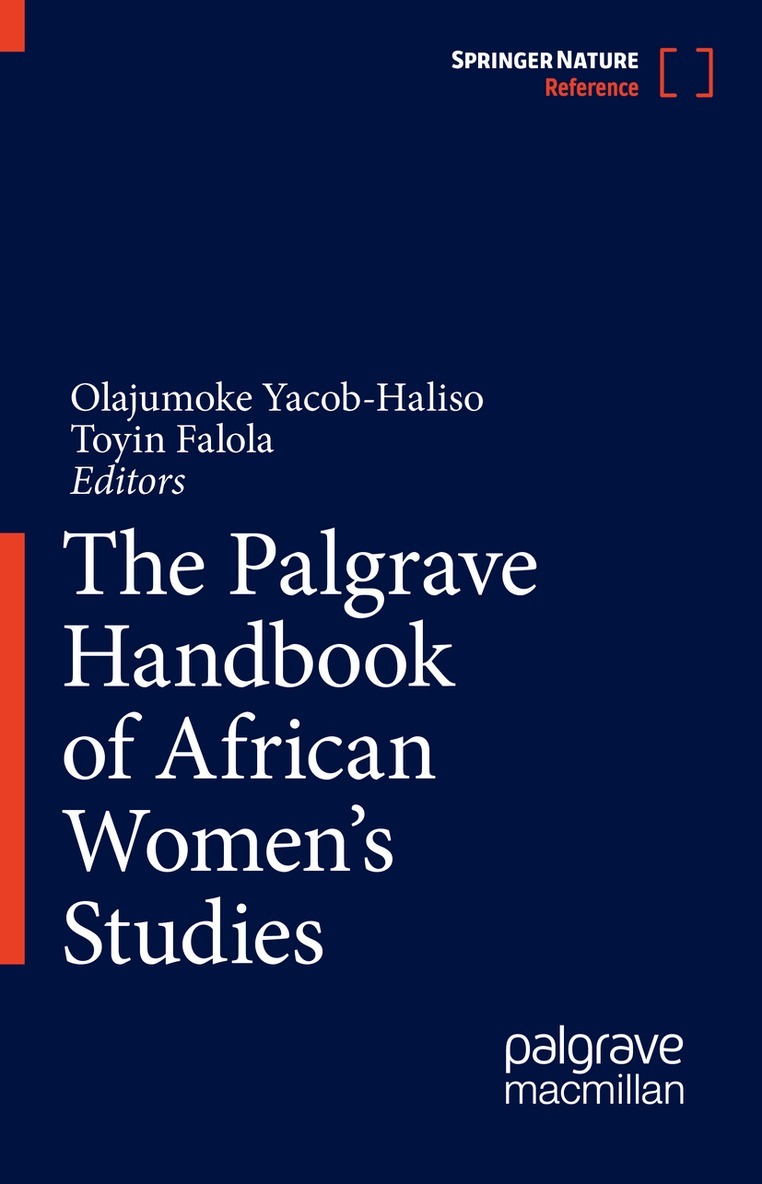
This definitive handbook is the first reference of its kind bringing together knowledge, scholarship, and debates on themes and issues concerning African women everywhere. It unearths, critiques, reviews, analyses, theorizes, synthesizes and evaluates African women’s historical, social, political, economic, local and global lives and experiences with a view to decolonizing the corpus. This Handbook questions the gendered roles and positions of African women and the structures, institutions, and processes of policy, politics, and knowledge production that continually construct, deconstruct, and reconstruct African women and the study of them. Contributors offer a consistent emphasis on debunking erroneous and misleading myths about African women''s roles and positions, bringing their previously marginalized stories to relief, and ultimately re-writing their histories. Thus, this Handbook enlarges the scope of the field, challenges its orthodoxies, and engenders new subjects, theories,and approaches. This reference work includes, to the greatest extent possible, the voices of African women themselves as writers of their own stories. The detailed, rigorous and up-to-date analyses in the work represent a variety of theoretical, methodological, and transdisciplinary approaches. This reference work will prove vital in charting new directions for the study of African women, and will reverberate in future studies, generating new debates and engendering further interest.
11 938 kr
Kommande
1 512 kr
Skickas inom 10-15 vardagar
1 379 kr
Läs direkt efter köp
1 082 kr
Skickas inom 10-15 vardagar
1 404 kr
Skickas inom 10-15 vardagar
1 672 kr
Läs direkt efter köp
This volume investigates alternative epistemological pathways by which knowledge production in Africa can proceed. The contributors, using different intellectual dynamics, explore the existing epistemological dominance of the West—from architecture to gender discourse, from environmental management to democratic governance—and offer distinct and unique arguments that challenge the denigration of the different and differing modes of knowing that the West considered “barbaric” and “primitive.” This volume therefore constitutes a minimal gesture that further contributes to the ongoing discourse on alternative modes of knowing in Africa.
1 404 kr
Skickas inom 10-15 vardagar
1 619 kr
Skickas inom 10-15 vardagar
1 977 kr
Läs direkt efter köp