Ole Skovsmose – författare
1 416 kr
Läs direkt efter köp
1 084 kr
Skickas inom 10-15 vardagar
1 416 kr
Läs direkt efter köp
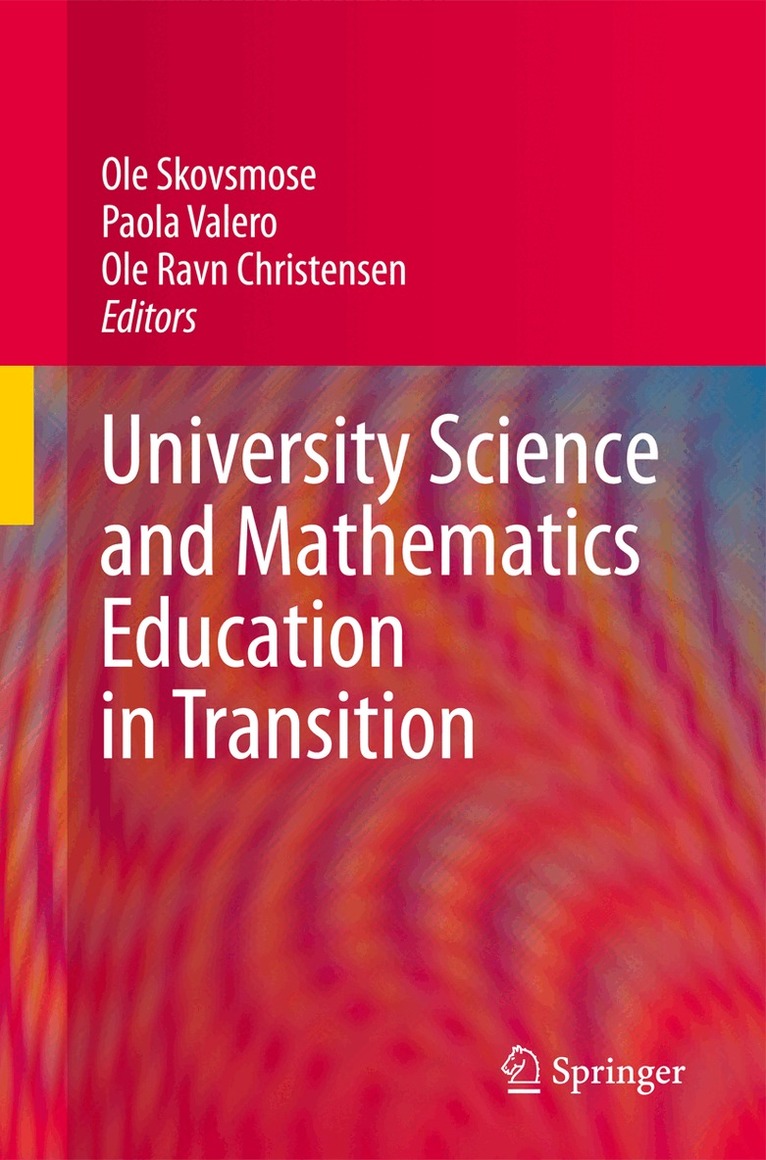
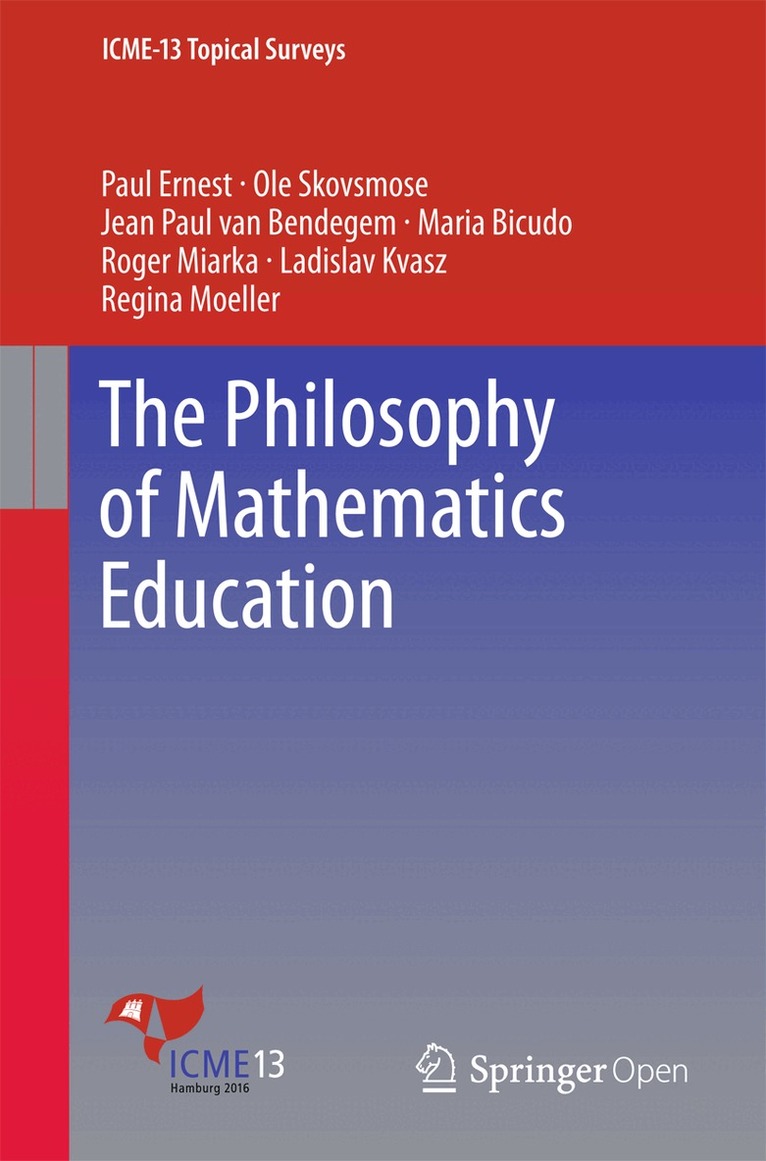
More than ever, our time is characterised by rapid changes in the organisation and the production of knowledge. This movement is deeply rooted in the evolution of the scientific endeavour, as well as in the transformation of the political, economic and cultural organisation of society. In other words, the production of scientific knowledge is changing both with regard to the internal development of science and technology, and with regard to the function and role science and technology fulfill in society. This general social context in which universities and knowledge production are placed has been given different names: the informational society, the knowledge society, the learning society, the post-industrial society, the risk society, or even the post-modern society. A common feature of different characterisations of this historic time is the fact that it is a period in construction. Parts of the world, not only of the First World but also chunks of the Developing World, are involved in these transformations. There is a movement from former social, political and cultural forms of organisation which impact knowledge production into new forms. These forms drive us into forms of organisation that are unknown and that, for their very same complexity, do not show a clear ending stage. Somehow the utopias that guided the ideas of development and progress in the past are not present anymore, and therefore the transitions in the knowledge society generate a new uncertain world. We find ourselves and our universities to be in a transitional period in time.
In this context, it is difficult to avoid considering seriously the challenges that such a complex and uncertain social configuration poses to scientific knowledge, to universities and especially to education in mathematics and science. It is clear that the transformation of knowledge outside universities has implied a change in the routes that research in mathematics, science and technology has taken in thelast decades. It is also clear that in different parts of the world these changes have happened at different points in time. While universities in the "New World" (the American Continent, Africa, Asia and Oceania) have accommodated their operation to the challenges of the construction in the new world, in many European countries universities with a longer existence and tradition have moved more slowly into this time of transformation and have been responding at a less rapid pace to environmental challenges. The process of tuning universities, together with their forms of knowledge production and their provision of education in science and mathematics, with the demands of the informational society has been a complex process, as complex as the general transformation undergoing in society. Therefore an understanding of the current transitions in science and mathematics education has to consider different dimensions involved in such a change.
Traditionally, educational studies in mathematics and science education have looked at changes in education from within the scientific disciplines and in the closed context of the classroom. Although educational change in the very end is implemented in everyday teaching and learning situations, other parallel dimensions influencing these situations cannot be forgotten. An understanding of the actual potentialities and limitations of educational transformations are highly dependent on the network of educational, cultural, administrative and ideological views and practices that permeate and constitute science and mathematics education in universities today.
This book contributes to understanding some of the multiple aspects and dimensions of the transition of science and mathematics education in the current informational society. Such an understanding is necessary for finding possibilities to improve science and mathematics education in universities all around the world. Such a broad approach to the transitions happening in these fields has not been addressed yet by existing books in the market.
Meaning in Mathematics Education
1 084 kr
Skickas inom 10-15 vardagar
1 416 kr
Läs direkt efter köp
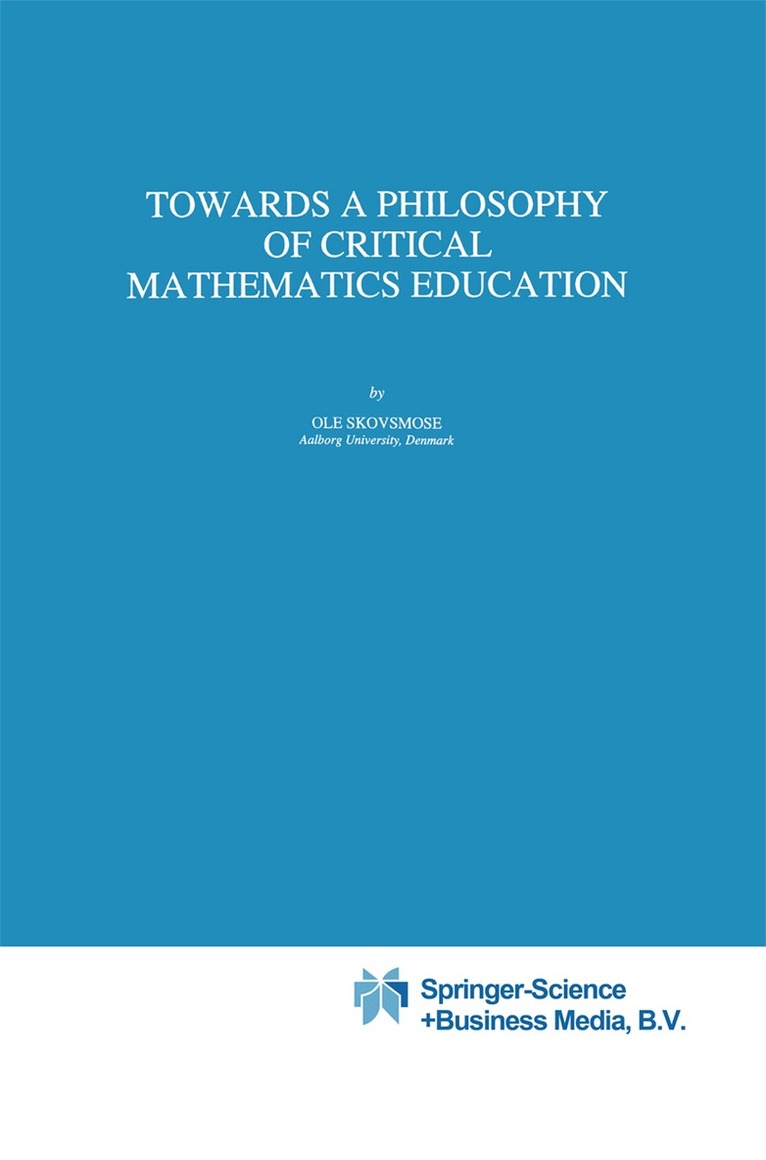
Towards a Philosophy of Critical Mathematics Education
2 161 kr
Skickas inom 10-15 vardagar
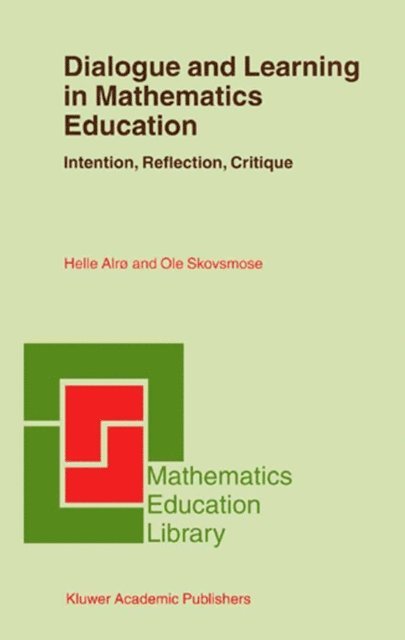
Dialogue and Learning in Mathematics Education
Intention, Reflection, Critique
1 084 kr
Skickas inom 10-15 vardagar
Dialogue and Learning in Mathematics Education
Intention, Reflection, Critique
1 084 kr
Skickas inom 10-15 vardagar
1 084 kr
Skickas inom 10-15 vardagar
Meaning in Mathematics Education
1 084 kr
Skickas inom 10-15 vardagar
693 kr
Skickas inom 5-8 vardagar
1 173 kr
Skickas inom 5-8 vardagar
495 kr
Läs direkt efter köp
432 kr
Skickas inom 5-8 vardagar
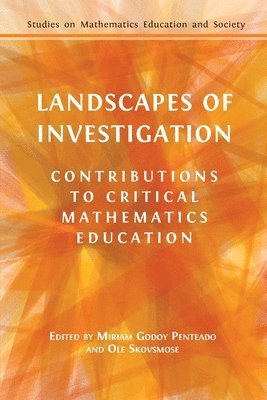
Landscapes of Investigation
Contributions to Critical Mathematics Education
615 kr
Skickas inom 5-8 vardagar
742 kr
Läs direkt efter köp
1 084 kr
Skickas inom 10-15 vardagar
1 416 kr
Läs direkt efter köp
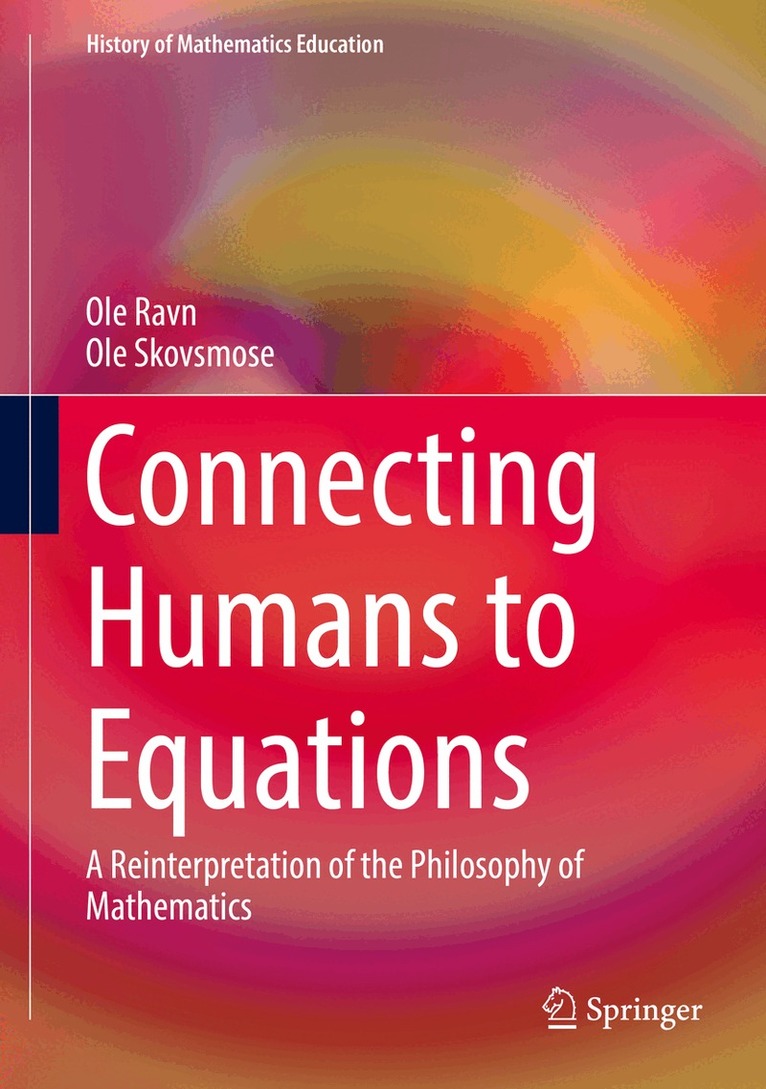
Connecting Humans to Equations: A Reinterpretation of the Philosophy of Mathematics presents some of the most important positions in the philosophy of mathematics, while adding new dimensions to this philosophy. Mathematics is an integral part of human and social life, meaning that a philosophy of mathematics must include several dimensions. This book describes these dimensions by the following four questions that structure the content of the book: Where is mathematics? How certain is mathematics? How social is mathematics? How good is mathematics?
These four questions refer to the ontological, epistemological, social, and ethical dimension of a philosophy of mathematics. While the ontological and epistemological dimensions have been explored in all classic studies in the philosophy of mathematics, the exploration of the book is unique in its social and ethical dimensions. It argues that the foundation of mathematics is deeply connected to human and social actions and that mathematics includes not just descriptive but also performative features. This human-centered and accessible interpretation of mathematics is relevant for students in mathematics, mathematics education, and any technical discipline and for anybody working with mathematics.
1 786 kr
Skickas inom 10-15 vardagar
2 238 kr
Läs direkt efter köp
1 838 kr
Skickas inom 5-8 vardagar
2 299 kr
Läs direkt efter köp
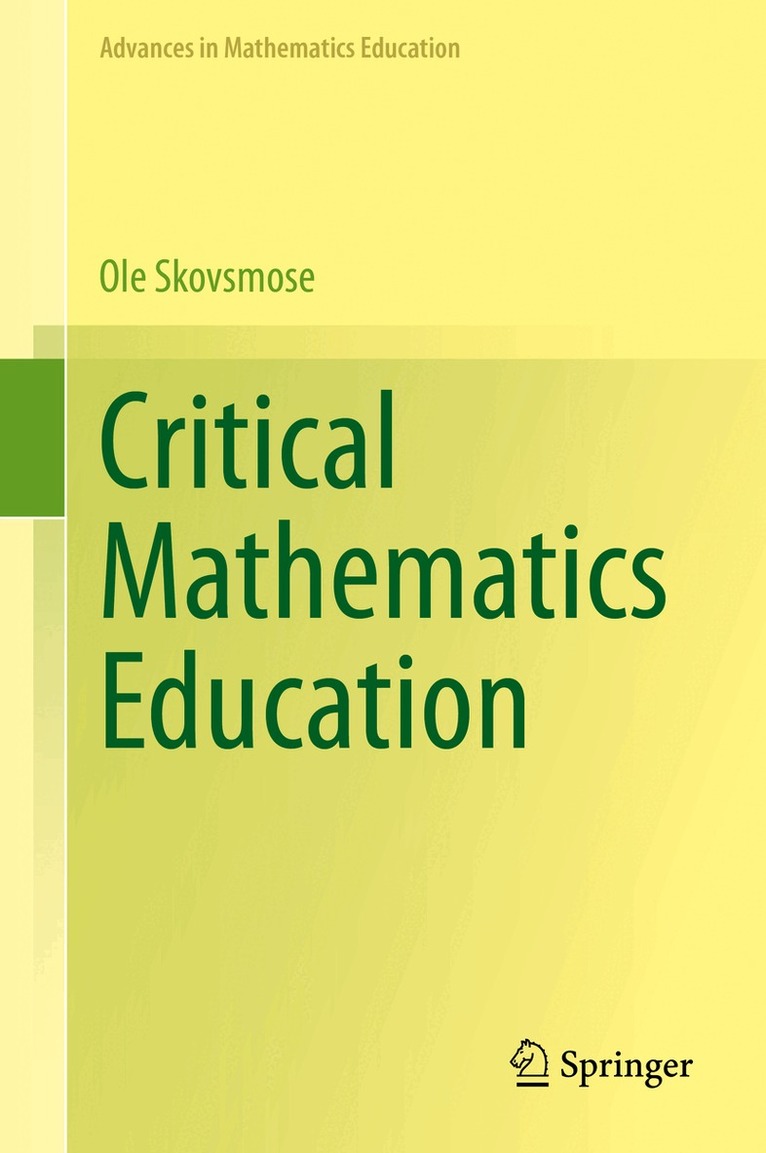
The book Critical Mathematics Education provides Ole Skovsmose’s recent contribution to the further development of critical mathematics education. It gives examples of learning environments, which invite students to engage in investigative processes. It discusses how mathematics can be used for identifying cases of social injustice, and it shows how mathematics itself can become investigated critically. Critical Mathematics Education addresses issues with respect to racism, oppression, erosion of democracy, sustainability, formatting power of mathematics, and banality of mathematical expertise. It explores relationships between mathematics, ethics, crises, and critique.
Ole Skovsmose has published what I might call his magnum opus, a 280-page synthesis and extension of his work simply called Critical Mathematics Education. In it he brings together his deep philosophical understanding and theorisation of mathematics itself, mathematics in society from a critical perspective, and mathematics in the teaching, learning and formation of students. For the mathematics education community, especially those concerned with social justice, philosophy, critical pedagogy and the nature of mathematics this is likely to be the publishing event of the year. In this book he offers something lacking in the literature, a philosophy of applied mathematics, as well as much more. Paul Ernest, Emeritus Professor, University of Exeter, UK
629 kr
Skickas inom 5-8 vardagar
1 838 kr
Skickas inom 10-15 vardagar
1 623 kr
Skickas inom 10-15 vardagar
2 049 kr
Läs direkt efter köp
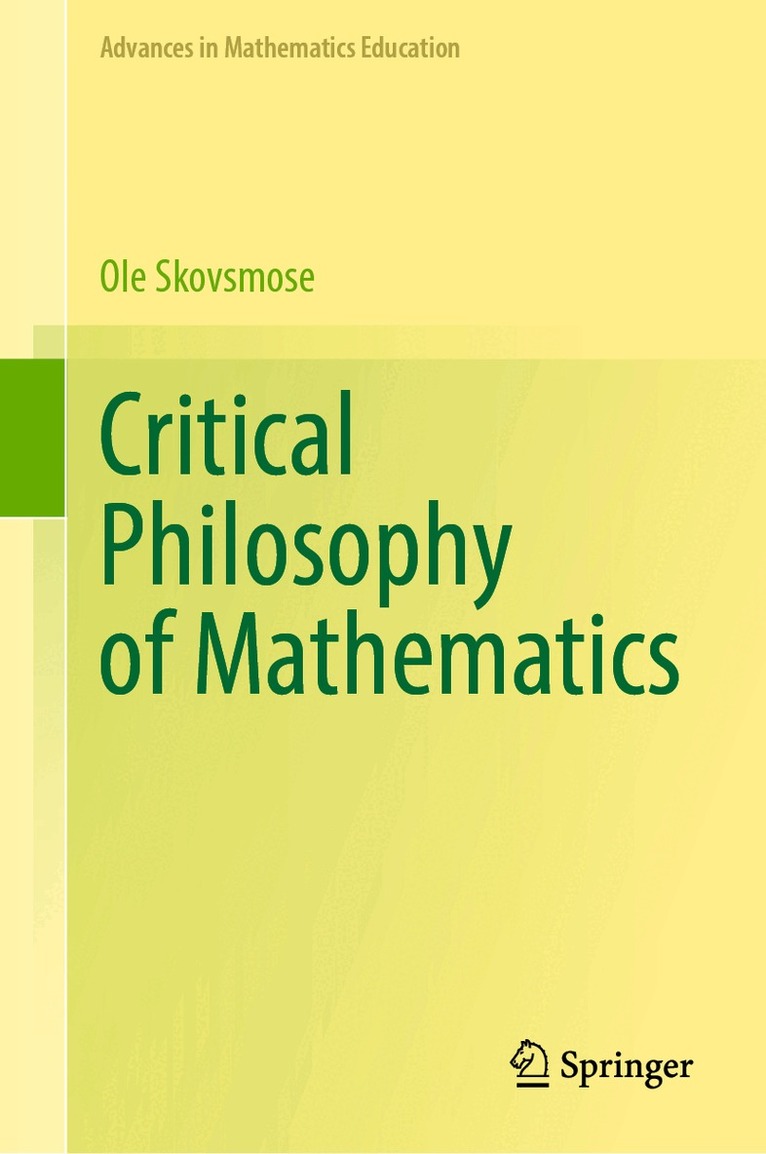
This book provides a philosophy of mathematics that resonates with critical mathematics education. It draws attention to the social complexities that characterise the period of Modernity including the extreme exploitation of manual workers and their families, brutal forms of colonisations, trading of slaves, and the formation of racist ideologies. It portrays Modernity as a period of contradictions and highlights that mathematics is a part of these contradictions. The text interprets mathematics as being indefinite, seeing that mathematics is a part of the ongoing human constructions. It outlines a performative interpretation of mathematics, portraying mathematics as intrinsically connected to actions. Any kind of action, including mathematics-based actions, calls for ethical considerations and this leads to any mathematical practice, either in research, application, or education, to face ethical challenges. It illustrates with examples how a critical philosophy of mathematics can come to be an integral part of classroom practices.
108 kr
Skickas inom 10-15 vardagar
Towards a Philosophy of Critical Mathematics Education
2 161 kr
Skickas inom 10-15 vardagar
2 840 kr
Läs direkt efter köp