Oliver Hellmann – författare
Visar alla böcker från författaren Oliver Hellmann. Handla med fri frakt och snabb leverans.
13 produkter
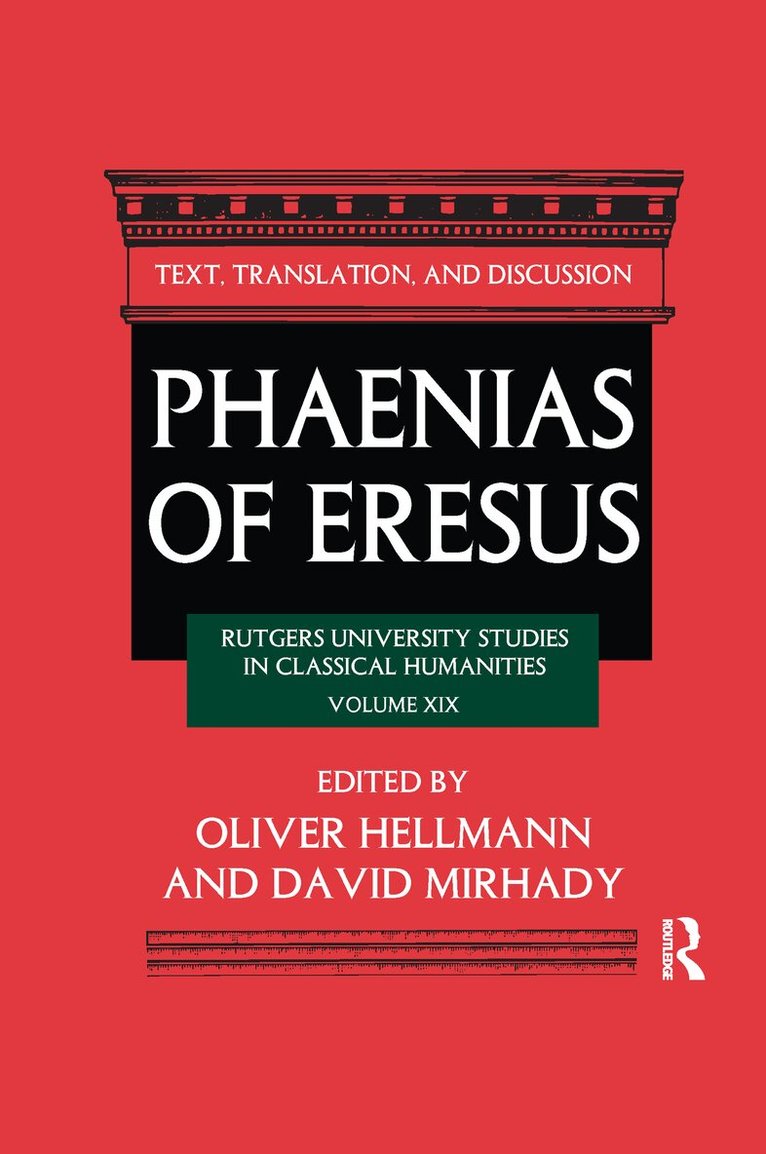
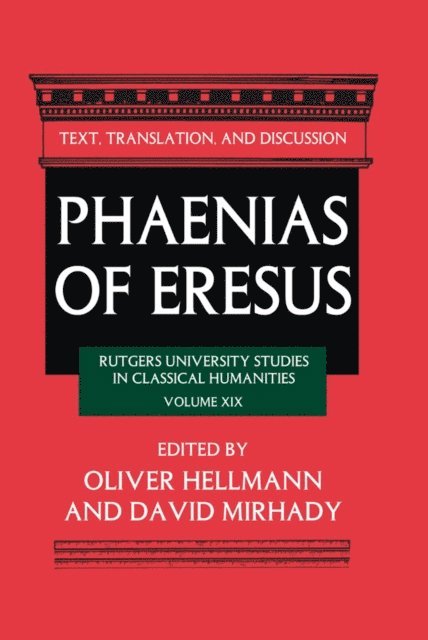
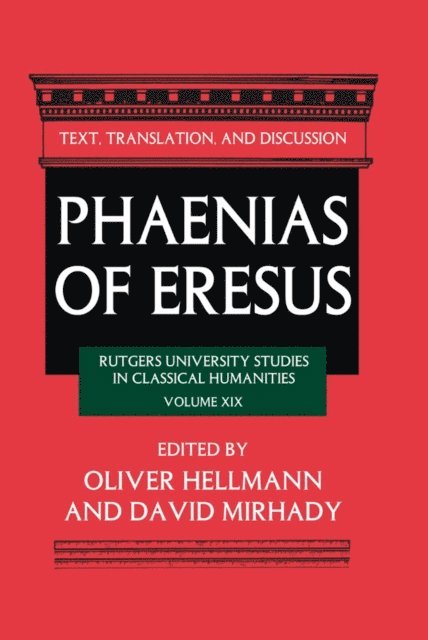
Phaenias of Eresus
Text, Translation, and Discussion
Av Oliver Hellmann, David Mirhady
Häftad, 2020
704 kr
Lägg i varukorg
Phaenias of Eresus (c. 375–300 BC) was a member of Aristotle's school, the "Peripatos" or "Lyceum," and a friend and compatriot of Aristotle's successor, Theophrastus. Phaenias's scholarly interests stretched from strictly philosophical treatises to chronology and the history of philosophy and …
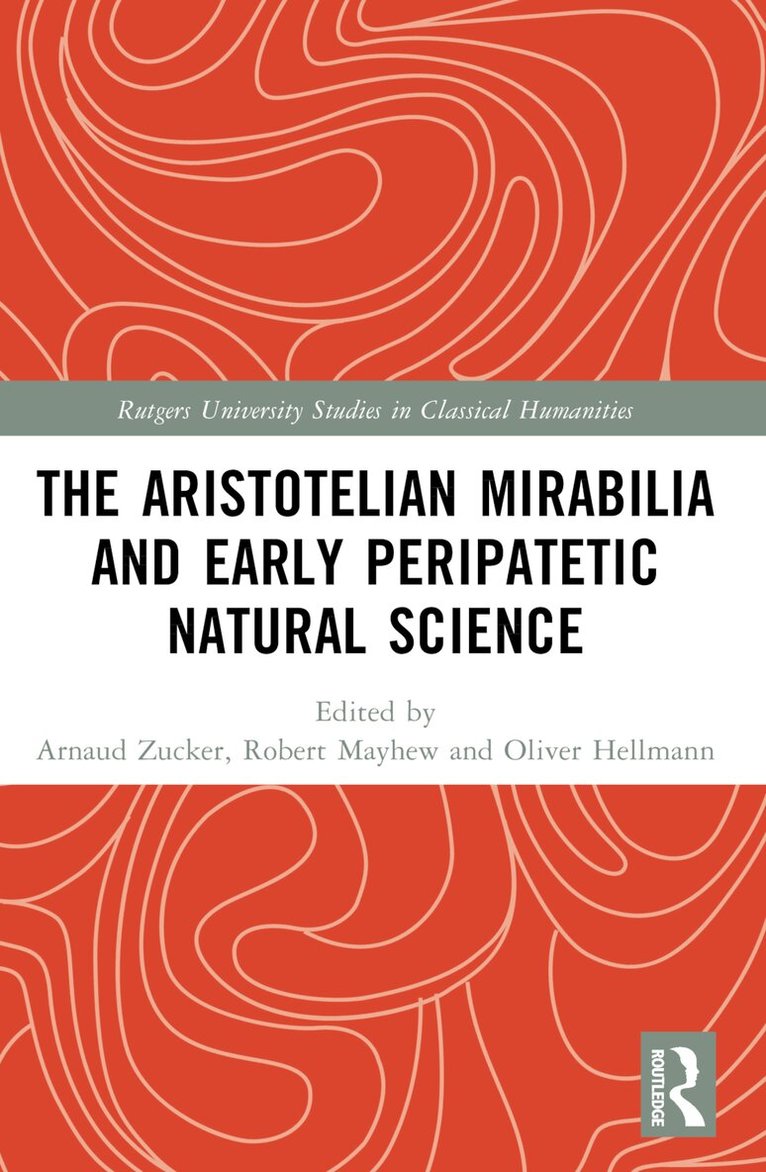
Aristotelian Mirabilia and Early Peripatetic Natural Science
Av Oliver Hellmann, Robert Mayhew m. fl.
E-bok, 2024
856 kr
Lägg i varukorg
This is the first volume devoted to the sections of the Aristotelian Mirabilia on natural science, filling a significant gap in the history of the Aristotelian study of nature and especially of animals. The chapters in this volume explore the Mirabilia , or De mirabilibus auscultationibus ( On …
Aristotelian Mirabilia and Early Peripatetic Natural Science
Av Oliver Hellmann, Robert Mayhew m. fl.
E-bok, 2024
856 kr
Lägg i varukorg
This is the first volume devoted to the sections of the Aristotelian Mirabilia on natural science, filling a significant gap in the history of the Aristotelian study of nature and especially of animals. The chapters in this volume explore the Mirabilia , or De mirabilibus auscultationibus ( On …
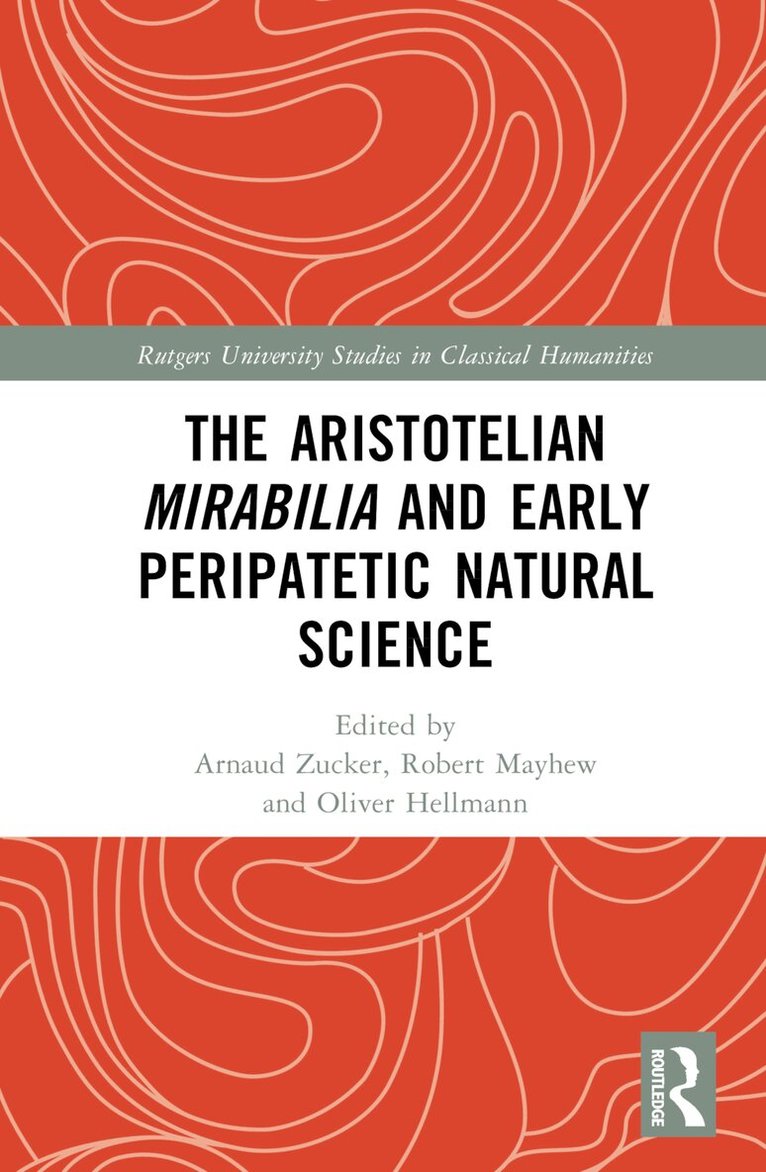
Aristotelian Mirabilia and Early Peripatetic Natural Science
Av Arnaud Zucker, Robert Mayhew m. fl.
Inbunden, 2024
2504 kr
Lägg i varukorg
This is the first volume devoted to the sections of the Aristotelian Mirabilia on natural science, filling a significant gap in the history of the Aristotelian study of nature and especially of animals.The chapters in this volume explore the Mirabilia, or De mirabilibus auscultationibus (On …
Aristotelian Mirabilia and Early Peripatetic Natural Science
Av Arnaud Zucker, Robert Mayhew m. fl.
Häftad, 2025
704 kr
Lägg i varukorg
This is the first volume devoted to the sections of the Aristotelian Mirabilia on natural science, filling a significant gap in the history of the Aristotelian study of nature and especially of animals.The chapters in this volume explore the Mirabilia, or De mirabilibus auscultationibus (On …
Peripatetic Ethics in Theophrastus and After
Av Robert Mayhew, Oliver Hellmann m. fl.
E-bok, 2026
674 kr
Lägg i varukorg
This volume presents up-to-date insights into the ethical theories of Aristotle's followers, beginning with his colleagues Theophrastus and Eudemus and covering a broad range of figures, topics and applications up to the Imperial Roman period.The ethical work of the Peripatetic school in antiquity …
Peripatetic Ethics in Theophrastus and After
Av Robert Mayhew, Oliver Hellmann m. fl.
E-bok, 2026
674 kr
Lägg i varukorg
This volume presents up-to-date insights into the ethical theories of Aristotle's followers, beginning with his colleagues Theophrastus and Eudemus and covering a broad range of figures, topics and applications up to the Imperial Roman period.The ethical work of the Peripatetic school in antiquity …
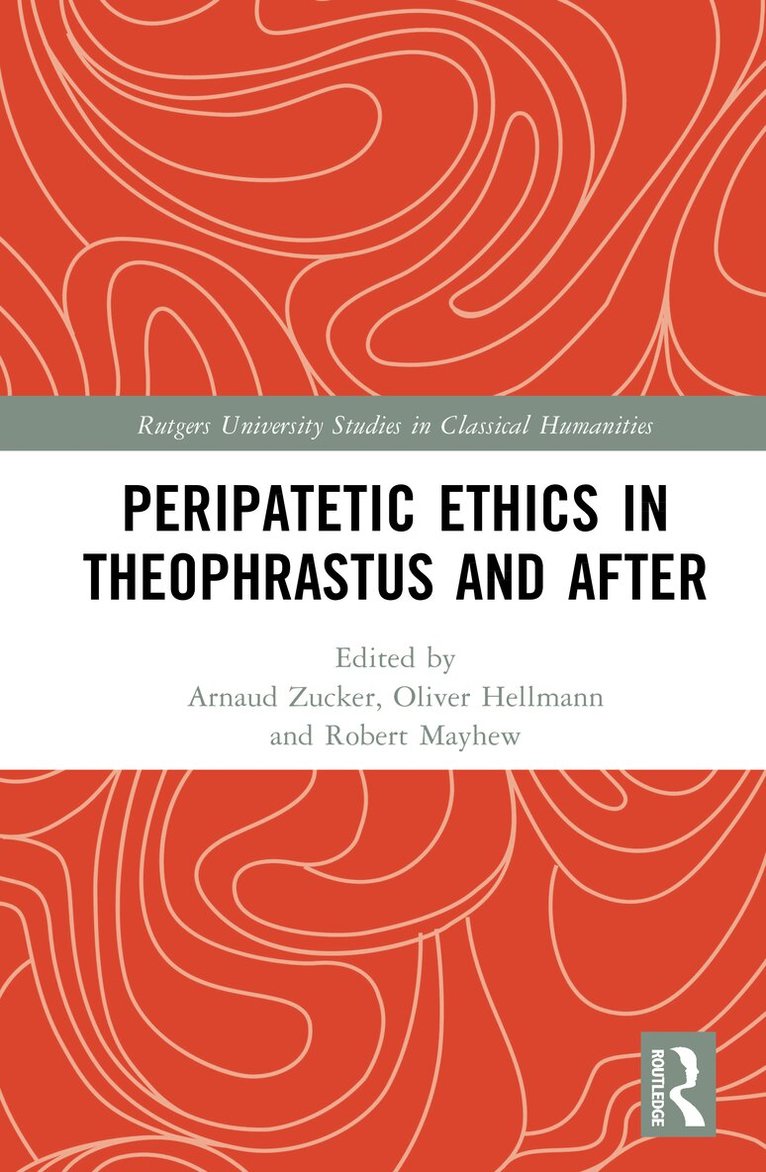
Peripatetic Ethics in Theophrastus and After
Av Arnaud Zucker, Oliver Hellmann m. fl.
Inbunden, 2026
2504 kr
Lägg i varukorg
This volume presents up-to-date insights into the ethical theories of Aristotle’s followers, beginning with his colleagues Theophrastus and Eudemus and covering a broad range of figures, topics and applications up to the Imperial Roman period.The ethical work of the Peripatetic school in antiquity …
Phaenias of Eresus
Text, Translation, and Discussion
Av David Mirhady, Oliver Hellmann
E-bok, 2017
831 kr
Lägg i varukorg
"Phaenias of Eresus (c. 375 BC) was a member of Aristotle''s school, the ""Peripatos"" or ""Lyceum,"" and a friend and compatriot of Aristotle''s successor, Theophrastus. Phaenias''s scholarly interests stretched from strictly philosophical treatises to chronology and the history of philosophy and …
Phaenias of Eresus
Text, Translation, and Discussion
Av David Mirhady, Oliver Hellmann
E-bok, 2017
831 kr
Lägg i varukorg
"Phaenias of Eresus (c. 375 BC) was a member of Aristotle''s school, the ""Peripatos"" or ""Lyceum,"" and a friend and compatriot of Aristotle''s successor, Theophrastus. Phaenias''s scholarly interests stretched from strictly philosophical treatises to chronology and the history of philosophy and …
Phaenias of Eresus
Text, Translation, and Discussion
Av Oliver Hellmann, David Mirhady
Inbunden, 2015
2504 kr
Lägg i varukorg
Phaenias of Eresus (c. 375–300 BC) was a member of Aristotle's school, the "Peripatos" or "Lyceum," and a friend and compatriot of Aristotle's successor, Theophrastus. Phaenias's scholarly interests stretched from strictly philosophical treatises to chronology and the history of philosophy and …
Rezeptionen der Vorsokratiker von der Antike bis in die Gegenwart
Av Benedikt Strobel, Oliver Hellmann
E-bok, 2022
1426 kr
Lägg i varukorg
Der Band versammelt die Beiträge einer internationalen Tagung zu zentralen Stationen der Vorsokratiker-Rezeption: Platon, Aristoteles, Autoren der hellenistischen und der Kaiserzeit, der Renaissance und der Gegenwart. Die Untersuchungen zeichnen sich durch einen rezeptionsorientierten …
Rezeptionen der Vorsokratiker von der Antike bis in die Gegenwart
Av Benedikt Strobel, Oliver Hellmann
E-bok, 2022
1426 kr
Lägg i varukorg
Der Band versammelt die Beiträge einer internationalen Tagung zu zentralen Stationen der Vorsokratiker-Rezeption: Platon, Aristoteles, Autoren der hellenistischen und der Kaiserzeit, der Renaissance und der Gegenwart. Die Untersuchungen zeichnen sich durch einen rezeptionsorientierten …