Oliver Morrisey – författare
Visar alla böcker från författaren Oliver Morrisey. Handla med fri frakt och snabb leverans.
4 produkter
4 produkter
Inbunden, Engelska, 1994
1 090 kr
Skickas inom 10-15 vardagar
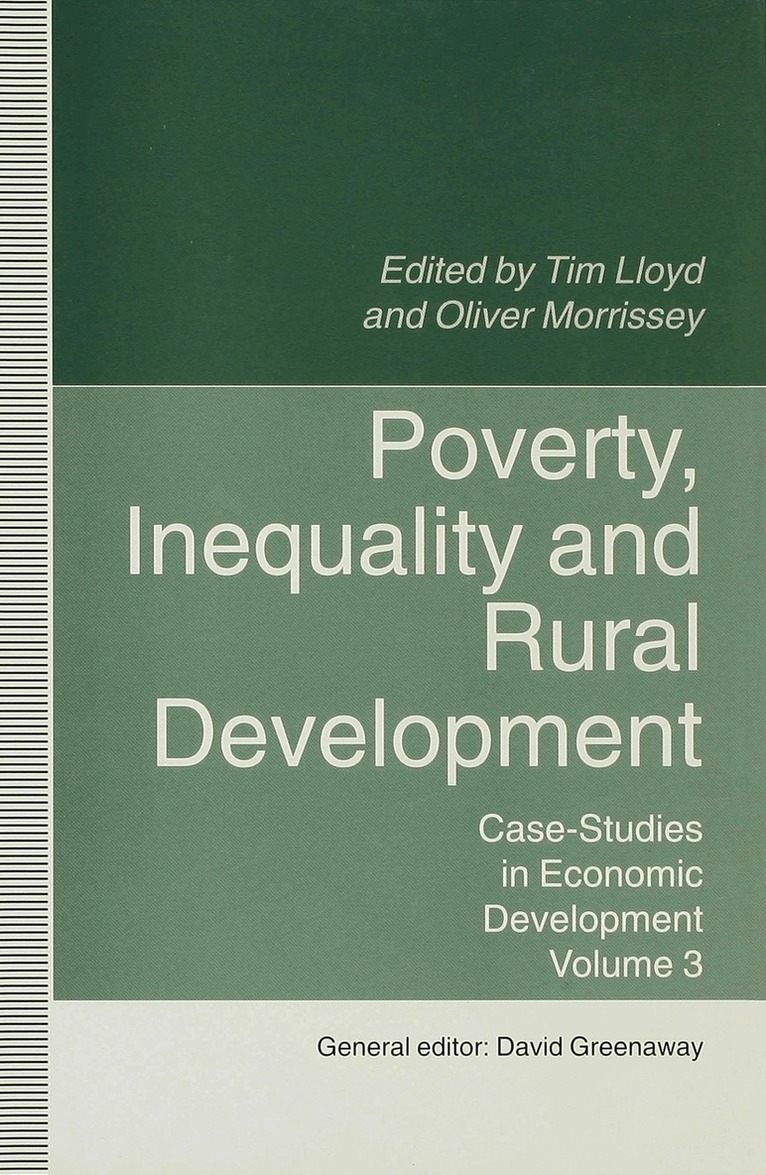
Poverty alleviation is a major objective of development. More than a fifth of the world's population lives in absolute poverty, and the majority of the poor live in rural areas. This volume studies what can be done for alleviating rural poverty. Four chapters address the measurement of poverty and inequality, including the use of household expenditure surveys and intra-household income distribution. Evidence is presented for India, Mauritania, Cte d'Ivoire and China. Other chapters present case studies on strategies for rural development: provision of rural credit in Bangladesh and India; technical change in Philippine agriculture; contract farming in Thailand; and banana growers in the Windwards. The contributions introduce the problems of rural development and show that effective rural development is assisted by investment in education and secure access to credit; that equity is important for incentives but not directly related to poverty; and that technical and institutional reform are essential, but require careful design and implementation.
E-bok
PDF, Engelska, 20161 054 kr
Läs direkt efter köp
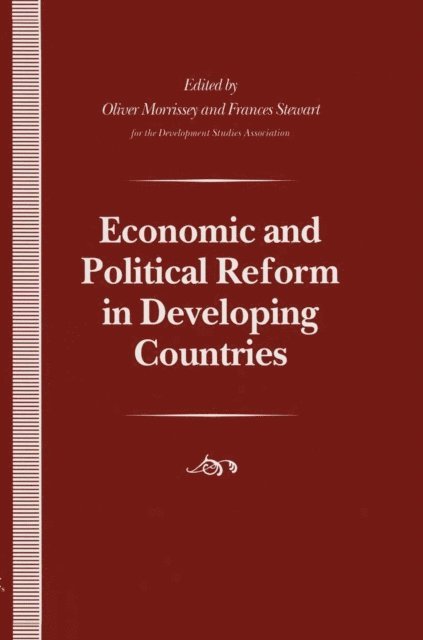
This volume explores the interactions between economic and political reform in developing countries and eastern Europe. Over the past decade there have been significant moves both towards economic reform - essentially involving a greater role for the market and a lesser role for the state - and political reform, with important steps taken towards democratic forms of government. In some areas political change preceded economic reform (as in much of eastern Europe), while elsewhere economic and political reform have gone hand in hand, often as a result of external pressure. The essays cover a wide range of experience of economic and political reforms, from which some general lessons emerge. The most important one is that political and economic reforms interact in complex ways, with political reform often acting to slow down or even reverse economic reform. Secondly, it is shown that the state has an important role to play in guiding reform and preventing market excesses.
E-bok
PDF, Engelska, 19941 367 kr
Läs direkt efter köp
Poverty alleviation is a major objective of development. More than a fifth of the world''s population lives in absolute poverty, and the majority of the poor live in rural areas. This volume studies what can be done for alleviating rural poverty. Four chapters address the measurement of poverty and inequality, including the use of household expenditure surveys and intra-household income distribution. Evidence is presented for India, Mauritania, Cte d''Ivoire and China. Other chapters present case studies on strategies for rural development: provision of rural credit in Bangladesh and India; technical change in Philippine agriculture; contract farming in Thailand; and banana growers in the Windwards. The contributions introduce the problems of rural development and show that effective rural development is assisted by investment in education and secure access to credit; that equity is important for incentives but not directly related to poverty; and that technical and institutional reform are essential, but require careful design and implementation.
Häftad, Engelska, 1994
1 090 kr
Skickas inom 10-15 vardagar
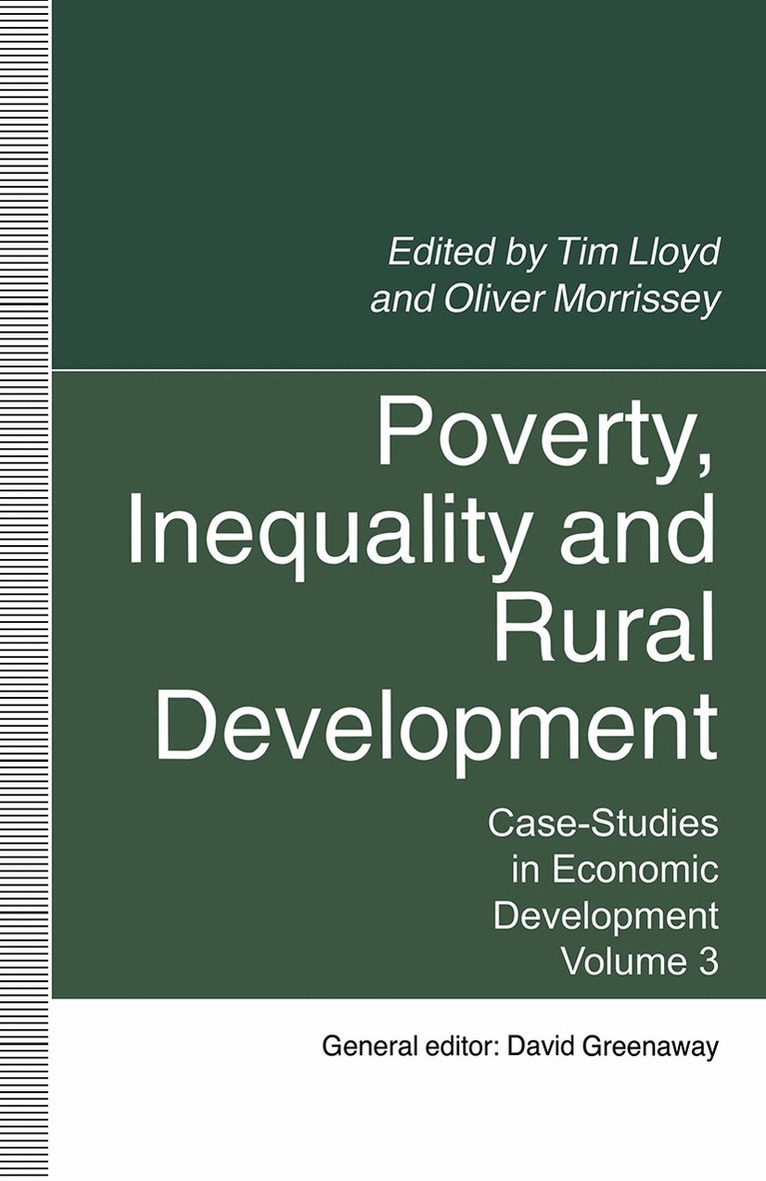
Poverty alleviation is a major objective of development. More than a fifth of the world's population lives in absolute poverty, and the majority of the poor live in rural areas. This volume studies what can be done for alleviating rural poverty. Four chapters address the measurement of poverty and inequality, including the use of household expenditure surveys and intra-household income distribution. Evidence is presented for India, Mauritania, Cte d'Ivoire and China. Other chapters present case studies on strategies for rural development: provision of rural credit in Bangladesh and India; technical change in Philippine agriculture; contract farming in Thailand; and banana growers in the Windwards. The contributions introduce the problems of rural development and show that effective rural development is assisted by investment in education and secure access to credit; that equity is important for incentives but not directly related to poverty; and that technical and institutional reform are essential, but require careful design and implementation.