Olivier Schmitt - Böcker
Visar alla böcker från författaren Olivier Schmitt. Handla med fri frakt och snabb leverans.
9 produkter
9 produkter
655 kr
Kommande
638 kr
Skickas inom 10-15 vardagar
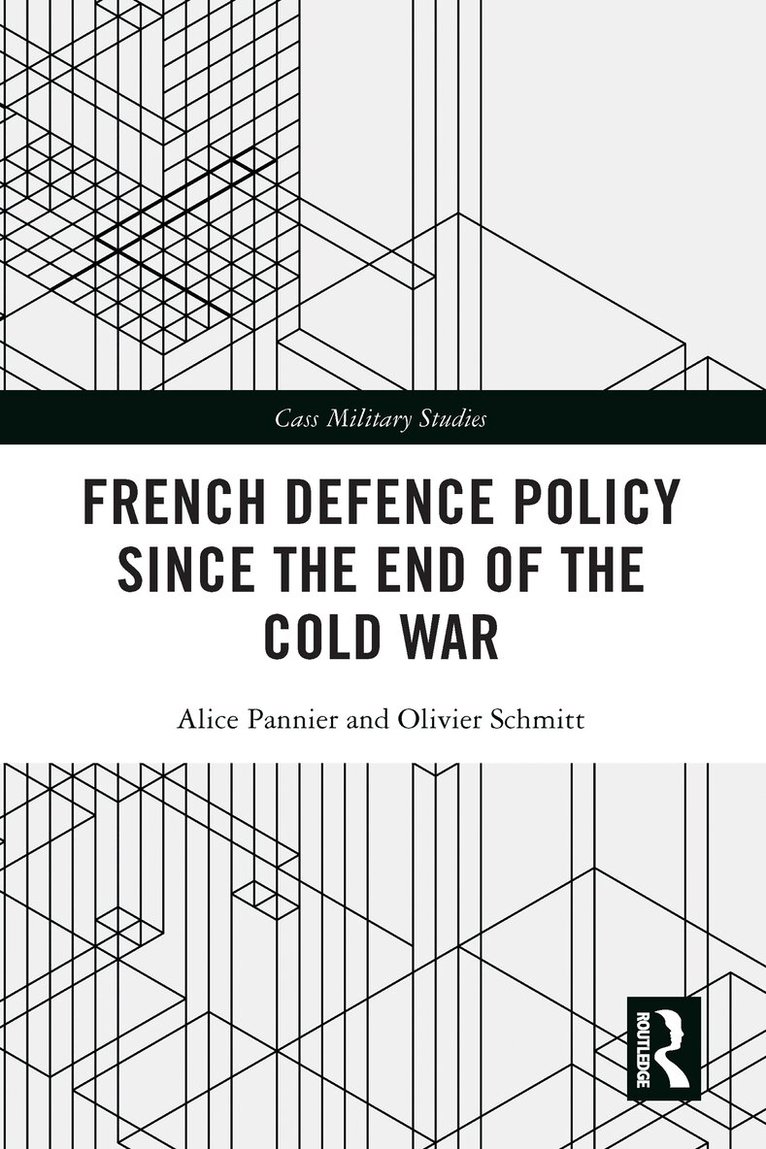
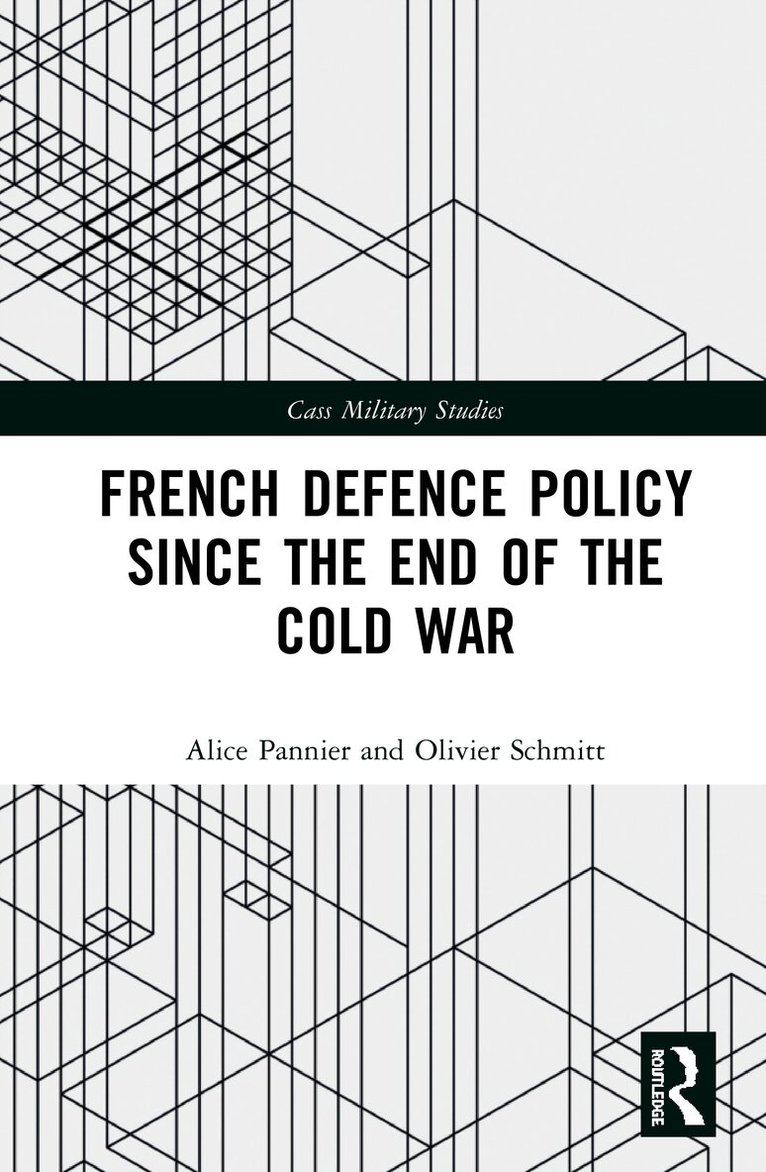
This book describes the evolution of French defence policy since the end of the Cold War.For the past thirty years there have been significant changes to French defence policy as a result of several contextual evolutions. Changes include shifts in the global balance of power, new understandings of the notion of international security, economic downturns, and developments in European integration. Yet despite these changes, the purpose of France’s grand strategy and its main principles have remained remarkably stable over time. This book identifies the incentives, representations and objectives of French defence policy The authors examine the general mechanisms that influence policy change and military transformation in democracies, the importance of status-seeking in international relations, the processes of strategy-making by a middle power, and the dilemmas and challenges of security cooperation. By doing so the book raises a number of questions related to the ways states adjust (or not) their security policies in a transformed international system. This book makes French-language sources available to non-French-speaking readers and contributes to a better understanding of a country that is at the forefront of Europe’s external action.This book will be of great interest to students of defence studies, French politics, military studies, security studies, and IR in general.
581 kr
Skickas inom 10-15 vardagar
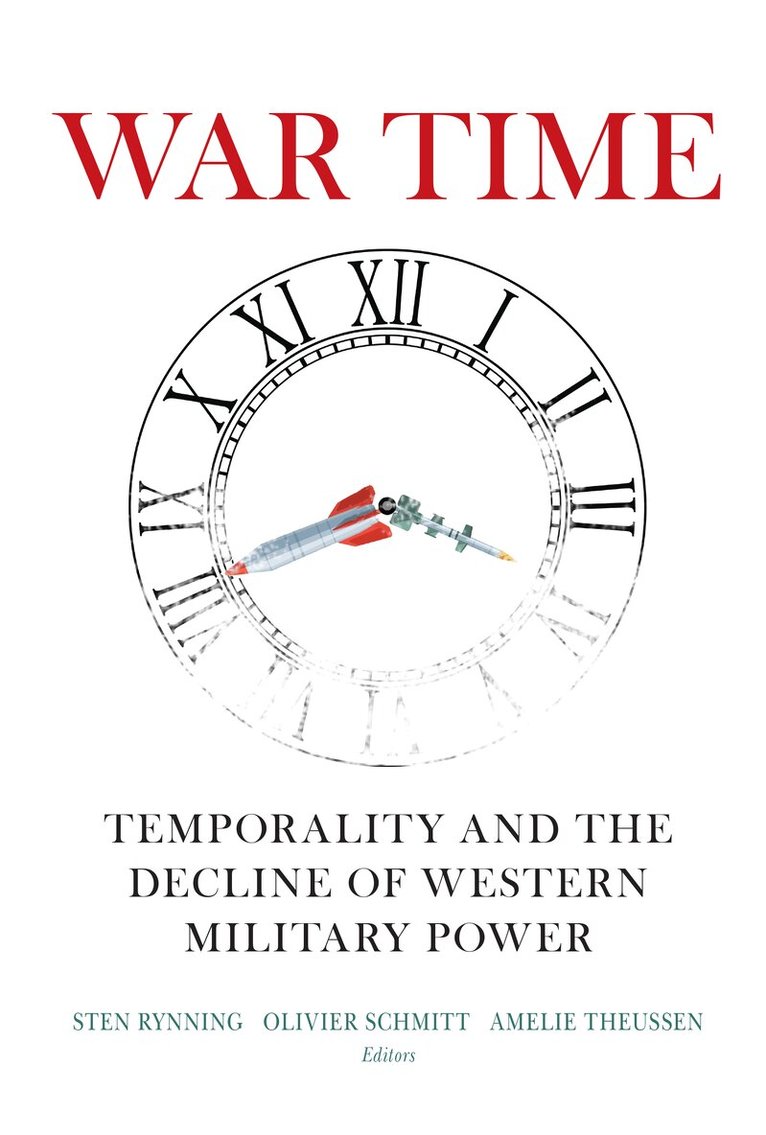
Perceptions of time contributed to recent Western military failingsThe decline of the West is once again a frequent topic of speculation. Often cited as one element of the alleged decline is the succession of prolonged and unsuccessful warsmost notably those waged in recent decades by the United States. This book by three Danish military experts examines not only the validity of the speculation but also asks why the West, particularly its military effectiveness, might be perceived as in decline.Temporality is the central concept linking a series of structural fractures that leave the West seemingly muscle-bound: overwhelmingly powerful in technology and military might but strategically fragile. This temporality, the authors say, is composed of three interrelated dimensions: trajectories, perceptions, and pace.First, Western societies to tend view time as a linear trajectory, focusing mostly on recent and current events and leading to the framing of history as a story of rise and decline. The authors examine whether the inevitable fall already has happened, is underway, or is still in the future.Perceptions of time also vary across cultures and periods, shaping socio-political activities, including warfare. The enemy, for example, can be perceived as belong to another time (being backward or barbarian). And war can be seen either as cyclical or exceptional, helping frame the public's willingness to accept its violent and tragic consequences.The pace of war is another factor shaping policies and actions. Western societies emphasize speed: the shorter the war the better, even if the long-term result is unsuccessful. Ironically, one of the Western world's least successful wars also has been America's longest, in Afghanistan.This unique book is thus a critical assessment of the evolution and future of Western military power. It contributes much-needed insight into the potential for the West's political and institutional renewal.
620 kr
Skickas inom 10-15 vardagar
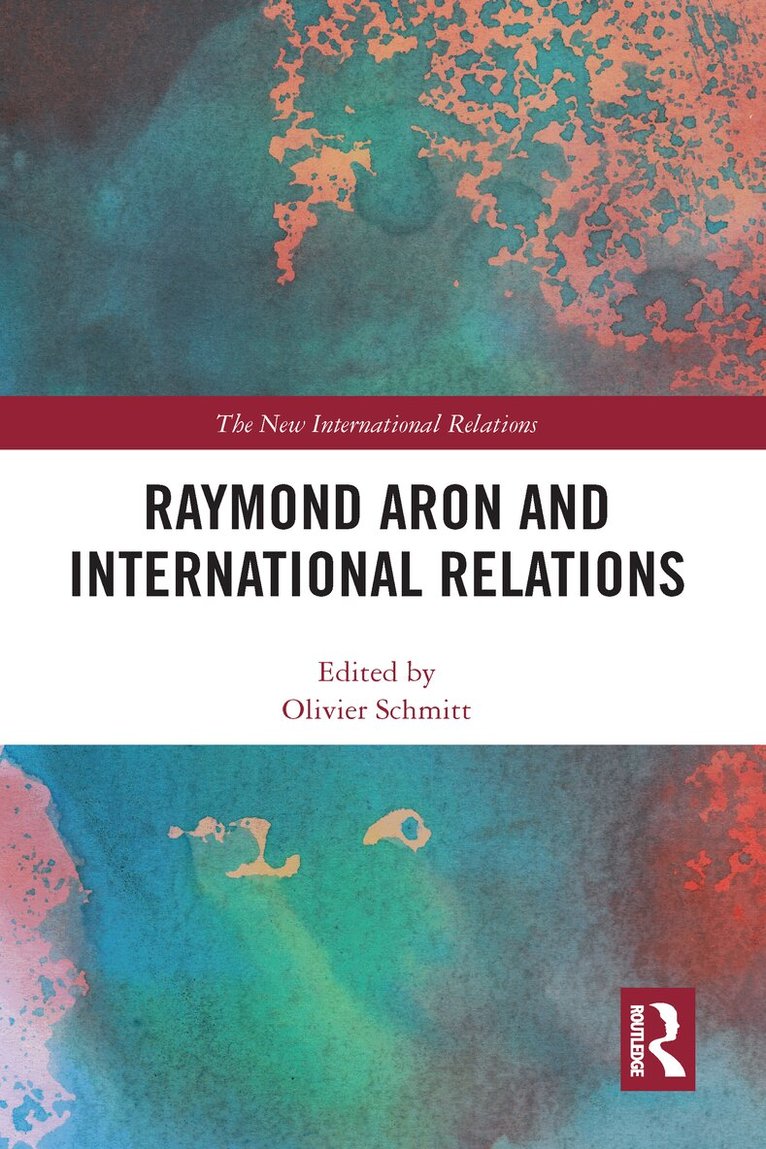
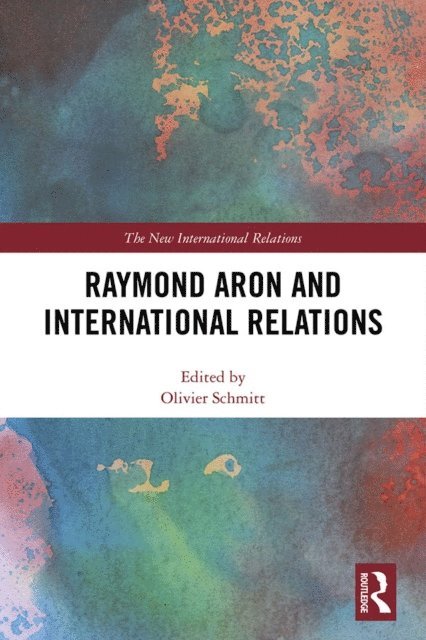
At a time when the field of International Relations (IR) is diverting from grand theoretical debates, rediscovering the value of classical realism and exploring its own intellectual history, this book contributes to these debates by presenting a cohesive view of Raymond Aron’s theory of IR. It explores how a careful reading of Aron can contribute to important current debates, in particular what a theory of IR can be (and thus, what is within or outside the scope of this theory), how to bridge the gap that emerged in the 1970s between a "normative" and a "scientific" theory of IR, and finally how multidisciplinarity is possible (and desirable) in the study of IR. This edited collection offers a synthetic approach to Raymond Aron’s theory of International Relations by bringing together some of the most prominent specialists on Raymond Aron, thus filling an important gap in the current market of books devoted to IR theories and the historiography of the field. The volume is divided into three parts: the first part explores Aron’s intellectual contribution to the theoretical debates in IR, thus showing his originality and prescience; the second part traces Aron’s influence and explores his relations with other prominent scholars of his time, thus contributing to the historiography of the field; and the third part analyses Aron’s contemporary relevance. This comprehensive volume contributes to current debates in the field by showing the originality and breadth of Aron’s thought.This book will be of great interest to academics and students interested in IR theories, strategic studies and the historiography of the field.
1 813 kr
Skickas inom 10-15 vardagar
This book describes the evolution of French defence policy since the end of the Cold War.For the past thirty years there have been significant changes to French defence policy as a result of several contextual evolutions. Changes include shifts in the global balance of power, new understandings of the notion of international security, economic downturns, and developments in European integration. Yet despite these changes, the purpose of France’s grand strategy and its main principles have remained remarkably stable over time. This book identifies the incentives, representations and objectives of French defence policy The authors examine the general mechanisms that influence policy change and military transformation in democracies, the importance of status-seeking in international relations, the processes of strategy-making by a middle power, and the dilemmas and challenges of security cooperation. By doing so the book raises a number of questions related to the ways states adjust (or not) their security policies in a transformed international system. This book makes French-language sources available to non-French-speaking readers and contributes to a better understanding of a country that is at the forefront of Europe’s external action.This book will be of great interest to students of defence studies, French politics, military studies, security studies, and IR in general.
2 165 kr
Skickas inom 10-15 vardagar
At a time when the field of International Relations (IR) is diverting from grand theoretical debates, rediscovering the value of classical realism and exploring its own intellectual history, this book contributes to these debates by presenting a cohesive view of Raymond Aron’s theory of IR. It explores how a careful reading of Aron can contribute to important current debates, in particular what a theory of IR can be (and thus, what is within or outside the scope of this theory), how to bridge the gap that emerged in the 1970s between a "normative" and a "scientific" theory of IR, and finally how multidisciplinarity is possible (and desirable) in the study of IR. This edited collection offers a synthetic approach to Raymond Aron’s theory of International Relations by bringing together some of the most prominent specialists on Raymond Aron, thus filling an important gap in the current market of books devoted to IR theories and the historiography of the field. The volume is divided into three parts: the first part explores Aron’s intellectual contribution to the theoretical debates in IR, thus showing his originality and prescience; the second part traces Aron’s influence and explores his relations with other prominent scholars of his time, thus contributing to the historiography of the field; and the third part analyses Aron’s contemporary relevance. This comprehensive volume contributes to current debates in the field by showing the originality and breadth of Aron’s thought.This book will be of great interest to academics and students interested in IR theories, strategic studies and the historiography of the field.
1 502 kr
Skickas inom 5-8 vardagar
What qualities make an ally useful in coalition warfare, and when is an ally more trouble than it’s worth? Allies That Count analyzes the utility of junior partners in coalition warfare and reaches surprising conclusions. In this volume, Olivier Schmitt presents detailed case-study analysis of several US allies in the Gulf War, the Kosovo campaign, the Iraq War, and the war in Afghanistan. He also includes a broader comparative analysis of 204 junior partners in various interventions since the end of the Cold War. This analysis bridges a gap in previous studies about coalition warfare, while also contributing to policy debates about a recurring defense dilemma. Previous works about coalition warfare have focused on explaining how coalitions are formed, but little attention has been given to the issue of their effectiveness. Simultaneously, policy debates, have framed the issue of junior partners in multinational military operations in terms of a trade-off between the legitimacy that is allegedly gained from a large number of coalition states vs. the decrease in military effectiveness associated with the inherent difficulties of coalition warfare. Schmitt determines which political and military variables are more likely to create utility, and he challenges the conventional wisdom about the supposed benefit of having as many states as possible in a coalition. Allies That Count will be of interest to students and scholars of security studies and international relations as well as military practitioners and policymakers.
511 kr
Skickas inom 5-8 vardagar
What qualities make an ally useful in coalition warfare, and when is an ally more trouble than it’s worth? Allies That Count analyzes the utility of junior partners in coalition warfare and reaches surprising conclusions. In this volume, Olivier Schmitt presents detailed case-study analysis of several US allies in the Gulf War, the Kosovo campaign, the Iraq War, and the war in Afghanistan. He also includes a broader comparative analysis of 204 junior partners in various interventions since the end of the Cold War. This analysis bridges a gap in previous studies about coalition warfare, while also contributing to policy debates about a recurring defense dilemma. Previous works about coalition warfare have focused on explaining how coalitions are formed, but little attention has been given to the issue of their effectiveness. Simultaneously, policy debates, have framed the issue of junior partners in multinational military operations in terms of a trade-off between the legitimacy that is allegedly gained from a large number of coalition states vs. the decrease in military effectiveness associated with the inherent difficulties of coalition warfare. Schmitt determines which political and military variables are more likely to create utility, and he challenges the conventional wisdom about the supposed benefit of having as many states as possible in a coalition. Allies That Count will be of interest to students and scholars of security studies and international relations as well as military practitioners and policymakers.
Del 1 - Technology/Data/War
Preparing for War
Strategy, Power and Military Change
Inbunden, Engelska, 2026
385 kr
Skickas inom 7-10 vardagar
An original conceptual approach to the study of war, attempting to capture the entire phenomenon of military adaptation—whether strategic, institutional or in the field.The unravelling of the post-Cold War order has intensified geopolitical tensions, driving a global increase in defence spending. Most military organisations are engaged in a process of drastic transformation, trying to scale their activities, learn from contemporary battlefields, and improve readiness. Yet armed forces engaged in such reforms must solve a major dilemma: how to adapt to an uncertain future without losing their current identity, coherence or operational effectiveness.In this incisive and timely study, Olivier Schmitt explores how modern militaries adapt, or fail to adapt, to evolving threats, technologies and political constraints. Drawing on global case-studies--from the trenches of Ukraine to the halls of the People's Liberation Army leadership--he investigates how social expectations, political constraints and organisational cultures collide in the worldwide quest to reform the military.Essential reading for defence professionals, policymakers and scholars of international security, Preparing for War equips readers with the tools to grasp not only the 'how' but the 'why' behind military transformation. In an era of rising defence budgets and shrinking certainties, this book delivers crucial insights into the future of war--and the institutions that must be ready for it.