• Fri frakt över 249 kr
  • •
  • Snabba leveranser
  • •
  • Billiga böcker
Kundservice

Du är på sajten för privatpersoner.

Företag, bibliotek eller offentlig verksamhet?

Du handlar på classic.bokus.com, där alla dina funktioner finns intakta.
Till classic.bokus.com
Bokus logotyp. Gå till startsidan.
  • Erbjudanden
  • Nyheter
  • Student
  • Topplistor
  • Barn & ungdom
  • Bokus Play
  • E-böcker
  • Pocketböcker
  • Spel & pussel

10% rabatt på allt med kod NYSTART10 →

Sidfot

Mina sidor

    Hjälp

    • Kundservice
    • Vanliga frågor och svar
    • Frakt och leverans
    • Retur vid ångerrätt
    • Reklamera vara
    • Betalning
    • Köpvillkor
    • Allmänna villkor
    • Information om webbplatsens tillgänglighet

    Om Bokus

    • Om oss
    • Pressrum
    • För studenter
    • För företag
    • För bibliotek och offentlig verksamhet
    • För leverantörer
    • Hållbarhet

    Populärt

    • Aktuella erbjudanden
    • Presentkort
    • Studentlitteratur
    • Nya böcker
    • Topplistor
    • Signerade böcker
    • Engelska böcker

    Inspiration

    • Boktips
    • BookTok
    • Populära bokserier
    • Barnbokskaraktärer
    • Populära författare
    Logotyp för Bokus
    Följ oss på Facebook (extern länk)Följ oss på Instagram (extern länk)Följ oss på YouTube (extern länk)Följ oss på TikTok (extern länk)
    bokus @ CookiesAnpassa cookiesIntegritetspolicyKöpvillkor
    Till Citymail hemsida (extern länk)Till Budbee hemsida (extern länk)Till Postnord hemsida (extern länk)Till Schenker hemsida (extern länk)Till Early Bird hemsida (extern länk)Till Walleys hemsida (extern länk)
    1. Samhälle och politik
    2. Politik och statsskick
    3. Offentlig förvaltning

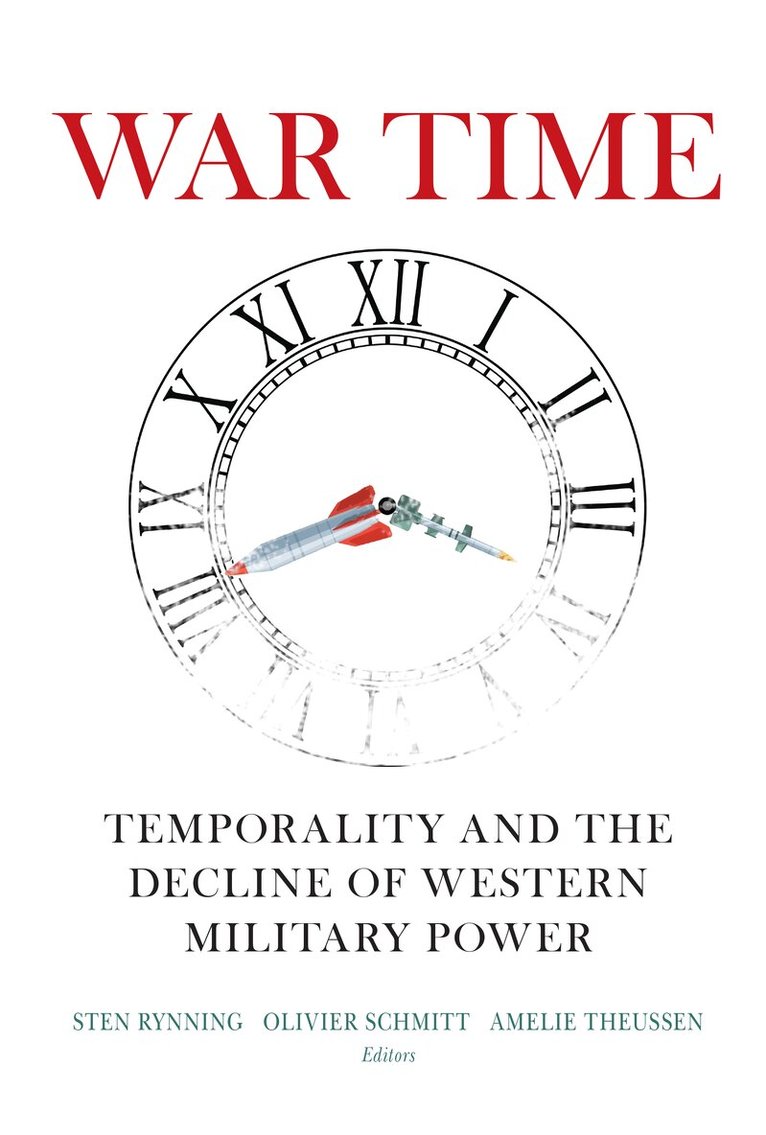
    War Time

    Temporality and the Decline of Western Military Power

    AvSten Rynning,Olivier Schmitt

    Häftad, Engelska, 2021

    Del i serien Insights: Critical Thinking on International Affairs

    604 kr

    Beställningsvara. Skickas inom 10-15 vardagar. Fri frakt över 249 kr.

    Beskrivning

    Perceptions of time contributed to recent Western military failingsThe “decline of the West” is once again a frequent topic of speculation. Often cited as one element of the alleged decline is the succession of prolonged and unsuccessful wars—most notably those waged in recent decades by the United States. This book by three Danish military experts examines not only the validity of the speculation but also asks why the West, particularly its military effectiveness, might be perceived as in decline.Temporality is the central concept linking a series of structural fractures that leave the West seemingly muscle-bound: overwhelmingly powerful in technology and military might but strategically fragile. This temporality, the authors say, is composed of three interrelated dimensions: trajectories, perceptions, and pace.First, Western societies to tend view time as a linear trajectory, focusing mostly on recent and current events and leading to the framing of history as a story of rise and decline. The authors examine whether the inevitable fall already has happened, is underway, or is still in the future.Perceptions of time also vary across cultures and periods, shaping socio-political activities, including warfare. The enemy, for example, can be perceived as belong to another time (being “backward” or “barbarian”). And war can be seen either as cyclical or exceptional, helping frame the public's willingness to accept its violent and tragic consequences.The pace of war is another factor shaping policies and actions. Western societies emphasize speed: the shorter the war the better, even if the long-term result is unsuccessful. Ironically, one of the Western world's least successful wars also has been America's longest, in Afghanistan.This unique book is thus a critical assessment of the evolution and future of Western military power. It contributes much-needed insight into the potential for the West's political and institutional renewal.

    Produktinformation

    • Utgivningsdatum:2021-03-02
    • Mått:155 x 222 x 22 mm
    • Vikt:481 g
    • Format:Häftad
    • Språk:Engelska
    • Serie:Insights: Critical Thinking on International Affairs
    • Antal sidor:336
    • Förlag:Bloomsbury Publishing Plc
    • ISBN:9780815738947

    Utforska kategorier

    • Offentlig förvaltning inom Samhälle och politik
    • Internationella relationer inom Samhälle och politik

    Mer om författaren

    Sten Rynning is professor of war studies at the University of Southern Denmark.Olivier Schmitt is professor with special responsibilities at the Center for War Studies, University of Southern Denmark, and currently director of research and studies at the French Institute for Higher National Defence Studies.Amelie Theussen is assistant professor at the Center for War Studies, University of Southern Denmark.

    Recensioner i media

    War Time is a provocative consideration of the many aspects of modern military power in politics and international affairs. Though the nature of war doesn't change, this book is particularly relevant given the changing character of modern war as we see in the Caucasus, Ukraine, the Sahel, and the Indo-Pacific region. Essential reading for political leaders, diplomats, and strategic thinkers."- Lt. Gen. (Ret.) Ben Hodges, Pershing Chair in Strategic Studies, Center for European Policy Analysis; Commander, United States Army Europe, 2014–2017;"This volume provides a much-needed framework for Western decision makers as they contend with difficult choices on when to intervene politically or militarily, and when to exercise restraint. As the United States and Europe emerge from a period of transactionalism and seek to reinvigorate the multilateral institutions that underpin the transatlantic relationship, War Time reminds us of the importance of rediscovering the collective good and grounding short-term decisions in a long-term vision."- Rachel Ellehuus, Center for Strategic and International Studies;"This excellent collection of essays explores why the West is overwhelmingly powerful on the battlefield and yet also strategically fragile, and whether that dichotomy signals the end of Western military dominance. I especially liked the exploration of norms that shape Western military power and how they're being utilized by our adversaries. Arguing with the many interesting propositions its authors produce will sharpen all of our thinking about what constitutes the Western way of war, and whether it remains sufficient to protect and advance our interests."- Kori Schake, director of foreign and defense policy, American Enterprise Institute;"This superb volume offers totally fresh perspectives on the institutional and temporal foundations of Western military power. War Time is a brilliantly original addition to the literature on why Western states are losing the wars of the twenty-first century."- Theo Farrell, University of Wollongong, Australia

    Innehållsförteckning

    • Contents:ForewordAcknowledgmentsIntroductionPart I: “Civic Militarism” and the Trajectory of Western Power: The Western Experience in Balancing Liberal and Military Virtues1. The Modern State Rise and Decline of Civic Militarism2. Making Time an Ally: Uncovering the Perils of Tactical Military Speed3. Benefit or Burden? NATO-led Military Missions and Western Cohesion4. The Future of the West: What If the United States Pulls Out of NATO?Part II: Western Perceptions of Time and the International Normative Order: A Normative Order under Pressure5. Civilian Casualties and Contemporary Coalition Operations: The Case of Afghanistan6. Conflicting Norms of Intervention: When and How to Use Military Force?7. In the Shadows: The Challenge of Russian and Chinese Gray Zone Conflict for the West8. Competing Norms: What If China Takes Control of Djibouti to Protect Its People?Part III: Military Operations and Temporality: Speed, Time, and Western Military Power9. Fighting, Fast and Slow? Speed and Western Ways of War10. War at Information Speed: Multi-Domain Warfighting Visions11. The Limits of Technology: The Impact of Speed and Innovation on Western Military Primacy12. Military Operations: What If Digital Technologies Fail on the BattlefieldConclusionContributorsIndex