Omar Azzaroni – författare
2 374 kr
Skickas inom 10-15 vardagar
Materials Nanoarchitectonics: From Integrated Molecular Systems to Advanced Devices provides the latest information on the design and molecular manipulation of self-organized hierarchically structured systems using tailor-made nanoscale materials as structural and functional units. The book is organized into three main sections that focus on molecular design of building blocks and hybrid materials, formation of nanostructures, and applications and devices. Bringing together emerging materials, synthetic aspects, nanostructure strategies, and applications, the book aims to support further progress, by offering different perspectives and a strong interdisciplinary approach to this rapidly growing area of innovation.
This is an extremely valuable resource for researchers, advanced students, and scientists in industry, with an interest in nanoarchitectonics, nanostructures, and nanomaterials, or across the areas of nanotechnology, chemistry, surface science, polymer science, electrical engineering, physics, chemical engineering, and materials science.
Offers a nanoarchitectonic perspective on emerging fields, such as metal-organic frameworks, porous polymer materials, or biomimetic nanostructuresDiscusses different approaches to utilizing "soft chemistry" as a source for hierarchically organized materialsOffers an interdisciplinary approach to the design and construction of integrated chemical nano systemsDiscusses novel approaches towards the creation of complex multiscale architectures3 382 kr
Läs direkt efter köp
4 655 kr
Skickas inom 5-8 vardagar
5 363 kr
Läs direkt efter köp
Serves as a guide for seasoned researchers and students alike, who wish to learn about the cross-fertilization between biology and materials that is driving this emerging area of science
This book covers the most relevant topics in basic research and those having potential technological applications for the field of biopolymer brushes. This area has experienced remarkable increase in development of practical applications in nanotechnology and biotechnology over the past decade. In view of the rapidly growing activity and interest in the field, this book covers the introductory features of polymer brushes and presents a unifying and stimulating overview of the theoretical aspects and emerging applications. It immerses readers in the historical perspective and the frontiers of research where our knowledge is increasing steadily—providing them with a feeling of the enormous potential, the multiple applications, and the many up-and-coming trends behind the development of macromolecular interfaces based on the use of polymer brushes.
Polymer and Biopolymer Brushes: Fundamentals and Applications in Materials offers chapters on: Functionalization of Surfaces Using Polymer Brushes; Polymer Brushes by ATRP and Surface-Mediated RAFT Polymerization for Biological Functions; Electro-Induced Copper Catalyzed Surface Modification with Monolayer and Polymer Brush; Polymer Brushes on Flat and Curved Substrates; Biomimetic Anchors for Antifouling Polymer Brush Coating; Glycopolymer Brushes Presenting Sugars in Their Natural Form; Smart Surfaces Modified with Phenylboronic Acid-Containing Polymer Brushes; DNA Brushes; Polymer Brushes as Interfacial Materials for Soft Metal Conductors and Electronics; and more.
Presents a comprehensive theory/simulation section that will be valuable for all readers Includes chapters not only on the biological applications of polymer brushes but also on biological systems that resemble polymer brushes on flat surfaces Addresses applications in coatings, friction, sensors, microelectromechanical systems, and biomaterials Devotes particular attention to the functional aspects of hybrid nanomaterials employing polymer brushes as functional unitsPolymer and Biopolymer Brushes: Fundamentals and Applications in Materials is aimed at both graduate students and researchers new to this subject as well as scientists already engaged in the study and development of polymer brushes.
5 363 kr
Läs direkt efter köp
Serves as a guide for seasoned researchers and students alike, who wish to learn about the cross-fertilization between biology and materials that is driving this emerging area of science
This book covers the most relevant topics in basic research and those having potential technological applications for the field of biopolymer brushes. This area has experienced remarkable increase in development of practical applications in nanotechnology and biotechnology over the past decade. In view of the rapidly growing activity and interest in the field, this book covers the introductory features of polymer brushes and presents a unifying and stimulating overview of the theoretical aspects and emerging applications. It immerses readers in the historical perspective and the frontiers of research where our knowledge is increasing steadily—providing them with a feeling of the enormous potential, the multiple applications, and the many up-and-coming trends behind the development of macromolecular interfaces based on the use of polymer brushes.
Polymer and Biopolymer Brushes: Fundamentals and Applications in Materials offers chapters on: Functionalization of Surfaces Using Polymer Brushes; Polymer Brushes by ATRP and Surface-Mediated RAFT Polymerization for Biological Functions; Electro-Induced Copper Catalyzed Surface Modification with Monolayer and Polymer Brush; Polymer Brushes on Flat and Curved Substrates; Biomimetic Anchors for Antifouling Polymer Brush Coating; Glycopolymer Brushes Presenting Sugars in Their Natural Form; Smart Surfaces Modified with Phenylboronic Acid-Containing Polymer Brushes; DNA Brushes; Polymer Brushes as Interfacial Materials for Soft Metal Conductors and Electronics; and more.
Presents a comprehensive theory/simulation section that will be valuable for all readers Includes chapters not only on the biological applications of polymer brushes but also on biological systems that resemble polymer brushes on flat surfaces Addresses applications in coatings, friction, sensors, microelectromechanical systems, and biomaterials Devotes particular attention to the functional aspects of hybrid nanomaterials employing polymer brushes as functional unitsPolymer and Biopolymer Brushes: Fundamentals and Applications in Materials is aimed at both graduate students and researchers new to this subject as well as scientists already engaged in the study and development of polymer brushes.
3 517 kr
Skickas inom 5-8 vardagar
3 149 kr
Läs direkt efter köp
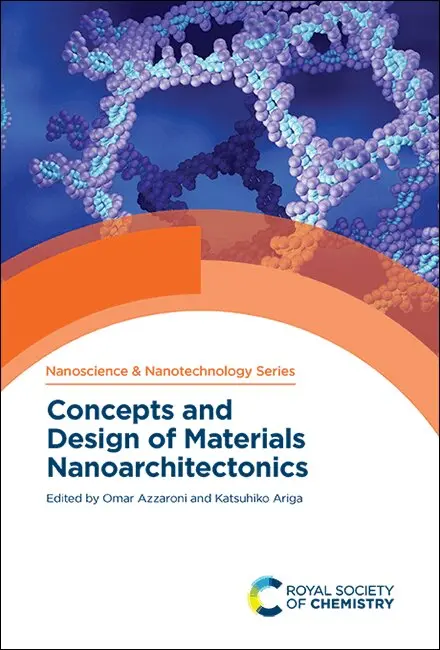
The concept of nanoarchitechtonics was introduced to describe the correct manipulation of nanoscale materials in the creation of nano-devices and applications. Nanoarchitectonics has begun to spread into many fields including nanostructured materials synthesis, supramolecular assembly, nanoscale structural fabrications, materials hybridizations, materials and structures for energy and environmental sciences, device and physical application, and bio- and medical applications. Following on from the 2012 title Manipulation of Nanoscale Materials, Concepts and Design of Materials Nanoarchitectonics covers the introductory features underlying the field, presenting a unifying overview of the theoretical aspects and emerging applications that are changing the capability to understand and design advanced functional materials. Edited by pioneers of the field, this book will appeal to researchers working in nanoscience, materials science, supramolecular chemistry, physical chemistry and organic chemistry, as well as graduate students in these areas.
3 149 kr
Läs direkt efter köp
The concept of nanoarchitechtonics was introduced to describe the correct manipulation of nanoscale materials in the creation of nano-devices and applications. Nanoarchitectonics has begun to spread into many fields including nanostructured materials synthesis, supramolecular assembly, nanoscale structural fabrications, materials hybridizations, materials and structures for energy and environmental sciences, device and physical application, and bio- and medical applications. Following on from the 2012 title Manipulation of Nanoscale Materials, Concepts and Design of Materials Nanoarchitectonics covers the introductory features underlying the field, presenting a unifying overview of the theoretical aspects and emerging applications that are changing the capability to understand and design advanced functional materials. Edited by pioneers of the field, this book will appeal to researchers working in nanoscience, materials science, supramolecular chemistry, physical chemistry and organic chemistry, as well as graduate students in these areas.
1 884 kr
Skickas inom 5-8 vardagar
5 743 kr
Läs direkt efter köp
Provides up-to-date coverage of both current knowledge and new developments in the dynamic and interdisciplinary field of supramolecular nanotechnology
In recent years, supramolecular nanotechnology has revolutionized research in chemistry, physics, and materials science. These easily manipulated molecular units enable the synthesis of novel nanomaterials for use in a wide range of current and potential applications including electronics, sensors, drug delivery, and imaging.
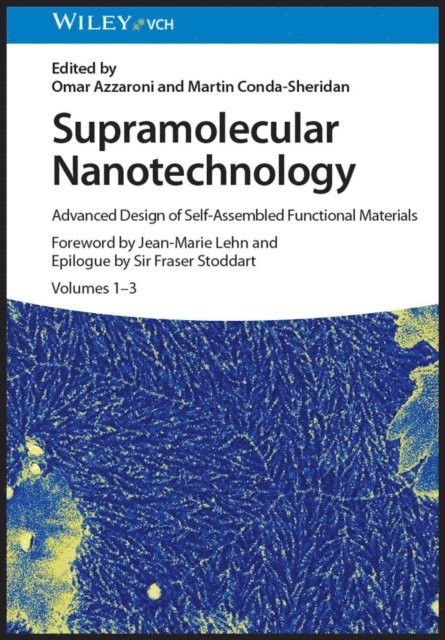
Supramolecular Nanotechnology presents a state-of-the-art overview of functional self-assembling nanomaterials based on organic and polymeric molecules. Featuring contributions by an international panel of experts in the field, this comprehensive volume covers the design of self-assembled materials, their synthesis and diverse fabrication methods, the characterization of supramolecular architectures, and current and emerging applications in chemistry, biology, and medicine. Detailed chapters discuss the synthesis of peptide-based supramolecular structures and polymeric self-assembling materials, their characterization, advanced microscopy techniques, nanostructures made of porphyrins, polyelectrolytes, silica, their application in catalysis and cancer, atomistic and coarse-grained simulations, and more.
Presents cutting-edge research on rationally designed, self-assembled supramolecular structures Discusses the impact of supramolecular nanotechnology on current and future research and technology Highlights applications of self-assembled supramolecular systems in catalysis, biomedical imaging, cancer therapies, and regenerative medicine Provides synthetic strategies for preparing the molecular assemblies and various characterization techniques for assessing the supramolecular morphology Describes theoretical modeling and simulation techniques for analyzing supramolecular nanostructuresSupramolecular Nanotechnology: Advanced Design of Self-Assembled Functional Materials is essential reading for materials scientists and engineers, polymer and organic chemists, pharmaceutical scientists, molecular physicists and biologists, and chemical engineers.
5 542 kr
Läs direkt efter köp
Provides up-to-date coverage of both current knowledge and new developments in the dynamic and interdisciplinary field of supramolecular nanotechnology
In recent years, supramolecular nanotechnology has revolutionized research in chemistry, physics, and materials science. These easily manipulated molecular units enable the synthesis of novel nanomaterials for use in a wide range of current and potential applications including electronics, sensors, drug delivery, and imaging.
Supramolecular Nanotechnology presents a state-of-the-art overview of functional self-assembling nanomaterials based on organic and polymeric molecules. Featuring contributions by an international panel of experts in the field, this comprehensive volume covers the design of self-assembled materials, their synthesis and diverse fabrication methods, the characterization of supramolecular architectures, and current and emerging applications in chemistry, biology, and medicine. Detailed chapters discuss the synthesis of peptide-based supramolecular structures and polymeric self-assembling materials, their characterization, advanced microscopy techniques, nanostructures made of porphyrins, polyelectrolytes, silica, their application in catalysis and cancer, atomistic and coarse-grained simulations, and more.
Presents cutting-edge research on rationally designed, self-assembled supramolecular structures Discusses the impact of supramolecular nanotechnology on current and future research and technology Highlights applications of self-assembled supramolecular systems in catalysis, biomedical imaging, cancer therapies, and regenerative medicine Provides synthetic strategies for preparing the molecular assemblies and various characterization techniques for assessing the supramolecular morphology Describes theoretical modeling and simulation techniques for analyzing supramolecular nanostructuresSupramolecular Nanotechnology: Advanced Design of Self-Assembled Functional Materials is essential reading for materials scientists and engineers, polymer and organic chemists, pharmaceutical scientists, molecular physicists and biologists, and chemical engineers.
2 105 kr
Läs direkt efter köp
In-depth resource on making and using graphene field effect transistors for point-of-care diagnostic devices
Graphene Field-Effect Transistors focuses on the design, fabrication, characterization, and applications of graphene field effect transistors, summarizing the state-of-the-art in the field and putting forward new ideas regarding future research directions and potential applications. After a review of the unique electronic properties of graphene and the production of graphene and graphene oxide, the main part of the book is devoted to the fabrication of graphene field effect transistors and their sensing applications.
Graphene Field-Effect Transistors includes information on:
Electronic properties of graphene, production of graphene oxide and reduced graphene oxide, and graphene functionalization Fundamentals and fabrication of graphene field effect transistors, and nanomaterial/graphene nanostructure-based field-effect transistors Graphene field-effect transistors integrated with microfluidic platforms and flexible graphene field-effect transistors Graphene field-effect transistors for diagnostics applications, and DNA biosensors and immunosensors based on graphene field-effect transistors Graphene field-effect transistors for targeting cancer molecules, brain activity recording, bacterial detection, and detection of smell and tasteProviding both fundamentals of the technology and an in-depth overview of using graphene field effect transistors for fabricating bioelectronic devices that can be applied for point-of-care diagnostics, Graphene Field-Effect Transistors is an essential reference for materials scientists, engineering scientists, laboratory medics, and biotechnologists.
2 105 kr
Läs direkt efter köp
In-depth resource on making and using graphene field effect transistors for point-of-care diagnostic devices
Graphene Field-Effect Transistors focuses on the design, fabrication, characterization, and applications of graphene field effect transistors, summarizing the state-of-the-art in the field and putting forward new ideas regarding future research directions and potential applications. After a review of the unique electronic properties of graphene and the production of graphene and graphene oxide, the main part of the book is devoted to the fabrication of graphene field effect transistors and their sensing applications.
Graphene Field-Effect Transistors includes information on:
Electronic properties of graphene, production of graphene oxide and reduced graphene oxide, and graphene functionalization Fundamentals and fabrication of graphene field effect transistors, and nanomaterial/graphene nanostructure-based field-effect transistors Graphene field-effect transistors integrated with microfluidic platforms and flexible graphene field-effect transistors Graphene field-effect transistors for diagnostics applications, and DNA biosensors and immunosensors based on graphene field-effect transistors Graphene field-effect transistors for targeting cancer molecules, brain activity recording, bacterial detection, and detection of smell and tasteProviding both fundamentals of the technology and an in-depth overview of using graphene field effect transistors for fabricating bioelectronic devices that can be applied for point-of-care diagnostics, Graphene Field-Effect Transistors is an essential reference for materials scientists, engineering scientists, laboratory medics, and biotechnologists.