Wolfgang Knoll - Böcker
Visar alla böcker från författaren Wolfgang Knoll. Handla med fri frakt och snabb leverans.
7 produkter
7 produkter
2 032 kr
Skickas inom 7-10 vardagar
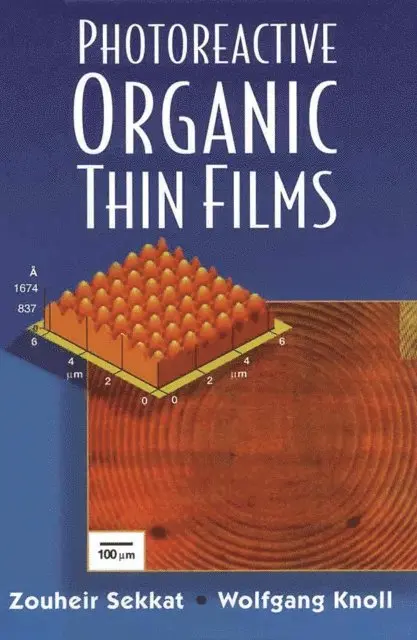
Wolfgang Knoll is a former Directory of Polymer research at the Max Planck Institute. He is extremely well know for his research in this area. Zouheir Sekkat was a Postdoctoral researcher at Max Planck working under Professor Knoll. With Knoll's involvement, we can be confident that the best people in this field will be contributing to the reference.
2 253 kr
Skickas inom 7-10 vardagar
This new volume of Methods in Enzymology continues the legacy of this premier serial with quality chapters authored by leaders in the field.
Provides the authority and expertise of leading contributors from an international board of authors Presents the latest release in the Methods in Enzymology seriesDel 56 - Materials Research Foundations
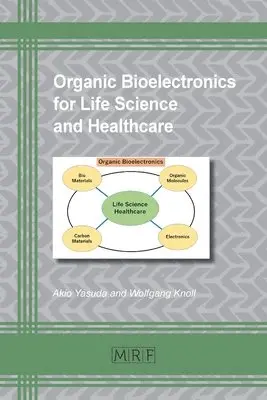
Organic Bioelectronics for Life Science and Healthcare
Häftad, Engelska, 2019
1 302 kr
Skickas inom 5-8 vardagar
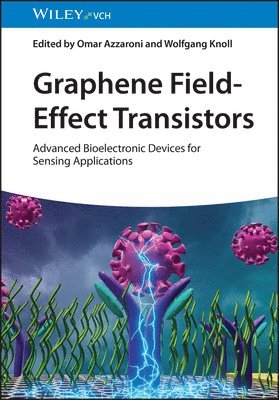
Graphene Field-Effect Transistors
Advanced Bioelectronic Devices for Sensing Applications
Inbunden, Engelska, 2023
1 844 kr
Skickas inom 5-8 vardagar
Graphene Field-Effect Transistors In-depth resource on making and using graphene field effect transistors for point-of-care diagnostic devices Graphene Field-Effect Transistors focuses on the design, fabrication, characterization, and applications of graphene field effect transistors, summarizing the state-of-the-art in the field and putting forward new ideas regarding future research directions and potential applications. After a review of the unique electronic properties of graphene and the production of graphene and graphene oxide, the main part of the book is devoted to the fabrication of graphene field effect transistors and their sensing applications. Graphene Field-Effect Transistors includes information on: Electronic properties of graphene, production of graphene oxide and reduced graphene oxide, and graphene functionalizationFundamentals and fabrication of graphene field effect transistors, and nanomaterial/graphene nanostructure-based field-effect transistorsGraphene field-effect transistors integrated with microfluidic platforms and flexible graphene field-effect transistorsGraphene field-effect transistors for diagnostics applications, and DNA biosensors and immunosensors based on graphene field-effect transistorsGraphene field-effect transistors for targeting cancer molecules, brain activity recording, bacterial detection, and detection of smell and tasteProviding both fundamentals of the technology and an in-depth overview of using graphene field effect transistors for fabricating bioelectronic devices that can be applied for point-of-care diagnostics, Graphene Field-Effect Transistors is an essential reference for materials scientists, engineering scientists, laboratory medics, and biotechnologists.
3 256 kr
Skickas inom 10-15 vardagar
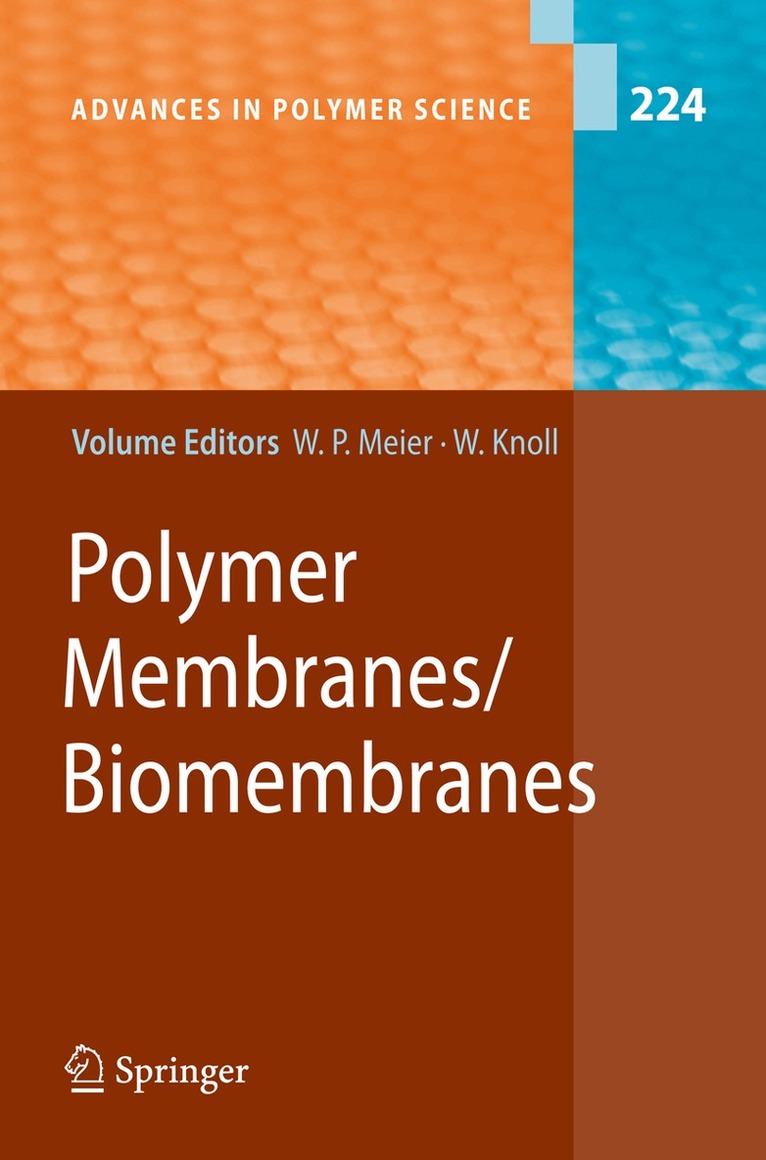
Themulticomponentnatureofbiologicalmembranesandtheirintra- andextracel- lar interactions make direct investigations on the membrane structure and processes nearly impossible. Clearly, a better understanding of the membrane properties and the mechanisms determining membrane protein functions is crucial to the imp- mentation of biosensors, bioreactors and novel platforms for medical therapy. For this reason, the interest in model systems suitable for the construction and study of complex lipid/protein membrane architectures has increased steadily over the years. The classical portfolio of model membranes used for biophysical and - terfacial studies of lipid (bi)layers and lipid/protein composites includes Langmuir monolayers assembled at the water/air interface, (uni- and multi-lamellar) vesicles in bulk (liposomal) dispersion, bimolecular lipid membranes (BLMs), and various types of solid-supported membranes. All these have speci?c advantages but also suffer from serious drawbacksthat limit their technical applications.Polymer m- branes comprised of entirely synthetic or hybrid (synthetic polymer/biopolymer) block copolymersappeared to be an attractive alternative to the lipid-based models. Generally, the synthetic block copolymer membranes are thicker and more stable and the versatility of polymer chemistry allows the adoption of relevant properties for a wide range of applications. This volume provides a vast overview of the physico-chemical and synthetic - pectsofarti?cial membranes. Numerousmembranemodelsaredescribed,including their properties(i. e. swelling, drying,lateral mobility,stability, electrical conduct- ity, etc. ), advantages, and drawbacks. The potential applications of these models are discussed and supported by real examples. Chapter 1 summarizesmethodsfor the stabilizationof arti?cial lipid membranes.
3 256 kr
Skickas inom 10-15 vardagar
Themulticomponentnatureofbiologicalmembranesandtheirintra- andextracel- lar interactions make direct investigations on the membrane structure and processes nearly impossible. Clearly, a better understanding of the membrane properties and the mechanisms determining membrane protein functions is crucial to the imp- mentation of biosensors, bioreactors and novel platforms for medical therapy. For this reason, the interest in model systems suitable for the construction and study of complex lipid/protein membrane architectures has increased steadily over the years. The classical portfolio of model membranes used for biophysical and - terfacial studies of lipid (bi)layers and lipid/protein composites includes Langmuir monolayers assembled at the water/air interface, (uni- and multi-lamellar) vesicles in bulk (liposomal) dispersion, bimolecular lipid membranes (BLMs), and various types of solid-supported membranes. All these have speci?c advantages but also suffer from serious drawbacksthat limit their technical applications.Polymer m- branes comprised of entirely synthetic or hybrid (synthetic polymer/biopolymer) block copolymersappeared to be an attractive alternative to the lipid-based models. Generally, the synthetic block copolymer membranes are thicker and more stable and the versatility of polymer chemistry allows the adoption of relevant properties for a wide range of applications. This volume provides a vast overview of the physico-chemical and synthetic - pectsofarti?cial membranes. Numerousmembranemodelsaredescribed,including their properties(i. e. swelling, drying,lateral mobility,stability, electrical conduct- ity, etc. ), advantages, and drawbacks. The potential applications of these models are discussed and supported by real examples. Chapter 1 summarizesmethodsfor the stabilizationof arti?cial lipid membranes.
5 083 kr
Skickas inom 7-10 vardagar
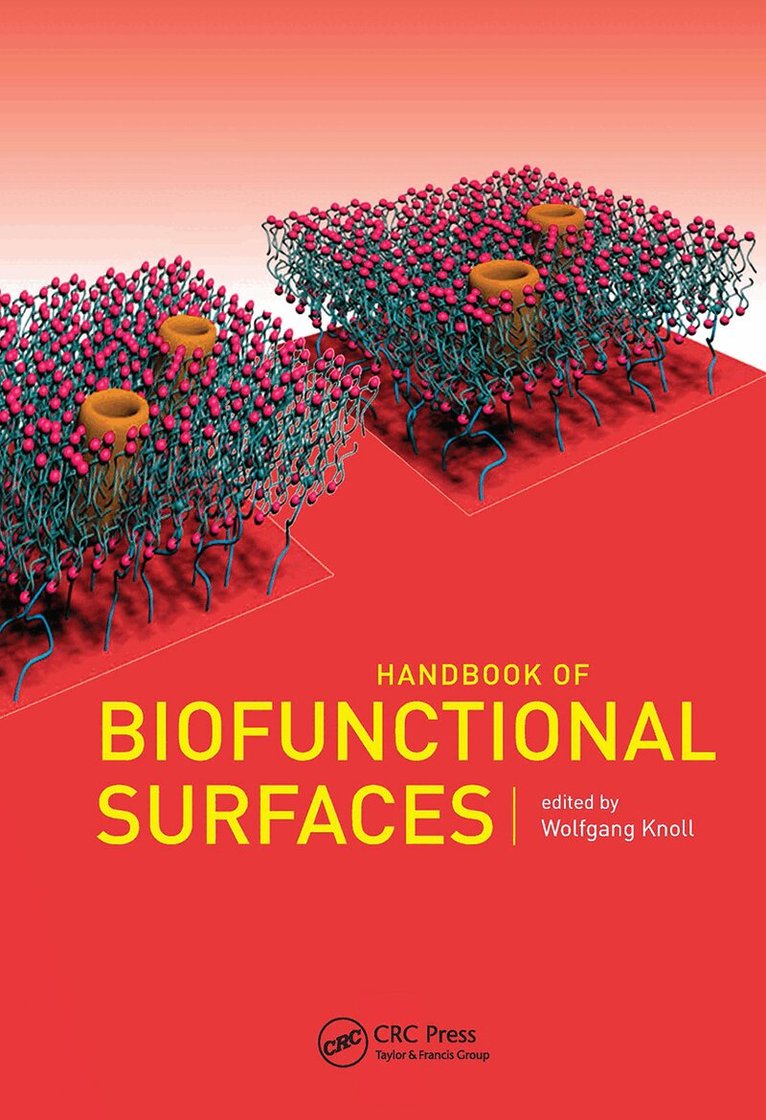
The design and synthesis of molecularly or supramolecularly defined interfacial architectures have seen in recent years a remarkable growth of interest and scientific research activities for various reasons. On the one hand, it is generally believed that the construction of an interactive interface between the living world of cells, tissue, or whole organisms and the (inorganic or organic) materials world of technical devices such as implants or medical parts requires proper construction and structural (and functional) control of this organism–machine interface. It is still the very beginning of generating a better understanding of what is needed to make an organism tolerate implants, to guarantee bidirectional communication between microelectronic devices and living tissue, or to simply construct interactive biocompatibility of surfaces in general.This exhaustive book lucidly describes the design, synthesis, assembly and characterization, and bio-(medical) applications of interfacial layers on solid substrates with molecularly or supramolecularly controlled architectures. Experts in the field share their contributions that have been developed in recent years.