• Fri frakt över 249 kr
  • •
  • Snabba leveranser
  • •
  • Billiga böcker
Kundservice

Du är på sajten för privatpersoner.

Företag, bibliotek eller offentlig verksamhet?

Du handlar på classic.bokus.com, där alla dina funktioner finns intakta.
Till classic.bokus.com
Bokus logotyp. Gå till startsidan.
  • Erbjudanden
  • Nyheter
  • Student
  • Topplistor
  • Barn & ungdom
  • Bokus Play
  • E-böcker
  • Pocketböcker
  • Spel & pussel

10% rabatt på allt med kod: NYSTART10 →

Sidfot

Mina sidor

    Hjälp

    • Kundservice
    • Vanliga frågor och svar
    • Frakt och leverans
    • Retur vid ångerrätt
    • Reklamera vara
    • Betalning
    • Köpvillkor
    • Allmänna villkor
    • Information om webbplatsens tillgänglighet

    Om Bokus

    • Om oss
    • Pressrum
    • För studenter
    • För företag
    • För bibliotek och offentlig verksamhet
    • För leverantörer
    • Hållbarhet

    Populärt

    • Aktuella erbjudanden
    • Presentkort
    • Studentlitteratur
    • Nya böcker
    • Topplistor
    • Signerade böcker
    • Engelska böcker

    Inspiration

    • Boktips
    • BookTok
    • Populära bokserier
    • Barnbokskaraktärer
    • Populära författare
    Logotyp för Bokus
    Följ oss på Facebook (extern länk)Följ oss på Instagram (extern länk)Följ oss på YouTube (extern länk)Följ oss på TikTok (extern länk)
    bokus @ CookiesAnpassa cookiesIntegritetspolicyKöpvillkor
    Till Citymail hemsida (extern länk)Till Budbee hemsida (extern länk)Till Postnord hemsida (extern länk)Till Schenker hemsida (extern länk)Till Early Bird hemsida (extern länk)Till Walleys hemsida (extern länk)
    1. Naturvetenskap och teknik
    2. Teknik och industri
    3. Biokemisk teknik

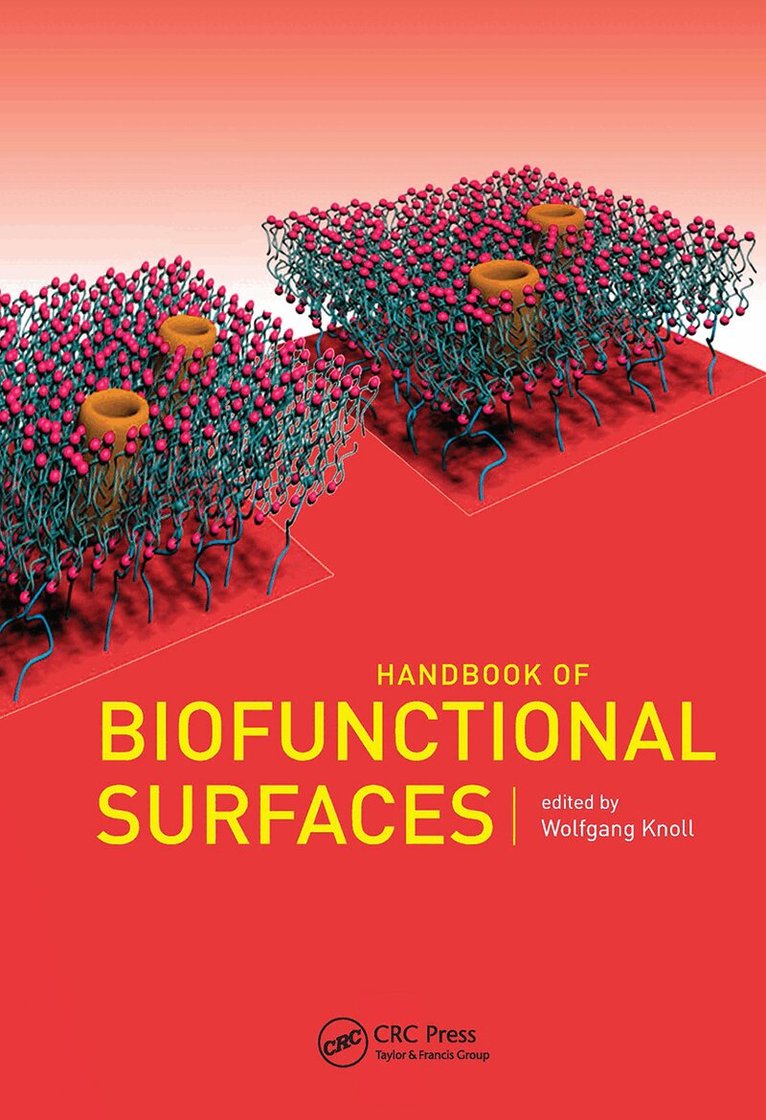
    Handbook of Biofunctional Surfaces

    AvWolfgang Knoll

    Inbunden, Engelska, 2013

    5 345 kr

    Beställningsvara. Skickas inom 5-8 vardagar. Fri frakt över 249 kr.

    Beskrivning

    The design and synthesis of molecularly or supramolecularly defined interfacial architectures have seen in recent years a remarkable growth of interest and scientific research activities for various reasons. On the one hand, it is generally believed that the construction of an interactive interface between the living world of cells, tissue, or whole organisms and the (inorganic or organic) materials world of technical devices such as implants or medical parts requires proper construction and structural (and functional) control of this organism–machine interface. It is still the very beginning of generating a better understanding of what is needed to make an organism tolerate implants, to guarantee bidirectional communication between microelectronic devices and living tissue, or to simply construct interactive biocompatibility of surfaces in general.This exhaustive book lucidly describes the design, synthesis, assembly and characterization, and bio-(medical) applications of interfacial layers on solid substrates with molecularly or supramolecularly controlled architectures. Experts in the field share their contributions that have been developed in recent years.

    Produktinformation

    • Utgivningsdatum:2013-05-22
    • Mått:152 x 229 x undefined mm
    • Vikt:1 682 g
    • Format:Inbunden
    • Språk:Engelska
    • Antal sidor:1 184
    • Förlag:Pan Stanford Publishing Pte Ltd
    • ISBN:9789814316637

    Utforska kategorier

    • Biokemisk teknik inom Naturvetenskap och teknik
    • Biologi inom Naturvetenskap och teknik
    • Maskinteknik och material inom Naturvetenskap och teknik

    Mer om författaren

    Wolfgang Knoll received a PhD in biophysics at the University of Konstanz in 1976. In 1977, he joined the group of Prof. E. Sackmann at the University of Ulm, Germany, working on model membrane systems and their phase behavior by neutron scattering and spectroscopic and thermodynamic measurements. After a postdoctoral stay at the IBM Research Laboratory in San Jose, California (1980–1981), and a stay as a visiting scientist at the Institute Laue-Langevin in Grenoble, he joined the Physics Department of the Technical University of Munich. From 1991 to 1999, he was head of Laboratory for Exotic Nanomaterials hosted by the Institute of Physical and Chemical Research in Wako, Japan. In 1992, he was appointed consulting professor at the Department of Chemical Engineering at Stanford University, California. In 1998, Dr. Knoll was appointed professor of chemistry (by courtesy) at the University of Florida in Gainesville and in 1999 adjunct professor at Hanyang University in Seoul, South Korea. From 1999 to 2003 he was a Temasek Professor at the National University of Singapore, and since 2008 is honorary professor at the University of Natural Resources and Applied Life Sciences in Vienna, Austria, and visiting professor at the Nanyang Technological University of Singapore. Since 2008 he is scientific managing director of the AIT Austrian Institute of Technology in Vienna, Austria. His current research interests include aspects of the structure/order–property/function relationships of polymeric/organic systems, in particular in thin films and at functionalized surfaces.

    Innehållsförteckning

    • Self-Assembled Monolayers (SAMs). Multi-Valent Chelator SAMs. Gemini SAMs. PEG SAMs. Electrochemically Designed SAMs. Polymer Brushes. Ultra-Sensitive Biosensing with Polymer Brushes. Noncovalent Anchoring of Proteins to Surfaces. S-Layer Proteins. Heparan Sulfate Surfaces to Probe the Functions of the Master Regulator of the Extracellular Space. Hemocompatible Surfaces. Peptide Nanotube Coatings for Bioapplications. Proteoglycanylated Surfaces. Surface-Attached Polymeric Hydrogel Films. Evanescent Wave Biosensors with Hydrogels Binding Matrix. IPNs. Biofunctional Grafted Dendrons. Glucase Biosensors: Transduction Method, Redox Materials, and Bio-Interface. Modification of Glass Surfaces by Phosphorus Dendrimer Layers for Biosensors. Tethering Lipid Bilayers to Solid Supports. In vitro Synthesis of Membrane Proteins. Integrin-Functionalized Artificial Membranes as Test Platforms for Monitoring Small Integrin Ligand Binding by Surface Plasmon-Enhanced Fluorescence Spectroscopy. Wetting of Surfaces by Lipid Bilayers. Patterned Lipid Bilayers on Solid Substrate as a Model System of the Biological Membrane. Electrically Addressable, Biologically Relevant Surface Supported Bilayers. Nanopatterning of Biomolecules by Dip Pen Lithography. Surfaces for Stem Cell Propagation. Mechanical Cues for Cell Culture. Constructing Defined Networks of Neurons. Mineralization on a Biomimetic Surface.MO-CVD on patterned SAMs. Application of Biofunctional Surfaces in Medical Diagnostics. Nanopatterning for Bioapplications.