Omolade Adunbi - Böcker
Visar alla böcker från författaren Omolade Adunbi. Handla med fri frakt och snabb leverans.
6 produkter
6 produkter
901 kr
Skickas inom 7-10 vardagar
Omolade Adunbi investigates the myths behind competing claims to oil wealth in Nigeria's Niger Delta. Looking at ownership of natural resources, oil extraction practices, government control over oil resources, and discourse about oil, Adunbi shows how symbolic claims have created an "oil citizenship." He explores the ways NGOs, militant groups, and community organizers invoke an ancestral promise to defend land disputes, justify disruptive actions, or organize against oil corporations. Policies to control the abundant resources have increased contestations over wealth, transformed the relationship of people to their environment, and produced unique forms of power, governance, and belonging.
362 kr
Skickas inom 7-10 vardagar
Omolade Adunbi investigates the myths behind competing claims to oil wealth in Nigeria's Niger Delta. Looking at ownership of natural resources, oil extraction practices, government control over oil resources, and discourse about oil, Adunbi shows how symbolic claims have created an "oil citizenship." He explores the ways NGOs, militant groups, and community organizers invoke an ancestral promise to defend land disputes, justify disruptive actions, or organize against oil corporations. Policies to control the abundant resources have increased contestations over wealth, transformed the relationship of people to their environment, and produced unique forms of power, governance, and belonging.
Enclaves of Exception
Special Economic Zones and Extractive Practices in Nigeria
Häftad, Engelska, 2022
319 kr
Skickas inom 7-10 vardagar
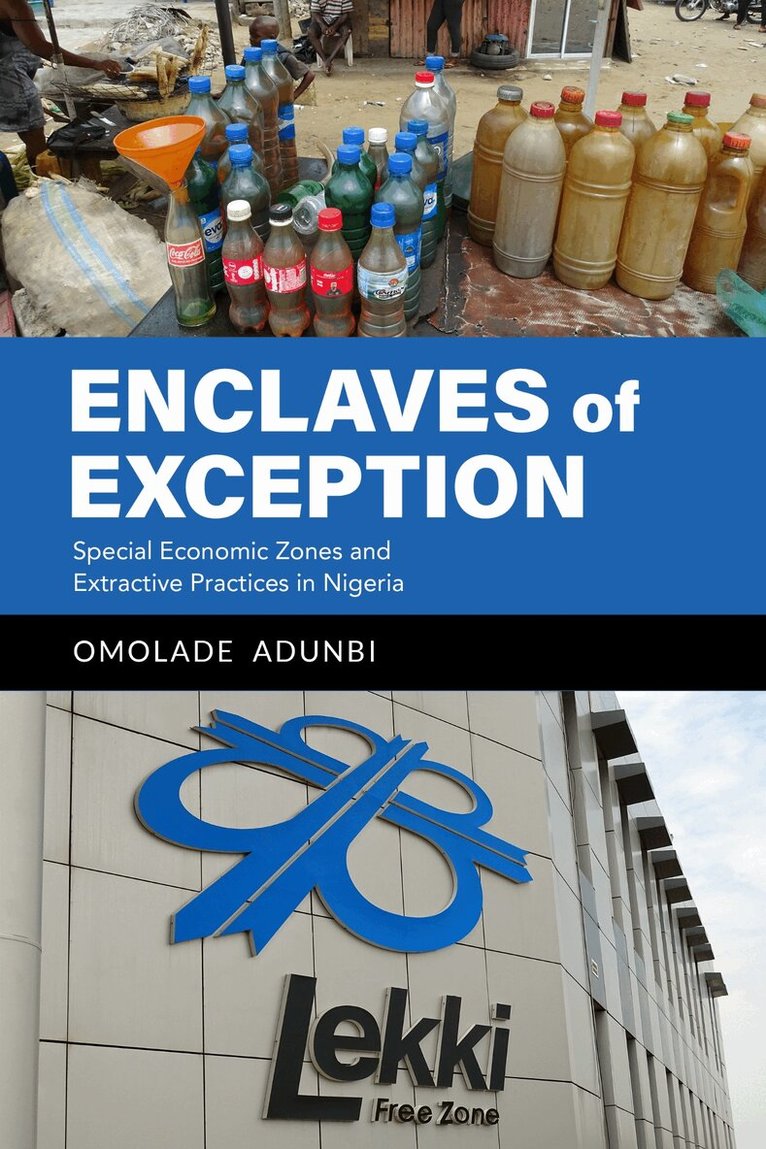
How do we measure and truly grasp the sweeping social and environmental effects of an oil-based economy? Focusing on the special economic zones resulting from China's trading partnership with Nigeria, Enclaves of Exception offers a new approach to exploring the relationship between oil and technologies of extraction and their interrelatedness to local livelihoods and environmental practices. In this groundbreaking work, Omolade Adunbi argues that even though the exploitation of oil resources is dominated by big corporations, it establishes opportunities for many former Nigerian insurgents and their local communities to contest the ownership of such resources in the oil-rich Niger Delta and to extract oil themselves and sell it.Based on extensive ethnographic fieldwork, Enclaves of Exception makes clear that, although both the free trade zones and the now booming local artisanal refineries share the goals of profit-making and are enthusiastically supported by those benefiting from them economically, they have yielded dramatically the same environmental outcome for communities around them that included pollution with precarious effects on the health of the populations in the regions, and displacement of population from their livelihood practices.
Enclaves of Exception
Special Economic Zones and Extractive Practices in Nigeria
Inbunden, Engelska, 2022
820 kr
Skickas inom 7-10 vardagar
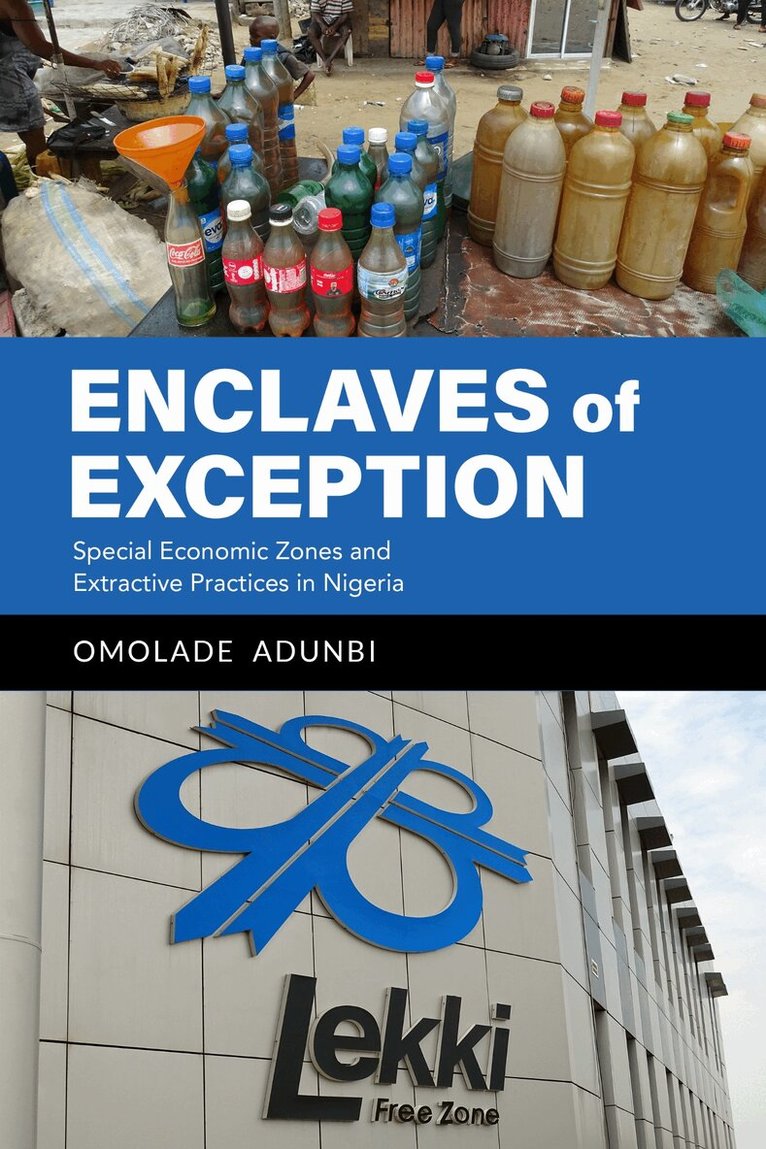
How do we measure and truly grasp the sweeping social and environmental effects of an oil-based economy? Focusing on the special economic zones resulting from China's trading partnership with Nigeria, Enclaves of Exception offers a new approach to exploring the relationship between oil and technologies of extraction and their interrelatedness to local livelihoods and environmental practices. In this groundbreaking work, Omolade Adunbi argues that even though the exploitation of oil resources is dominated by big corporations, it establishes opportunities for many former Nigerian insurgents and their local communities to contest the ownership of such resources in the oil-rich Niger Delta and to extract oil themselves and sell it.Based on extensive ethnographic fieldwork, Enclaves of Exception makes clear that, although both the free trade zones and the now booming local artisanal refineries share the goals of profit-making and are enthusiastically supported by those benefiting from them economically, they have yielded dramatically the same environmental outcome for communities around them that included pollution with precarious effects on the health of the populations in the regions, and displacement of population from their livelihood practices.
429 kr
Skickas inom 7-10 vardagar
The Post-Global City seeks to open a new field of analytical inquiry that examines knowledge production and technological developments in urban Africa rooted in local, historical realities, while also partaking in transnational, global processes. This work explores the ways in which urban residents have utilized technologies and networks to operate around, under, and beyond the state and the international “order,” and challenges the stereotypical images of Africa as a continent either devoid of technology or filled with either broken technologies or technologies from the Global North or Asia. This book focuses on accounts and critiques of new “Rising Africa” ideologies, examining megaprojects such as geothermal and hydroelectric plants with new networked startups that circumvent state and patriarchal hierarchies, women vendors selling online, youths designing and constructing oil refining technologies and tech startups working across diasporas.Grounded in ethnographic fieldwork carried out in urban spaces in Nigeria, Kenya, the Democratic Republic of Congo, Sudan, Gabon, Cameroon, and Tanzania, The Post-Global City brings together voices from Africa, Europe, and the United States to inquire into the dialectics between technology and the urban on the African continent.
1 356 kr
Skickas inom 7-10 vardagar
The Post-Global City seeks to open a new field of analytical inquiry that examines knowledge production and technological developments in urban Africa rooted in local, historical realities, while also partaking in transnational, global processes. This work explores the ways in which urban residents have utilized technologies and networks to operate around, under, and beyond the state and the international “order,” and challenges the stereotypical images of Africa as a continent either devoid of technology or filled with either broken technologies or technologies from the Global North or Asia. This book focuses on accounts and critiques of new “Rising Africa” ideologies, examining megaprojects such as geothermal and hydroelectric plants with new networked startups that circumvent state and patriarchal hierarchies, women vendors selling online, youths designing and constructing oil refining technologies and tech startups working across diasporas.Grounded in ethnographic fieldwork carried out in urban spaces in Nigeria, Kenya, the Democratic Republic of Congo, Sudan, Gabon, Cameroon, and Tanzania, The Post-Global City brings together voices from Africa, Europe, and the United States to inquire into the dialectics between technology and the urban on the African continent.