Oscar Widerberg – författare
Visar alla böcker från författaren Oscar Widerberg. Handla med fri frakt och snabb leverans.
6 produkter
6 produkter
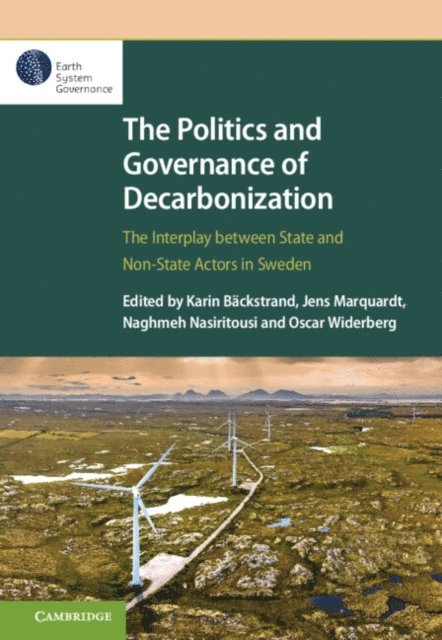
Politics and Governance of Decarbonization
The Interplay between State and Non-State Actors in Sweden
E-bok
Engelska, 20241 451 kr
Läs direkt efter köp
Politics and Governance of Decarbonization
The Interplay between State and Non-State Actors in Sweden
Inbunden, Engelska, 2024
1 240 kr
Skickas inom 7-10 vardagar
This book examines how, and under what conditions, states – in collaboration with non-state actors – can govern a societal transformation toward large-scale decarbonization in line with the goals of the Paris Agreement. It advances an innovative analytical framework on how the state governs through collaborative climate governance to foster cooperation, deliberation, and consensus between state and non-state actors. The book focuses on Sweden, which aims to become a fossil-free state. The chapters analyze Sweden's progress toward net-zero emissions, its role in international climate governance, and how the COVID-19 pandemic affected climate networks. Providing valuable policy insights for other countries endeavoring to decarbonize, this book is a useful reference for graduate students and researchers in climate governance, political science, and international relations. It is one of a series of publications associated with the Earth System Governance Project. For more publications, see www.cambridge.org/earth-system-governance. This title is also available as Open Access on Cambridge Core.
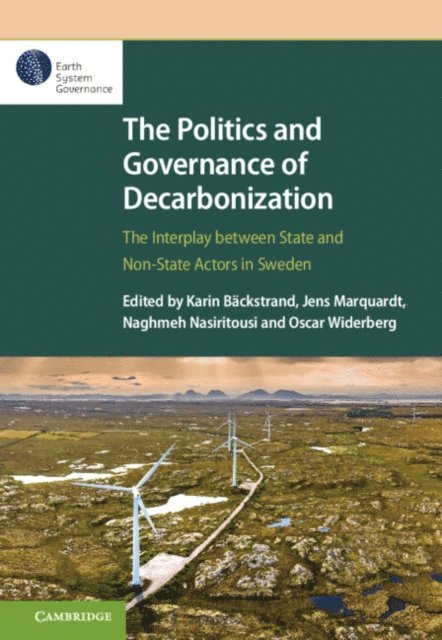
Politics and Governance of Decarbonization
The Interplay between State and Non-State Actors in Sweden
E-bok
PDF, Engelska, 20241 451 kr
Läs direkt efter köp
Inbunden, Engelska, 2020
1 564 kr
Skickas inom 7-10 vardagar
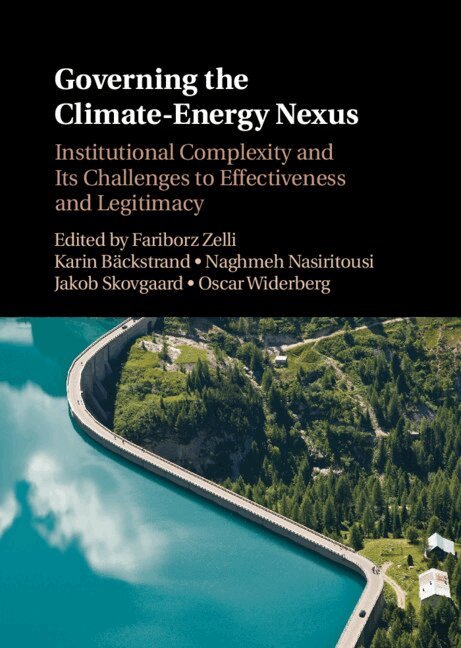
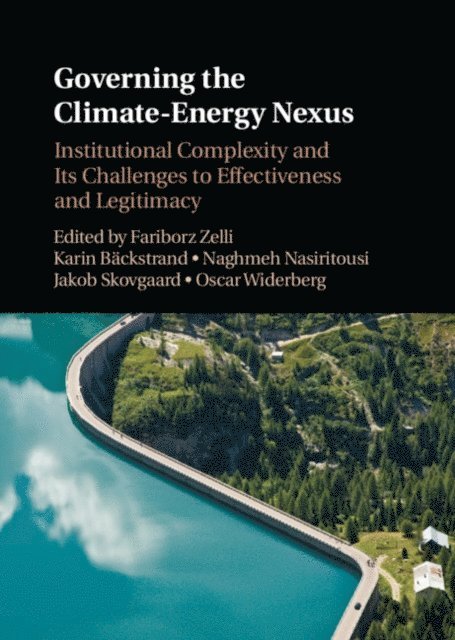
Combating climate change and transitioning to fossil-free energy are two central and interdependent challenges facing humanity today. Governing the nexus of these challenges is complex, and includes multiple intergovernmental and transnational institutions. This book analyses the governance interactions between such institutions, and explores their consequences for legitimacy and effectiveness. Using a novel analytical framework, the contributors examine three policy fields: renewable energy, fossil fuel subsidy reform, and carbon pricing. These fields are compared in terms of their institutional memberships, governance functions and overarching norms. Bringing together prominent researchers from political science and international relations, the book offers an essential resource for future research and provides policy recommendations for effective and legitimate governance of the climate-energy nexus. Rooted in the most recent research, it is an invaluable reference for researchers, policymakers and other stakeholders in climate change and energy politics. This title is also available as Open Access on Cambridge Core.
E-bok
PDF, Engelska, 20201 887 kr
Läs direkt efter köp
Combating climate change and transitioning to fossil-free energy are two central and interdependent challenges facing humanity today. Governing the nexus of these challenges is complex, and includes multiple intergovernmental and transnational institutions. This book analyses the governance interactions between such institutions, and explores their consequences for legitimacy and effectiveness. Using a novel analytical framework, the contributors examine three policy fields: renewable energy, fossil fuel subsidy reform, and carbon pricing. These fields are compared in terms of their institutional memberships, governance functions and overarching norms. Bringing together prominent researchers from political science and international relations, the book offers an essential resource for future research and provides policy recommendations for effective and legitimate governance of the climate-energy nexus. Rooted in the most recent research, it is an invaluable reference for researchers, policymakers and other stakeholders in climate change and energy politics. This title is also available as Open Access on Cambridge Core.
E-bok
Engelska, 20201 887 kr
Läs direkt efter köp
Combating climate change and transitioning to fossil-free energy are two central and interdependent challenges facing humanity today. Governing the nexus of these challenges is complex, and includes multiple intergovernmental and transnational institutions. This book analyses the governance interactions between such institutions, and explores their consequences for legitimacy and effectiveness. Using a novel analytical framework, the contributors examine three policy fields: renewable energy, fossil fuel subsidy reform, and carbon pricing. These fields are compared in terms of their institutional memberships, governance functions and overarching norms. Bringing together prominent researchers from political science and international relations, the book offers an essential resource for future research and provides policy recommendations for effective and legitimate governance of the climate-energy nexus. Rooted in the most recent research, it is an invaluable reference for researchers, policymakers and other stakeholders in climate change and energy politics. This title is also available as Open Access on Cambridge Core.