Osvaldo Rodríguez Morán – författare
Visar alla böcker från författaren Osvaldo Rodríguez Morán. Handla med fri frakt och snabb leverans.
6 produkter
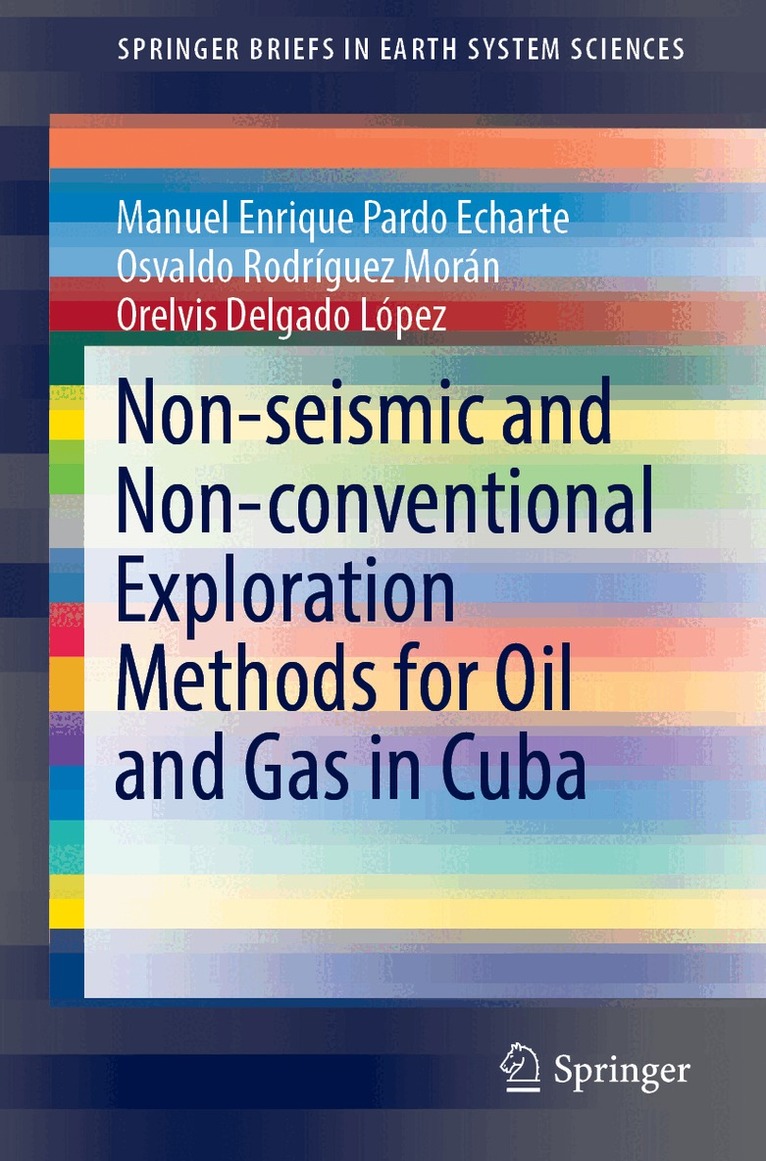
Non-seismic and Non-conventional Exploration Methods for Oil and Gas in Cuba
Av Manuel Enrique Pardo Echarte, Osvaldo Rodríguez Morán m. fl.
Häftad, 2019
551 kr
Lägg i varukorg
This book assesses the use of various non-seismic and non-conventional oil and gas exploration methods in Cuba. In addition to discussing the benefits of these methods, the book demonstrates how they can be combined with geological data and conventional methods, leading to a better evaluation of …
Non-seismic and Non-conventional Exploration Methods for Oil and Gas in Cuba
Av Orelvis Delgado Lopez, Osvaldo Rodriguez Moran m. fl.
E-bok, 2019
710 kr
Lägg i varukorg
This book assesses the use of various non-seismic and non-conventional oil and gas exploration methods in Cuba. In addition to discussing the benefits of these methods, the book demonstrates how they can be combined with geological data and conventional methods, leading to a better evaluation of …
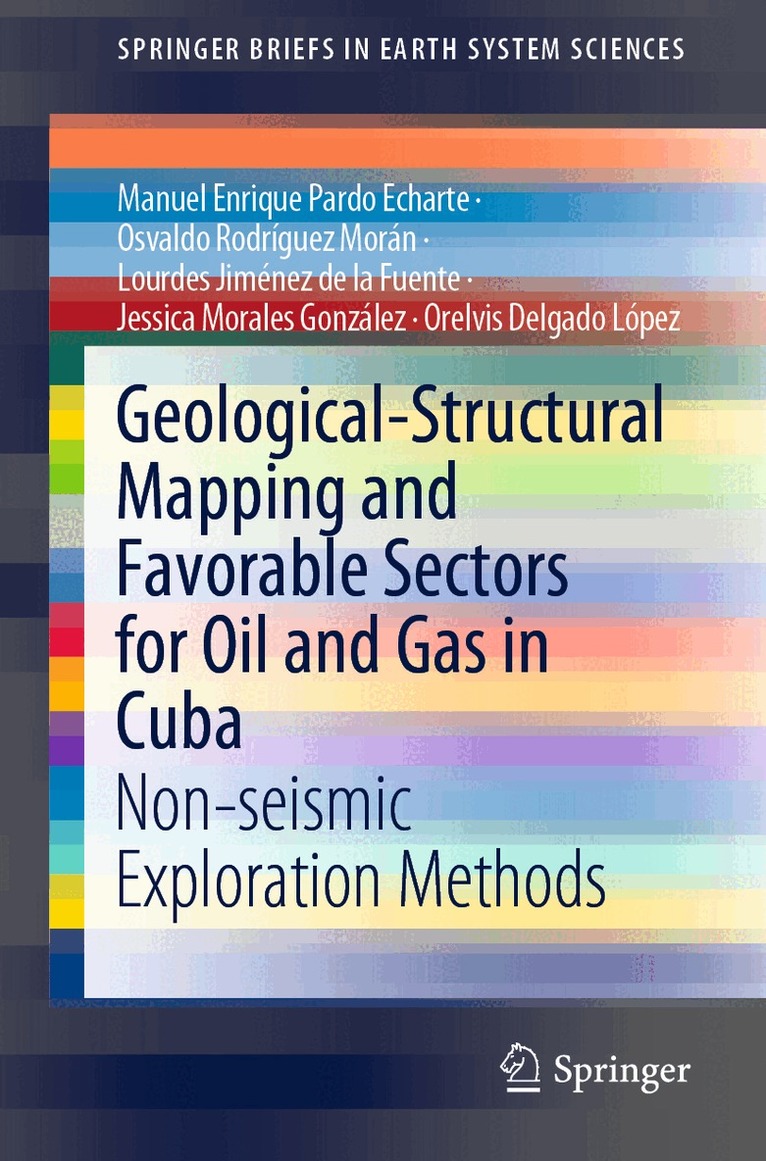
Geological-Structural Mapping and Favorable Sectors for Oil and Gas in Cuba
Non-seismic Exploration Methods
Av Manuel Enrique Pardo Echarte, Osvaldo Rodríguez Morán m. fl.
Häftad, 2022
552 kr
Lägg i varukorg
The so-called "Non-conventional geophysical-geochemical exploration methods" are used, in the particular case of oil and gas exploration, for the detection and mapping of active microseepage of light hydrocarbons with a vertical nature on the gas-oil accumulations.The non-seismic exploration …
Geological-Structural Mapping and Favorable Sectors for Oil and Gas in Cuba
Non-seismic Exploration Methods
Av Orelvis Delgado Lopez, Jessica Morales Gonzalez m. fl.
E-bok, 2022
718 kr
Lägg i varukorg
The so-called "Non-conventional geophysical-geochemical exploration methods" are used, in the particular case of oil and gas exploration, for the detection and mapping of active microseepage of light hydrocarbons with a vertical nature on the gas-oil accumulations. The non-seismic exploration …
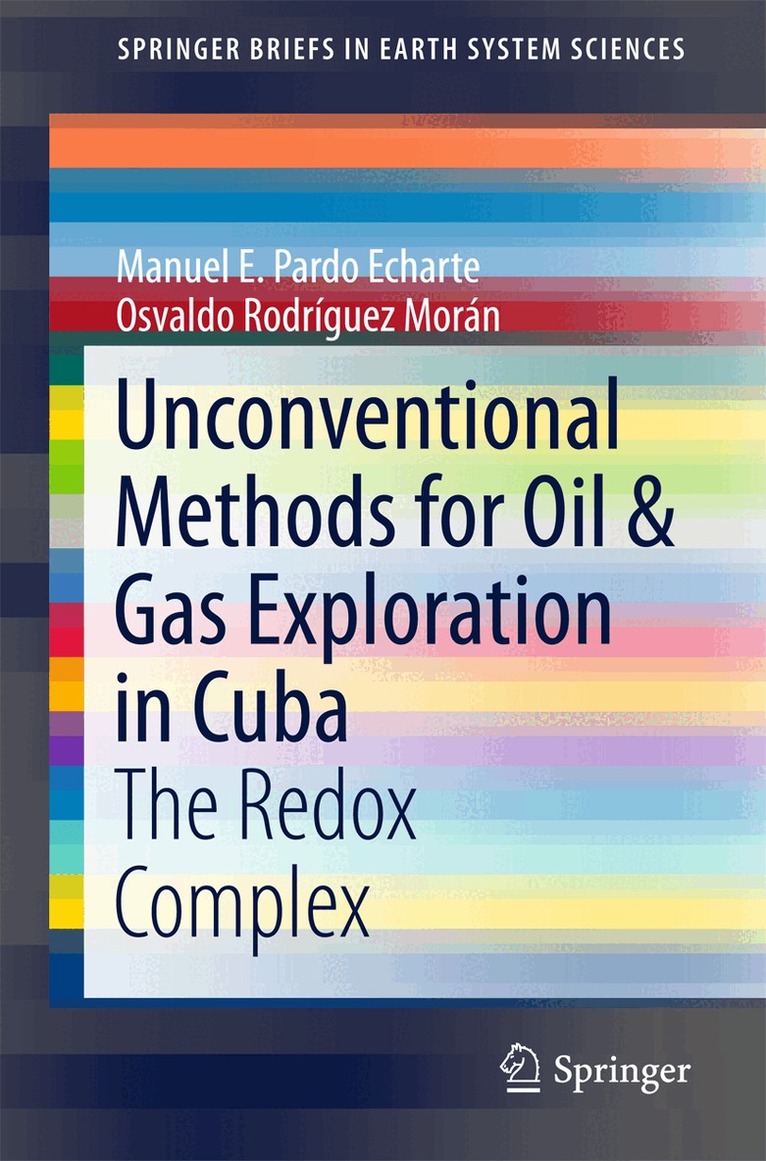
Unconventional Methods for Oil & Gas Exploration in Cuba
The Redox Complex
Av Manuel E. Pardo Echarte, Osvaldo Rodríguez Morán
Häftad, 2015
551 kr
Lägg i varukorg
This book studies the “Redox Complex”, a complex of unconventional geophysical-geochemical exploration techniques used for the indirect detection, characterization and evaluation of various metal targets, while also illustrating selected applications of unconventional geophysical-geochemical …
Unconventional Methods for Oil & Gas Exploration in Cuba
The Redox Complex
Av Osvaldo Rodriguez Moran, Manuel E. Pardo Echarte
E-bok, 2015
718 kr
Lägg i varukorg
This book studies the “Redox Complex”, a complex of unconventional geophysical-geochemical exploration techniques used for the indirect detection, characterization and evaluation of various metal targets, while also illustrating selected applications of unconventional geophysical-geochemical …