Owen Logan – författare
Visar alla böcker från författaren Owen Logan. Handla med fri frakt och snabb leverans.
5 produkter
5 produkter
Häftad, Engelska, 2015
355 kr
Skickas inom 10-15 vardagar
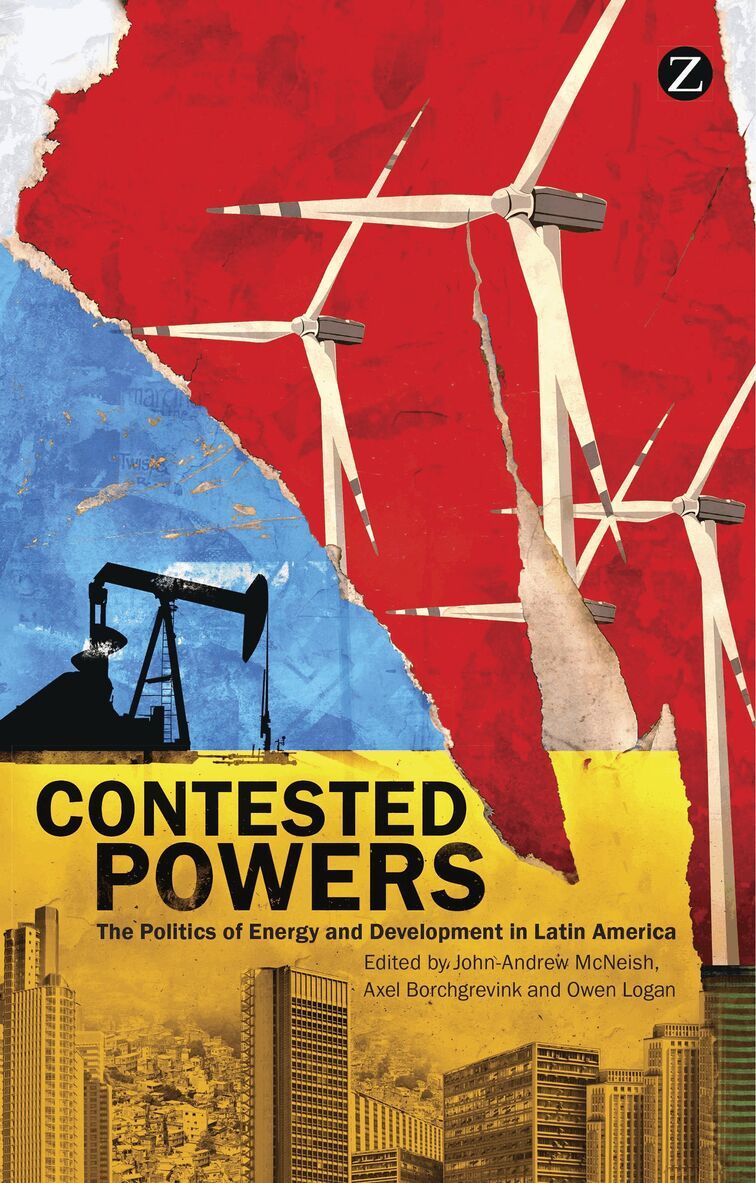
In the global North the commoditization of creativity and knowledge under the banner of a creative economy is being posed as the post-industrial answer to dependency on labour and natural resources. Not only does it promise a more stable and sustainable future, but an economy focused on intellectual property is more environmentally friendly, so it is suggested.Contested Powers argues that the fixes being offered by this model are bluffs; development as witnessed in Latin American energy politics and governance remains hindered by a global division of labour and nature that puts the capacity for technological advancement in private hands. The authors call for a multi-layered understanding of sovereignty, arguing that it holds the key to undermining rigid accounts of the relationship between carbon and democracy, energy and development, and energy and political expression. Furthermore, a critical focus on energy politics is crucial to wider debates on development and sustainability.Contested Powers is essential reading for those wondering how energy resources are converted into political power and why we still value the energy we take from our surroundings more than the means of its extraction.
Inbunden, Engelska, 2015
1 259 kr
Skickas inom 10-15 vardagar
In the global North the commoditization of creativity and knowledge under the banner of a creative economy is being posed as the post-industrial answer to dependency on labour and natural resources. Not only does it promise a more stable and sustainable future, but an economy focused on intellectual property is more environmentally friendly, so it is suggested.Contested Powers argues that the fixes being offered by this model are bluffs; development as witnessed in Latin American energy politics and governance remains hindered by a global division of labour and nature that puts the capacity for technological advancement in private hands. The authors call for a multi-layered understanding of sovereignty, arguing that it holds the key to undermining rigid accounts of the relationship between carbon and democracy, energy and development, and energy and political expression. Furthermore, a critical focus on energy politics is crucial to wider debates on development and sustainability.Contested Powers is essential reading for those wondering how energy resources are converted into political power and why we still value the energy we take from our surroundings more than the means of its extraction.
E-bok
PDF, Engelska, 2015379 kr
Läs direkt efter köp
In the global North the commoditization of creativity and knowledge under the banner of a creative economy is being posed as the post-industrial answer to dependency on labour and natural resources. Not only does it promise a more stable and sustainable future, but an economy focused on intellectual property is more environmentally friendly, so it is suggested.Contested Powers argues that the fixes being offered by this model are bluffs; development as witnessed in Latin American energy politics and governance remains hindered by a global division of labour and nature that puts the capacity for technological advancement in private hands. The authors call for a multi-layered understanding of sovereignty, arguing that it holds the key to undermining rigid accounts of the relationship between carbon and democracy, energy and development, and energy and political expression. Furthermore, a critical focus on energy politics is crucial to wider debates on development and sustainability.Contested Powers is essential reading for those wondering how energy resources are converted into political power and why we still value the energy we take from our surroundings more than the means of its extraction.
E-bok
Engelska, 2015365 kr
Läs direkt efter köp
In the global North the commoditization of creativity and knowledge under the banner of a creative economy is being posed as the post-industrial answer to dependency on labour and natural resources. Not only does it promise a more stable and sustainable future, but an economy focused on intellectual property is more environmentally friendly, so it is suggested.Contested Powers argues that the fixes being offered by this model are bluffs; development as witnessed in Latin American energy politics and governance remains hindered by a global division of labour and nature that puts the capacity for technological advancement in private hands. The authors call for a multi-layered understanding of sovereignty, arguing that it holds the key to undermining rigid accounts of the relationship between carbon and democracy, energy and development, and energy and political expression. Furthermore, a critical focus on energy politics is crucial to wider debates on development and sustainability.Contested Powers is essential reading for those wondering how energy resources are converted into political power and why we still value the energy we take from our surroundings more than the means of its extraction.
E-bok
Engelska, 2012535 kr
Läs direkt efter köp
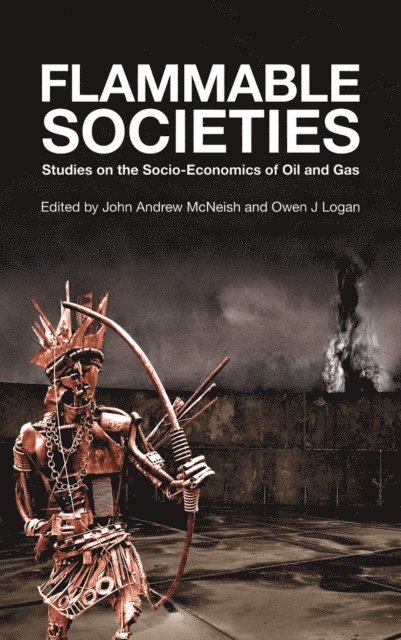
The impact of the oil and gas industry – paradoxically seen both as a blessing and a curse on socio-economic development – is a question at the heart of the comparative studies in this volume stretching from Northern Europe to the Caucasus, the Gulf of Guinea to Latin America. Britain’s transformation under Margaret Thatcher into a supposedly post-industrial society orientated towards consumer sovereignty was paid for with revenues from the North Sea oil industry, an industry conveniently out of sight and out of mind for many. Other case studies include resource struggles in Bolivia, oil money in Venezuela and the Azerbaijani oil boom among many others.Drawing on bottom-up research and theoretical reflection, this book questions the political and scientific basis of current international policy that aims to address the problem of resource management through standard Western models of economic governance, institution building and national sovereignty.