Paloma Aguilar – författare
Visar alla böcker från författaren Paloma Aguilar. Handla med fri frakt och snabb leverans.
7 produkter
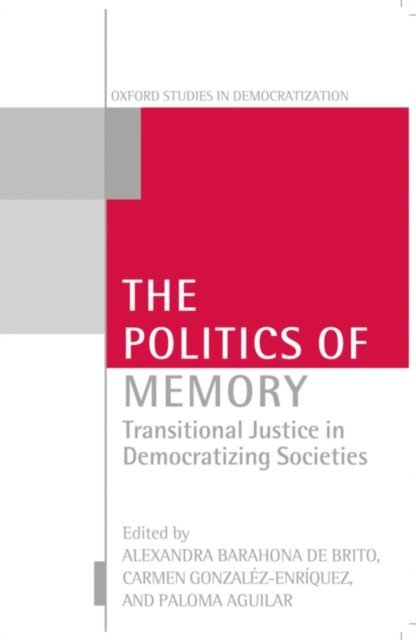
Politics of Memory
Transitional Justice in Democratizing Societies
Av Paloma Aguilar, Carmen Gonzalez Enriquez m. fl.
E-bok, 2001
1222 kr
Lägg i varukorg
One of the most important political and ethical questions faced during a political transition from authoritarian or totalitarian to democratic rule is how to deal with legacies of repression. Indeed, some of the most fundamental questions regarding law, morality and politics are raised at such …
The Politics of Memory and Democratization
Transitional Justice in Democratizing Societies
Av Alexandra Barahona de Brito, Alexandra Barahona De Brito m. fl.
Inbunden, 2001
2902 kr
Lägg i varukorg
One of the most important political and ethical questions faced during a political transition from authoritarian or totalitarian to democratic rule is how to deal with legacies of repression. Indeed, some of the most fundamental questions regarding law, morality and politics are raised at such …
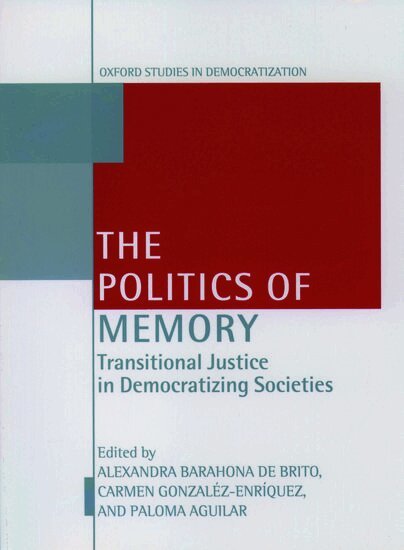
The Politics of Memory
Transitional Justice in Democratizing Societies
Av Alexandra Barahona De Brito, Carmen Gonzalez Enriquez m. fl.
Häftad, 2001
1822 kr
Lägg i varukorg
One of the most important political and ethical questions faced during a political transition from authoritarian or totalitarian to democratic rule is how to deal with legacies of repression. Indeed, some of the most fundamental questions regarding law, morality and politics are raised at such …
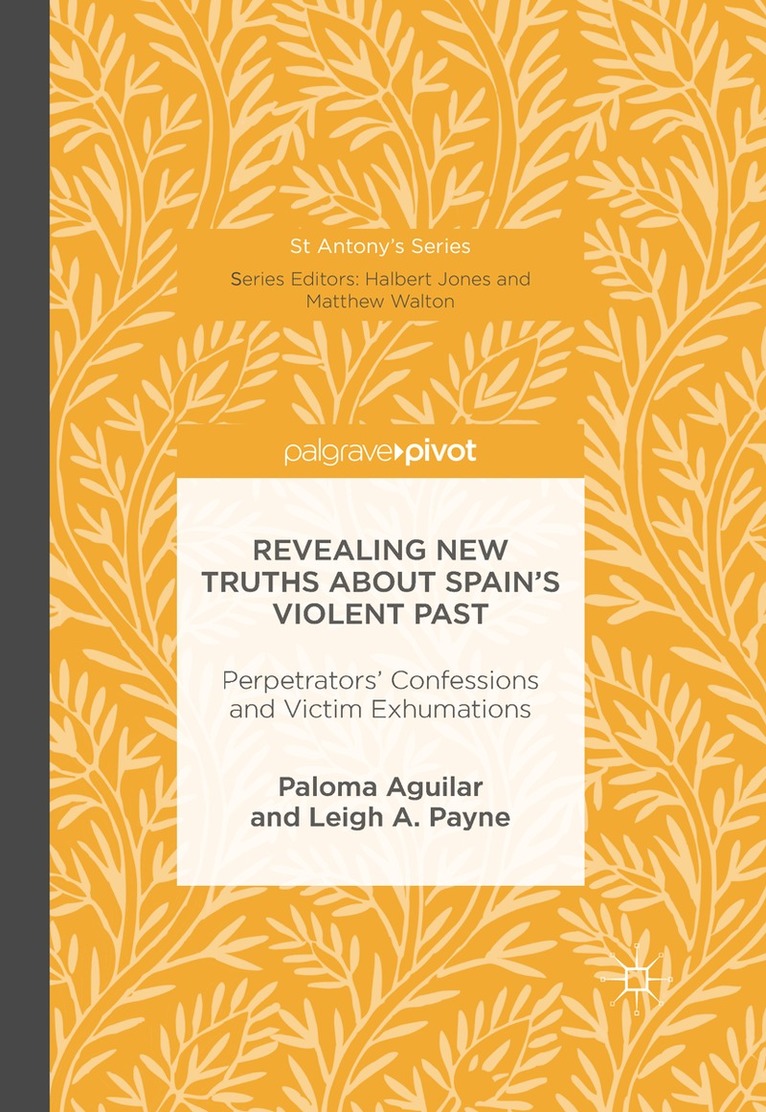
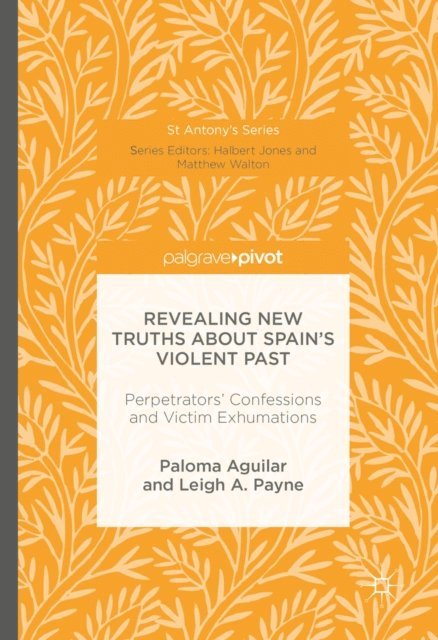
Revealing New Truths about Spain's Violent Past
Perpetrators' Confessions and Victim Exhumations
Av Paloma Aguilar, Leigh A. Payne
Inbunden, 2016
624 kr
Lägg i varukorg
The foundation of a stable democracy in Spain was built on a settled account: an agreement that both sides were equally guilty of violence, a consensus to avoid contention, and a pact of oblivion as the pathway to peace and democracy. That foundation is beginning to crack as perpetrators’ …
Revealing New Truths about Spain's Violent Past
Perpetrators'' Confessions and Victim Exhumations
Av Leigh A. Payne, Paloma Aguilar
E-bok, 2016
873 kr
Lägg i varukorg
The foundation of a stable democracy in Spain was built on a settled account: an agreement that both sides were equally guilty of violence, a consensus to avoid contention, and a pact of oblivion as the pathway to peace and democracy. That foundation is beginning to crack as perpetrators’ …
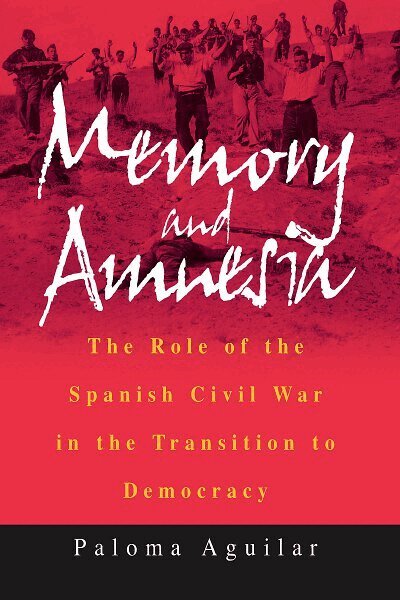
Memory and Amnesia
The Role of the Spanish Civil War in the Transition to Democracy
Häftad, 2002
526 kr
Lägg i varukorg
Using a rich variety of sources such as official newsreels, school textbooks, the work of contemporary historians, memoirs, official documents, legislation, and monuments, this book explores how the historical memory of the Spanish Civil War (1936-1939) influenced the transition to democracy in …
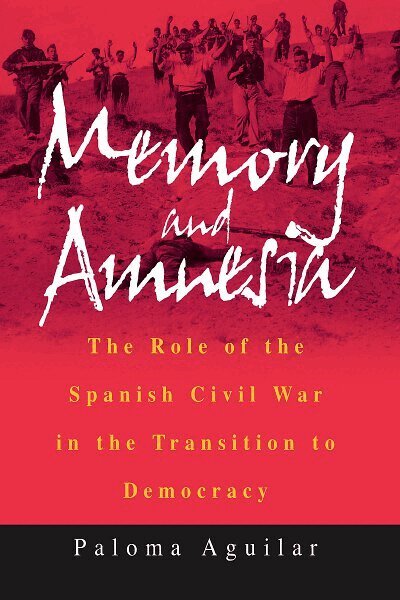
Memory and Amnesia
The Role of the Spanish Civil War in the Transition to Democracy
Inbunden, 2002
1916 kr
Lägg i varukorg
Using a rich variety of sources such as official newsreels, school textbooks, the work of contemporary historians, memoirs, official documents, legislation, and monuments, this book explores how the historical memory of the Spanish Civil War (1936-1939) influenced the transition to democracy in …