Pamela Oberhuemer – författare
2 115 kr
Skickas inom 10-15 vardagar
2 115 kr
Skickas inom 10-15 vardagar
578 kr
Skickas inom 10-15 vardagar
619 kr
Skickas inom 10-15 vardagar
2 047 kr
Skickas inom 10-15 vardagar
662 kr
Läs direkt efter köp
Early Childhood Education in the United States is rife with contradictions, critique and innovation. It is a time when a status quo – characterized by systemic, historic discrimination; teacher de-professionalization; ''teaching to the test''; and attacks on funding – is challenged by new technologies, new literacies and transformative and critical perspectives and practices that defy assumptions and biases to create cutting-edge, diverse instantiations of Early Childhood Education for children, families, and teachers.
This volume, based on a special issue of the Early Years journal written in 2016 before the new administration announced its policies, aims to generate conversations about developments in Early Childhood Education, situated within classist/racist/linguicist and neoliberal contexts, and to analyze critically where we are, where we might go and what we might do. It is also an opportunity to share counter-narratives to the dominant narratives promulgated by many, convinced that narrow, destructive norms of appropriate practice, standards, and accountability, as well as the curtailed achievement of children of Color, those from low income communities, and emergent bilinguals are ‘common sense’.
These counter-narratives – some about transformational projects that have generated innovative perspectives and practices, and some detailing critical analyses and projects that go beyond to explore issues of power – contest education that disprivileges some children and families while advocating education that is child- and family-centered, culturally relevant and sustaining, equitable and democratic. Our hope is that this work creates a ''space of dialogue and human action'' needed even more urgently today.
This book was originally published as a special issue of the Early Years journal.
662 kr
Läs direkt efter köp
Early Childhood Education in the United States is rife with contradictions, critique and innovation. It is a time when a status quo – characterized by systemic, historic discrimination; teacher de-professionalization; ''teaching to the test''; and attacks on funding – is challenged by new technologies, new literacies and transformative and critical perspectives and practices that defy assumptions and biases to create cutting-edge, diverse instantiations of Early Childhood Education for children, families, and teachers.
This volume, based on a special issue of the Early Years journal written in 2016 before the new administration announced its policies, aims to generate conversations about developments in Early Childhood Education, situated within classist/racist/linguicist and neoliberal contexts, and to analyze critically where we are, where we might go and what we might do. It is also an opportunity to share counter-narratives to the dominant narratives promulgated by many, convinced that narrow, destructive norms of appropriate practice, standards, and accountability, as well as the curtailed achievement of children of Color, those from low income communities, and emergent bilinguals are ‘common sense’.
These counter-narratives – some about transformational projects that have generated innovative perspectives and practices, and some detailing critical analyses and projects that go beyond to explore issues of power – contest education that disprivileges some children and families while advocating education that is child- and family-centered, culturally relevant and sustaining, equitable and democratic. Our hope is that this work creates a ''space of dialogue and human action'' needed even more urgently today.
This book was originally published as a special issue of the Early Years journal.
710 kr
Läs direkt efter köp
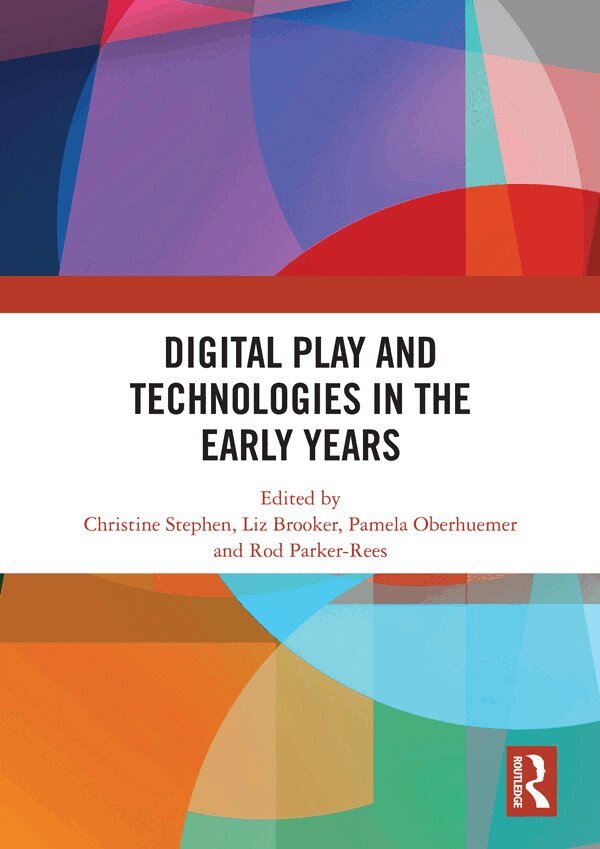
Technologies are a pervasive feature of contemporary life for adults and children. However, young children’s experiences with digital technologies are often the subject of polarised debate among parents, educators, policymakers and social commentators, particularly since the advent of tablets and smartphones changed access to the Internet and the nature of interactions with digital resources. Some are opposed to children’s engagement with digital resources, concerned that the activities they afford are not developmentally appropriate, limit physical activity and restrict the development of social skills. Others welcome digital technologies which they see as offering new and enhanced ways of learning and sharing knowledge. Despite this level of popular and policy interest in young children’s interactions with digital technologies our understanding of the influence of these technologies on playing and learning, and on the role of educators, has remained surprisingly limited.
The contributions to this book fill in the gaps of our existing understanding of the field. They focus on children and families from Australia to England to Estonia, the how and why of encounters with digital technologies, the nature of digital play and questions about practice and practitioners. The book raises critical questions and offers new understandings and theoretical insights around one of the ‘hot topics’ in early years research.
This book was originally published as a special issue of the Early Years journal.
710 kr
Läs direkt efter köp
Technologies are a pervasive feature of contemporary life for adults and children. However, young children’s experiences with digital technologies are often the subject of polarised debate among parents, educators, policymakers and social commentators, particularly since the advent of tablets and smartphones changed access to the Internet and the nature of interactions with digital resources. Some are opposed to children’s engagement with digital resources, concerned that the activities they afford are not developmentally appropriate, limit physical activity and restrict the development of social skills. Others welcome digital technologies which they see as offering new and enhanced ways of learning and sharing knowledge. Despite this level of popular and policy interest in young children’s interactions with digital technologies our understanding of the influence of these technologies on playing and learning, and on the role of educators, has remained surprisingly limited.
The contributions to this book fill in the gaps of our existing understanding of the field. They focus on children and families from Australia to England to Estonia, the how and why of encounters with digital technologies, the nature of digital play and questions about practice and practitioners. The book raises critical questions and offers new understandings and theoretical insights around one of the ‘hot topics’ in early years research.
This book was originally published as a special issue of the Early Years journal.
714 kr
Skickas inom 10-15 vardagar
1 744 kr
Skickas inom 3-6 vardagar
509 kr
Läs direkt efter köp
695 kr
Skickas inom 10-15 vardagar
285 kr
Skickas
316 kr
Skickas inom 3-6 vardagar