Pamela S. Murray – författare
Visar alla böcker från författaren Pamela S. Murray. Handla med fri frakt och snabb leverans.
4 produkter
4 produkter
Häftad, Engelska, 2008
281 kr
Skickas inom 5-8 vardagar
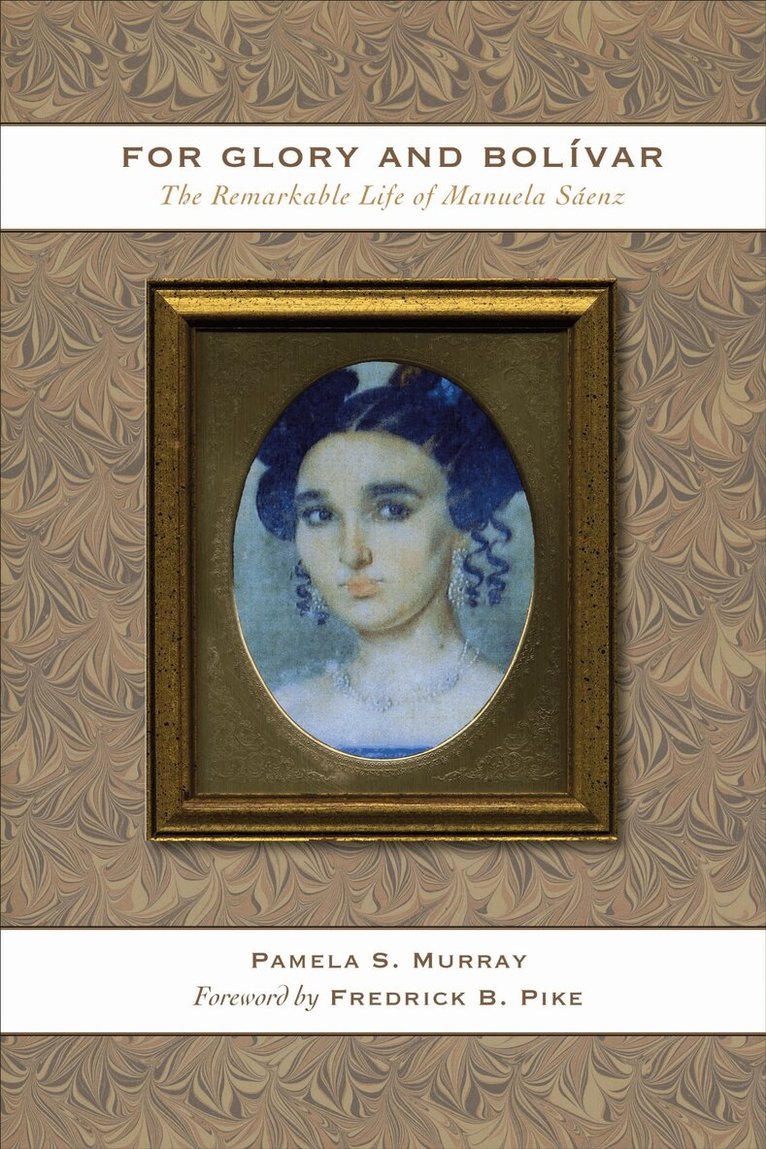
She was a friend, lover, and confidante of charismatic Spanish American independence hero SimÓn BolÍvar and, after her death, a nationalist icon in her own right. Yet authors generally have chosen either to romanticize Manuela SÁenz or to discount her altogether. For Glory and Bolivar: The Remarkable of Life of Manuela SÁenz, by contrast, offers a comprehensive and clear-eyed biography of her. Based on unprecedented archival research, it paints a vivid portrait of the Quito-born "Libertadora," revealing both an exceptional figure and a flesh-and-blood person whose life broadly reflected the experiences of women during Spanish America's turbulent Age of Revolution.Already married at the time of her meeting with the famous Liberator, SÁenz abandoned her husband in order to become not only BolÍvar's romantic companion, but also his official archivist, a member of his inner circle, and one of his most loyal followers. She played a central role in Spanish South America's independence drama and eventually in developments leading to the consolidation of new nations. Pamela Murray, for the first time, closely examines SÁenz's political trajectory including her vital, often-overlooked years in exile. She exposes the myths that still surround her. She offers, in short, a nuanced and much-needed historical perspective, one that balances recognition of SÁenz's uniqueness with awareness of the broader forces that shaped this dynamic nineteenth-century woman.
Inbunden, Engelska, 2014
2 818 kr
Skickas inom 10-15 vardagar
In Latin American history, women have not only played key roles within the family and society, but have long been active participants in political and economic life. The explosion of research over the last fifteen years testifies to how much we still have to learn about their experiences. Women and Gender in Modern Latin America brings together selections from recent scholarship with excerpts from an exciting array of primary sources, many translated into English for the first time, to bring the story of women’s involvement in modern Latin American history up to date.Covering major developments in the region from the bitter wars of Spanish American independence (1810-1825) through the turn of the twenty-first century, this collection examines the expectations, responsibilities, and limitations that have confronted women in their varied roles. The book explores: The nature and impact of feminist movements Women’s role in economic modernization and the gendered division of labor Women’s contributions to 20th-century nationalism and social revolutions Changing gender roles and relations within marriage and the family The impact of modern birth control methods and changing sexual moresIn the concise introductory essays, Pamela S. Murray synthesizes recent research to provide readers with a context for the selections in each chapter, including primary sources that range from trial records, legal codes, and other official documents to personal letters, excerpts from women’s published writings, speeches, and images.Whether for a course specifically on women in Latin America, or as an addition to a Modern Latin America survey course, Women and Gender in Modern Latin America provides a comprehensive overview of the experiences of women and workings of gender over time across a vast and diverse region.
Häftad, Engelska, 2014
1 102 kr
Skickas inom 10-15 vardagar
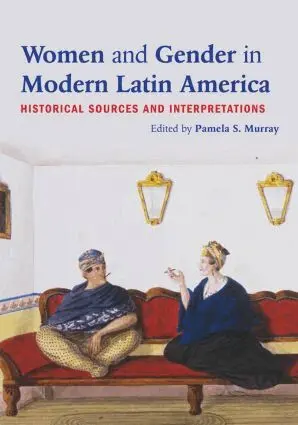
In Latin American history, women have not only played key roles within the family and society, but have long been active participants in political and economic life. The explosion of research over the last fifteen years testifies to how much we still have to learn about their experiences. Women and Gender in Modern Latin America brings together selections from recent scholarship with excerpts from an exciting array of primary sources, many translated into English for the first time, to bring the story of women’s involvement in modern Latin American history up to date.Covering major developments in the region from the bitter wars of Spanish American independence (1810-1825) through the turn of the twenty-first century, this collection examines the expectations, responsibilities, and limitations that have confronted women in their varied roles. The book explores: The nature and impact of feminist movements Women’s role in economic modernization and the gendered division of labor Women’s contributions to 20th-century nationalism and social revolutions Changing gender roles and relations within marriage and the family The impact of modern birth control methods and changing sexual moresIn the concise introductory essays, Pamela S. Murray synthesizes recent research to provide readers with a context for the selections in each chapter, including primary sources that range from trial records, legal codes, and other official documents to personal letters, excerpts from women’s published writings, speeches, and images.Whether for a course specifically on women in Latin America, or as an addition to a Modern Latin America survey course, Women and Gender in Modern Latin America provides a comprehensive overview of the experiences of women and workings of gender over time across a vast and diverse region.
E-bok
Spanska, 202068 kr
Läs direkt efter köp
¿Cómo escribir una historia que incluya a la gran mayoría de personas que vivieron en el pasado? Por medio siglo esta pregunta ha tenido una cierta urgencia, no sólo por razones historiográficas sino también porque la respuesta ha sido considerada central en los proyectos que buscan ganar la inclusión en la sociedad de grupos sociales previamente excluidos. En la década de 1960 la historia social creció rápidamente y tuvo bastante éxito en ayudar a nuestra comprensión de muchos grupos sociales, como los esclavos, las mujeres y los obreros, especialmente en lo tocante a sus vidas cotidianas y sus labores. Sin embargo, estas personas que entraron en la historia social raramente aparecieron en la historia política, salvo en resistencia a la política dominante. Pudieron entrar en una rebelión de esclavos, en una jacquerie de campesinos o en una huelga de obreros. Pero estos actos valientes casi nunca —salvo en el caso de la Revolución Haitiana— afectaron las grandes narrativas de la historia ni fueron los motores de la historia. La política de la clase obrera era concebida contra la nación y el Estado. Por eso, en los años noventa, el proyecto de los Estudios Subalternos intentó superar algunos límites de la historia social, especialmente la falta de presencia de los grupos populares en la vida política de la nación.James Sanders