Paola Rivetti - Böcker
Visar alla böcker från författaren Paola Rivetti. Handla med fri frakt och snabb leverans.
6 produkter
6 produkter
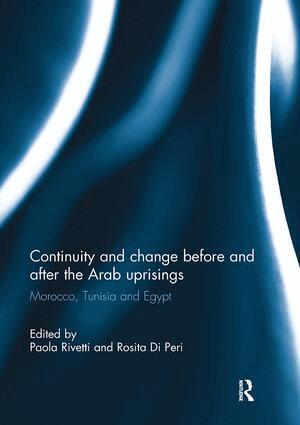
Continuity and change before and after the Arab uprisings
Morocco, Tunisia, and Egypt
Häftad, Engelska, 2017
725 kr
Skickas inom 10-15 vardagar
The Arab uprisings of 2011 have sparked much scholarly discussion with regards to democratisation, the resilience of authoritarian rule, mobilisation patterns, and the relationship between secularism and Islam, all under the assumption that politics has changed for good in North Africa and the Middle East. While acknowledging the post-2011 transformations taking place in the region, this book brings to the forefront an understudied, yet crucial, aspect related to the uprisings, namely the interplay between continuity and change. Challenging simplified representations built around the positions that either ‘all has changed’ or ‘nothing has changed’, the in-depth case studies in this volume demonstrate how elements both of continuity, and rupture with the past, are present in the post-uprising landscapes of Morocco, Tunisia and Egypt. Public policy, contentious politics, the process of institution making and re-making, and the relations of power connecting national and international economies are at the core of the comparative investigations included in the book. The volume makes an important contribution to the study of North African politics, and to the study of political change and stability, by contrasting the different trajectories of the uprisings, and by offering theoretical reflections on their meaning, consequences and scope. This book was originally published as a special issue of the British Journal of Middle Eastern Studies.
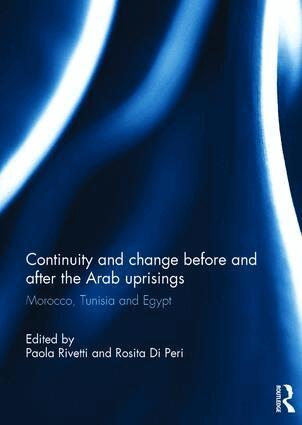
Continuity and change before and after the Arab uprisings
Morocco, Tunisia, and Egypt
Inbunden, Engelska, 2015
2 098 kr
Skickas inom 10-15 vardagar
The Arab uprisings of 2011 have sparked much scholarly discussion with regards to democratisation, the resilience of authoritarian rule, mobilisation patterns, and the relationship between secularism and Islam, all under the assumption that politics has changed for good in North Africa and the Middle East. While acknowledging the post-2011 transformations taking place in the region, this book brings to the forefront an understudied, yet crucial, aspect related to the uprisings, namely the interplay between continuity and change. Challenging simplified representations built around the positions that either ‘all has changed’ or ‘nothing has changed’, the in-depth case studies in this volume demonstrate how elements both of continuity, and rupture with the past, are present in the post-uprising landscapes of Morocco, Tunisia and Egypt. Public policy, contentious politics, the process of institution making and re-making, and the relations of power connecting national and international economies are at the core of the comparative investigations included in the book. The volume makes an important contribution to the study of North African politics, and to the study of political change and stability, by contrasting the different trajectories of the uprisings, and by offering theoretical reflections on their meaning, consequences and scope. This book was originally published as a special issue of the British Journal of Middle Eastern Studies.
Islamists and the Politics of the Arab Uprisings
Governance, Pluralisation and Contention
Inbunden, Engelska, 2018
2 164 kr
Skickas inom 3-6 vardagar
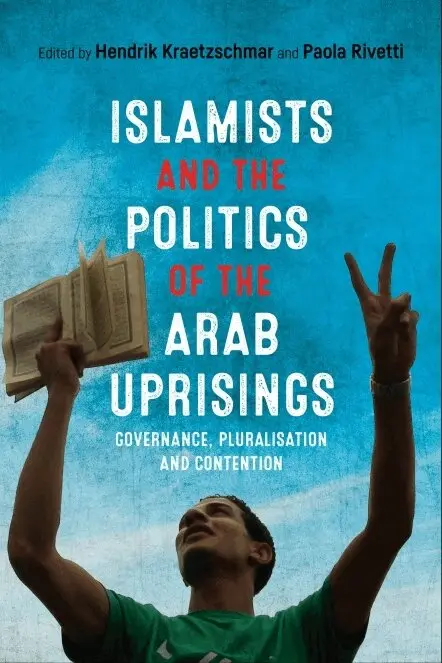
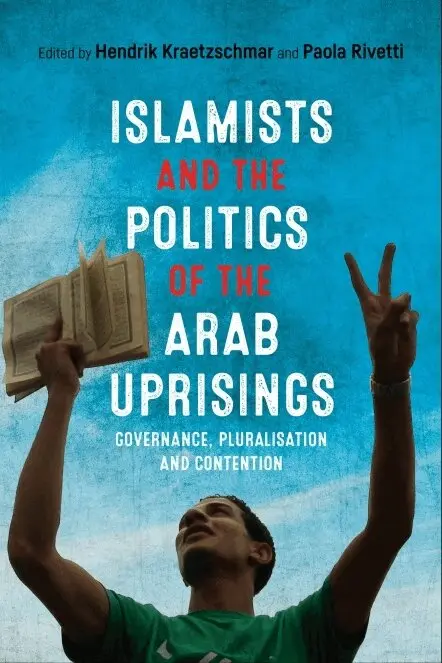
Scrutinises the political strategies and ideological evolution of Islamist actors and forces following the Arab uprisingsWhat role does political Islam play in the genealogy of protests as an instrument to resist neo-liberalism and authoritarian rule? How can we account for the internal conflicts among Islamist players after the 2011/2012 Arab uprisings? How can we assess the performance of Islamist parties in power? What geopolitical reconfigurations have the uprisings created, and what opportunities have arisen for Islamists to claim a stronger political role in domestic and regional politics? These questions are addressed in this book, which looks at the dynamics in place during the aftermath of the Arab uprisings in a wide range of countries across the Middle East and North Africa.Key features22 case studies explain the diverse trajectories of political Islam since 2011 in Bahrain, Egypt, Iraq, Iran, Kuwait, Lebanon, Libya, Morocco, Qatar, Syria, Tunisia, Turkey and YemenProvides a comprehensive analysis of political Islam covering intra-Islamist pluralisation and conflict, governance and accountability issues, 'secular-Islamist' contention, responses to neo-liberal development and the resurgence of sectarianism and militancyOffers a set of innovative approaches to the study of political Islam in the post-Arab spring era that open new possibilities for theory development in the fieldContributorsIbrahim Al-Marashi, California State University San MarcosNazli Cagin Bilgili, Istanbul Kultur UniversitySouhail Belhadj, Graduate Institute of International and Development Studies in GenevaFrancesco Cavatorta, Laval University, QuebecCherine Chams El-Dine, Cairo UniversityKaterina Dalacoura, London School of Economics and Political Science Jerome Drevon, University of Oxford Vincent Durac, University College Dublin and Bethlehem UniversityLaura Ruiz de Elvira Carrascal, French Institut de Recherche pour le Developpement (IRD), ParisMelissa Finn, University of WaterlooCourtney Freer, London School of Economics and Political Science Angela Joya, University of OregonWanda Krause, Royal Roads UniversityMohammed Masbah, Chatham House and Brandeis UniversityAlam Saleh, Lancaster UniversityJillian Schwedler, City University of New York's Hunter College Mariz Tadros, University of Sussex Truls Tonnessen, Georgetown UniversityMarc Valeri, University of Exeter Anne Wolf, University of CambridgeLuciano Zaccara, Qatar UniversityBarbara Zollner, Birkbeck College
Islamists and the Politics of the Arab Uprisings
Governance, Pluralisation and Contention
Häftad, Engelska, 2018
367 kr
Skickas inom 11-20 vardagar
Scrutinises the political strategies and ideological evolution of Islamist actors and forces following the Arab uprisingsWhat role does political Islam play in the genealogy of protests as an instrument to resist neo-liberalism and authoritarian rule? How can we account for the internal conflicts among Islamist players after the 2011/2012 Arab uprisings? How can we assess the performance of Islamist parties in power? What geopolitical reconfigurations have the uprisings created, and what opportunities have arisen for Islamists to claim a stronger political role in domestic and regional politics? These questions are addressed in this book, which looks at the dynamics in place during the aftermath of the Arab uprisings in a wide range of countries across the Middle East and North Africa.Key features22 case studies explain the diverse trajectories of political Islam since 2011 in Bahrain, Egypt, Iraq, Iran, Kuwait, Lebanon, Libya, Morocco, Qatar, Syria, Tunisia, Turkey and YemenProvides a comprehensive analysis of political Islam covering intra-Islamist pluralisation and conflict, governance and accountability issues, 'secular-Islamist' contention, responses to neo-liberal development and the resurgence of sectarianism and militancyOffers a set of innovative approaches to the study of political Islam in the post-Arab spring era that open new possibilities for theory development in the fieldContributorsIbrahim Al-Marashi, California State University San MarcosNazli Cagin Bilgili, Istanbul Kultur UniversitySouhail Belhadj, Graduate Institute of International and Development Studies in GenevaFrancesco Cavatorta, Laval University, QuebecCherine Chams El-Dine, Cairo UniversityKaterina Dalacoura, London School of Economics and Political Science Jerome Drevon, University of Oxford Vincent Durac, University College Dublin and Bethlehem UniversityLaura Ruiz de Elvira Carrascal, French Institut de Recherche pour le Developpement (IRD), ParisMelissa Finn, University of WaterlooCourtney Freer, London School of Economics and Political Science Angela Joya, University of OregonWanda Krause, Royal Roads UniversityMohammed Masbah, Chatham House and Brandeis UniversityAlam Saleh, Lancaster UniversityJillian Schwedler, City University of New York's Hunter College Mariz Tadros, University of Sussex Truls Tonnessen, Georgetown UniversityMarc Valeri, University of Exeter Anne Wolf, University of CambridgeLuciano Zaccara, Qatar UniversityBarbara Zollner, Birkbeck College
856 kr
Skickas inom 10-15 vardagar
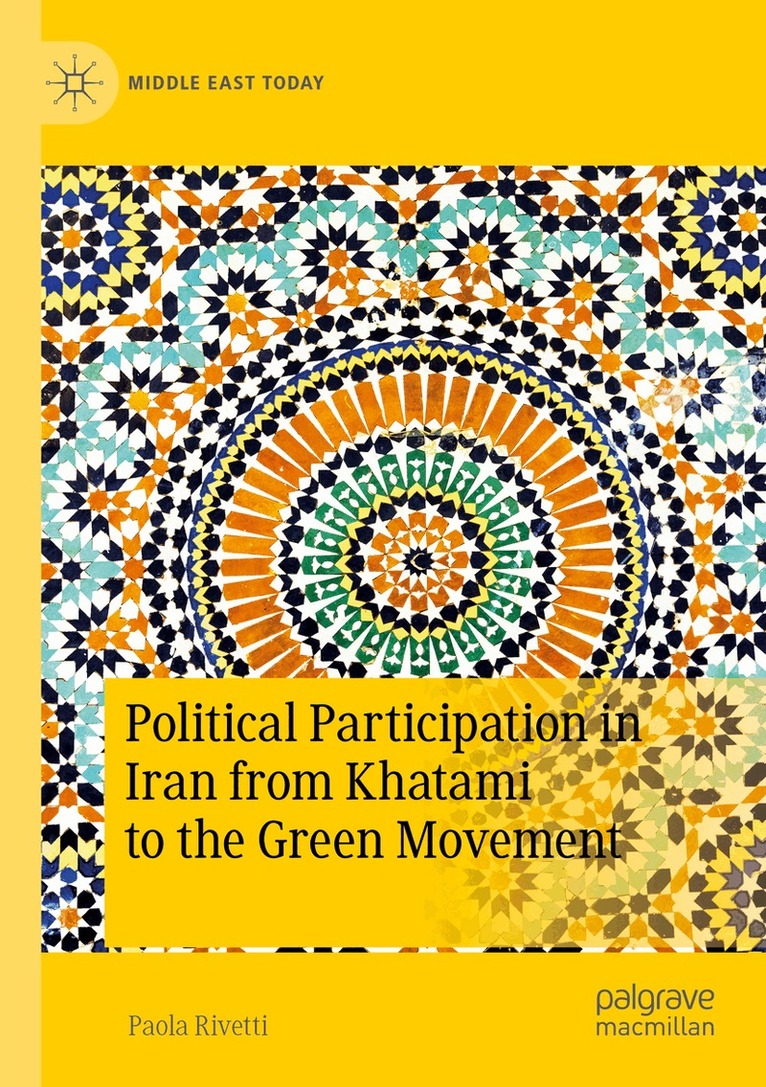
This book examines the unintended consequences of top-down reforms in Iran, analysing how the Iranian reformist governments (1997–2005) sought to utilise gradual reforms to control independent activism, and how citizens responded to such a disciplinary action.
856 kr
Skickas inom 10-15 vardagar
This book examines the unintended consequences of top-down reforms in Iran, analysing how the Iranian reformist governments (1997–2005) sought to utilise gradual reforms to control independent activism, and how citizens responded to such a disciplinary action.