Paola Spinozzi - Böcker
Visar alla böcker från författaren Paola Spinozzi. Handla med fri frakt och snabb leverans.
3 produkter
3 produkter
724 kr
Skickas inom 10-15 vardagar
Cultures of Sustainability and Wellbeing: Theories, Histories and Policies examines and assesses the interdependence between sustainability and wellbeing by drawing attention to humans as producers and consumers in a post-human age. Why wellbeing ought to be regarded as essential to sustainable development is explored first from multifocal theoretical perspectives encompassing sociology, literary criticism and socioeconomics, second in relation to institutions and policies, and third with a focus on specific case studies across the world. Wellbeing and its sustainability are defined in terms of biological and cultural diversity; stages of advancement in science and technology; notions of citizenship and agency; geopolitical scenarios and environmental conditions. Wellbeing and sustainability call for enquiries into human capacities in ontological, epistemological and practical terms. A view of sustainability that revolves around material and immaterial wellbeing is based on the assumption that life quality, comfort, happiness, security, safety always posit humans as both recipients and agents. Risk and resilience in contemporary societies define the intrinsically human ability to make and consume, to act and adapt, driving the search for and fruition of wellbeing. How to sustain the dual process of exploitation and regeneration is a task that requires integrated approaches from the sciences and the humanities, jointly tracing a worldwide cartography with clear localisations. This book will be of great interest to students and researchers interested in sustainability through conceptual and empirical approaches including social theory, literary and cultural studies, environmental economics and human ecology, urbanism and cultural geography.
2 103 kr
Skickas inom 10-15 vardagar
Cultures of Sustainability and Wellbeing: Theories, Histories and Policies examines and assesses the interdependence between sustainability and wellbeing by drawing attention to humans as producers and consumers in a post-human age. Why wellbeing ought to be regarded as essential to sustainable development is explored first from multifocal theoretical perspectives encompassing sociology, literary criticism and socioeconomics, second in relation to institutions and policies, and third with a focus on specific case studies across the world. Wellbeing and its sustainability are defined in terms of biological and cultural diversity; stages of advancement in science and technology; notions of citizenship and agency; geopolitical scenarios and environmental conditions. Wellbeing and sustainability call for enquiries into human capacities in ontological, epistemological and practical terms. A view of sustainability that revolves around material and immaterial wellbeing is based on the assumption that life quality, comfort, happiness, security, safety always posit humans as both recipients and agents. Risk and resilience in contemporary societies define the intrinsically human ability to make and consume, to act and adapt, driving the search for and fruition of wellbeing. How to sustain the dual process of exploitation and regeneration is a task that requires integrated approaches from the sciences and the humanities, jointly tracing a worldwide cartography with clear localisations. This book will be of great interest to students and researchers interested in sustainability through conceptual and empirical approaches including social theory, literary and cultural studies, environmental economics and human ecology, urbanism and cultural geography.
Del 24 - Cultural Interactions: Studies in the Relationship between the Arts
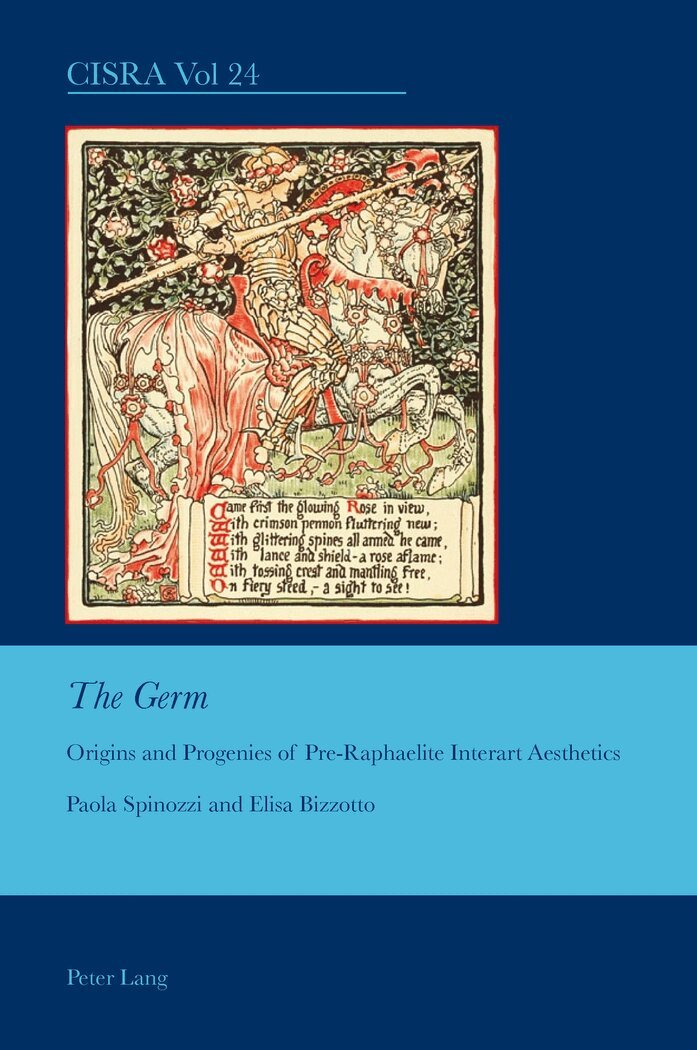
"The Germ"
Origins and Progenies of Pre-Raphaelite Interart Aesthetics
Häftad, Engelska, 2012
836 kr
Skickas inom 5-8 vardagar
It was in The Germ (1850), the first British magazine with an aesthetic manifesto, that the interart theories of the Pre-Raphaelites took shape. The thirteen young contributors advocated an ethical approach to art while at the same time acknowledging self-referentiality and meta-discoursivity. They defined the specificity of each mode of artistic expression while exploring the dynamic between word and image, moving from realism towards Symbolism and even anticipating Surrealism. The Aesthetes and Decadents were fascinated; the Modernists felt challenged.Later in the twentieth century a succession of reappraisals transformed the Pre-Raphaelites into a well-marketed group of eccentrics, but neglected the complexity of their cross-cultural, verbal/visual art. This study aims to explain why claims about the autonomy and interrelatedness of the arts, expressed in the form of a provocative monthly journal, proved so influential as to be a source of inspiration for the Oxford and Cambridge Magazine, The Century Guild Hobby Horse, The Yellow Book, The Savoy, and even for Modernist periodicals. Often regarded as a juvenile venture, The Germ was in fact a laboratory for expressive forms, themes, and ideas that had an enormous impact on the history of British culture.