Massimiliano Mazzanti – författare
742 kr
Skickas inom 10-15 vardagar
1 395 kr
Skickas inom 10-15 vardagar
2 294 kr
Skickas inom 10-15 vardagar
707 kr
Skickas inom 10-15 vardagar
2 294 kr
Skickas inom 10-15 vardagar
451 kr
Skickas inom 10-15 vardagar
2 294 kr
Skickas inom 10-15 vardagar
519 kr
Läs direkt efter köp
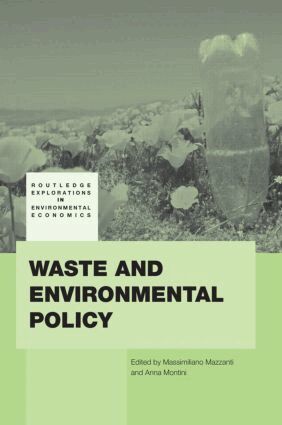
This research deals with the increasingly complex issues of waste generation, waste management and waste disposal that in less developed industrialised countries present diverse but critical concerns. It takes a socio-economic and policy-oriented perspective and provides empirical evidence at EU and regional level. The EU and Italy are taken as relevant case studies given the disparities in environmental performances between less and more developed areas.
The rich and various empirical evidence shows that a robust delinking between waste generation and economic growth is still not present, thus future policies should directly address the problem at the source by targeting waste generation in EU countries. Some structural factors like population density and urbanisation present themselves as relevant drivers of both waste management and landfill diversion. Nevertheless, economic and structural factors alone are not sufficient to improve waste performances. Though waste policies are to be redesigned by covering the entire area of waste management, some first signals of policy effectiveness are arising.
This work will be of most interest to those students of environmental economics and environmental sciences, as well as policy makers, waste utility managers and companies in the waste management sector.
519 kr
Läs direkt efter köp
This research deals with the increasingly complex issues of waste generation, waste management and waste disposal that in less developed industrialised countries present diverse but critical concerns. It takes a socio-economic and policy-oriented perspective and provides empirical evidence at EU and regional level. The EU and Italy are taken as relevant case studies given the disparities in environmental performances between less and more developed areas.
The rich and various empirical evidence shows that a robust delinking between waste generation and economic growth is still not present, thus future policies should directly address the problem at the source by targeting waste generation in EU countries. Some structural factors like population density and urbanisation present themselves as relevant drivers of both waste management and landfill diversion. Nevertheless, economic and structural factors alone are not sufficient to improve waste performances. Though waste policies are to be redesigned by covering the entire area of waste management, some first signals of policy effectiveness are arising.
This work will be of most interest to those students of environmental economics and environmental sciences, as well as policy makers, waste utility managers and companies in the waste management sector.
974 kr
Läs direkt efter köp
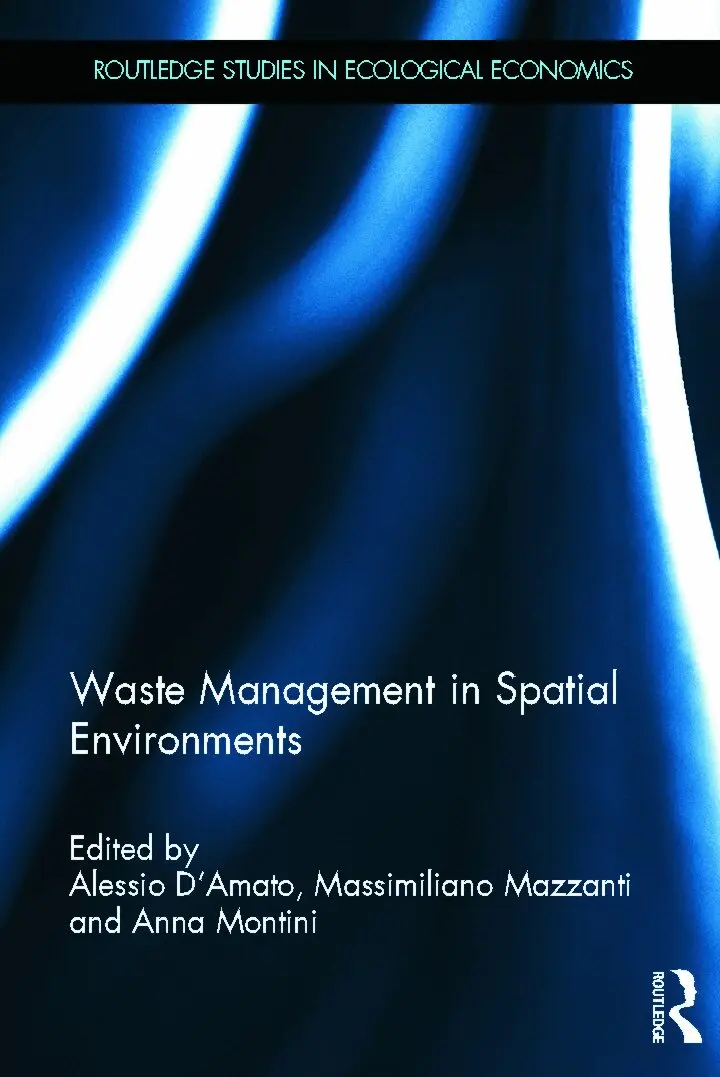
The increasing scarcity of land and the ever-rising amount of waste produced worldwide, coupled with the consequent change of focus by policy makers from waste disposal and recovery to waste prevention is boosting research in the ''economics of waste''.
This volume addresses waste-management and waste-disposal issues, embedding them in spatial, systemic and trade-related frameworks. The collection is policy oriented, including socio-economic and political science perspectives in order to provide an understanding of real world phenomena, and thus maximize its value for policy making.
The book includes contributions on the linkages between income and waste generation and landfilling (such as the ‘waste Kuznets curve’ conceptual framework), in addition to papers that bring together policy-oriented analysis of instrument effectiveness and the spatial nature of waste phenomena. On top of this, there are pieces of research emphasizing technological spillovers and trade at interregional and intercountry levels. The comparative analysis of policy effectiveness and efficiency at the regional and country levels is also covered, including the assessment of the potential role of illegal management of waste in determining waste performance. To give a spatial and comparative flavour, the book includes work on the evaluation of waste-related externalities, with examples covering household, industrial and special waste.
The wide set of methodologies and issues included in this book make it a comprehensive starting point for scholars and policy makers interested in waste-related research.
974 kr
Läs direkt efter köp
The increasing scarcity of land and the ever-rising amount of waste produced worldwide, coupled with the consequent change of focus by policy makers from waste disposal and recovery to waste prevention is boosting research in the ''economics of waste''.
This volume addresses waste-management and waste-disposal issues, embedding them in spatial, systemic and trade-related frameworks. The collection is policy oriented, including socio-economic and political science perspectives in order to provide an understanding of real world phenomena, and thus maximize its value for policy making.
The book includes contributions on the linkages between income and waste generation and landfilling (such as the ‘waste Kuznets curve’ conceptual framework), in addition to papers that bring together policy-oriented analysis of instrument effectiveness and the spatial nature of waste phenomena. On top of this, there are pieces of research emphasizing technological spillovers and trade at interregional and intercountry levels. The comparative analysis of policy effectiveness and efficiency at the regional and country levels is also covered, including the assessment of the potential role of illegal management of waste in determining waste performance. To give a spatial and comparative flavour, the book includes work on the evaluation of waste-related externalities, with examples covering household, industrial and special waste.
The wide set of methodologies and issues included in this book make it a comprehensive starting point for scholars and policy makers interested in waste-related research.
795 kr
Läs direkt efter köp
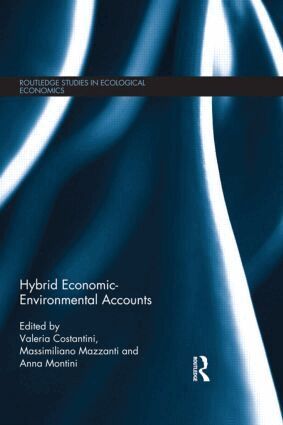
National Accounting Matrices of Environmental Accounts (NAMEA) tables are used to analyze a range of environmental pressures and economic data resulting from consumption and production patterns – helping us gain a far better notion of the consequences of individuals’, households’ and firms’ actions for the world we live in. This book deals with the increasingly complex issues of hybrid environmental and economic accounts. The perspective of environmental accounting for the analysis of the relationships between the economic and environmental systems, especially regarding the satellite accounts like NAMEA, is relatively recent, and partly derives from the conceptual and applied deficits that have emerged during the setting up of green GDP or GNP measures as alternative measures of accounting.
NAMEA provides a comprehensive and integrated picture of the economic system in association with the environmental system (physical pressures such as emissions) by a sector classification. This book is an integrated collection of complementary papers that revolve around the issue of environment-economic accounting In the first part a historical background and empirical issues related to the NAMEA-type table definitions and estimations open the book, followed by some applications and analyses mainly applied to a sub-national level. The second part opens the window to international case studies for different EU countries and studies with methodological insights.
These policy-oriented, original works are primarily from an applied perspective, although theoretical aspects are also fully developed. The book should be of use to Environmental and Ecological economics students and researchers, as well as those studying the more general field of Environment studies.
795 kr
Läs direkt efter köp
National Accounting Matrices of Environmental Accounts (NAMEA) tables are used to analyze a range of environmental pressures and economic data resulting from consumption and production patterns – helping us gain a far better notion of the consequences of individuals’, households’ and firms’ actions for the world we live in. This book deals with the increasingly complex issues of hybrid environmental and economic accounts. The perspective of environmental accounting for the analysis of the relationships between the economic and environmental systems, especially regarding the satellite accounts like NAMEA, is relatively recent, and partly derives from the conceptual and applied deficits that have emerged during the setting up of green GDP or GNP measures as alternative measures of accounting.
NAMEA provides a comprehensive and integrated picture of the economic system in association with the environmental system (physical pressures such as emissions) by a sector classification. This book is an integrated collection of complementary papers that revolve around the issue of environment-economic accounting In the first part a historical background and empirical issues related to the NAMEA-type table definitions and estimations open the book, followed by some applications and analyses mainly applied to a sub-national level. The second part opens the window to international case studies for different EU countries and studies with methodological insights.
These policy-oriented, original works are primarily from an applied perspective, although theoretical aspects are also fully developed. The book should be of use to Environmental and Ecological economics students and researchers, as well as those studying the more general field of Environment studies.
795 kr
Läs direkt efter köp
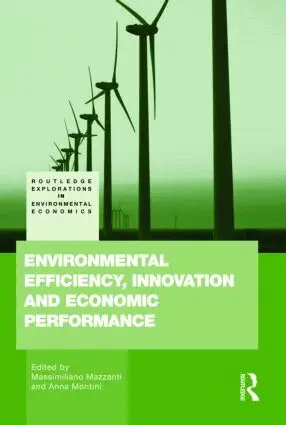
This book deals with the increasingly complex issues of eco-innovation. Eco-innovation is becoming a conceptual reference point for many regional and international public policies and management strategies. Since 2000, this field of research has been focusing on environmental innovation, particularly related to the intensity of emissions, and economic performance and efficiency. There are two reasons for this growing interest. The first is that environmental performance is one of the main economic policy goals of European countries thanks to its relevance to the Lisbon Strategy and the Göteborg priorities for sustainable development. The second, which is partly linked to the first, is related to the growing impact of environmental regulation on private sector activity in many European countries.
This volume brings together microeconomics studies on firms’ eco and economic performance both in the industrial and service sector; by considering a sector based perspective rooted mainly in the exploitation of NAMEA data; at regional level, and a macroeconomic analysis of the environment, income and welfare.
This collection brings together the best of recent research in the area of eco-innovation and in its entirety is an excellent source of knowledge for postgraduates and researchers students of Environmental and Ecological Economics alike. As well as fully developing the theoretical aspects of its topics, these essays are also strongly policy-oriented and will be of interest to anyone seeking information an applied perspective.
795 kr
Läs direkt efter köp
This book deals with the increasingly complex issues of eco-innovation. Eco-innovation is becoming a conceptual reference point for many regional and international public policies and management strategies. Since 2000, this field of research has been focusing on environmental innovation, particularly related to the intensity of emissions, and economic performance and efficiency. There are two reasons for this growing interest. The first is that environmental performance is one of the main economic policy goals of European countries thanks to its relevance to the Lisbon Strategy and the Göteborg priorities for sustainable development. The second, which is partly linked to the first, is related to the growing impact of environmental regulation on private sector activity in many European countries.
This volume brings together microeconomics studies on firms’ eco and economic performance both in the industrial and service sector; by considering a sector based perspective rooted mainly in the exploitation of NAMEA data; at regional level, and a macroeconomic analysis of the environment, income and welfare.
This collection brings together the best of recent research in the area of eco-innovation and in its entirety is an excellent source of knowledge for postgraduates and researchers students of Environmental and Ecological Economics alike. As well as fully developing the theoretical aspects of its topics, these essays are also strongly policy-oriented and will be of interest to anyone seeking information an applied perspective.
2 158 kr
Skickas inom 10-15 vardagar
707 kr
Skickas inom 10-15 vardagar
865 kr
Skickas inom 10-15 vardagar
989 kr
Läs direkt efter köp
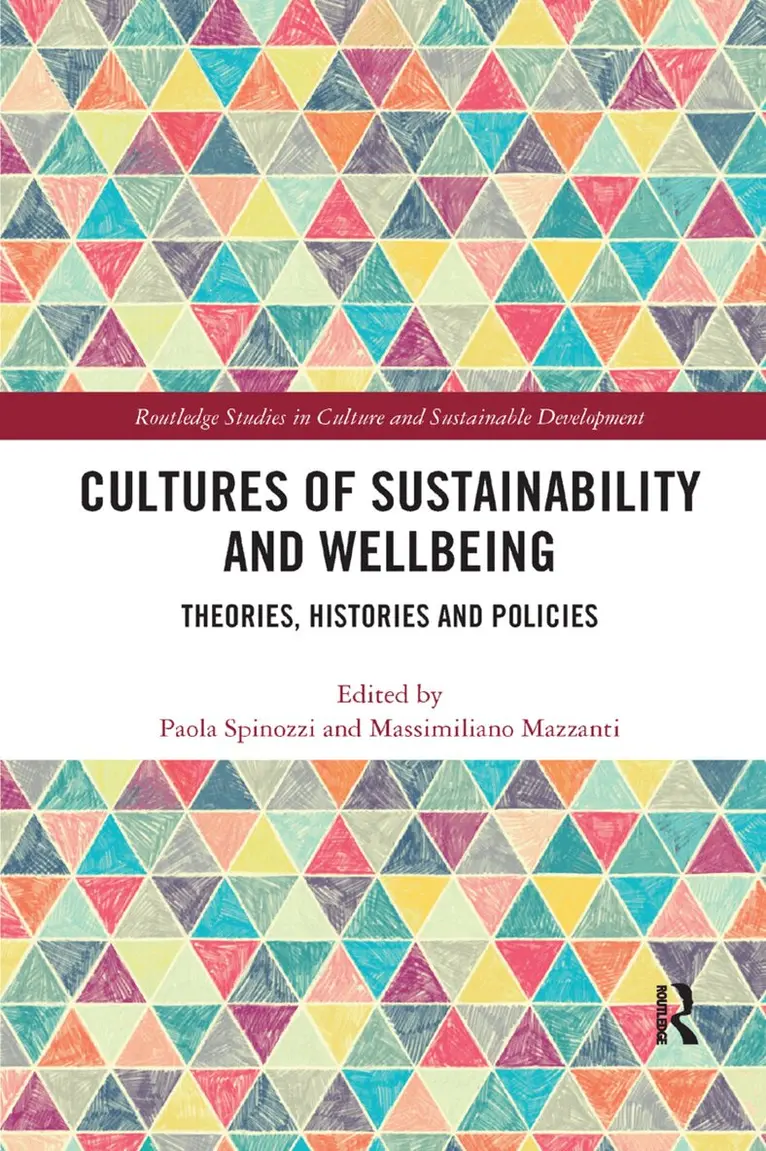
Cultures of Sustainability and Wellbeing: Theories, Histories and Policies examines and assesses the interdependence between sustainability and wellbeing by drawing attention to humans as producers and consumers in a post-human age. Why wellbeing ought to be regarded as essential to sustainable development is explored first from multifocal theoretical perspectives encompassing sociology, literary criticism and socioeconomics, second in relation to institutions and policies, and third with a focus on specific case studies across the world. Wellbeing and its sustainability are defined in terms of biological and cultural diversity; stages of advancement in science and technology; notions of citizenship and agency; geopolitical scenarios and environmental conditions.
Wellbeing and sustainability call for enquiries into human capacities in ontological, epistemological and practical terms. A view of sustainability that revolves around material and immaterial wellbeing is based on the assumption that life quality, comfort, happiness, security, safety always posit humans as both recipients and agents. Risk and resilience in contemporary societies define the intrinsically human ability to make and consume, to act and adapt, driving the search for and fruition of wellbeing. How to sustain the dual process of exploitation and regeneration is a task that requires integrated approaches from the sciences and the humanities, jointly tracing a worldwide cartography with clear localisations.
This book will be of great interest to students and researchers interested in sustainability through conceptual and empirical approaches including social theory, literary and cultural studies, environmental economics and human ecology, urbanism and cultural geography.
989 kr
Läs direkt efter köp
Cultures of Sustainability and Wellbeing: Theories, Histories and Policies examines and assesses the interdependence between sustainability and wellbeing by drawing attention to humans as producers and consumers in a post-human age. Why wellbeing ought to be regarded as essential to sustainable development is explored first from multifocal theoretical perspectives encompassing sociology, literary criticism and socioeconomics, second in relation to institutions and policies, and third with a focus on specific case studies across the world. Wellbeing and its sustainability are defined in terms of biological and cultural diversity; stages of advancement in science and technology; notions of citizenship and agency; geopolitical scenarios and environmental conditions.
Wellbeing and sustainability call for enquiries into human capacities in ontological, epistemological and practical terms. A view of sustainability that revolves around material and immaterial wellbeing is based on the assumption that life quality, comfort, happiness, security, safety always posit humans as both recipients and agents. Risk and resilience in contemporary societies define the intrinsically human ability to make and consume, to act and adapt, driving the search for and fruition of wellbeing. How to sustain the dual process of exploitation and regeneration is a task that requires integrated approaches from the sciences and the humanities, jointly tracing a worldwide cartography with clear localisations.
This book will be of great interest to students and researchers interested in sustainability through conceptual and empirical approaches including social theory, literary and cultural studies, environmental economics and human ecology, urbanism and cultural geography.
2 857 kr
Skickas inom 5-8 vardagar
825 kr
Läs direkt efter köp
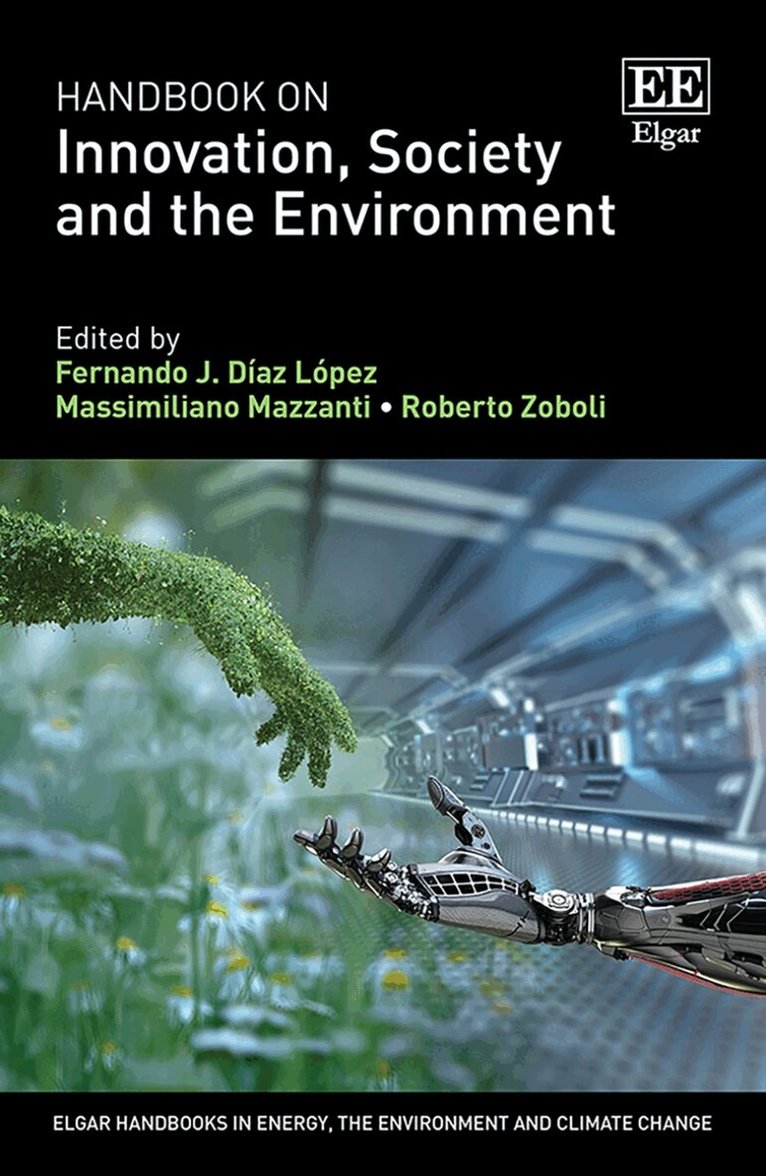
Chapters by leading authors from the sectors of eco-innovation, sustainability transformations and green and circular economies provide a meticulously balanced observation of innovation at local, regional, national and global scales. By featuring case studies from across Australasia, Europe and Latin America, as well as empirical work and modelling exercises, this forward-thinking Handbook links innovation to a range of interconnected topics. It imparts new evidence to offer a succinct conclusion about the potential success of certain innovation and green industrial policies.
This enlightening Handbook will be valuable for scholars and academics studying economics and management, economic and social innovation, and environmental policy. It will also be of great benefit for those analysing policy and industry professionals looking to learn more about eco-innovation.
2 002 kr
Skickas inom 10-15 vardagar
2 508 kr
Läs direkt efter köp
Co-operatives are increasingly being recognized as important contributors to inclusive, sustainable and fair development. However, the co-operative movement faces a multitude of challenges, including the lack of access to credit. This book presents existing cases and new examples of the intersection between the co-operative economy and sustainability challenges.
Chapters explore innovative circular and low carbon sustainable economy cases and practical examples of the role of co-operative organizations within the European Union. It asks how policy factors influence sustainability innovations, explores the role of workers’ involvement in firm strategies and analyses the management style of cooperative firms in facing sustainability challenges. This book will be an essential resource for scholars and students of sustainability and the circular economy, innovation management, HRM and labour studies.
2 002 kr
Skickas inom 10-15 vardagar
1 073 kr
Skickas inom 10-15 vardagar
1 420 kr
Läs direkt efter köp
1 105 kr
Skickas inom 10-15 vardagar