Valeria Costantini - Böcker
Visar alla böcker från författaren Valeria Costantini. Handla med fri frakt och snabb leverans.
4 produkter
4 produkter
2 228 kr
Skickas inom 10-15 vardagar
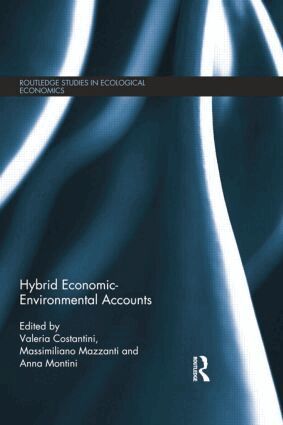
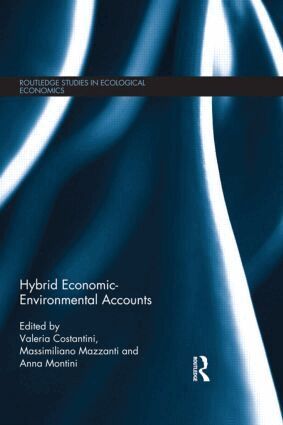
National Accounting Matrices of Environmental Accounts (NAMEA) tables are used to analyze a range of environmental pressures and economic data resulting from consumption and production patterns – helping us gain a far better notion of the consequences of individuals’, households’ and firms’ actions for the world we live in. This book deals with the increasingly complex issues of hybrid environmental and economic accounts. The perspective of environmental accounting for the analysis of the relationships between the economic and environmental systems, especially regarding the satellite accounts like NAMEA, is relatively recent, and partly derives from the conceptual and applied deficits that have emerged during the setting up of green GDP or GNP measures as alternative measures of accounting. NAMEA provides a comprehensive and integrated picture of the economic system in association with the environmental system (physical pressures such as emissions) by a sector classification. This book is an integrated collection of complementary papers that revolve around the issue of environment-economic accounting In the first part a historical background and empirical issues related to the NAMEA-type table definitions and estimations open the book, followed by some applications and analyses mainly applied to a sub-national level. The second part opens the window to international case studies for different EU countries and studies with methodological insights.These policy-oriented, original works are primarily from an applied perspective, although theoretical aspects are also fully developed. The book should be of use to Environmental and Ecological economics students and researchers, as well as those studying the more general field of Environment studies.
687 kr
Skickas inom 10-15 vardagar
National Accounting Matrices of Environmental Accounts (NAMEA) tables are used to analyze a range of environmental pressures and economic data resulting from consumption and production patterns – helping us gain a far better notion of the consequences of individuals’, households’ and firms’ actions for the world we live in. This book deals with the increasingly complex issues of hybrid environmental and economic accounts. The perspective of environmental accounting for the analysis of the relationships between the economic and environmental systems, especially regarding the satellite accounts like NAMEA, is relatively recent, and partly derives from the conceptual and applied deficits that have emerged during the setting up of green GDP or GNP measures as alternative measures of accounting. NAMEA provides a comprehensive and integrated picture of the economic system in association with the environmental system (physical pressures such as emissions) by a sector classification. This book is an integrated collection of complementary papers that revolve around the issue of environment-economic accounting In the first part a historical background and empirical issues related to the NAMEA-type table definitions and estimations open the book, followed by some applications and analyses mainly applied to a sub-national level. The second part opens the window to international case studies for different EU countries and studies with methodological insights.These policy-oriented, original works are primarily from an applied perspective, although theoretical aspects are also fully developed. The book should be of use to Environmental and Ecological economics students and researchers, as well as those studying the more general field of Environment studies.
Dynamics of Environmental and Economic Systems
Innovation, Environmental Policy and Competitiveness
Inbunden, Engelska, 2012
1 059 kr
Skickas inom 10-15 vardagar
Exploiting econometric techniques aimed at dealing with the dynamics of economic systems and the heterogeneity of agents performances, the volume integrates innovation-based reasoning with ex-post analyses, and presents ex-ante analyses able to evaluate the role of climate change policies by using computable general equilibrium models such as the Global Trade Analysis Project for Energy (GTAP-E). The authors merge and use a range of datasets, including OECD-PATSTAT and STAN, to test novel techniques informed by evolutionary economic theories and the Porter hypothesis. The immediate relevance and applicability of the models will strengthen the hand of policy analysts for whom the dynamic efficiency of environmental policy is a new, high-profile evaluation criterion.
Dynamics of Environmental and Economic Systems
Innovation, Environmental Policy and Competitiveness
Häftad, Engelska, 2014
1 091 kr
Skickas inom 10-15 vardagar
Exploiting econometric techniques aimed at dealing with the dynamics of economic systems and the heterogeneity of agents performances, the volume integrates innovation-based reasoning with ex-post analyses, and presents ex-ante analyses able to evaluate the role of climate change policies by using computable general equilibrium models such as the Global Trade Analysis Project for Energy (GTAP-E). The authors merge and use a range of datasets, including OECD-PATSTAT and STAN, to test novel techniques informed by evolutionary economic theories and the Porter hypothesis. The immediate relevance and applicability of the models will strengthen the hand of policy analysts for whom the dynamic efficiency of environmental policy is a new, high-profile evaluation criterion.