Paolo Di Barba - Böcker
Visar alla böcker från författaren Paolo Di Barba. Handla med fri frakt och snabb leverans.
7 produkter
7 produkter
1 064 kr
Skickas inom 10-15 vardagar
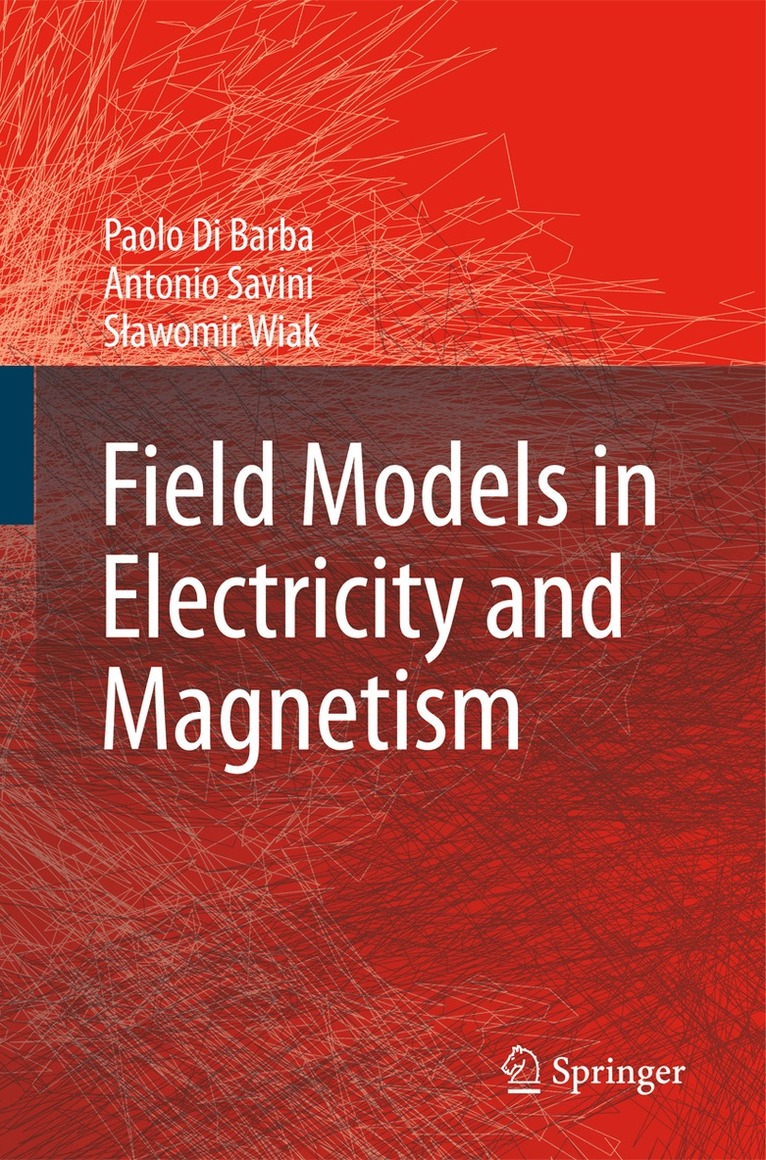
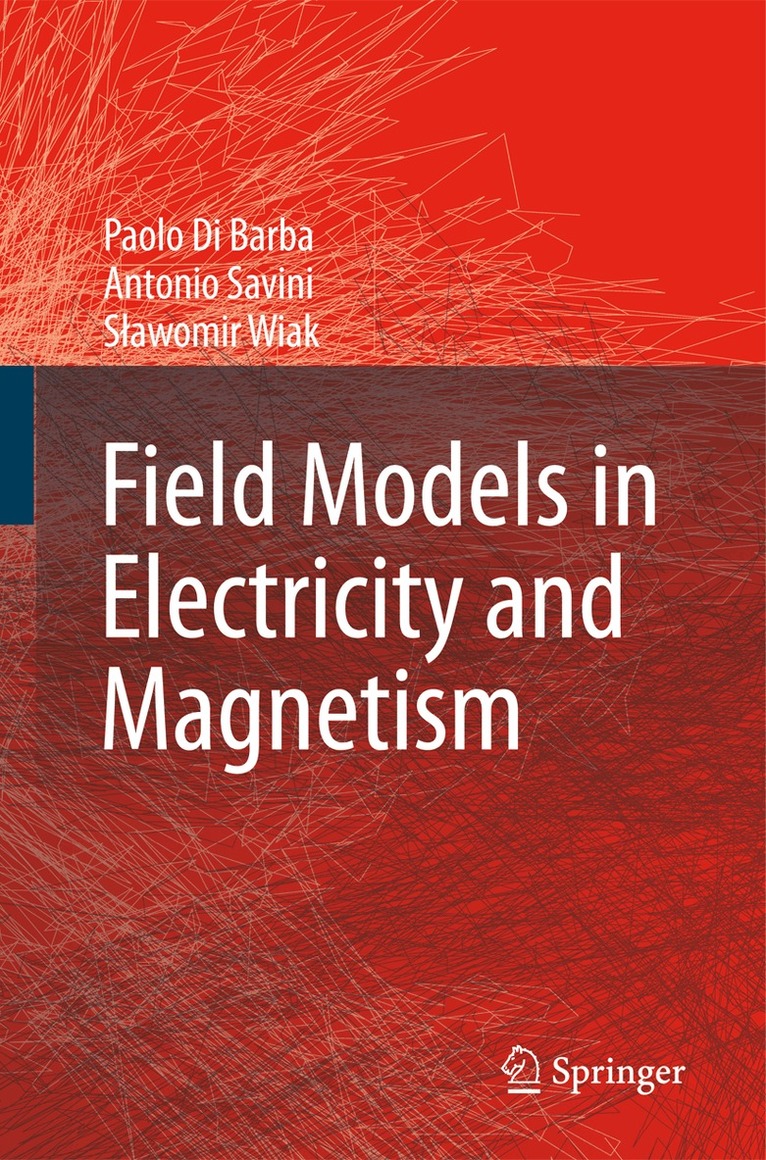
The subject of computation in electricity and magnetism has so advanced in the past 40 years, since the advent of digital computers and thanks to the development of numerical methods, that today it urges and deserves adequate collocation also in curricula for electrical engineering. However, the time allotted to the subject in generalisnotverylargeinundergraduatestudies,wheremoreemphasisisstillusually attributed to circuits and systems than to ?elds. Moreover, ?eld models are generally not very popular among students, who are by far more familiar with circuit models. Even if one considers the quasi-static case, however, not only is electromagnetism fundamentalforpeopledealingwithelectricandmagneticdevices,butitprovidesthe basisfor,e.g.semiconductordevicedesign,bioengineeringapplicationsandsoforth. In the authors’opinion, therefore, time has come to present ?eld models in el- tricity and magnetism, in the frame of an introductory textbook to be used by senior undergraduateorgraduatestudentsintheareaofelectricalandcomputerengineering. Elementary electromagnetism, basic vector analysis and fundamentals of numerical analysis are assumed to be known subjects. Havingthisinmind,theauthorshavecollectedtheexperiencetheyhaveaccu- lated in teaching electromagnetic theory at various levels and in different countries; theyintendtoofferabookonappliedelectricityandmagnetism,describingthepr- lemsofcalculatingelectromagnetic?eldsandtheintegralparametersconnectedwith them in suf?ciently clear and short form. The aim is that of writing a textbook containing the necessary background, i.e. laws explaining electromagnetic phenomena, mathematical operators and equations as well as methods for electromagnetic ?eld calculation. The latter include both analytical and numericalmethods applied to the analysis as well as to the synthesis of electromagnetic devices.
1 667 kr
Skickas inom 3-6 vardagar
The key theme of this book is an exploration of how recent advances across three related scientific fields are intertwined - the developments in metamaterials, the automated optimal design of innovative electronic, electromagnetic and mechatronic devices, and 3D printing.Developments in the field of automated optimal design have enabled the design of innovative electronic, electromagnetic and mechatronic devices, but there is a risk that design uncertainties and fabrication tolerances dictated by conventional manufacturing techniques will limit the practical synthesis and industrial realisation of these novel designs. The solution might be found in new manufacturing possibilities offered by 3D printing technologies and techniques for the fabrication of conductive layers in low and high frequency applications.The book approaches the topic from several perspectives, including the design of 3D fields, advances in shape synthesis, the role of additive manufacturing in synthesising metamaterials and manipulating ferromagnetic materials, and the steps from numerical models to printed mechatronic devices. A final chapter discusses design challenges and opportunities in industrial settings.Led by two expert editors, with contributions from authors with a range of backgrounds across academia and industrial research, this book provides key information for researchers, advanced students and industry professionals in advanced manufacturing, mechatronics, and electrical and electronic engineering.
Del 573 - Lecture Notes in Electrical Engineering
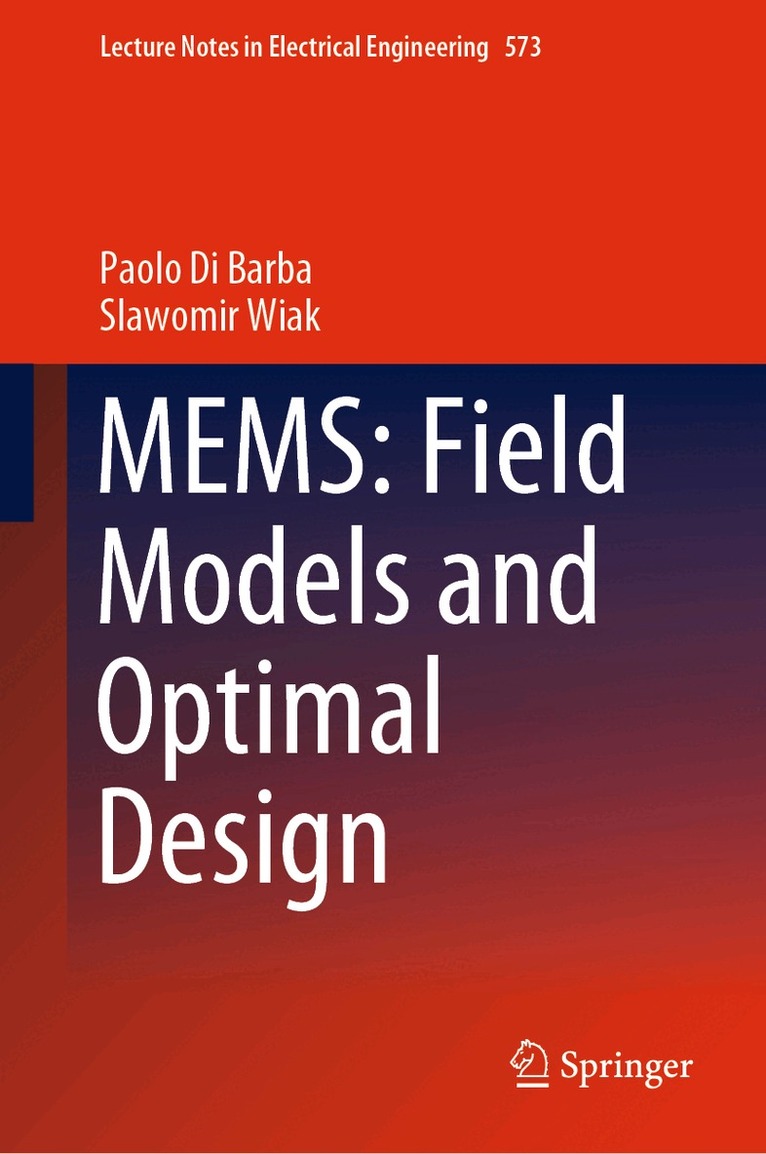
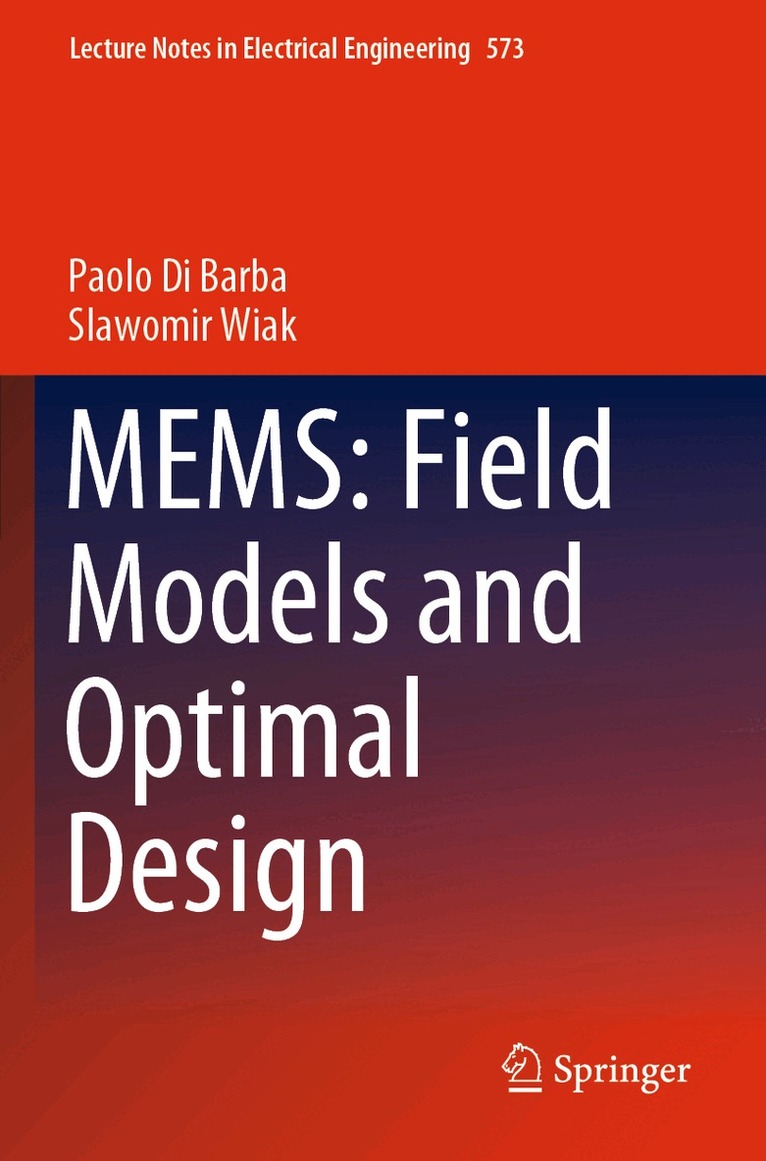
MEMS: Field Models and Optimal Design
Inbunden, Engelska, 2019
1 381 kr
Skickas inom 10-15 vardagar
This book highlights numerical models as powerful tools for the optimal design of Micro-Electro-Mechanical Systems (MEMS). Most MEMS experts have a background in electronics, where circuit models or behavioral models (i.e. lumped-parameter models) of devices are preferred to field models. This is certainly convenient in terms of preliminary design, e.g. in the prototyping stage. However, design optimization should also take into account fine-sizing effects on device behavior and therefore be based on distributed-parameter models, such as finite-element models. The book shows how the combination of automated optimal design and field-based models can produce powerful design toolboxes for MEMS. It especially focuses on illustrating theoretical concepts with practical examples, fostering comprehension through a problem-solving approach. By comparing the results obtained using different methods, readers will learn to identify their respective strengths and weaknesses. In addition, special emphasis is given to evolutionary computing and nature-inspired optimization strategies, the effectiveness of which has already been amply demonstrated. Given its scope, the book provides PhD students, researchers and professionals in the area of computer-aided analysis with a comprehensive, yet concise and practice-oriented guide to MEMS design and optimization. To benefit most from the book, readers should have a basic grasp of electromagnetism, vector analysis and numerical methods.
Del 573 - Lecture Notes in Electrical Engineering
MEMS: Field Models and Optimal Design
Häftad, Engelska, 2020
1 176 kr
Skickas inom 5-8 vardagar
This book highlights numerical models as powerful tools for the optimal design of Micro-Electro-Mechanical Systems (MEMS). However, design optimization should also take into account fine-sizing effects on device behavior and therefore be based on distributed-parameter models, such as finite-element models.
1 578 kr
Skickas inom 10-15 vardagar
Multiobjective Shape Design in Electricity and Magnetism is entirely focused on electric and magnetic field synthesis, with special emphasis on the optimal shape design of devices when conflicting objectives are to be fulfilled.
1 064 kr
Skickas inom 10-15 vardagar
The subject of computation in electricity and magnetism has so advanced in the past 40 years, since the advent of digital computers and thanks to the development of numerical methods, that today it urges and deserves adequate collocation also in curricula for electrical engineering. However, the time allotted to the subject in generalisnotverylargeinundergraduatestudies,wheremoreemphasisisstillusually attributed to circuits and systems than to ?elds. Moreover, ?eld models are generally not very popular among students, who are by far more familiar with circuit models. Even if one considers the quasi-static case, however, not only is electromagnetism fundamentalforpeopledealingwithelectricandmagneticdevices,butitprovidesthe basisfor,e.g.semiconductordevicedesign,bioengineeringapplicationsandsoforth. In the authors’opinion, therefore, time has come to present ?eld models in el- tricity and magnetism, in the frame of an introductory textbook to be used by senior undergraduateorgraduatestudentsintheareaofelectricalandcomputerengineering. Elementary electromagnetism, basic vector analysis and fundamentals of numerical analysis are assumed to be known subjects. Havingthisinmind,theauthorshavecollectedtheexperiencetheyhaveaccu- lated in teaching electromagnetic theory at various levels and in different countries; theyintendtoofferabookonappliedelectricityandmagnetism,describingthepr- lemsofcalculatingelectromagnetic?eldsandtheintegralparametersconnectedwith them in suf?ciently clear and short form. The aim is that of writing a textbook containing the necessary background, i.e. laws explaining electromagnetic phenomena, mathematical operators and equations as well as methods for electromagnetic ?eld calculation. The latter include both analytical and numericalmethods applied to the analysis as well as to the synthesis of electromagnetic devices.
Del 47 - Lecture Notes in Electrical Engineering
Multiobjective Shape Design in Electricity and Magnetism
Häftad, Engelska, 2012
1 578 kr
Skickas inom 10-15 vardagar
Multiobjective Shape Design in Electricity and Magnetism is entirely focused on electric and magnetic field synthesis, with special emphasis on the optimal shape design of devices when conflicting objectives are to be fulfilled. Direct problems are solved by means of finite-element analysis, while evolutionary computing is used to solve multiobjective inverse problems. This approach, which is original, is coherently developed throughout the whole manuscript. The use of game theory, dynamic optimisation, and Bayesian imaging strengthens the originality of the book. Covering the development of multiobjective optimisation in the past ten years, Multiobjective Shape Design in Electricity and Magnetism is a concise, comprehensive and up-to-date introduction to this research field, which is growing in the community of electricity and magnetism. Theoretical issues are illustrated by practical examples. In particular, a test problem is solved by different methods so that, by comparison of results, advantages and limitations of the various methods are made clear.